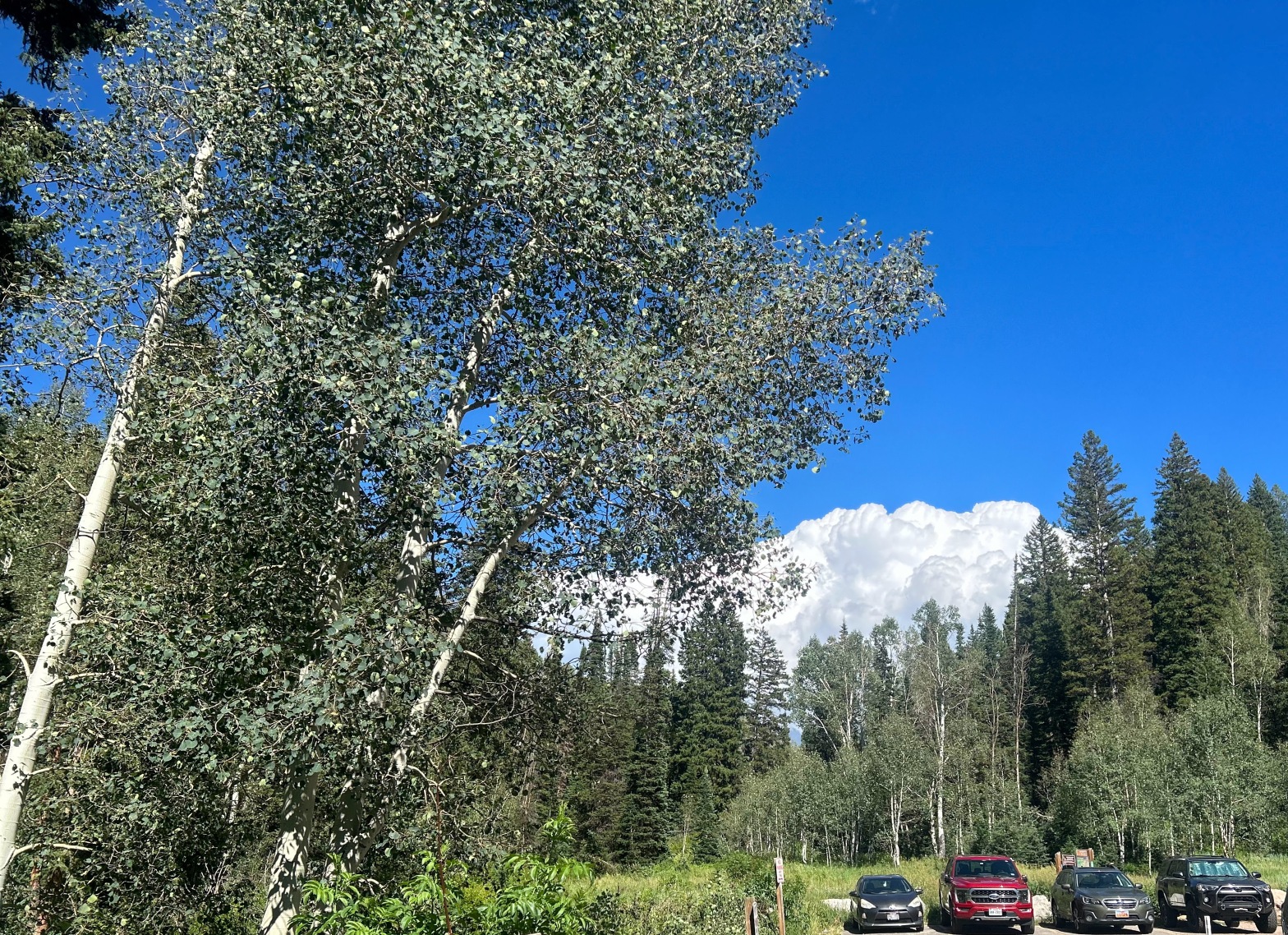
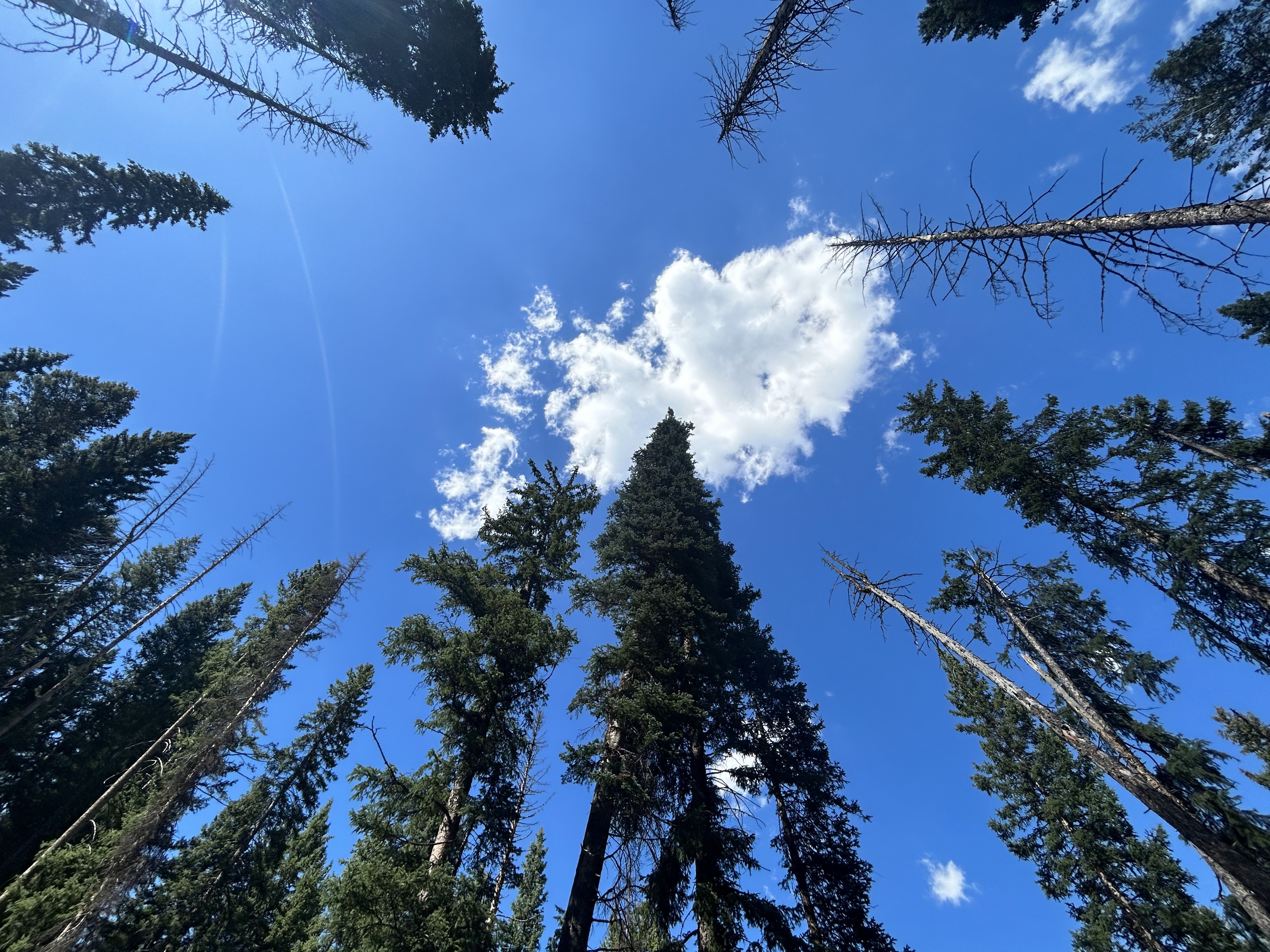
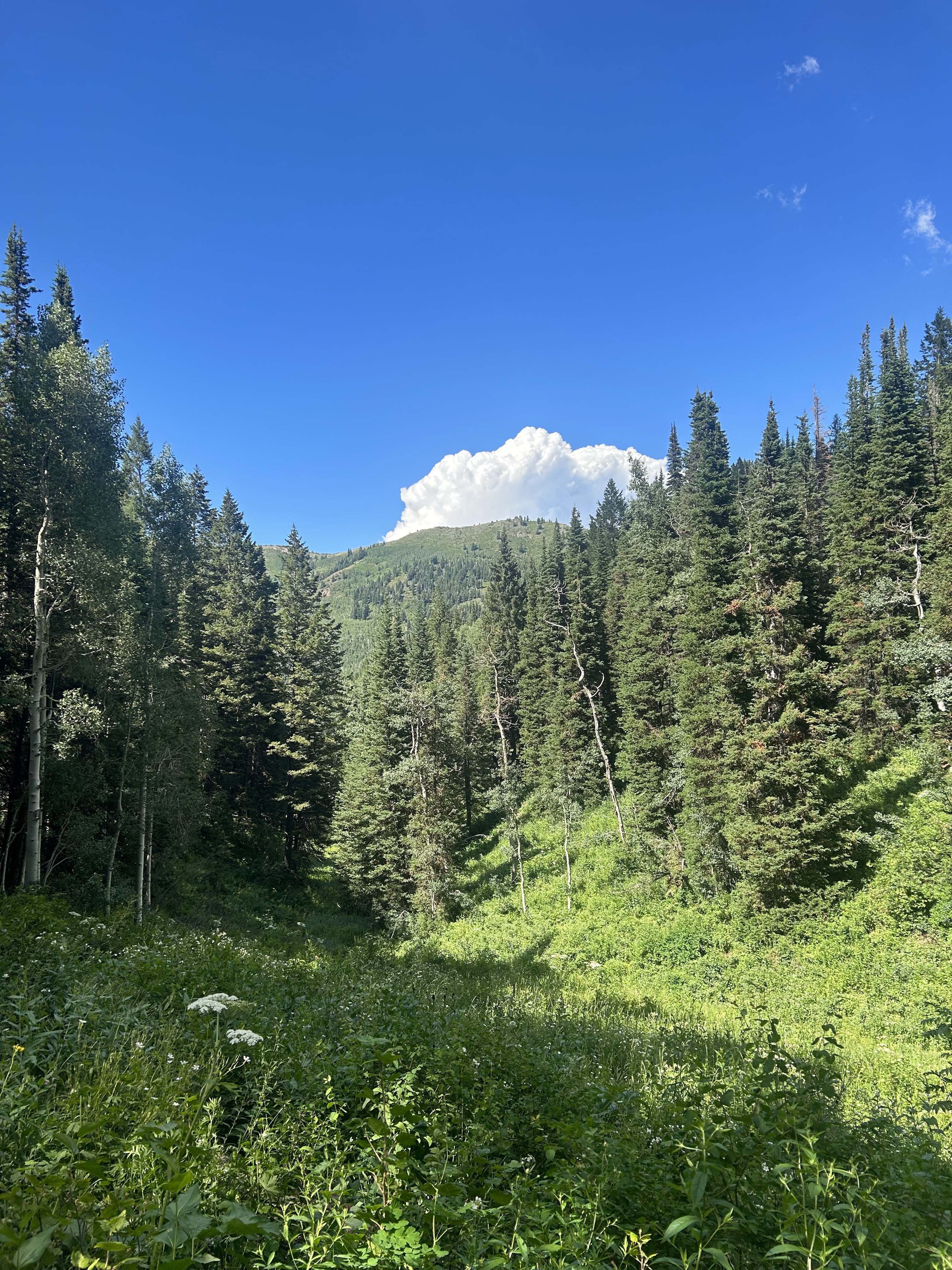
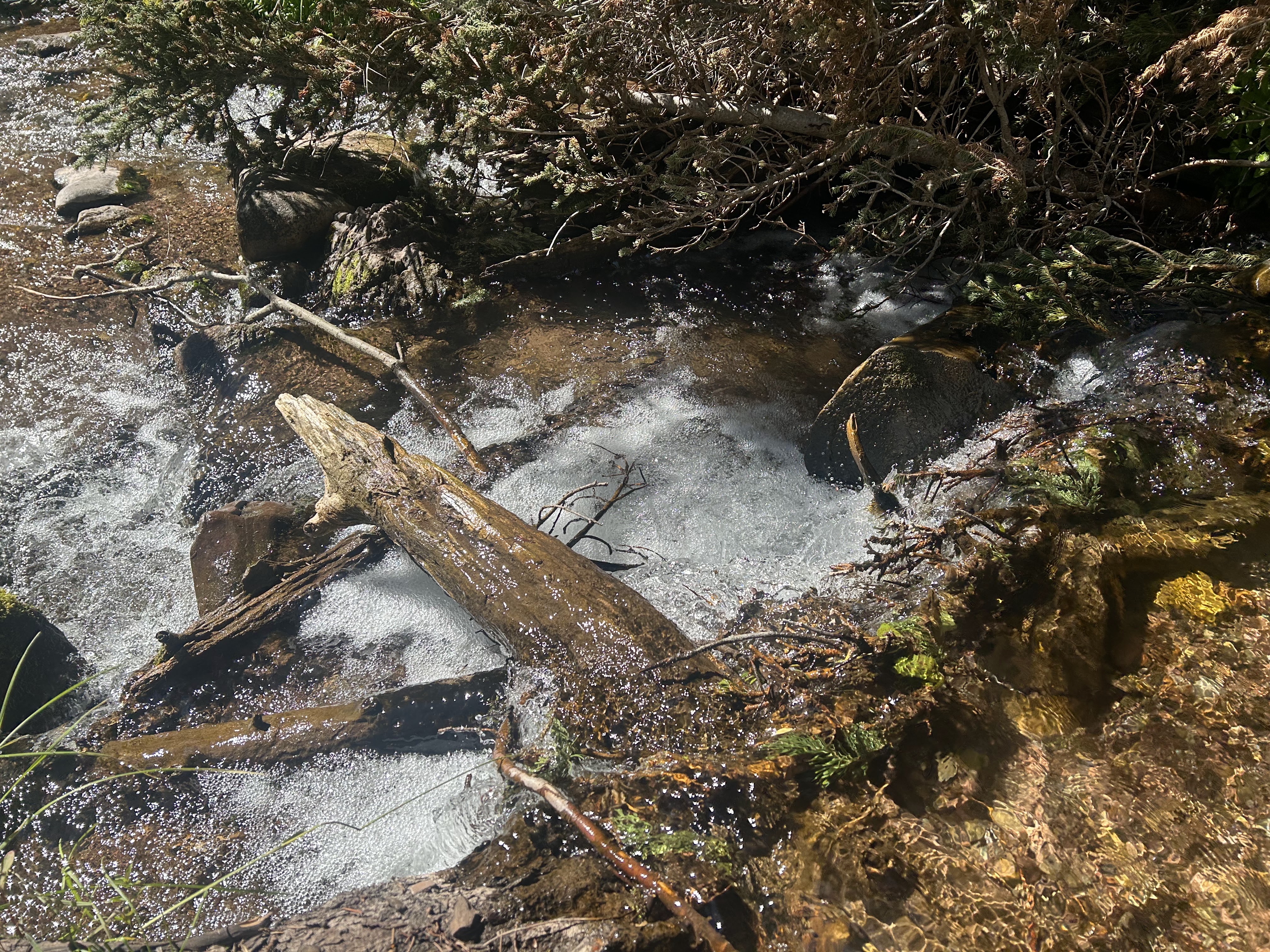
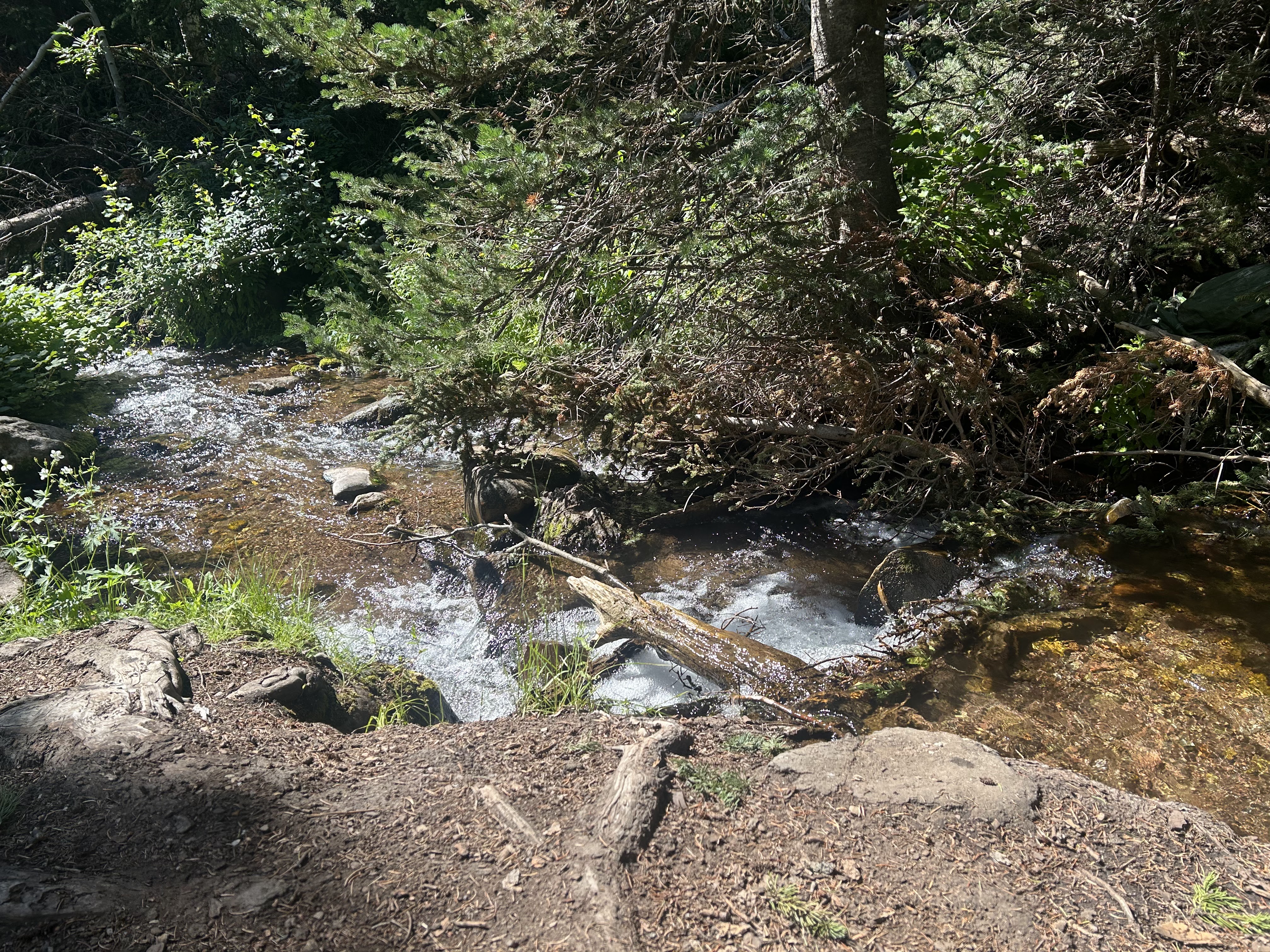
A benefit to life in Salt Lake City, Utah is the proximity of the city to the Wasatch Mountains. Recently for a hike in the mountains we drove up Mill Creek Canyon to the Upper Big Water Trailhead, just 9 miles east of the 215 Beltway in the city.
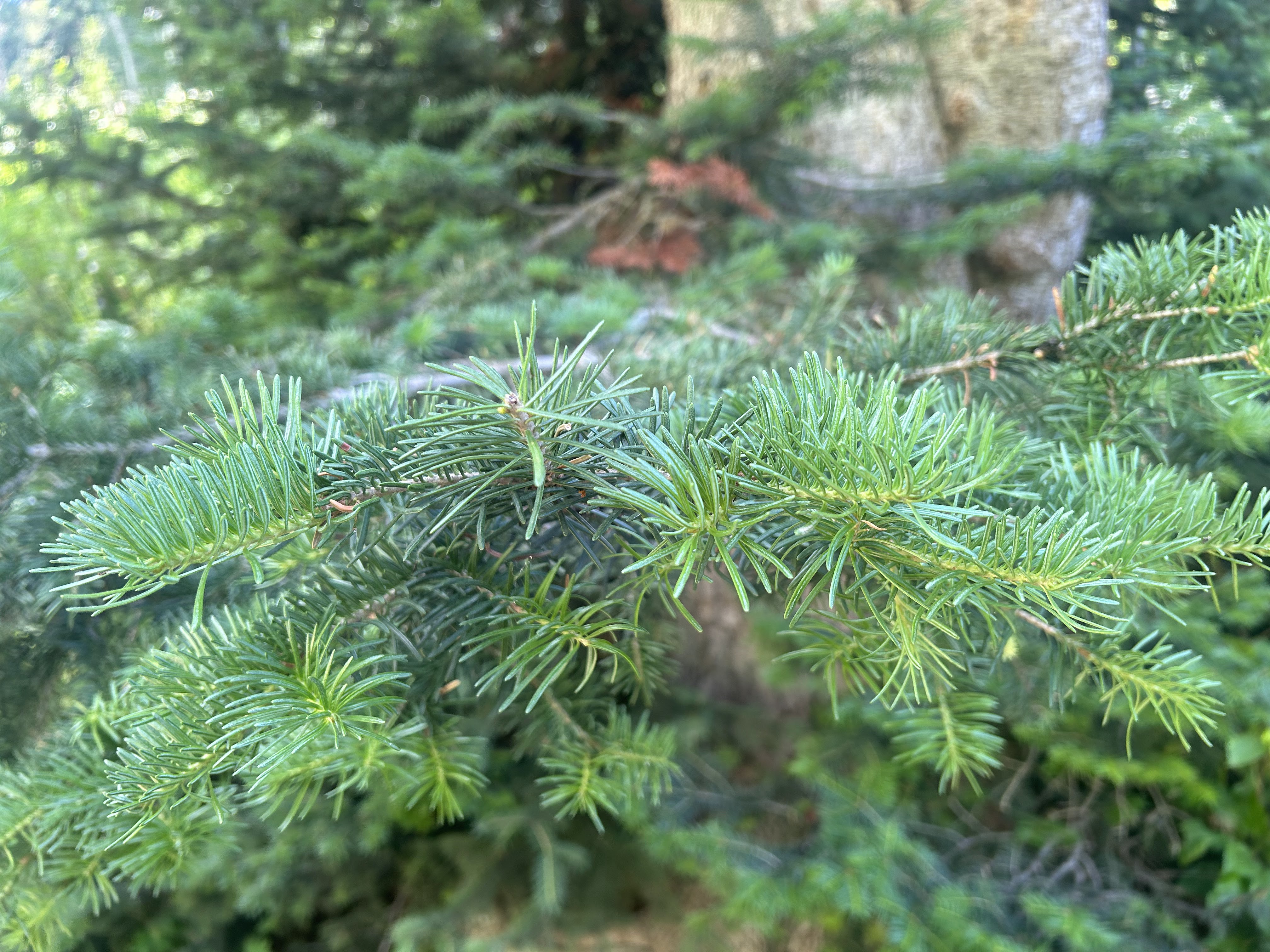
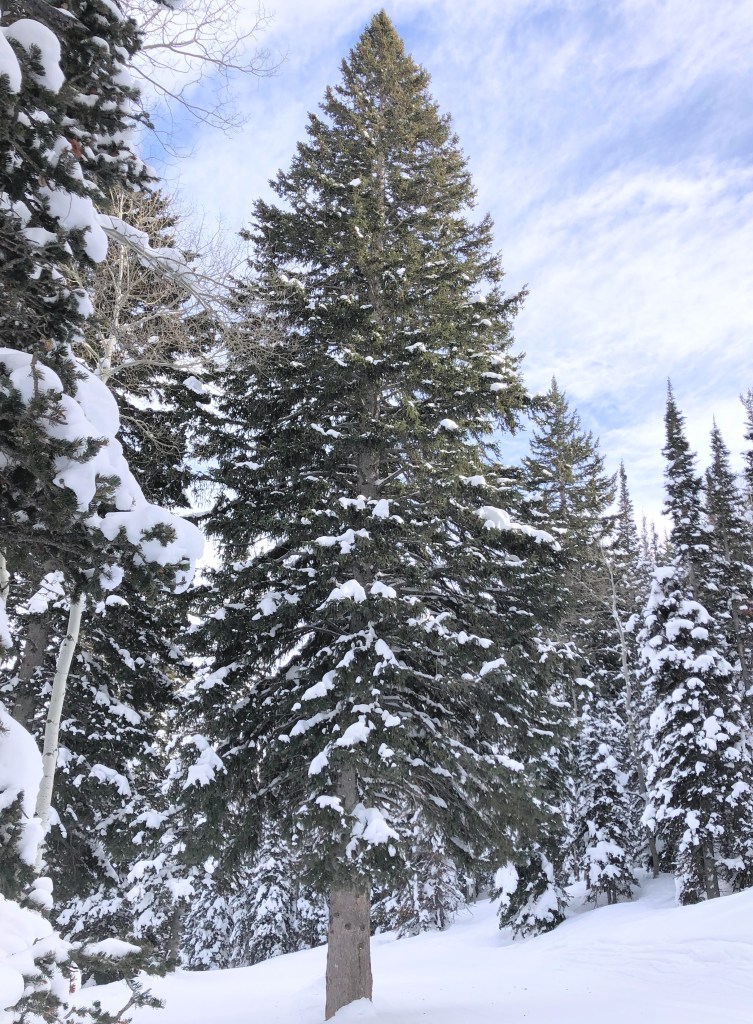
Subalpine Fir (Abies lasiocarpa)
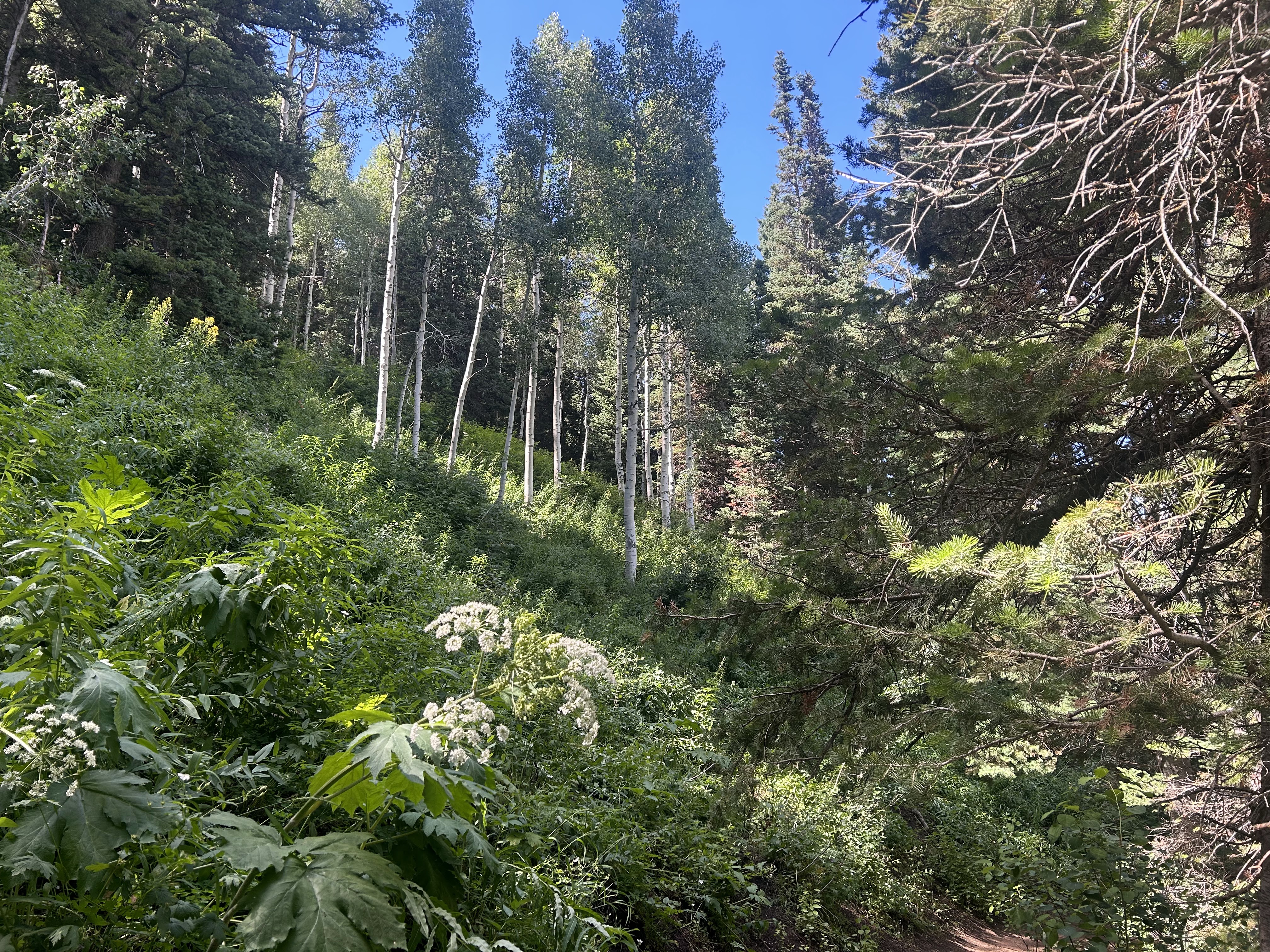
Trees in Mill Creek Canyon include Subalpine Fir, Engelmann Spruce, and Quaking Aspen.
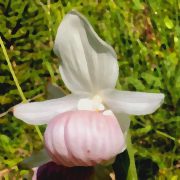
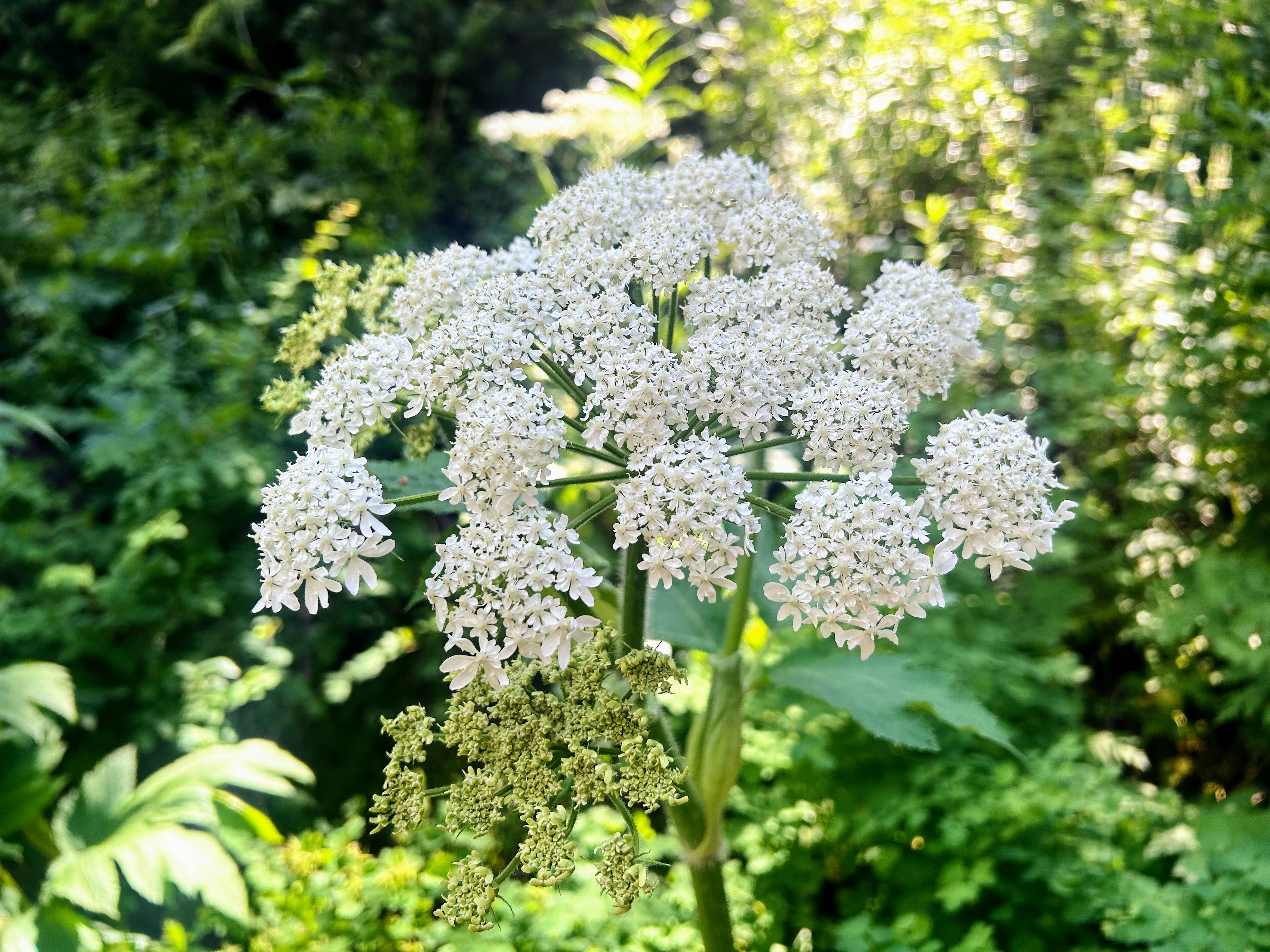
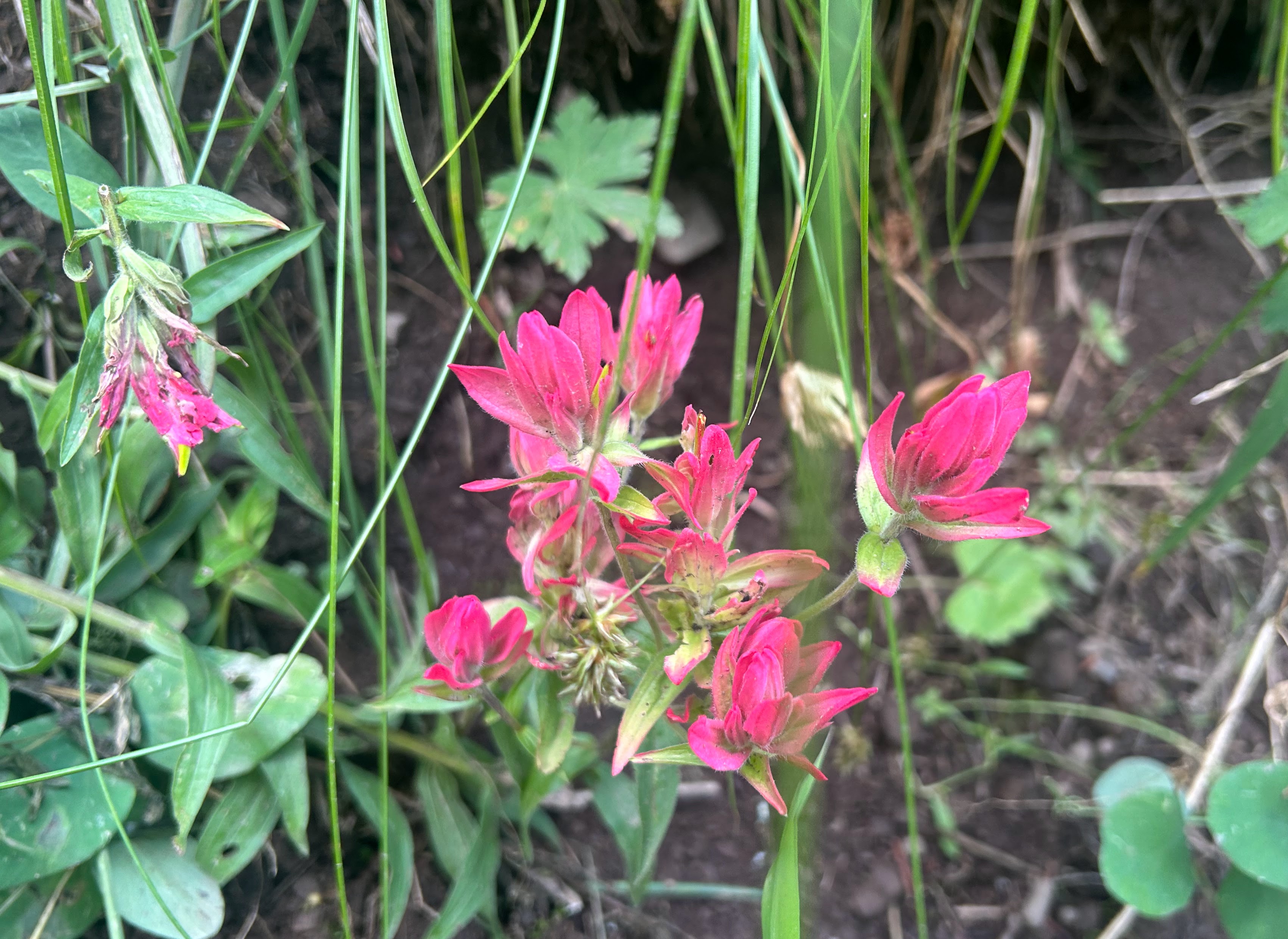
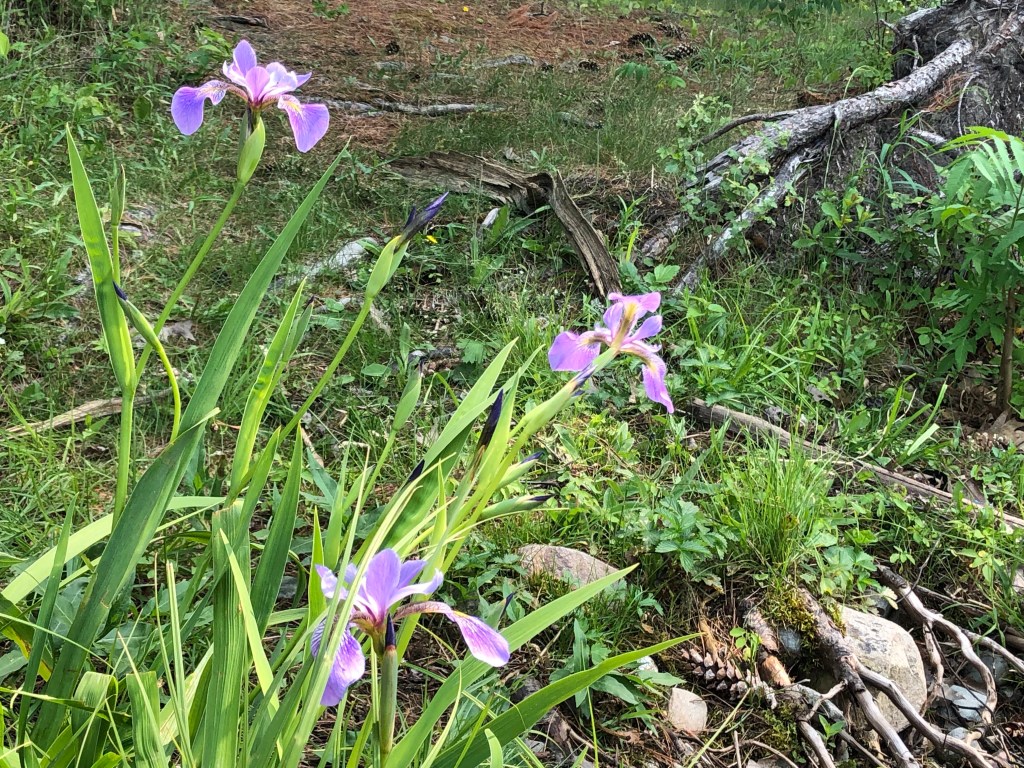
Many wildflowers were blooming on this day in early August.
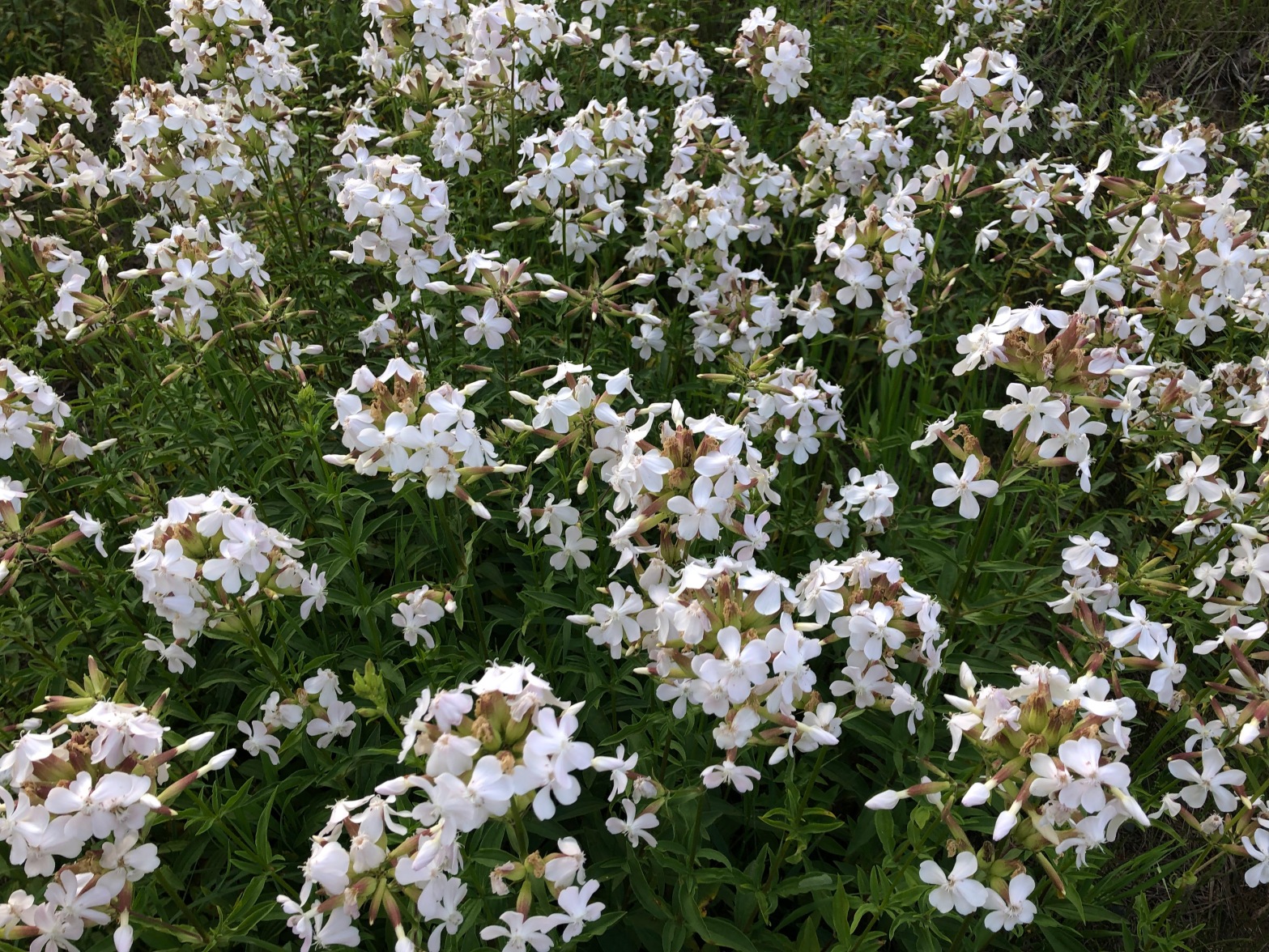
In late June, around the time of the summer solstice, nearly all the wildflowers in our area of North Central Minnesota are white. This seems unusual because other times of the year I see colorful wildflowers. May and early June have yellow and pink wildflowers, while in July through October you see magenta, yellow, and purple. The very first wildflowers of the spring are on blooming shrubs, and they are also predominantly white.
From quick online research I learned that bright white flowers are more visible to a wider range of pollinators. In particular, white attracts flies better than other colors, while bees are attracted to both white and colors. So, the prevalence of white flowers in earliest spring is understandable because there is likely more flies than bees at that time. The late June dominance of white wildflowers is not as easily explained. It could be coincidental, or maybe there is a subtle relation to available pollinators.
Bouncing Bet
Oxeye Daisy
Yarrow
Hoary Alyssum
Harebell
Of course, there is an exception. Tiny purple harebells also bloom in late June, but they are very inconspicuous.
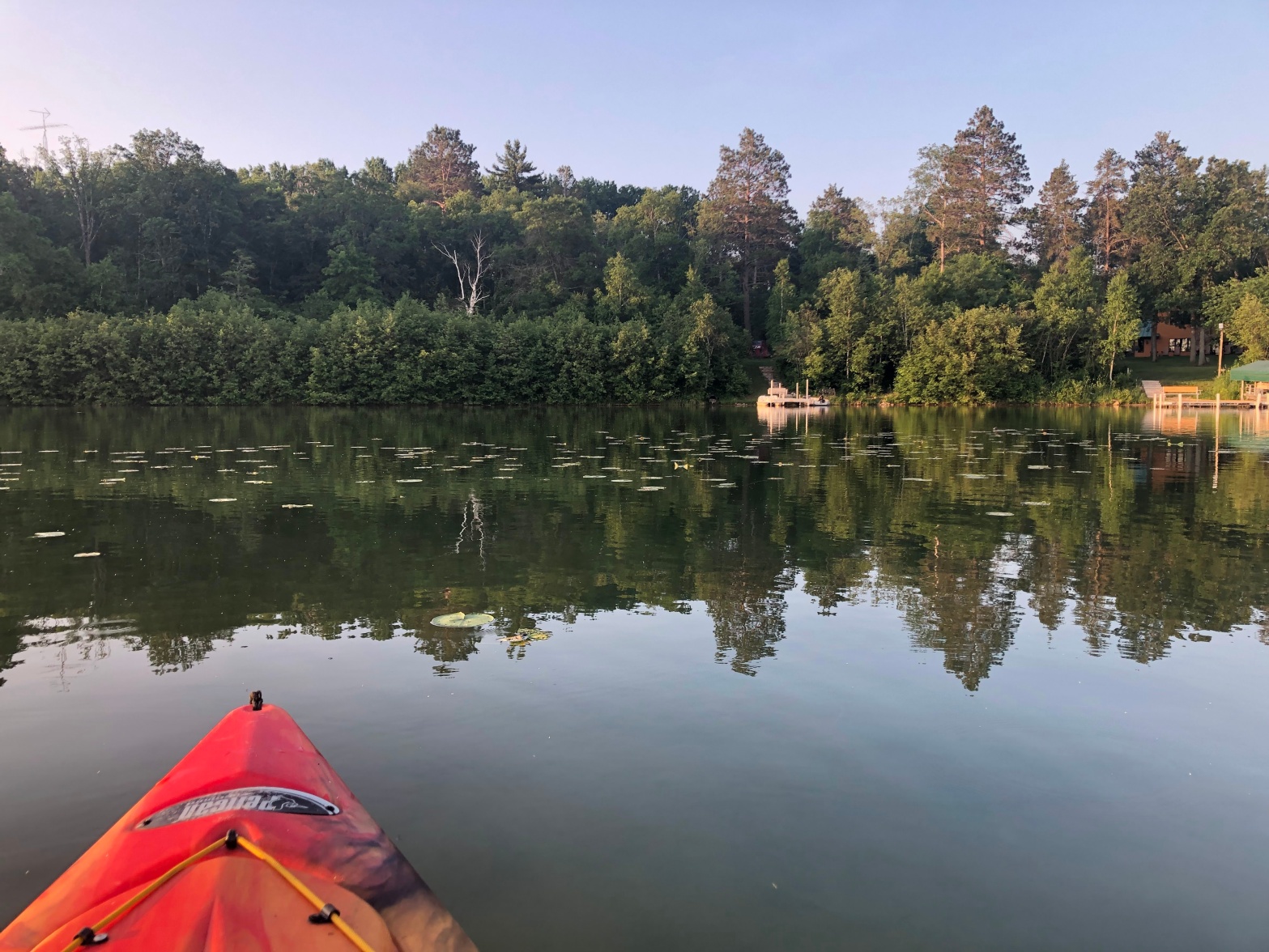
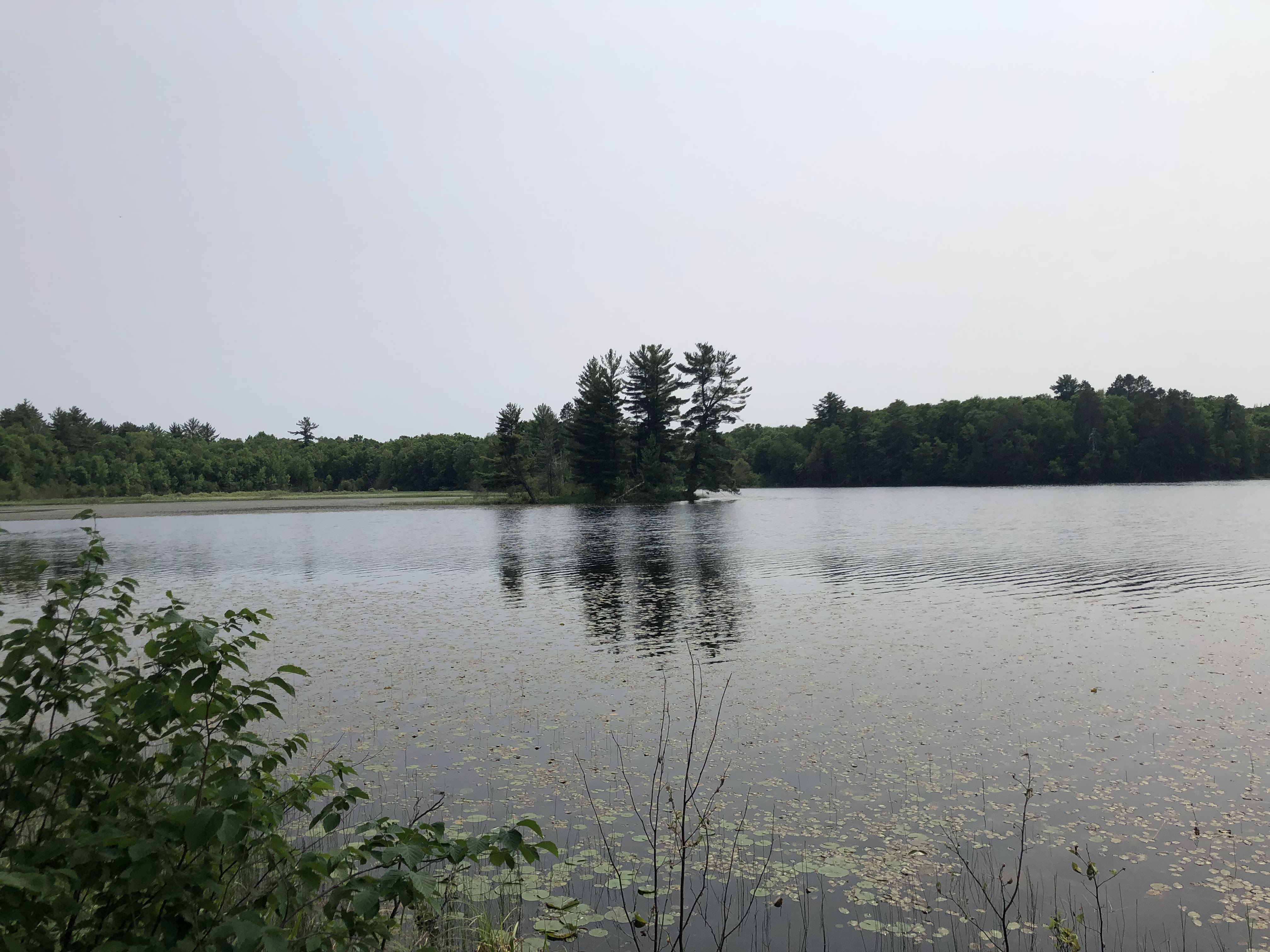
Within the last month I’ve kayaked in Utah and in Minnesota — there was quite a contrast. The pictures below illustrate how different the two places are.
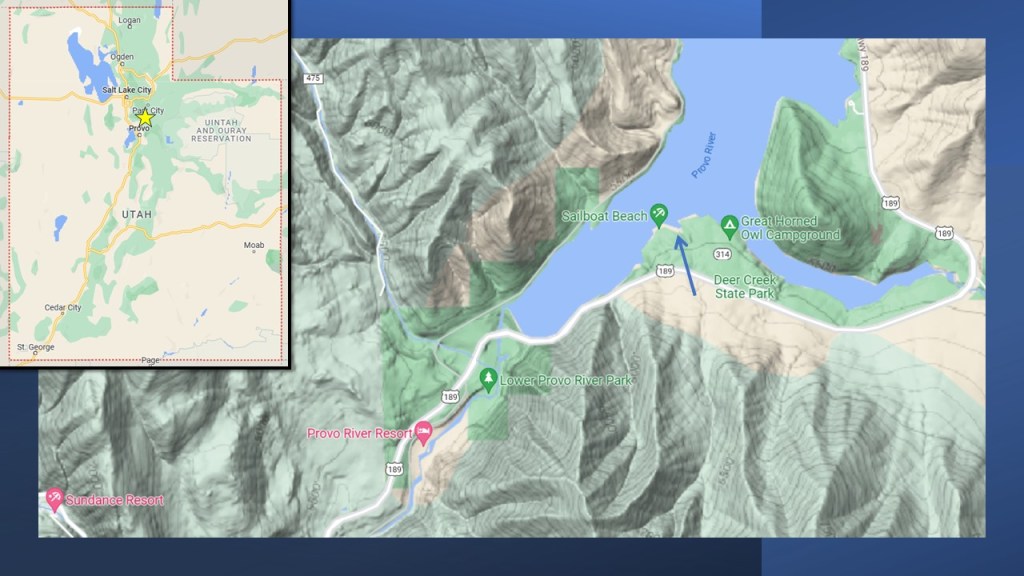
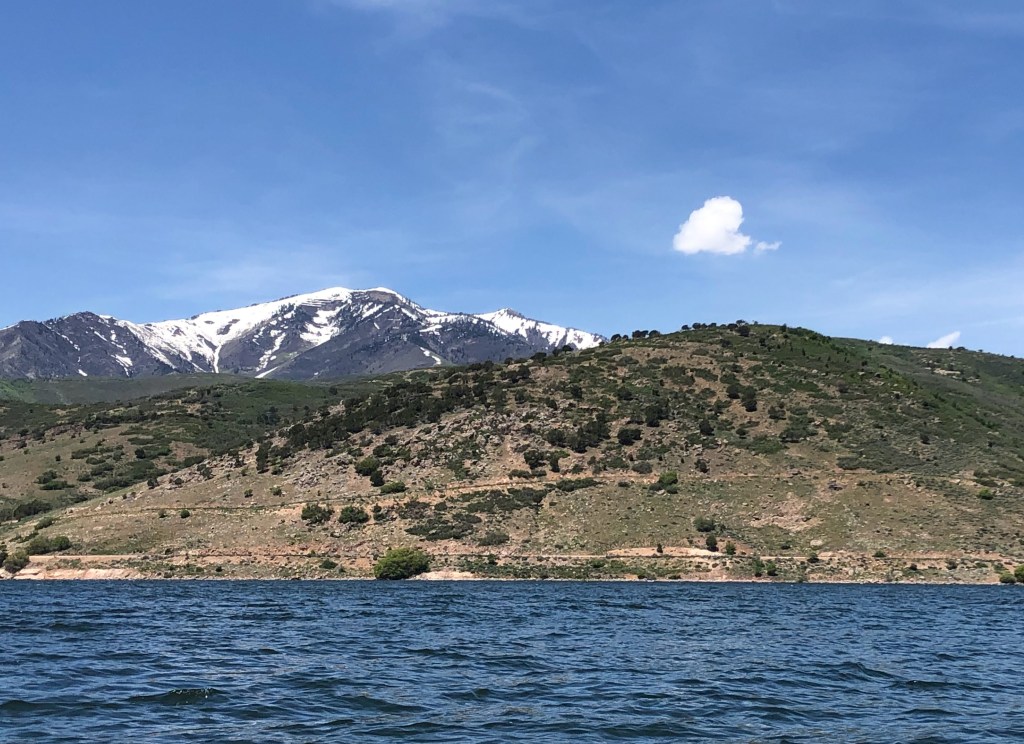
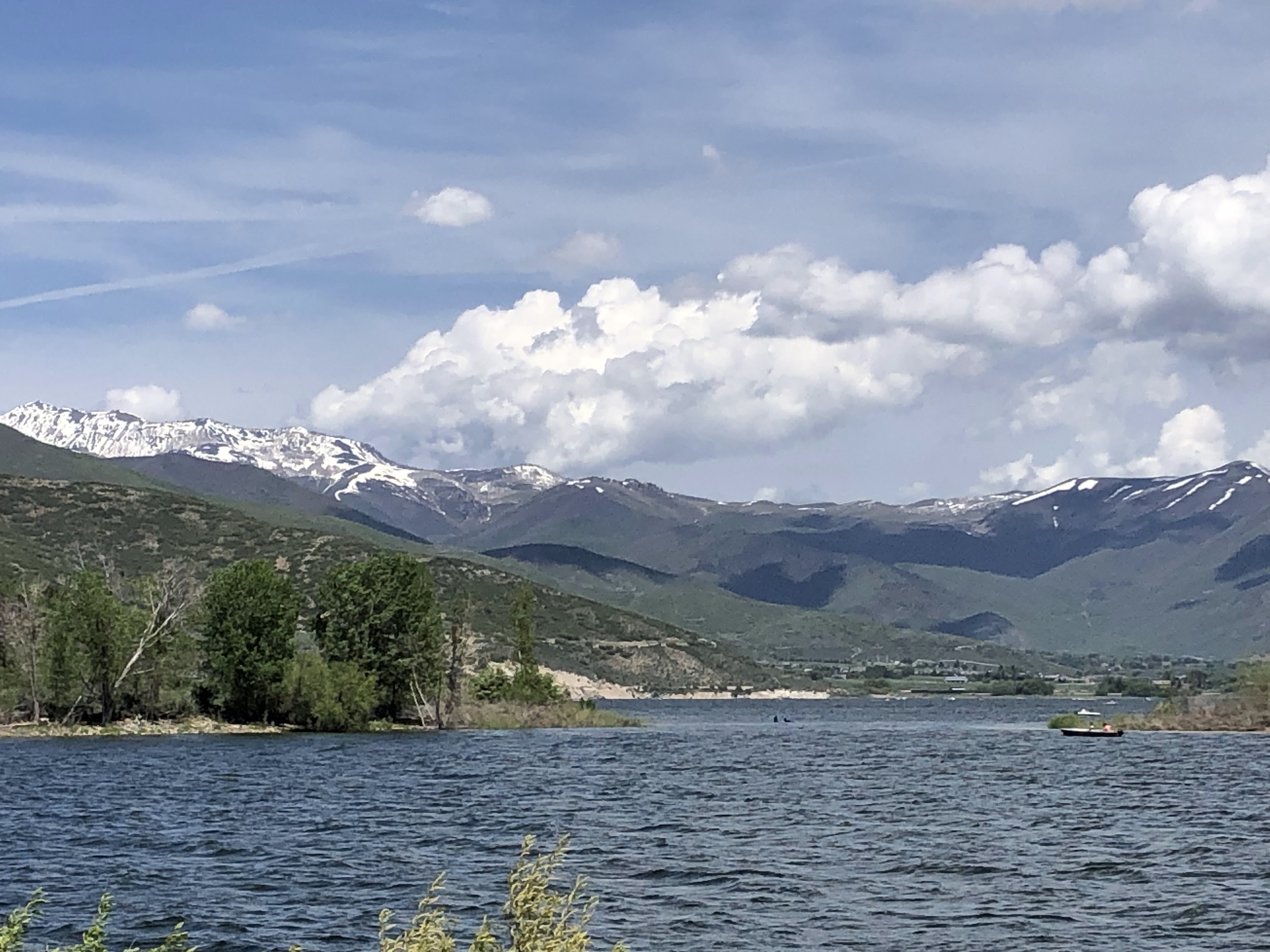
Deer Creek State Park, Utah
On Memorial Day we brought two kayaks up from Salt Lake City to Deer Creek State Park, near Heber, Utah (appreciating a YouTube video that reminds how to use our J-bar kayak carrier). The water was choppy and chilly, but the views of the still-snowy mountains were awesome.
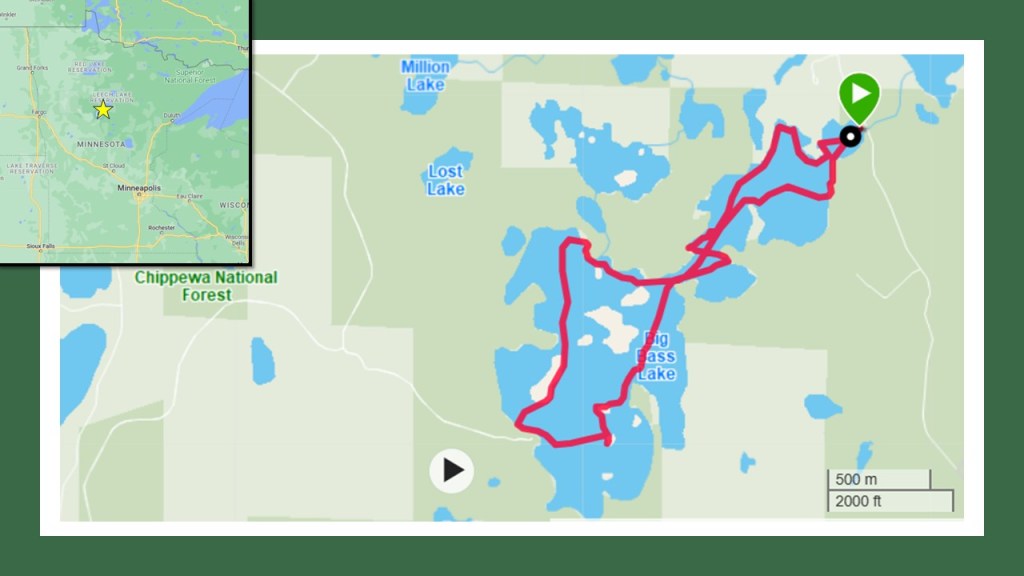
Big Bass Lake, Minnesota
After relocating for the summer to our Minnesota cabin, on June 13 we brought kayaks to Big Bass Lake, in the Chippewa National Forest. The red line in the map above shows the route we took kayaking around the lake (Garmin GPS).
Zoom in on the picture to see a fawn, whose drink from the lake we interrupted.
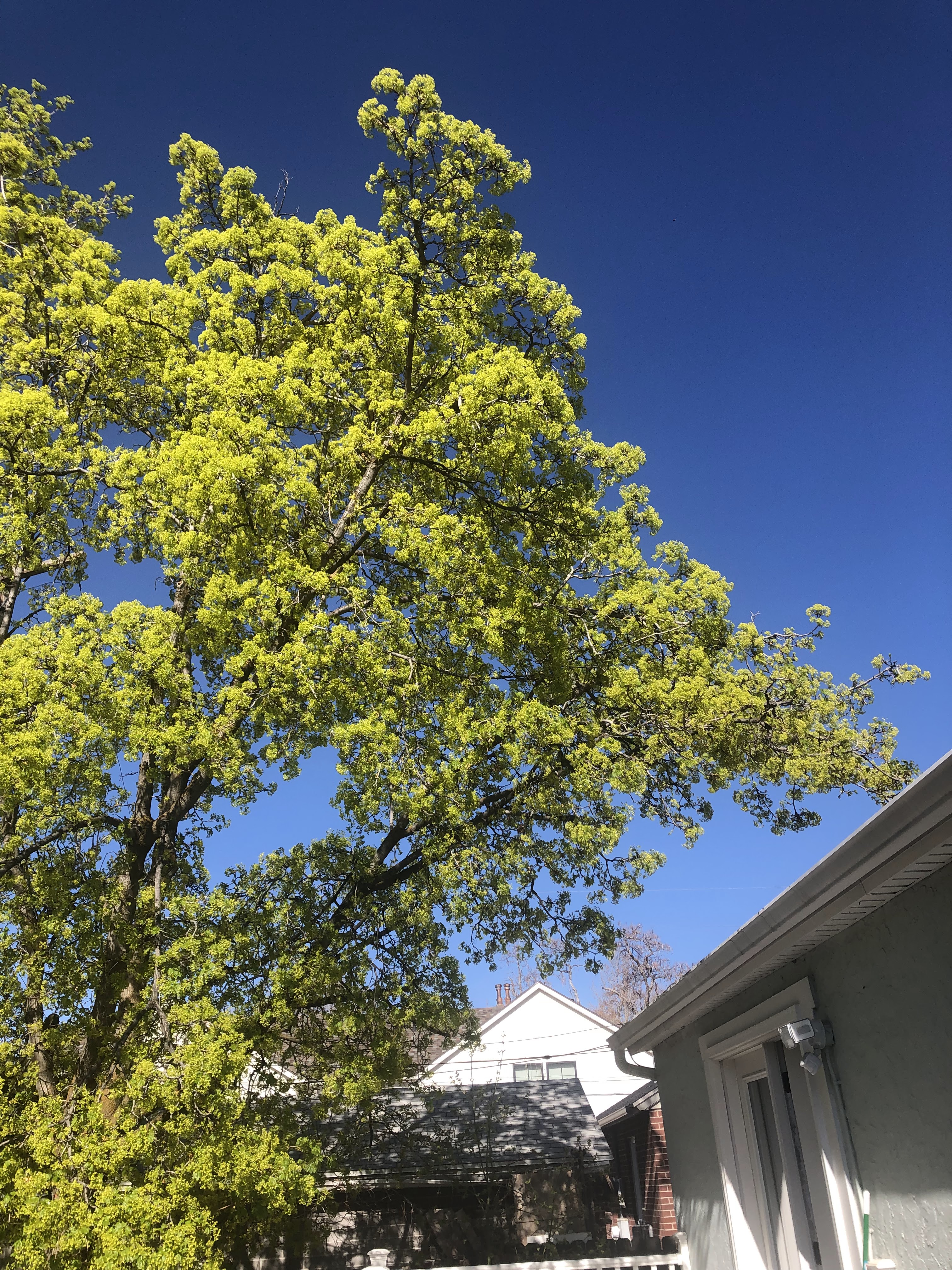
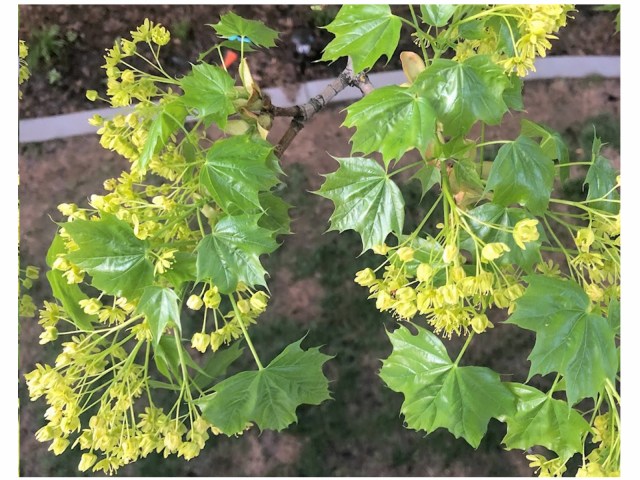
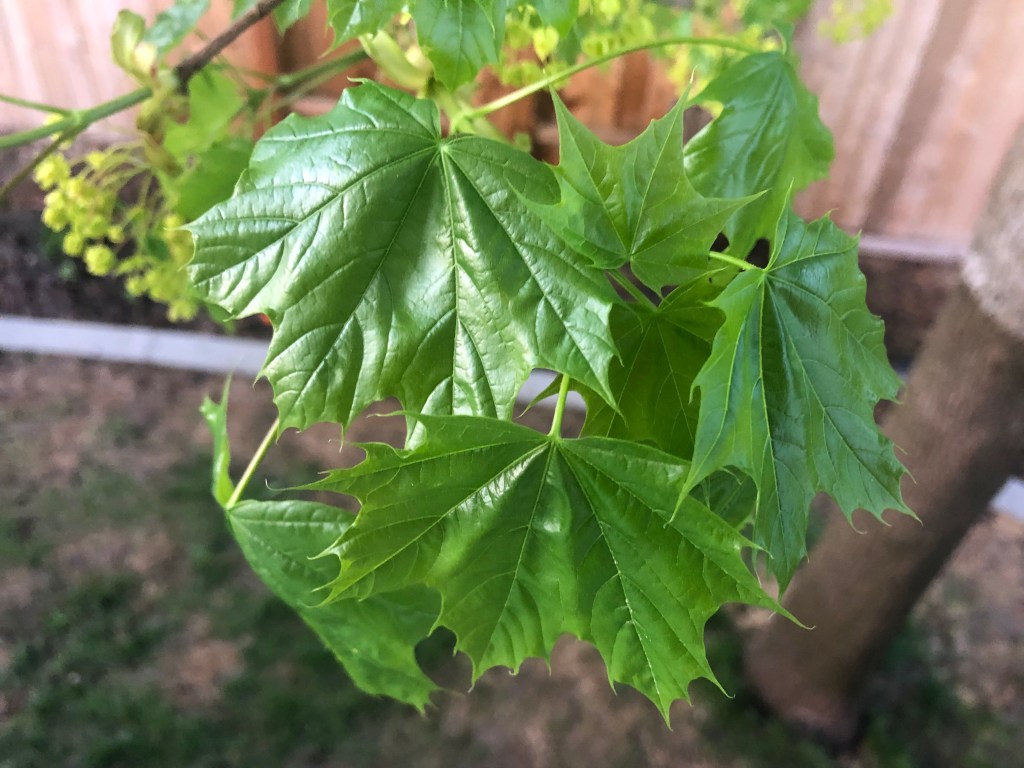
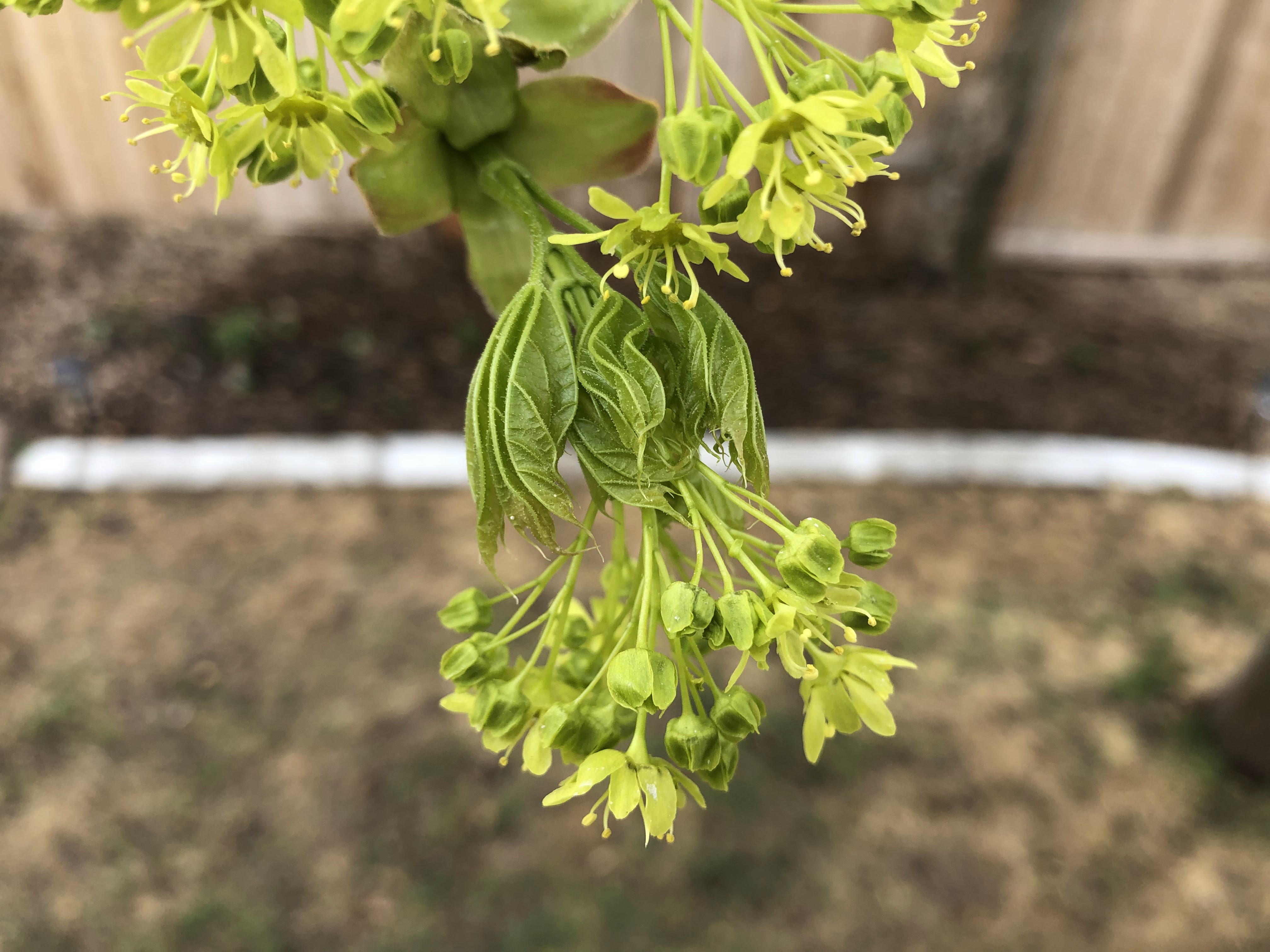
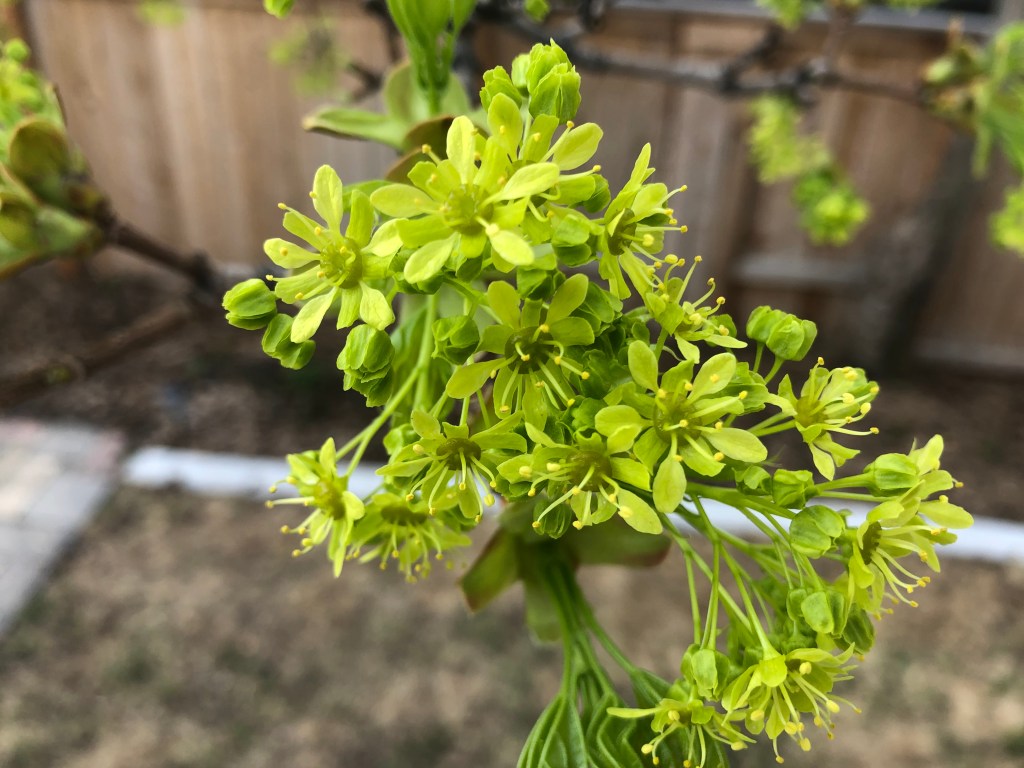
When we moved to Salt Lake City the yard of our new house had two mature Norwegian Maple trees. Norwegian Maples (Acer platanoides) are popular shade trees in the intermountain west because they grow quickly and tolerate alkaline soil and an arid climate.
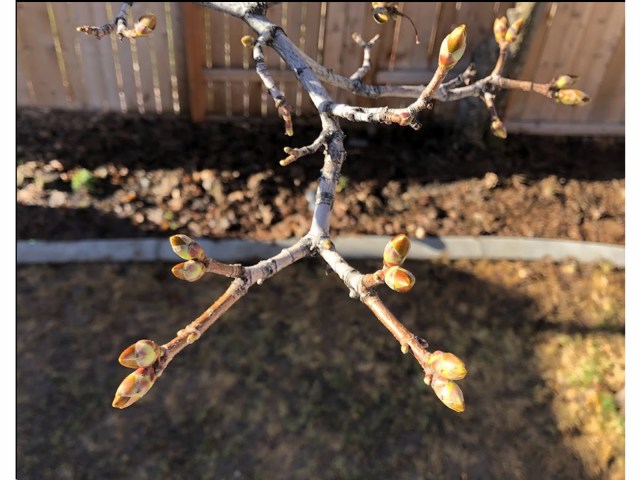
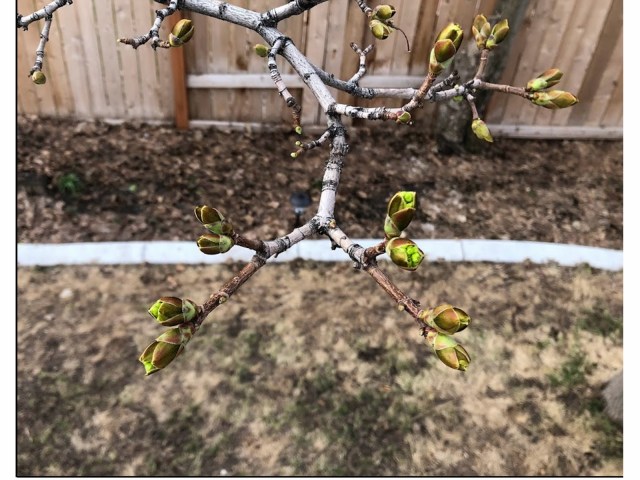
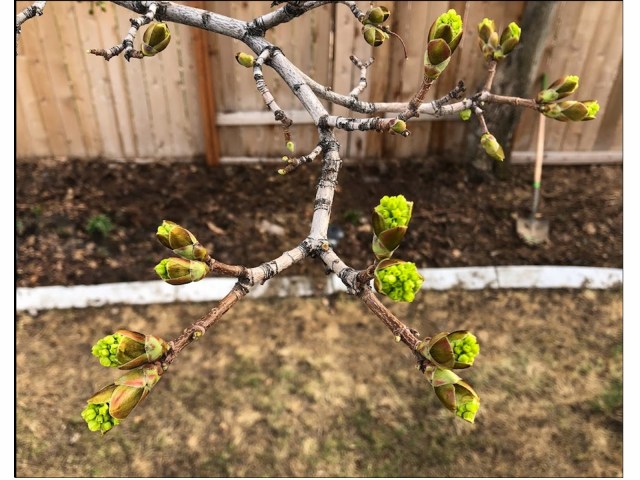
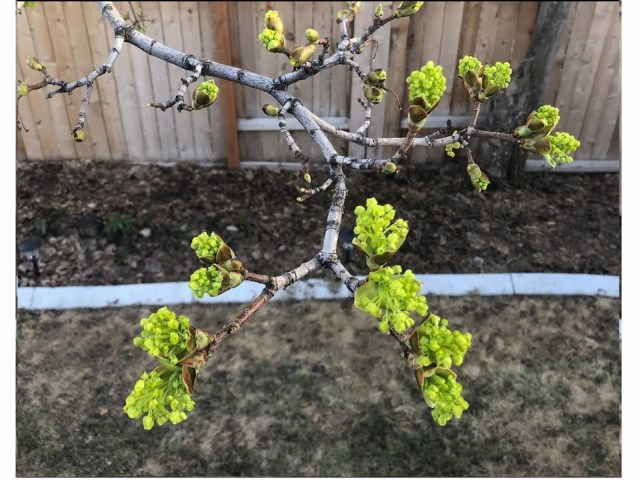
Norwegian Maple in mid-April in Salt Lake City backyard.
Norwegian Maples are native to Central Europe, and were introduced to the United States in the mid-1700’s. They are commonly used in this country as shade trees, particularly as replacements for American Elms that were lost to Dutch elm disease in the 1960’s.
There are significant drawbacks to Norwegian Maples. They are considered an invasive species and can out-compete native trees because they are very hardy and reproduce quickly, each tree producing huge numbers of seeds. Norwegian Maple sales are actually banned in Massachusetts and New Hampshire.
Norwegian Maple could be considered too effective of a shade tree. Its numerous large leaves create such dense shade that grass struggles to grow beneath it. The tree drops all these leaves very late in fall, so raking up after them is challenging. This year our trees still hadn’t dropped their leaves when snow started falling.
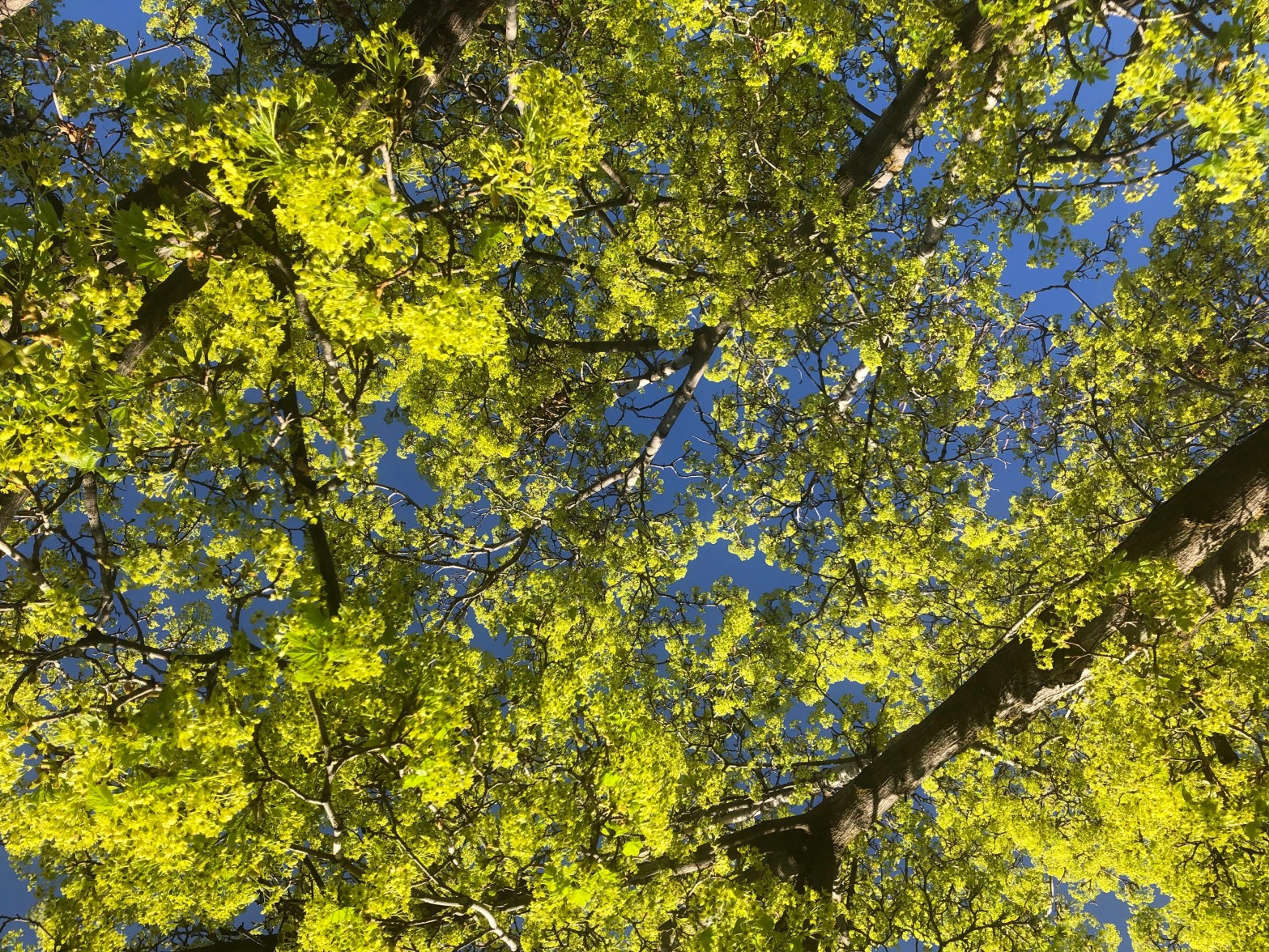
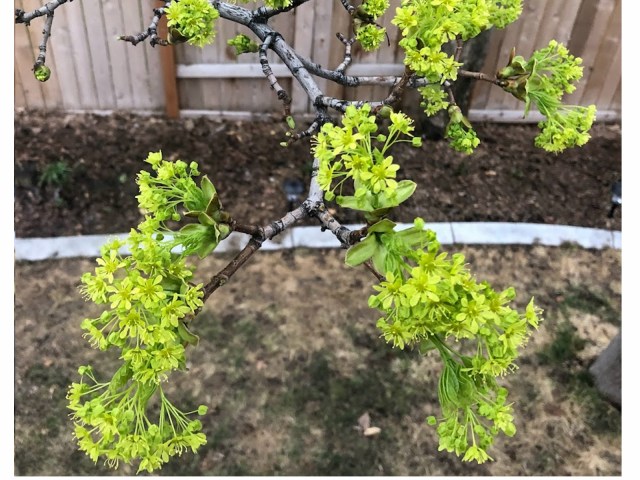
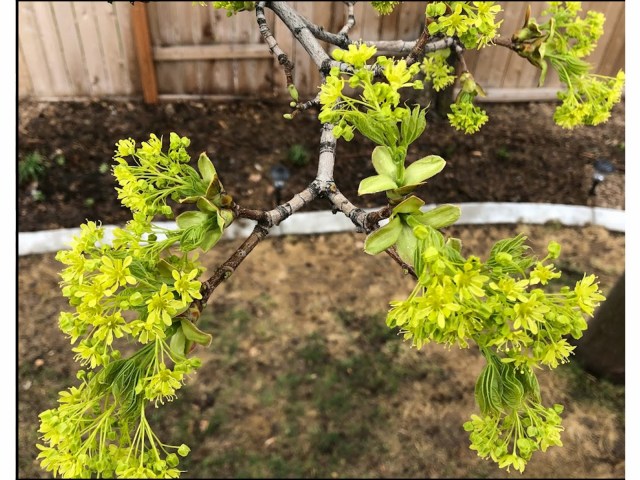
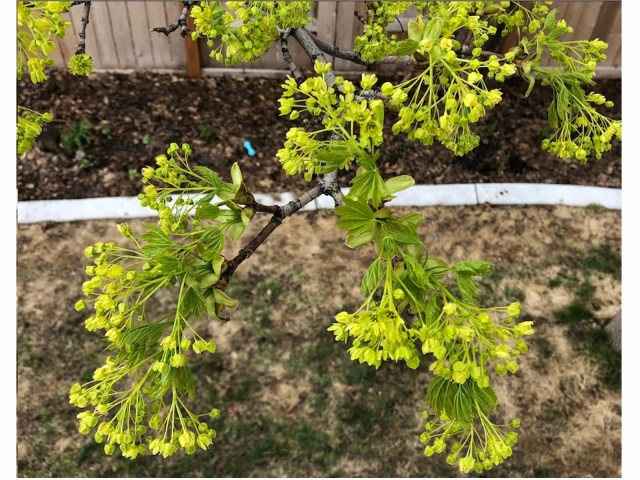
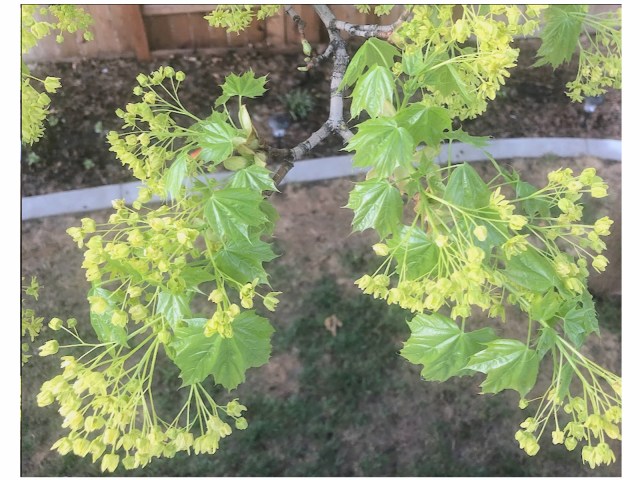
In springtime Norwegian Maples first produce clusters of small light-green flowers, followed by its new leaves. The slideshow below shows this progression of buds to flowers to leaves on one branch of our backyard tree from April 10-30.
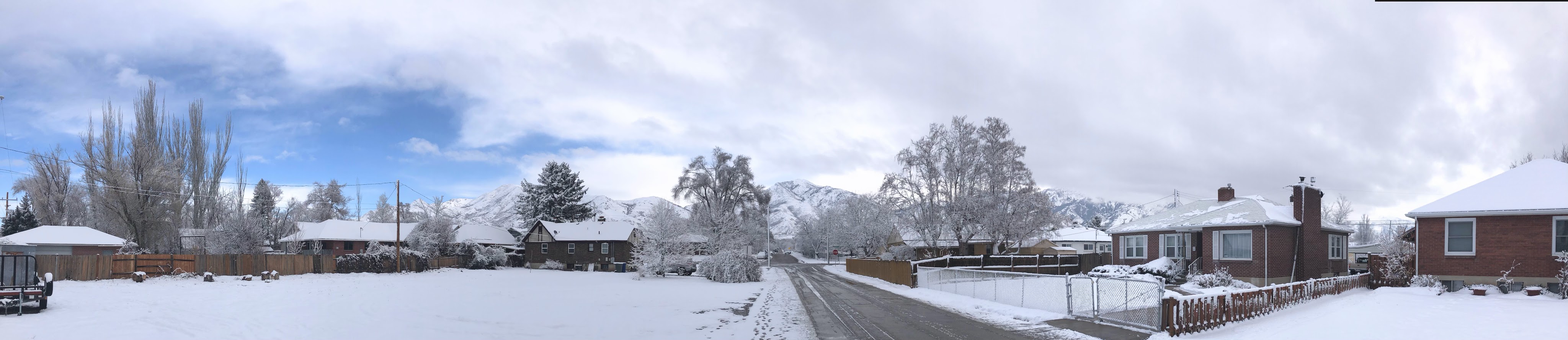
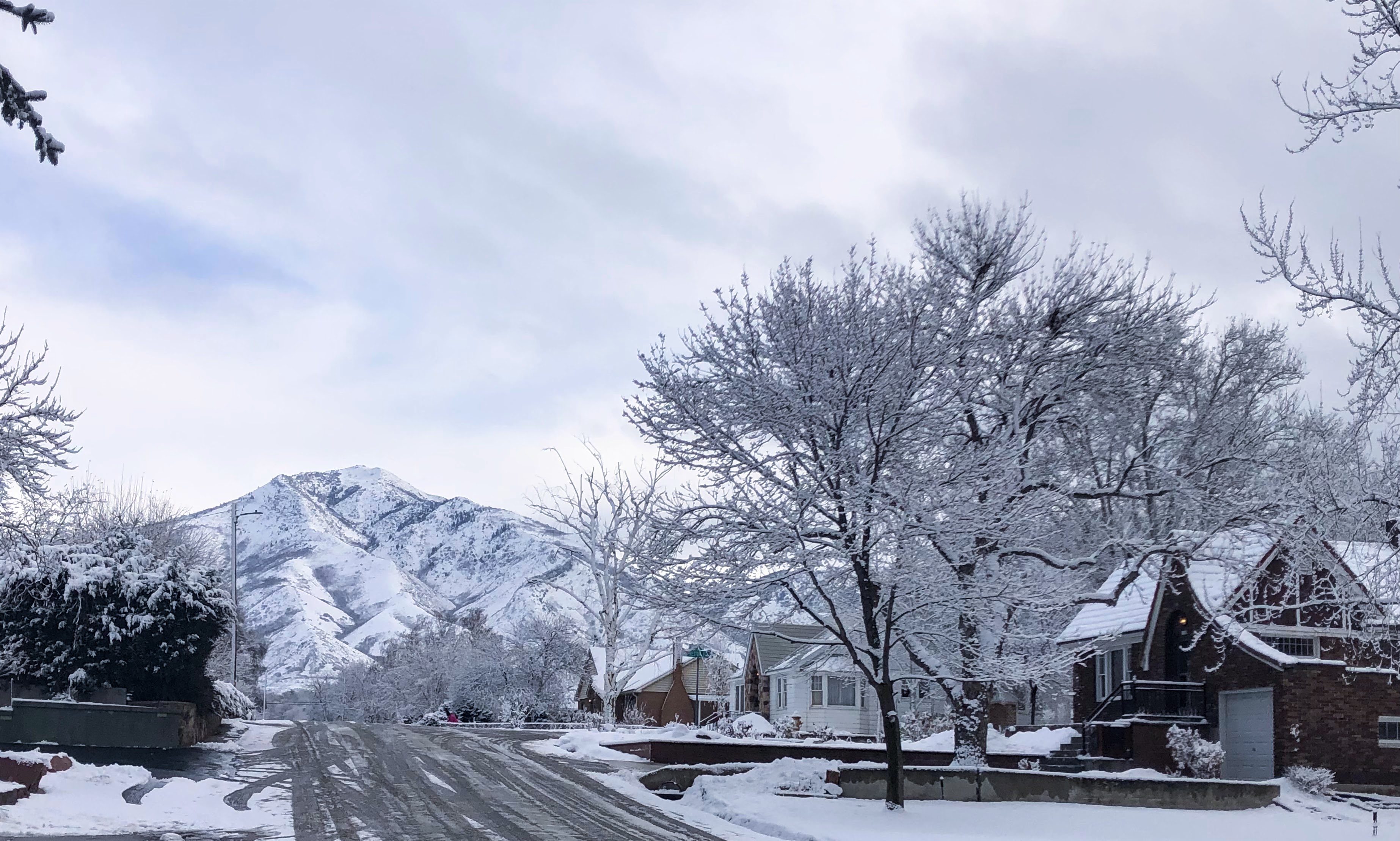
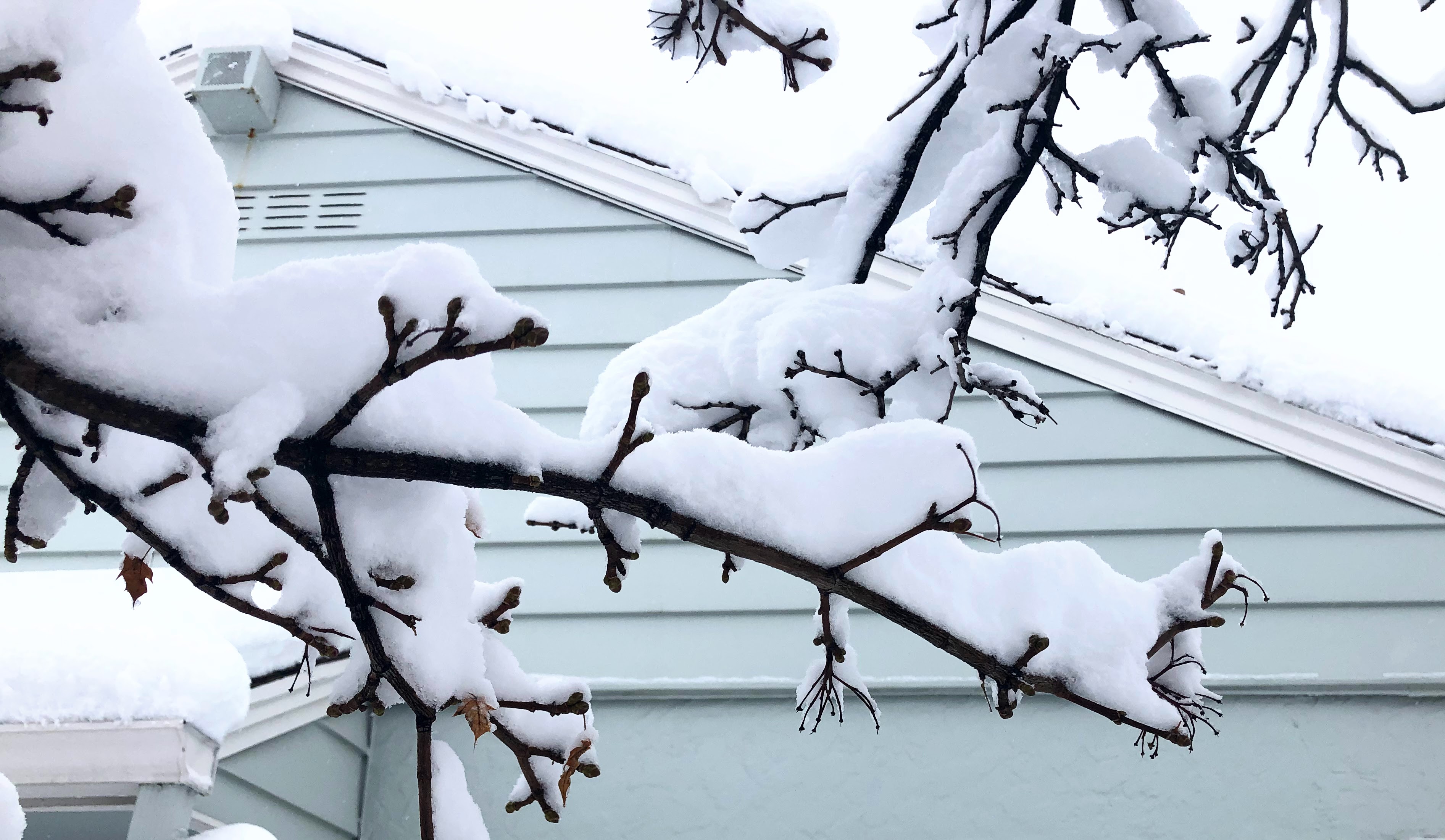
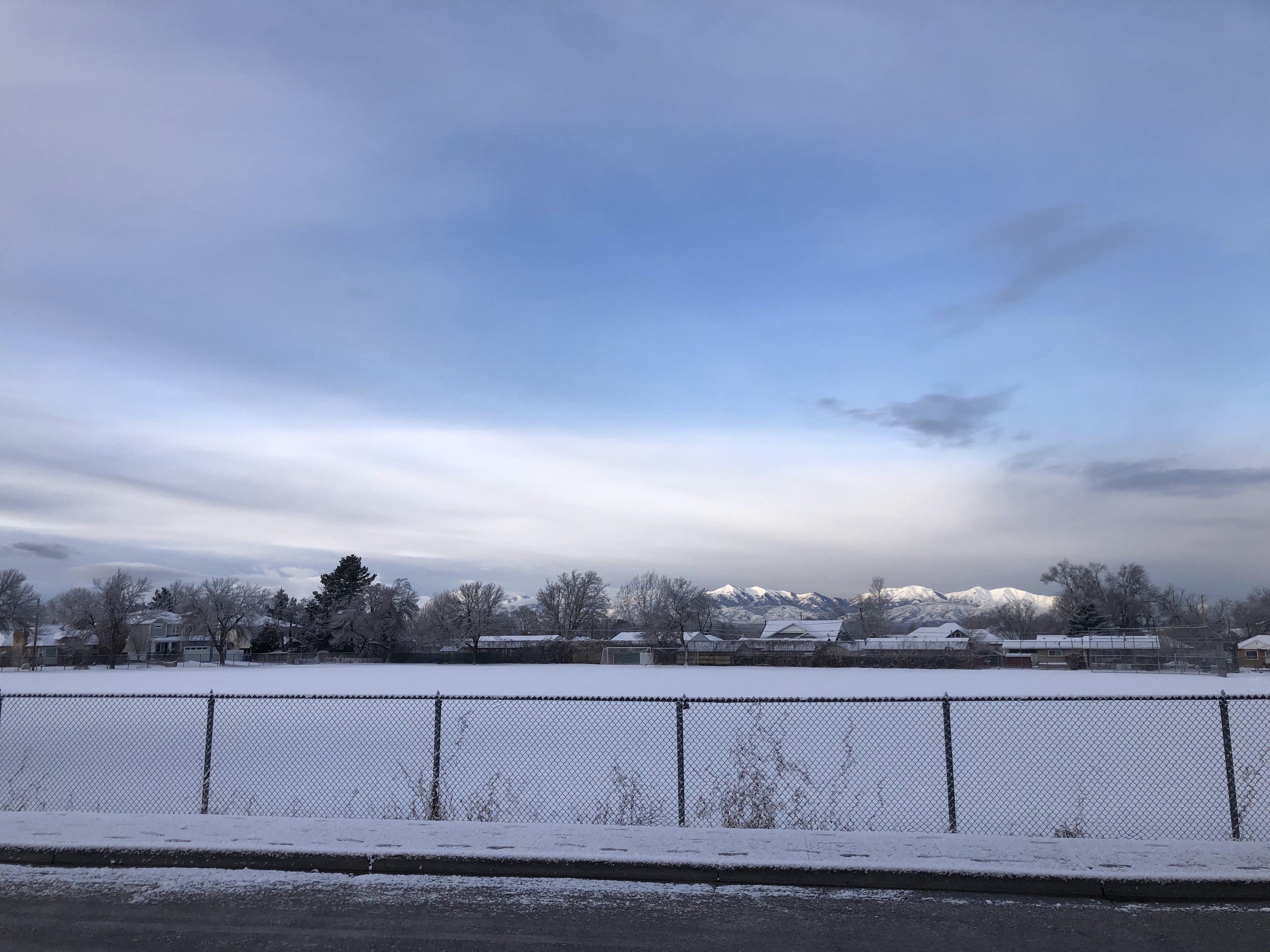
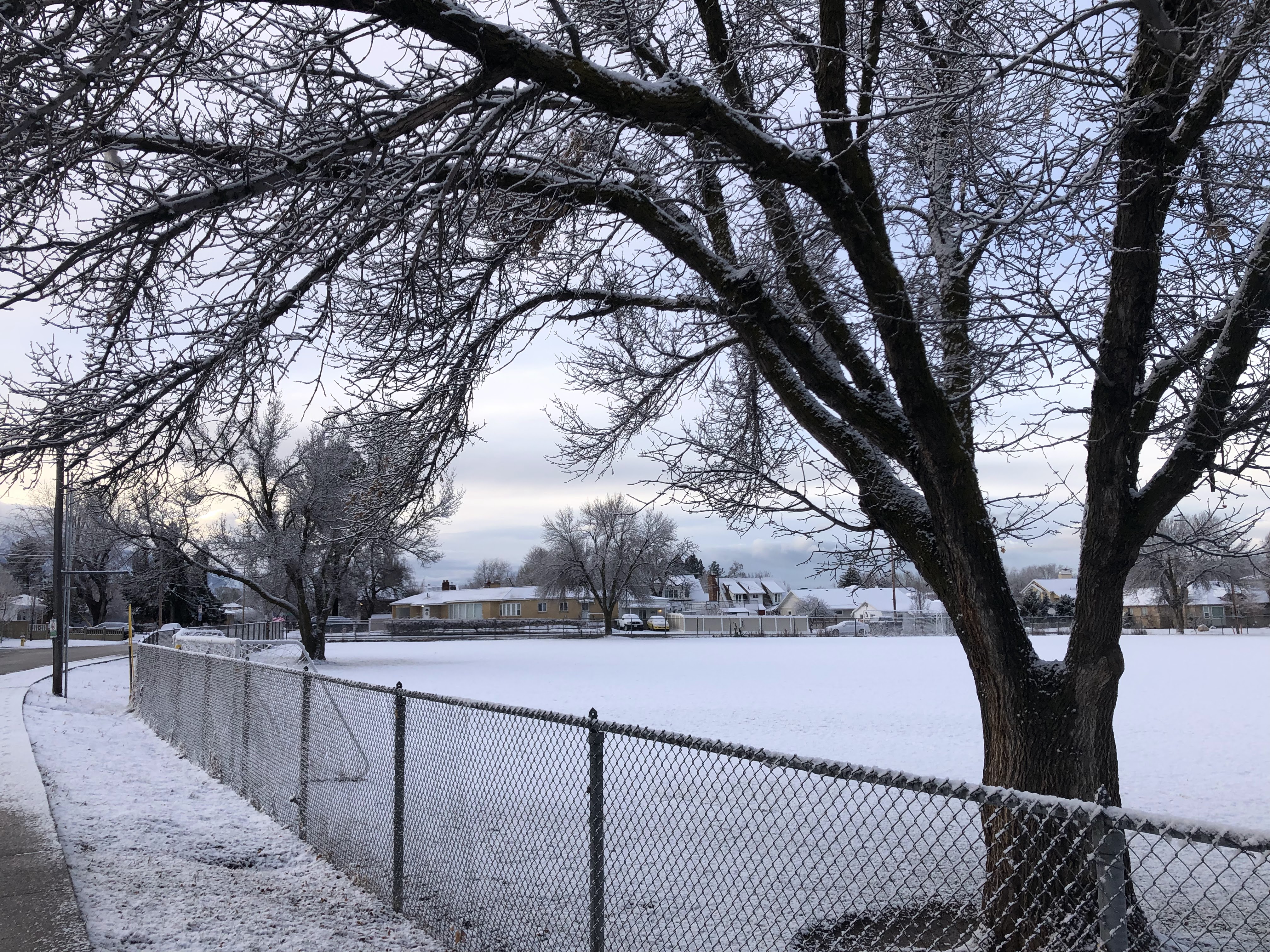
2023 has been an exceptionally snowy winter in Salt Lake City. Nearby Alta ski resort reports 616″ of snowfall as of March 4, the snowiest in their 43 recorded seasons. This post shares photos of this winter in SLC from January through March.
Morning after March 5 snowfall.
February 22 snow
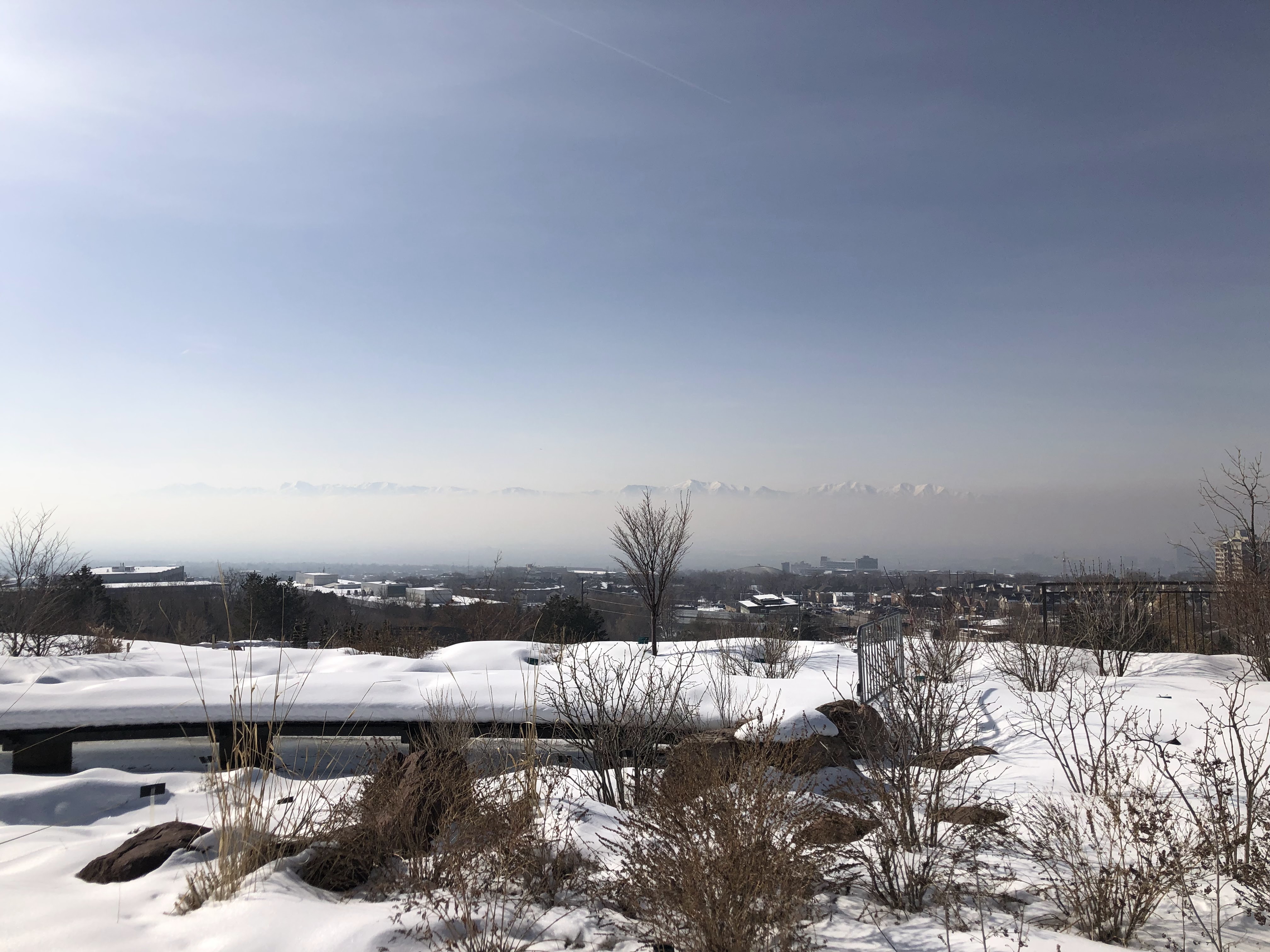
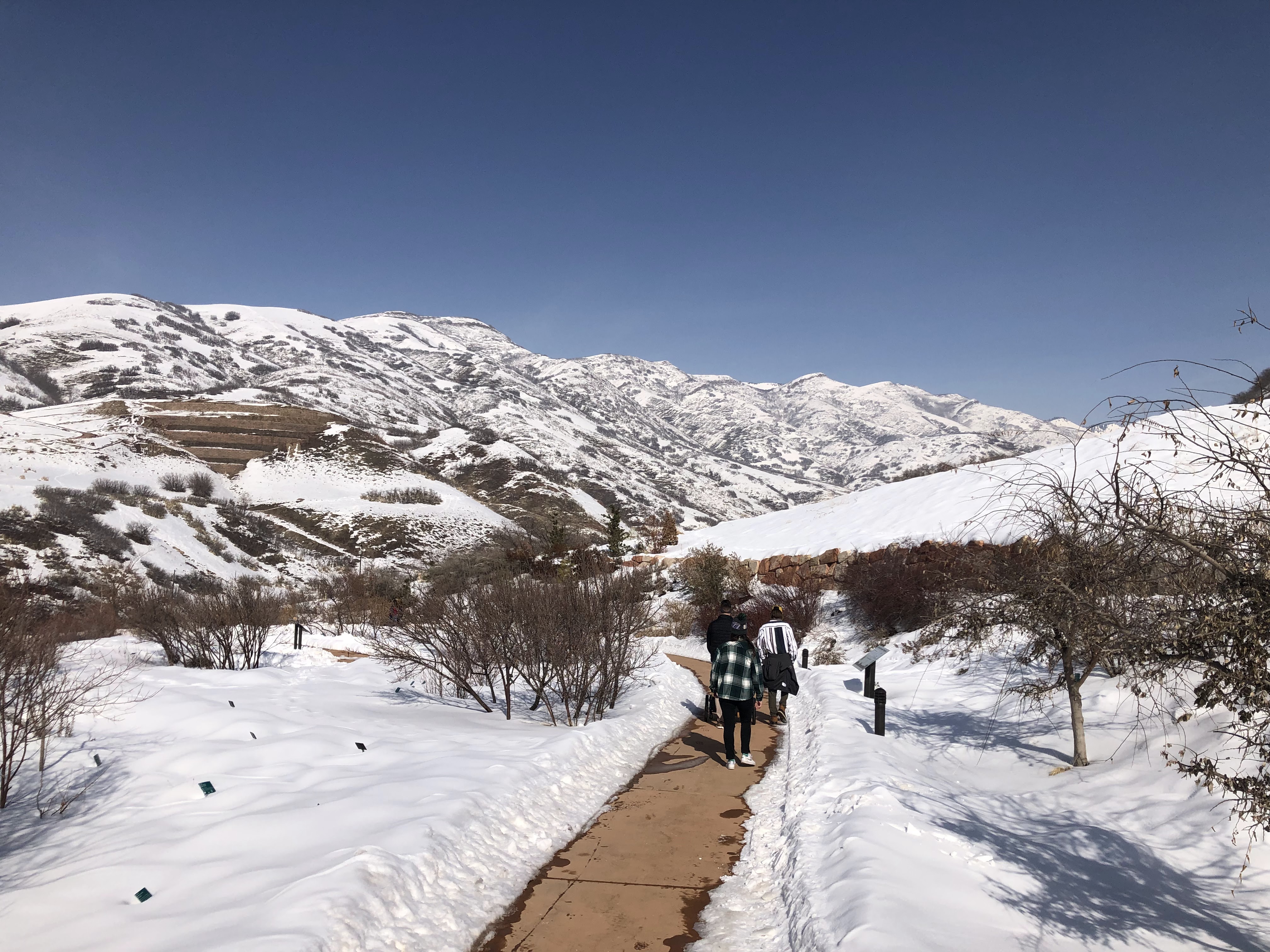
Snowy Red Butte Gardens, on the east side of SLC, February 4. Looking down on the city to the west the common winter haze is very evident. The haze is particularly bad during temperature inversions, when temperature at the surface of the SLC valley is colder than temperatures aloft.
January 16, 2023
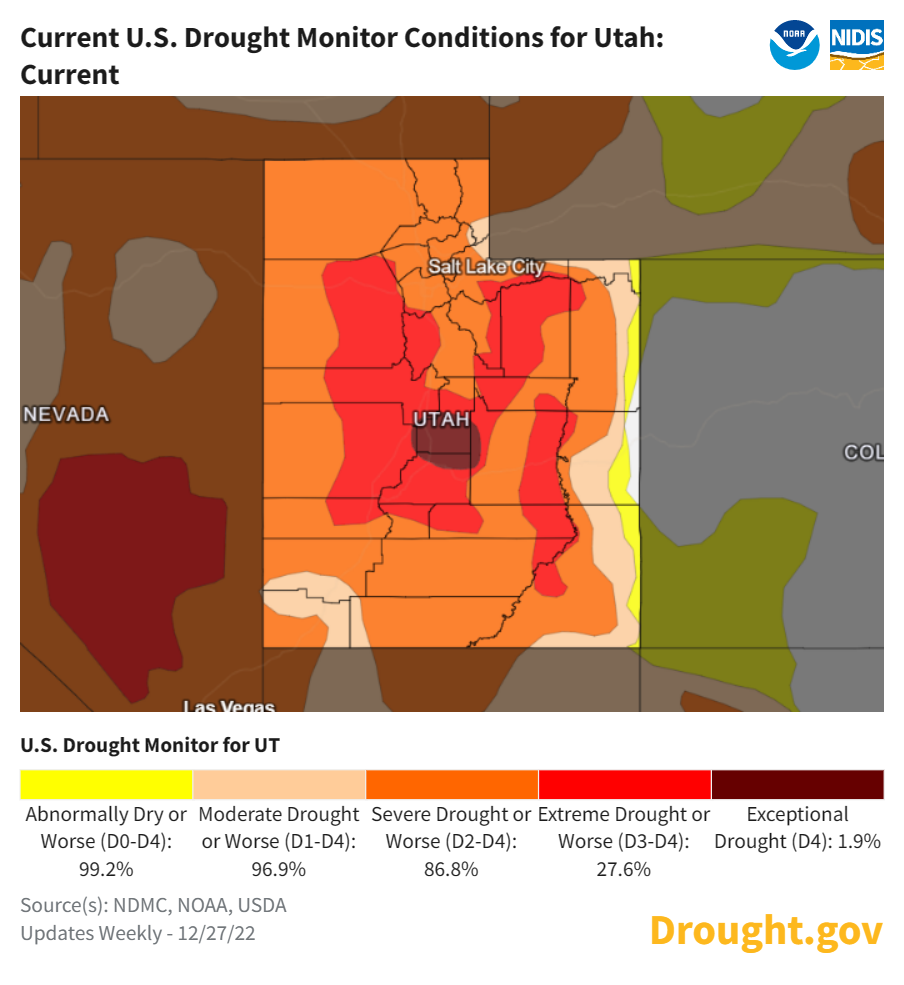
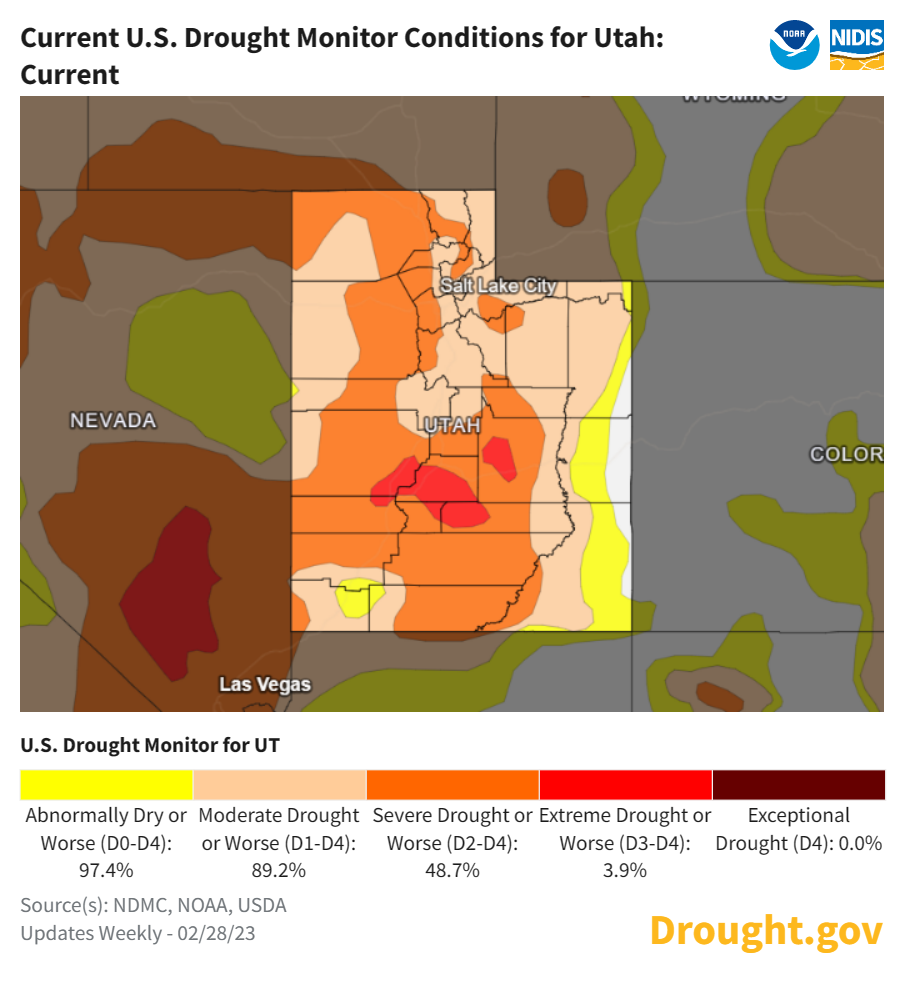
This snowy winter has improved Utah’s drought conditions, as can be seen by comparing the drought severity maps from December 27, 2022, and February 28, 2023. More than one snowy winter is needed though to address water issues like the drying up of the Great Salt Lake.
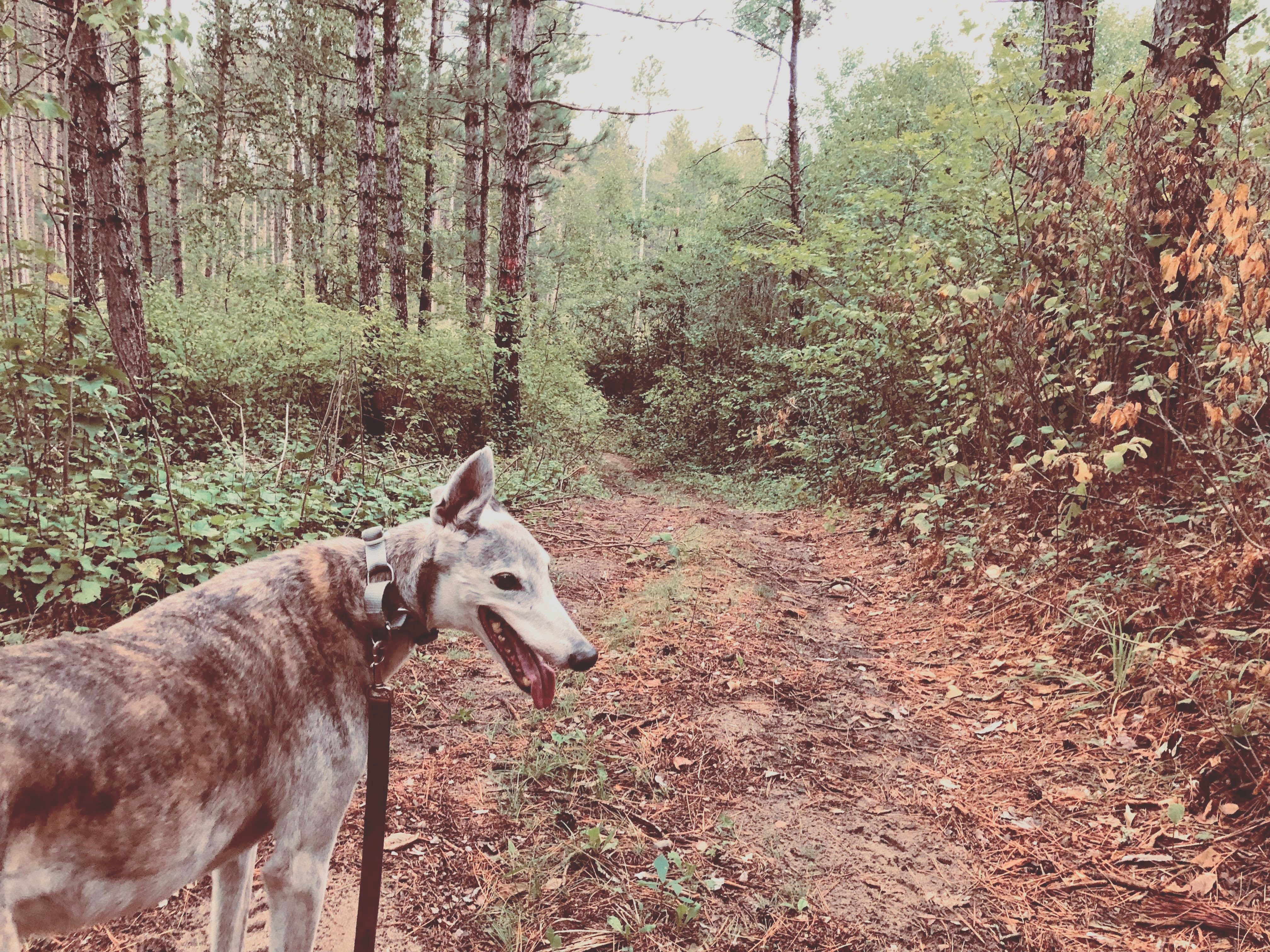
This week our beloved greyhound Blue had to be put to sleep after reaching nearly 14 years. This was a very sad occasion, but we were lucky to have lived with Blue for more than 9 years after adopting him from a greyhound rescue organization.
Greyhounds are calm, loving and loyal companions as well as being amazing athletes. Saying that we “rescued” Blue seems inaccurate to me. He was a valued member of our family who will be missed greatly.
On a chilly day with his buddy RoxieHis last photo
Blue was bred as a racing greyhound; he raced 20 times under the name Deep Dark Blue. Basic information about him given on a greyhound racing website is shown below.
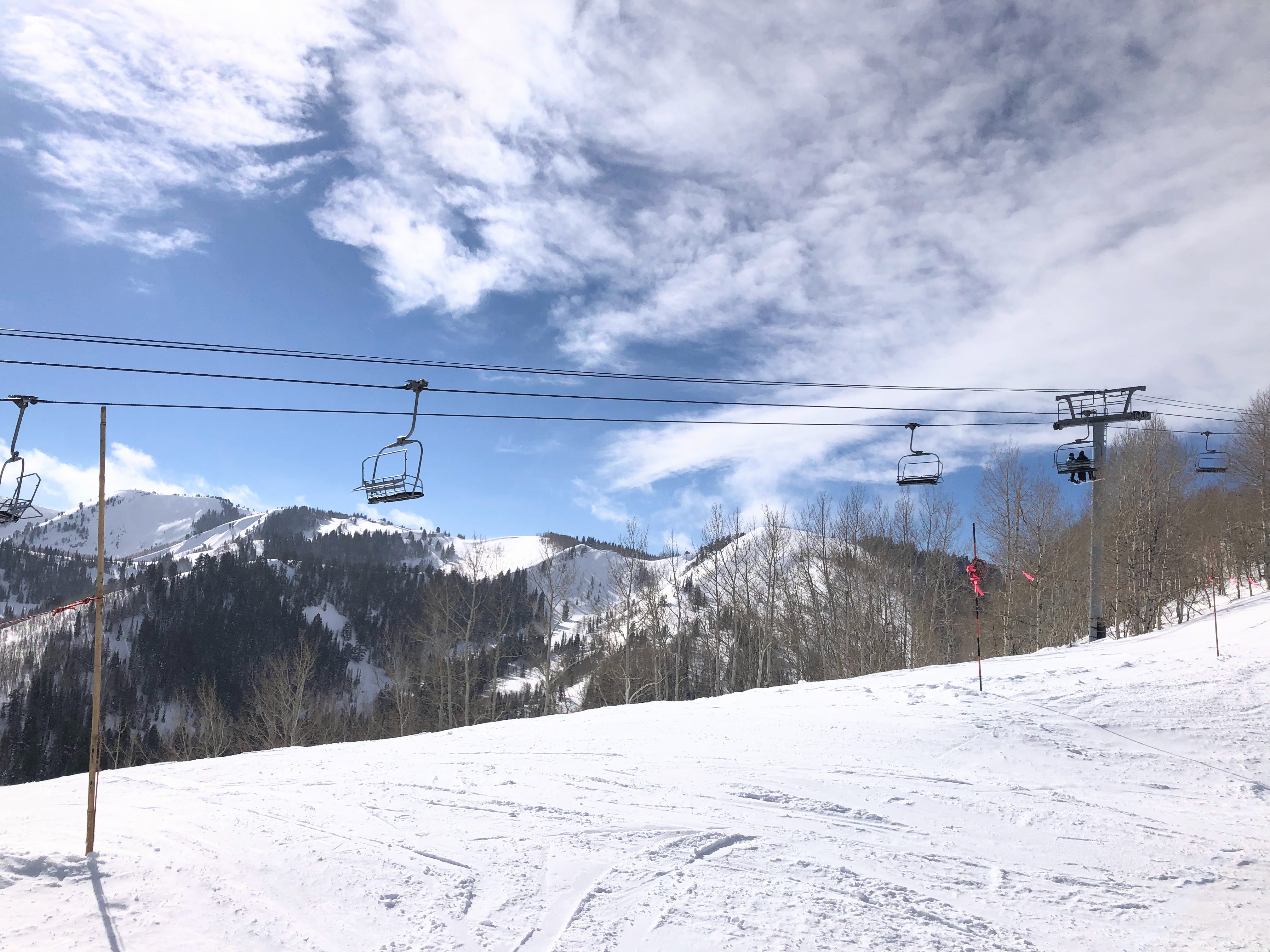
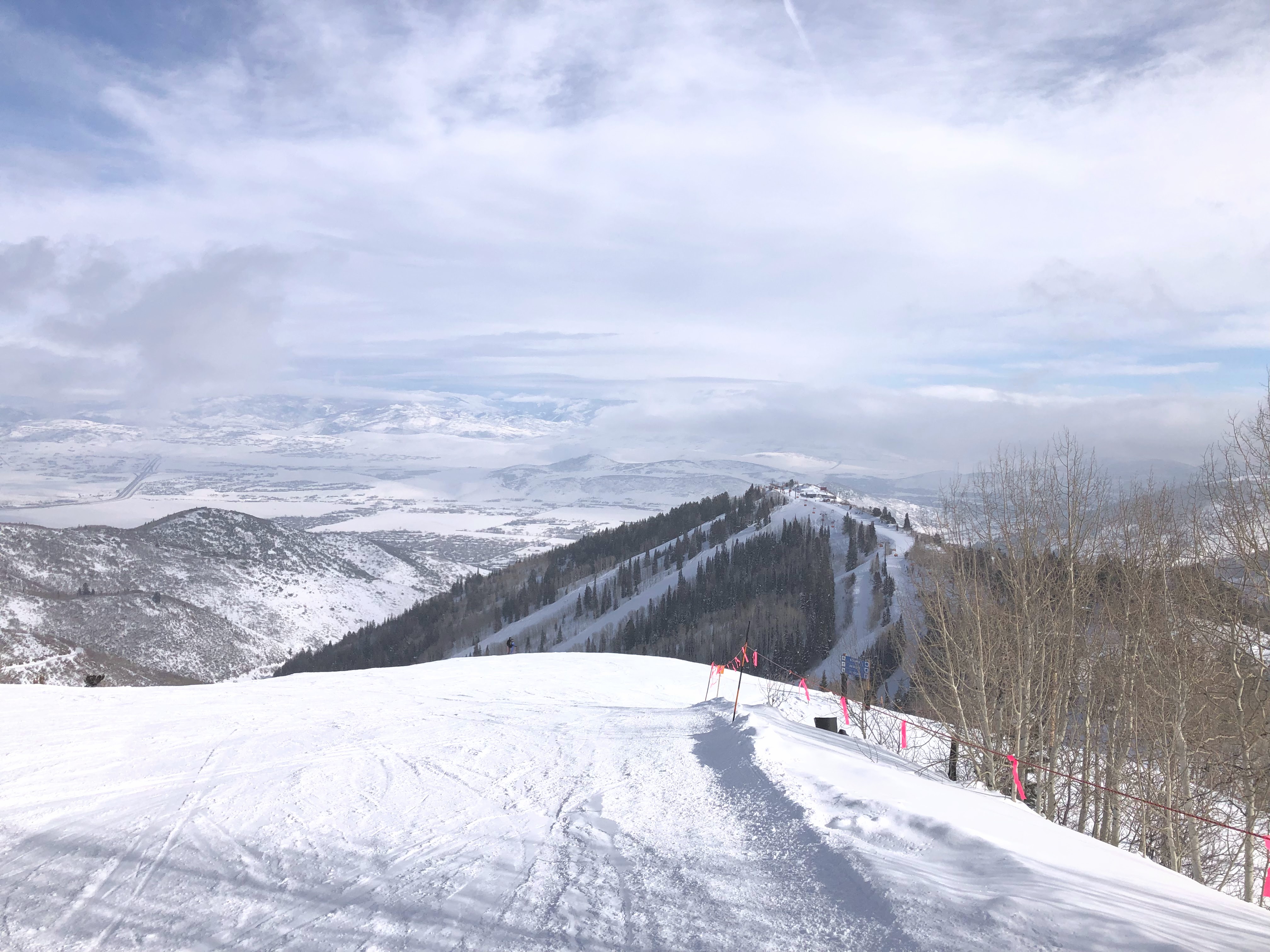
An aspect of downhill skiing that may be underappreciated is the spectacular scenery that can be seen from the ski slopes, particularly in Utah. The following pictures were taken on a beautiful January day skiing at the Canyons area of Park City.
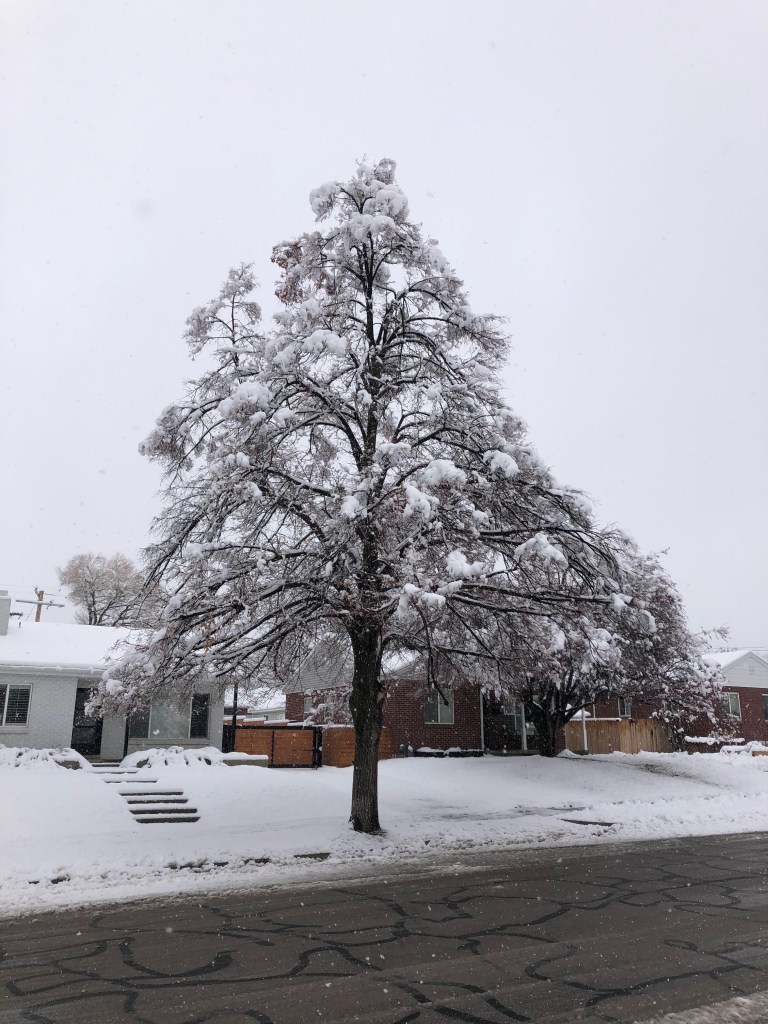
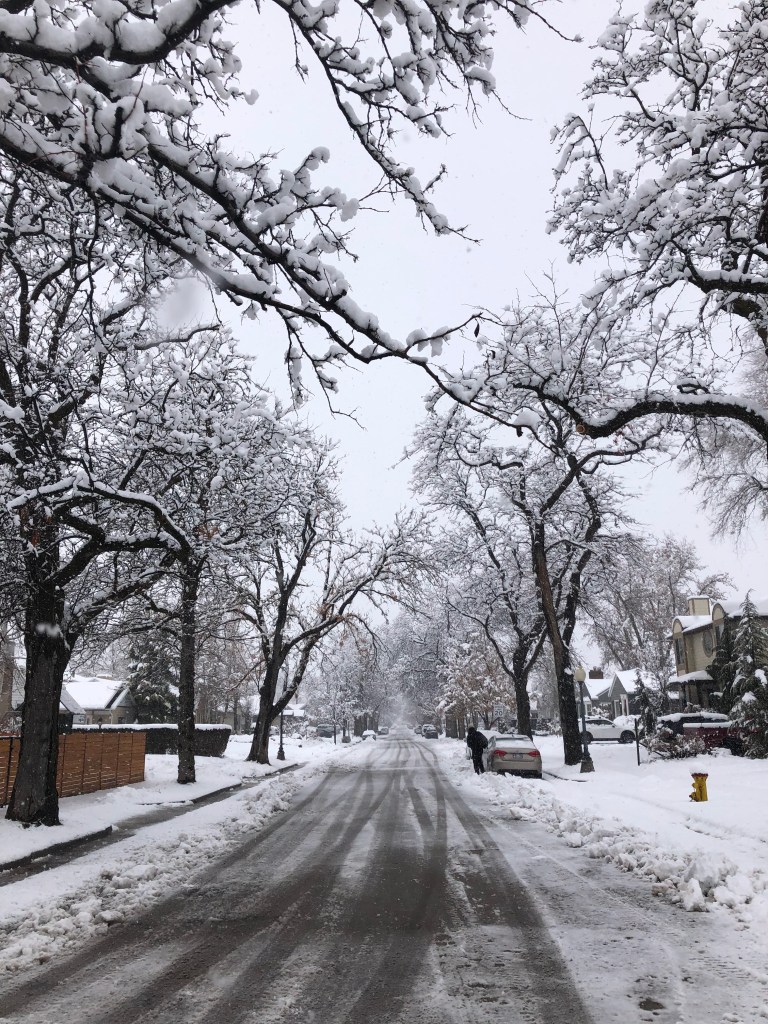
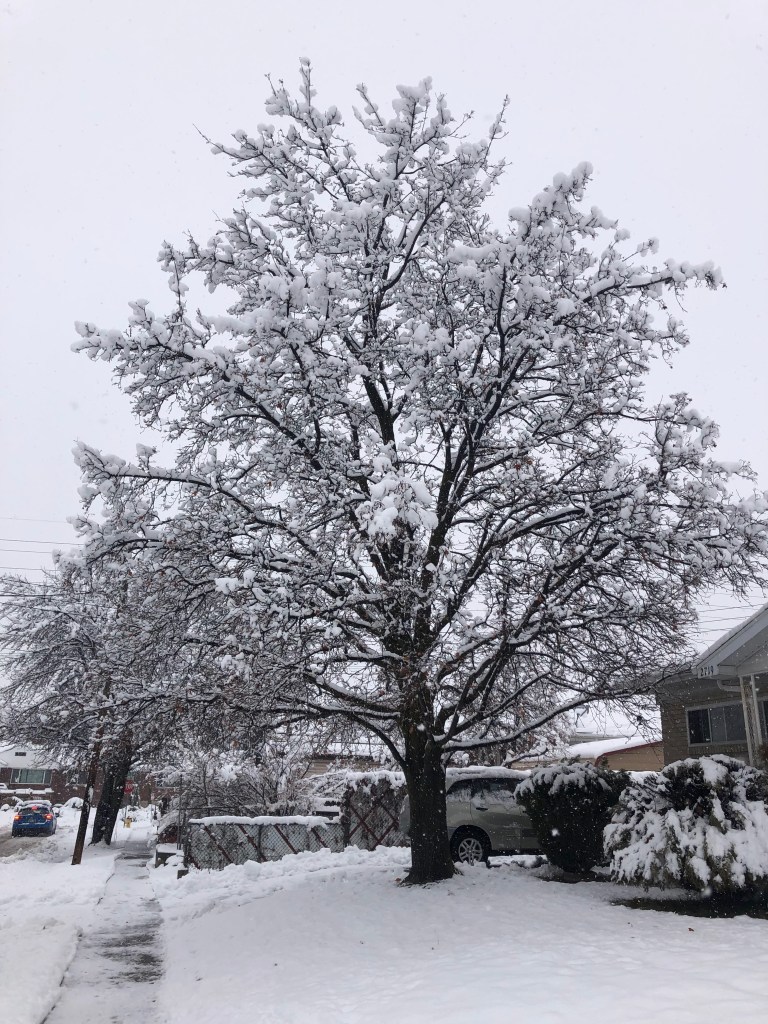
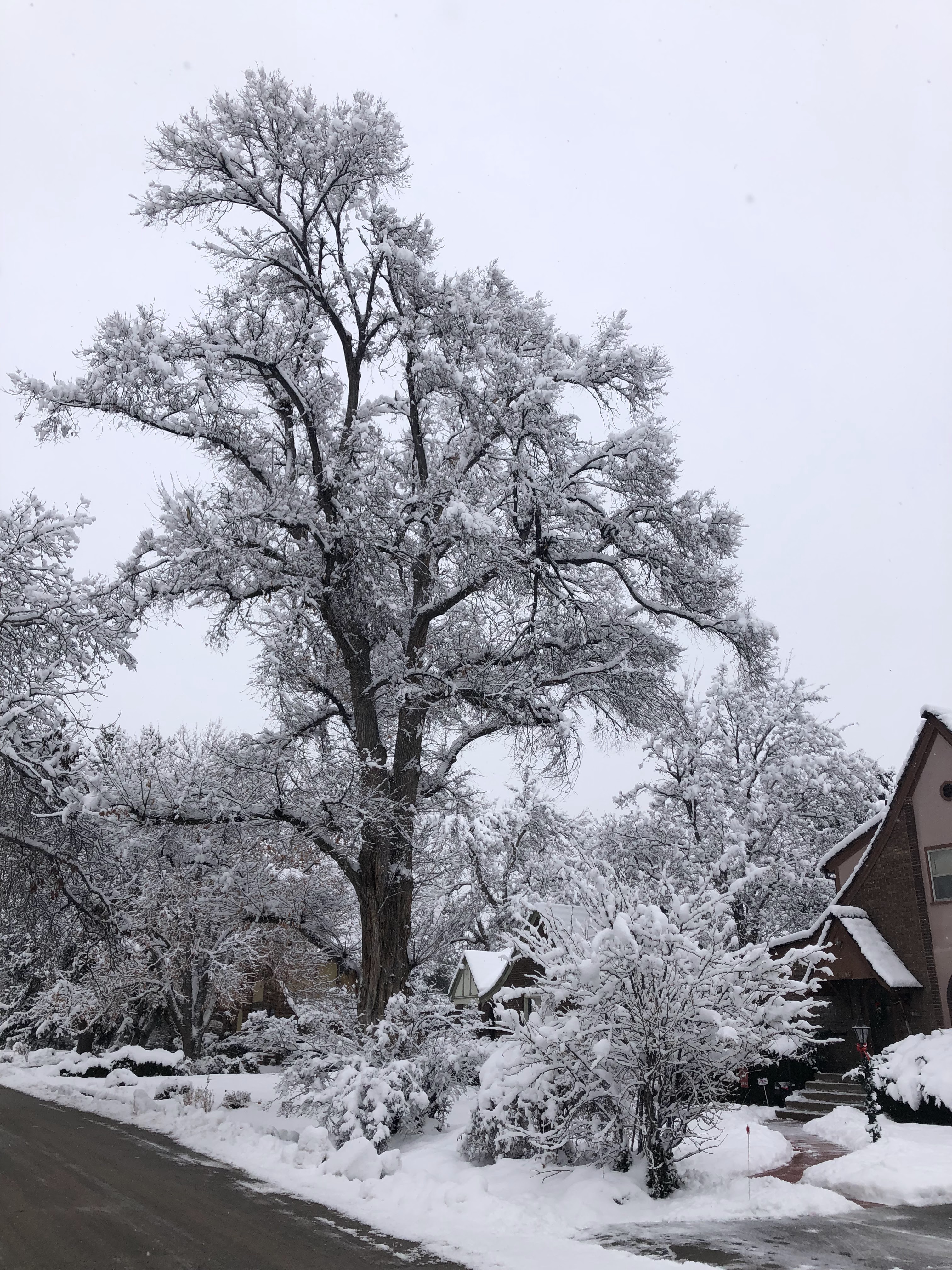
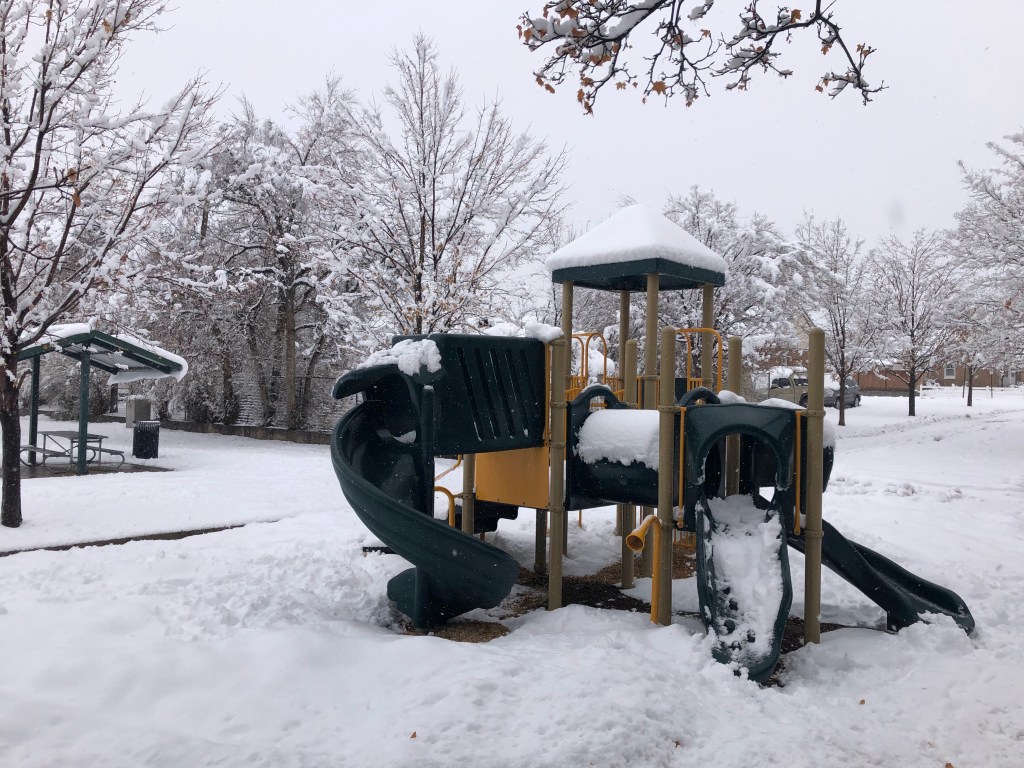
The western United States has been experiencing drought over the last few years. So, the wet and snowy weather here in Salt Lake City over the past few weeks has been very welcome. Following are some pictures of the snowy city around New Year’s.
Early morning January 1, 2023.On a walk around the neighborhood at noon.
Slight improvement in drought conditions over the past month can be seen in the two maps of Utah below. Continuing wet weather is forecast, which should further improve the situation.
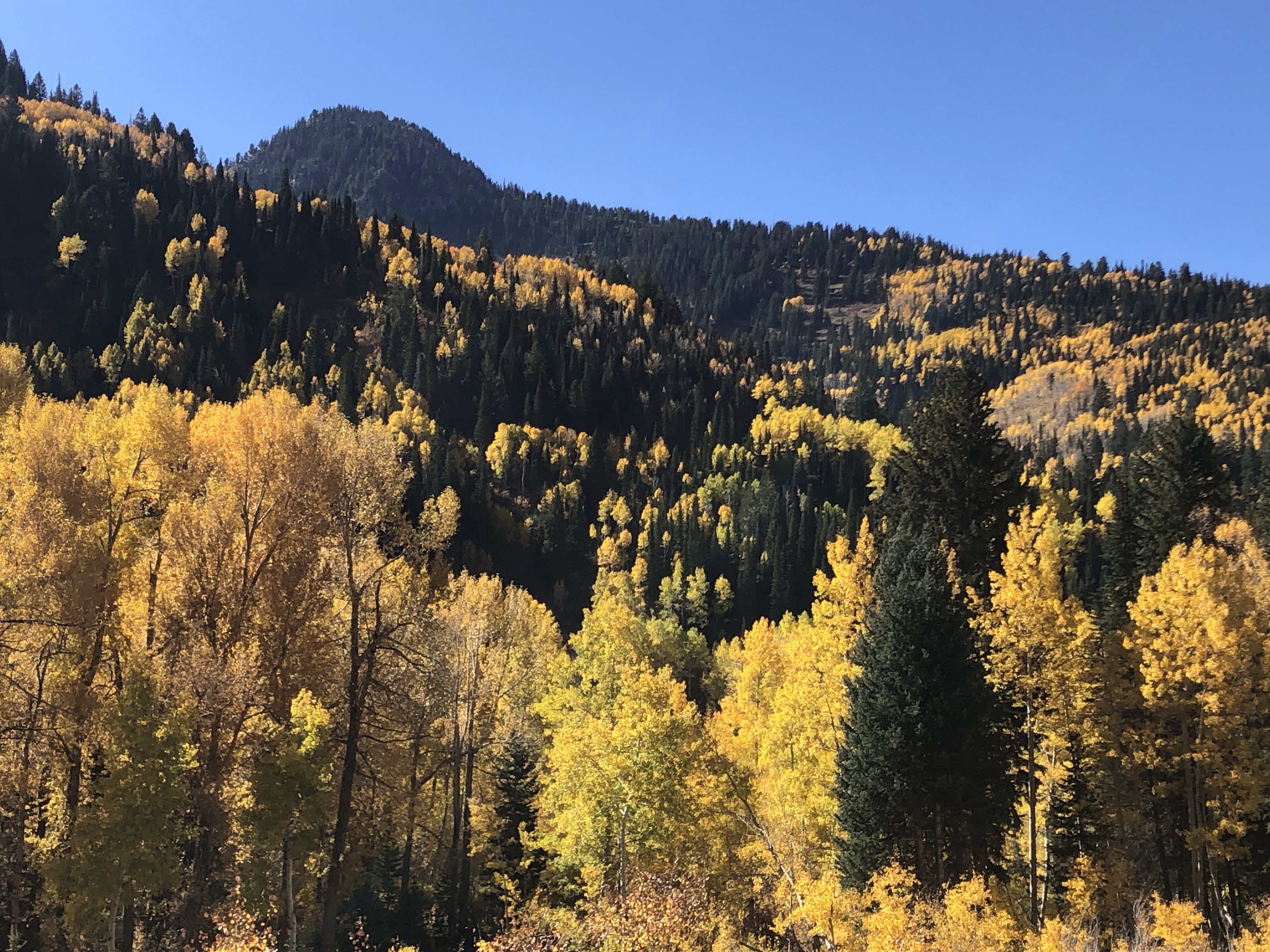
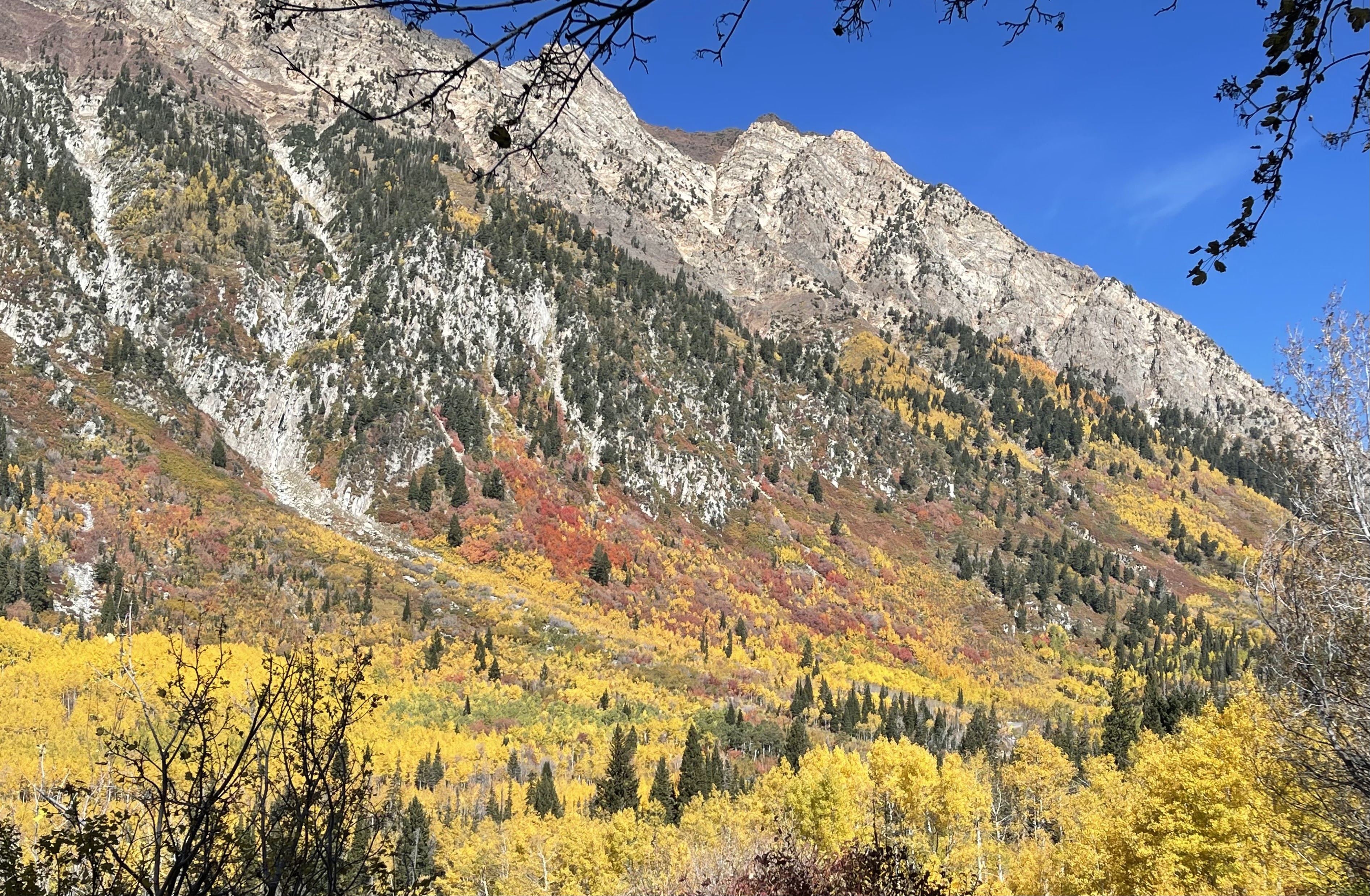
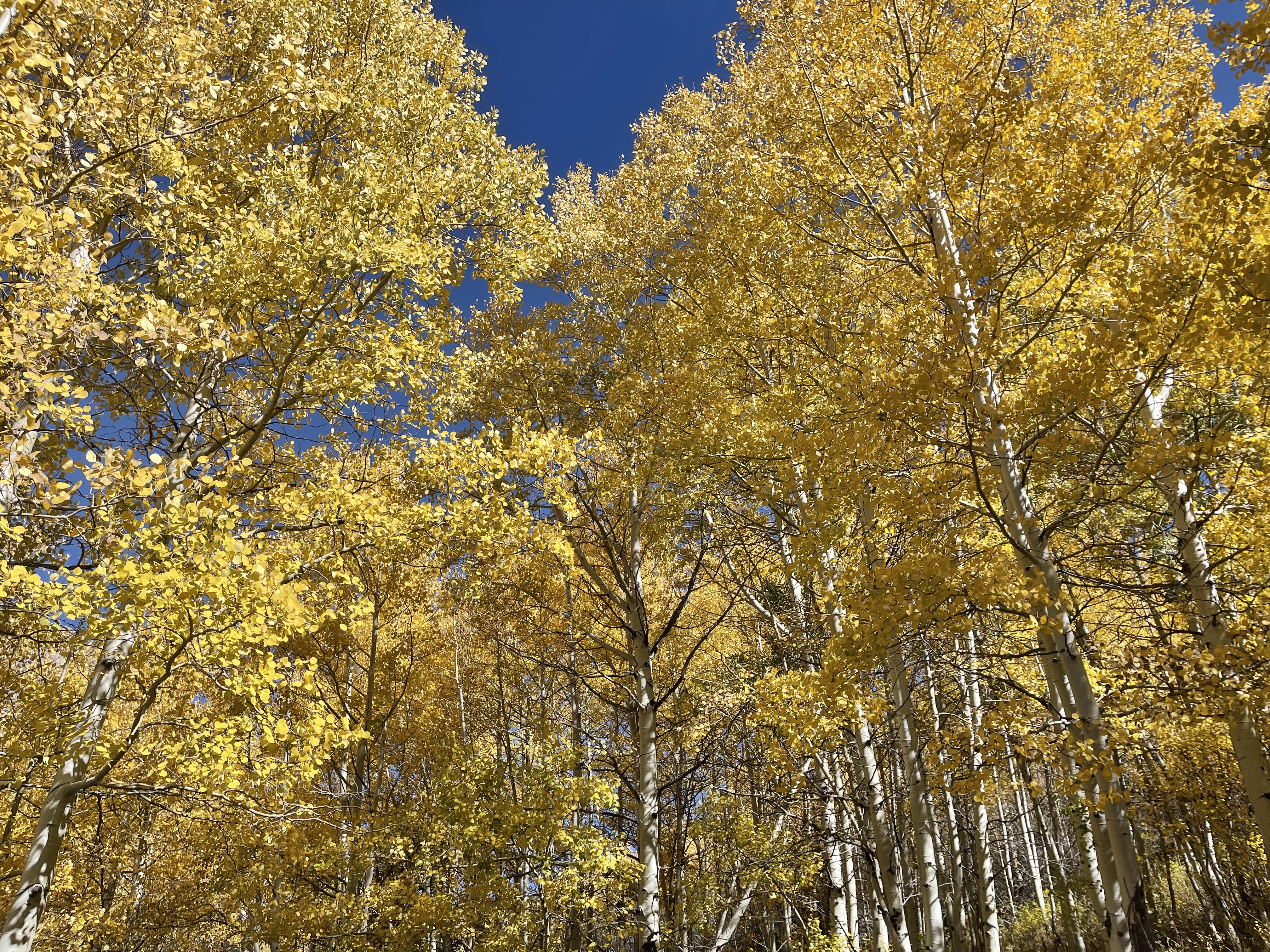
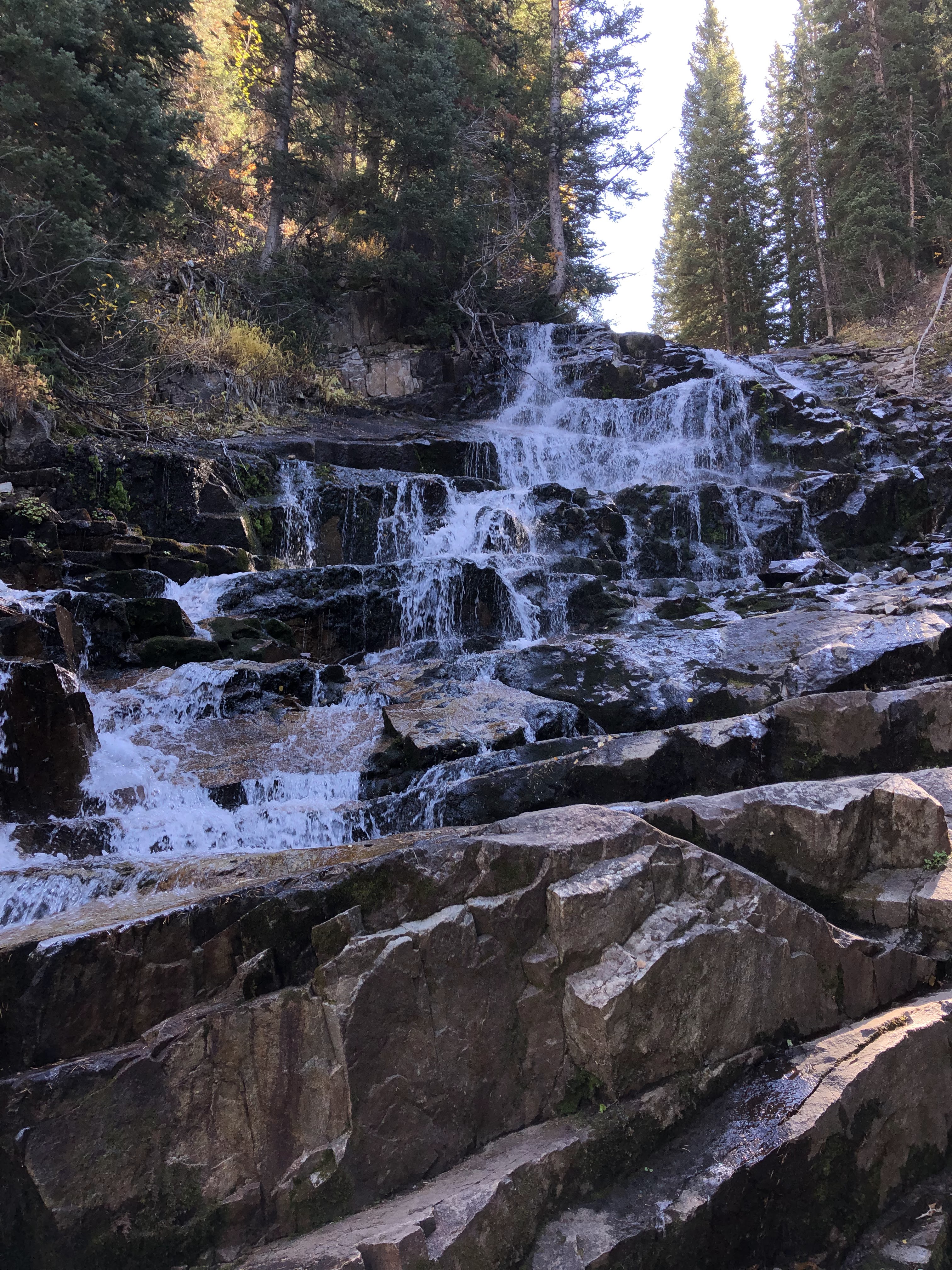
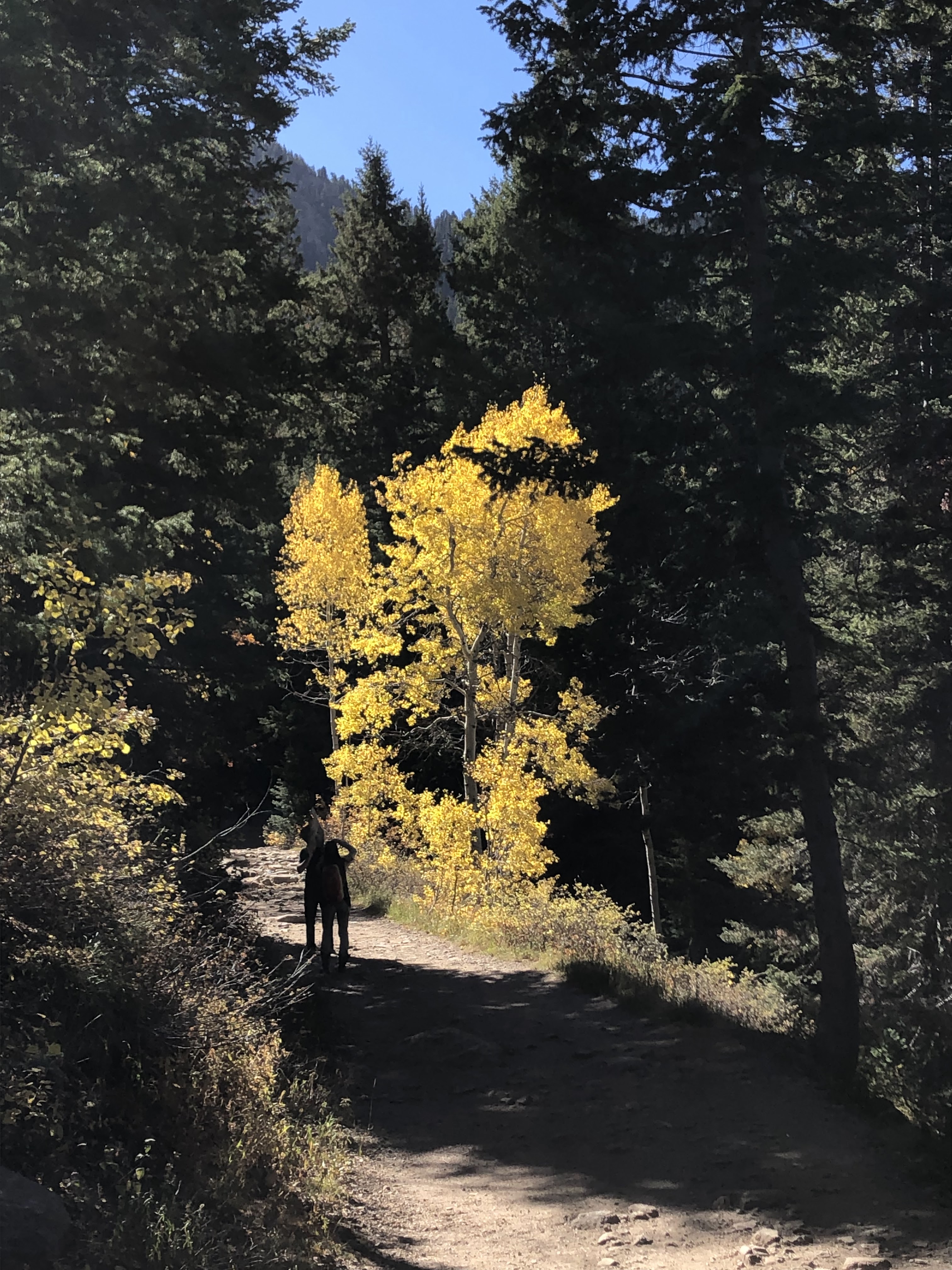
The trailhead for Gloria Falls is just short of the Snowbird and Alta ski resorts as you drive up the Little Cottonwood Canyon from Salt Lake City. Longer trails to White Pine and Red Pine Lakes also start from this site. In mid-October we were rewarded with magnificent views of fall colors in the canyon during the short hike up to Gloria Falls.
The view from our parking spot along Utah State Route 210Looking across the canyon from the trail.Quaking Aspen (Populus tremuloides),
Quaking Aspen has been the state tree of Utah since 2014. It replaced Colorado Blue Spruce as the state tree at the suggestion of a 4th-grade class.