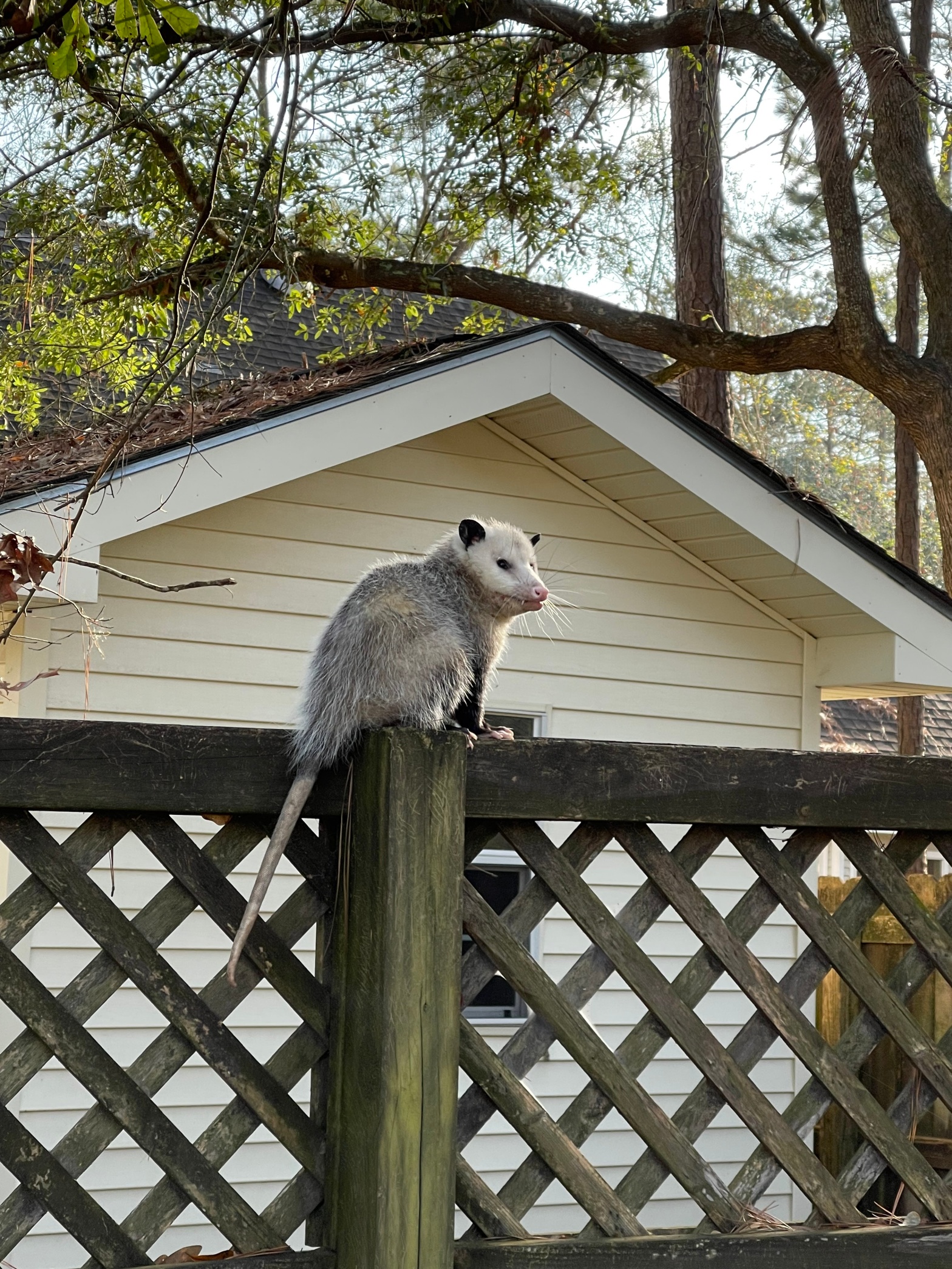
This opossum was calmly perched on a fence in our neighborhood as we walked by on a recent morning dog walk. Opossums are nocturnal animals, so seeing one out in mid-morning seemed unusual.
Virginia Opossum (Didelphis virginiana) is the only wild species of opossum in the United States, and it is our only native marsupial. They have a reputation as a pest, but this may not be deserved. They are useful scavengers of dead animals, and also eat many types of noxious rodents and insects, particularly ticks.
I was surprised to find an organization online that is devoted to opossums, the Opossum Society of the United States. They rescue and rehabilitate injured and orphaned opossums, and also present educational programs in schools. Good for them!
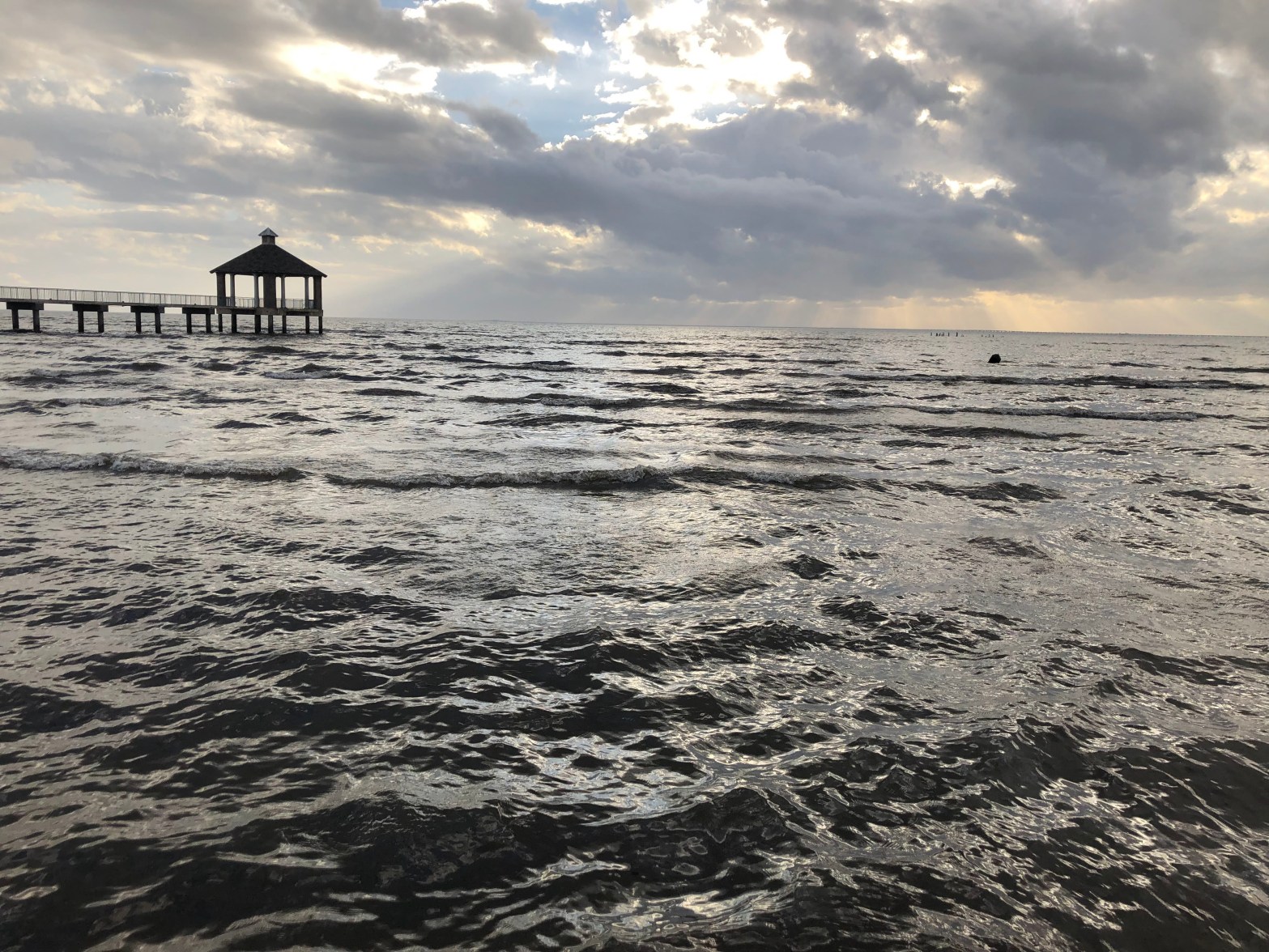
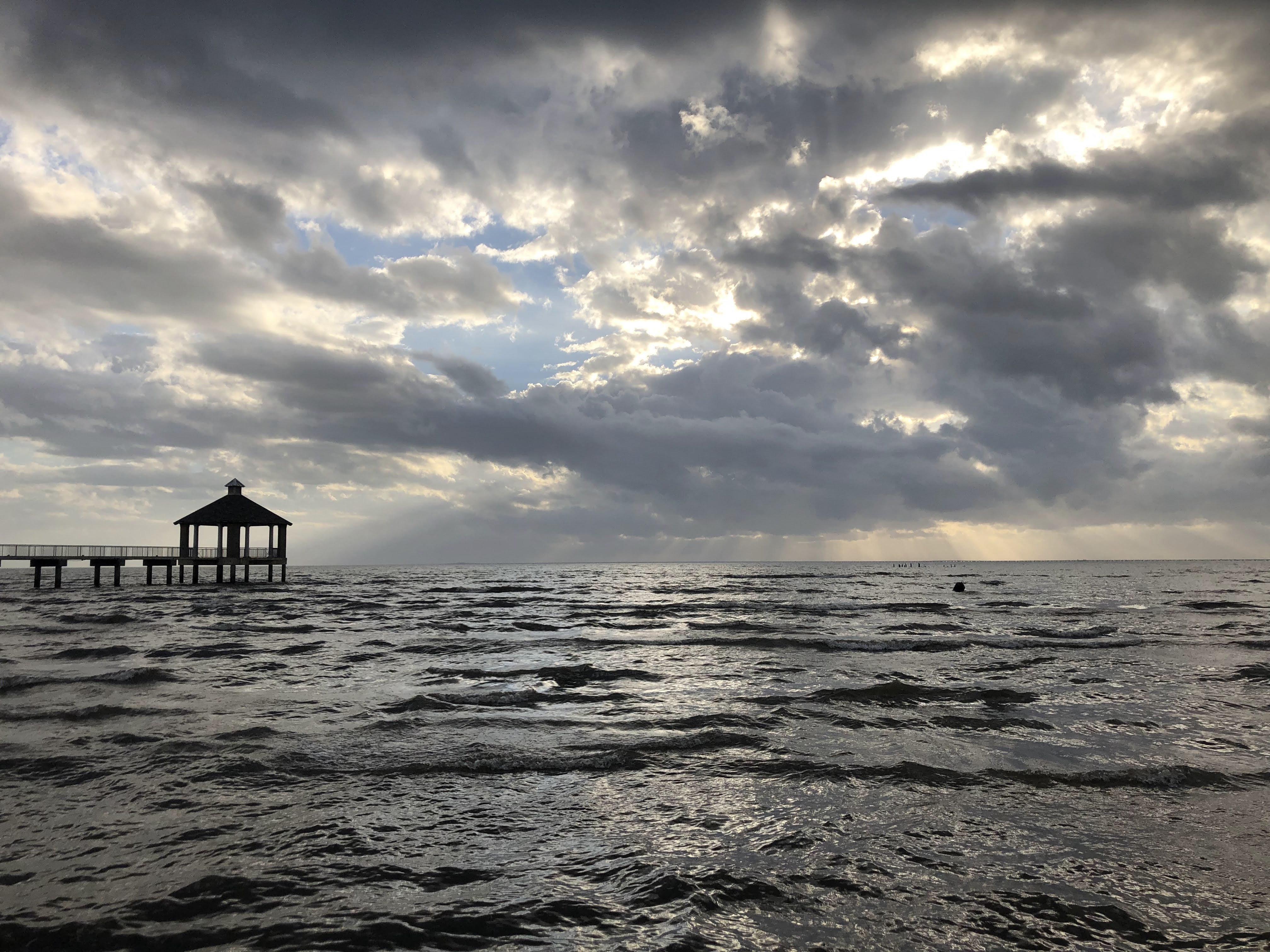
A dramatic view of Lake Pontchartrain from its shore in Fontainebleau State Park, just east of Mandeville Louisiana. This was taken on an unseasonably warm day in late December.
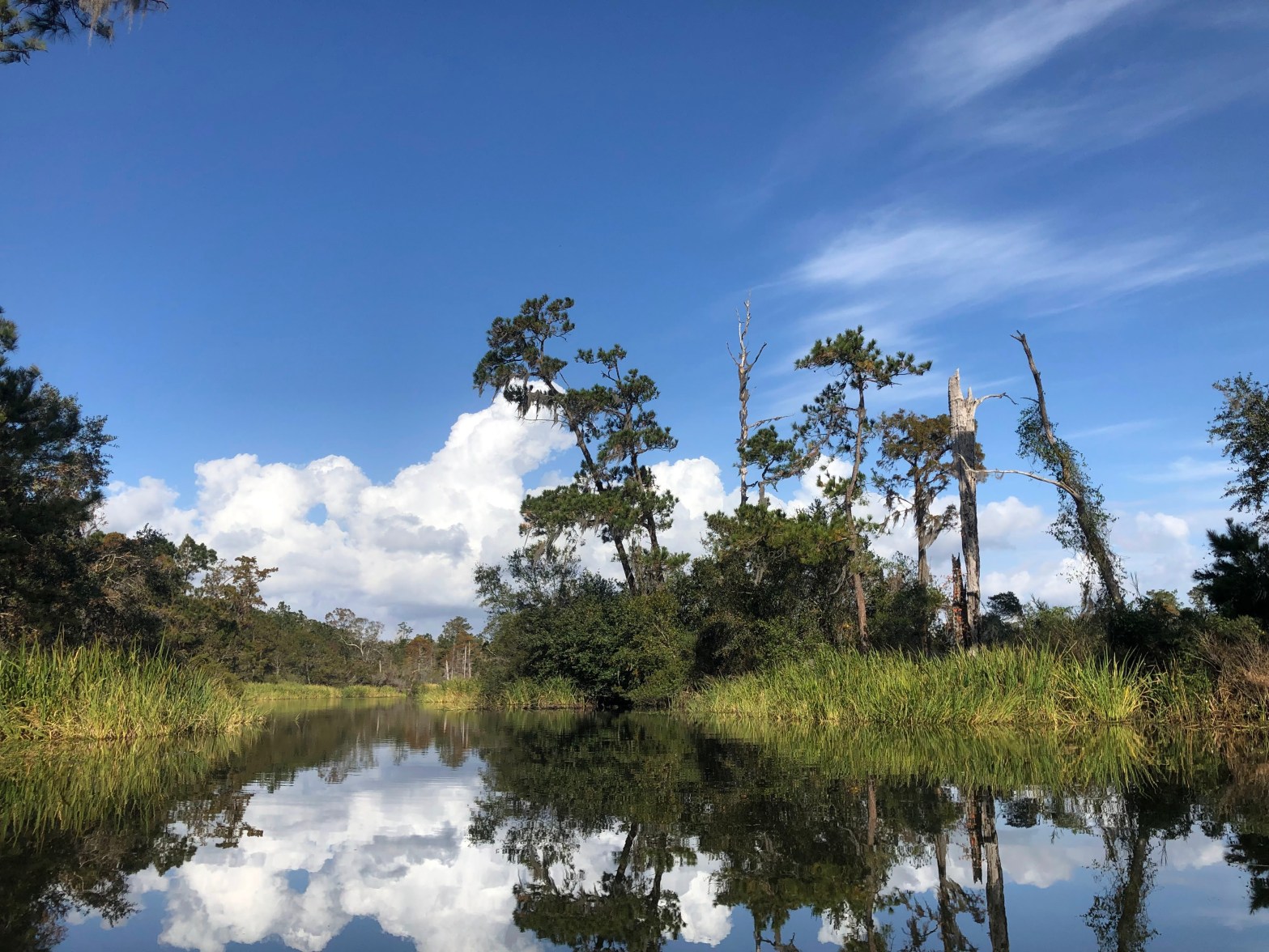
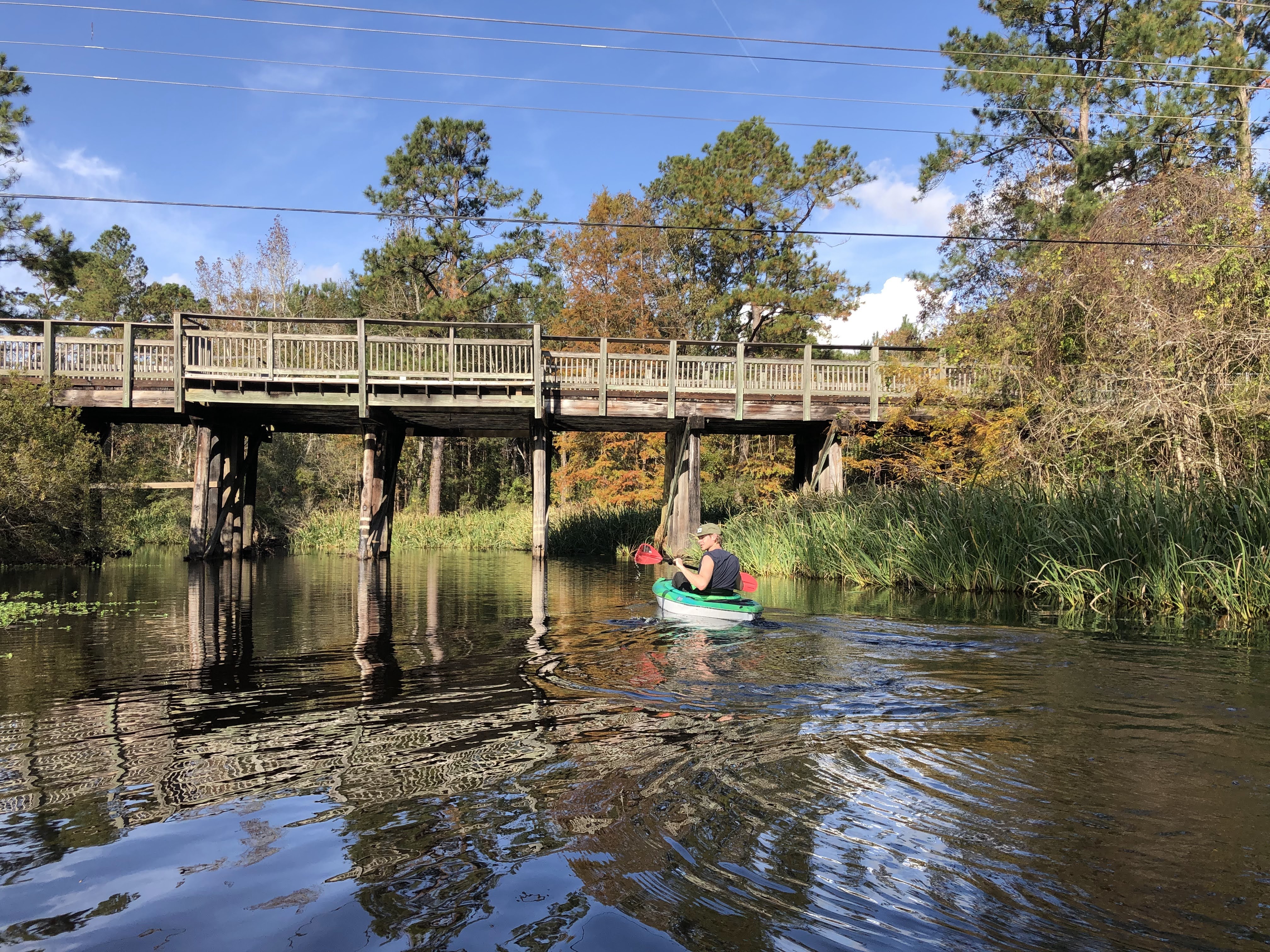
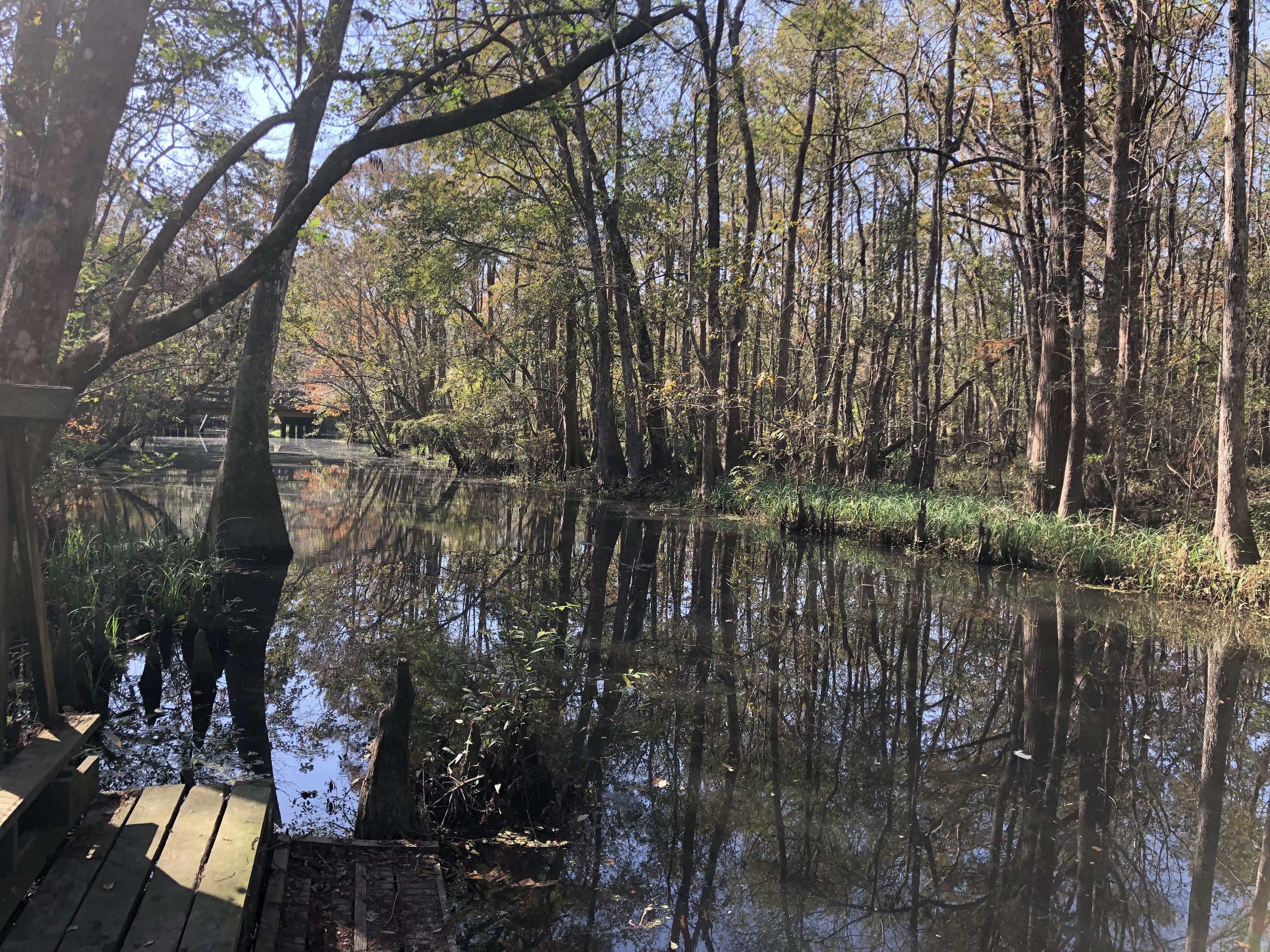
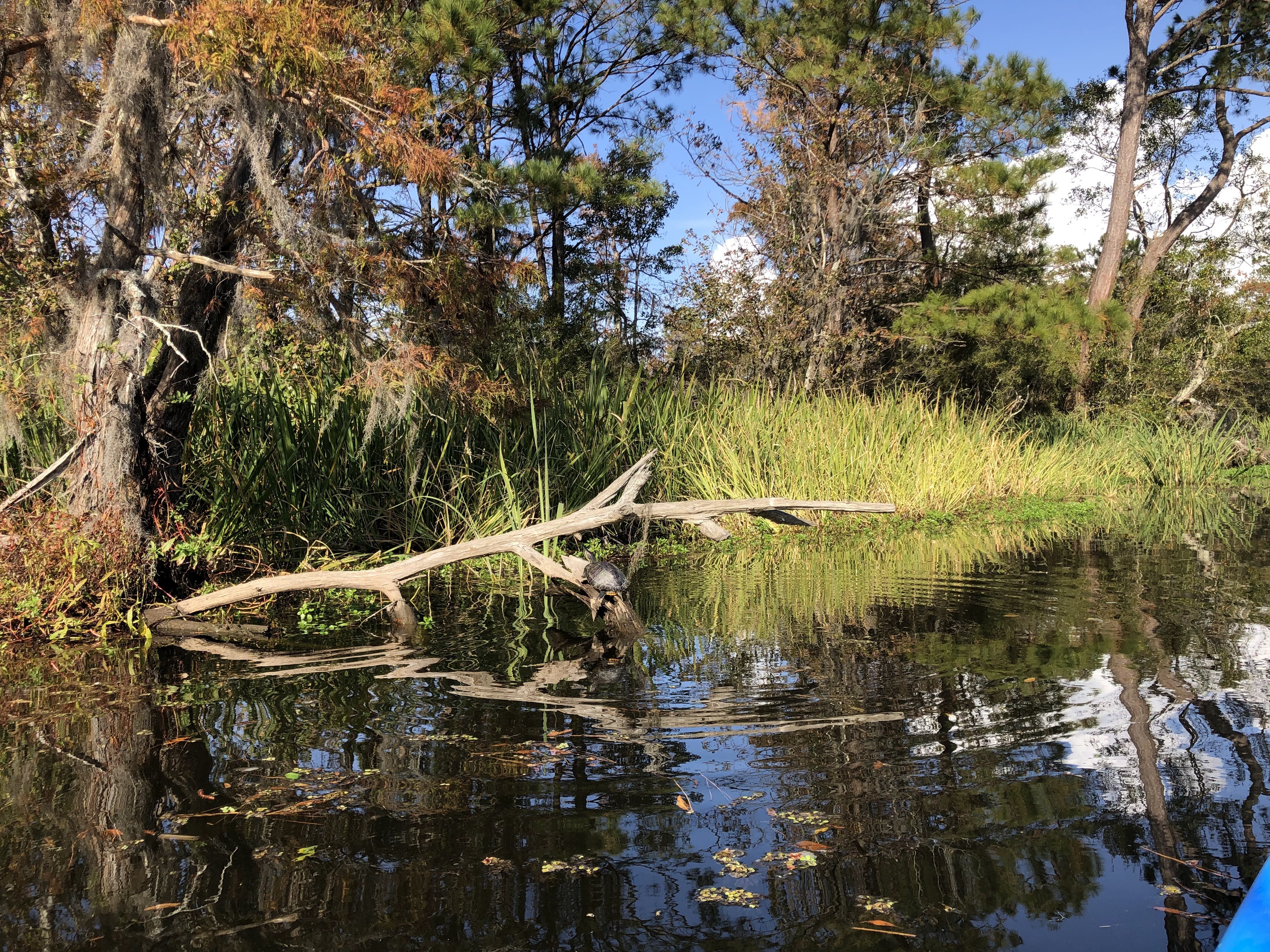
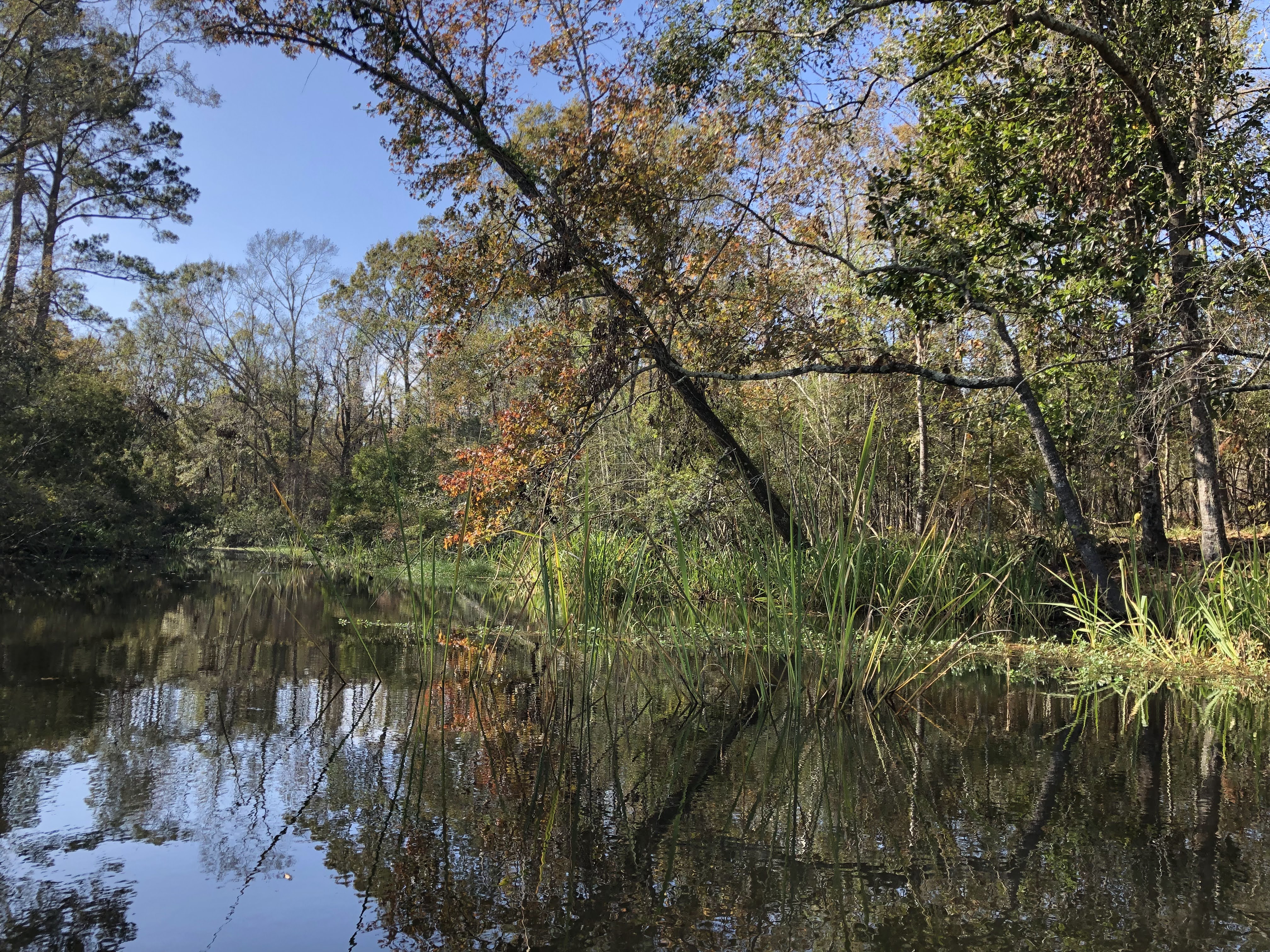
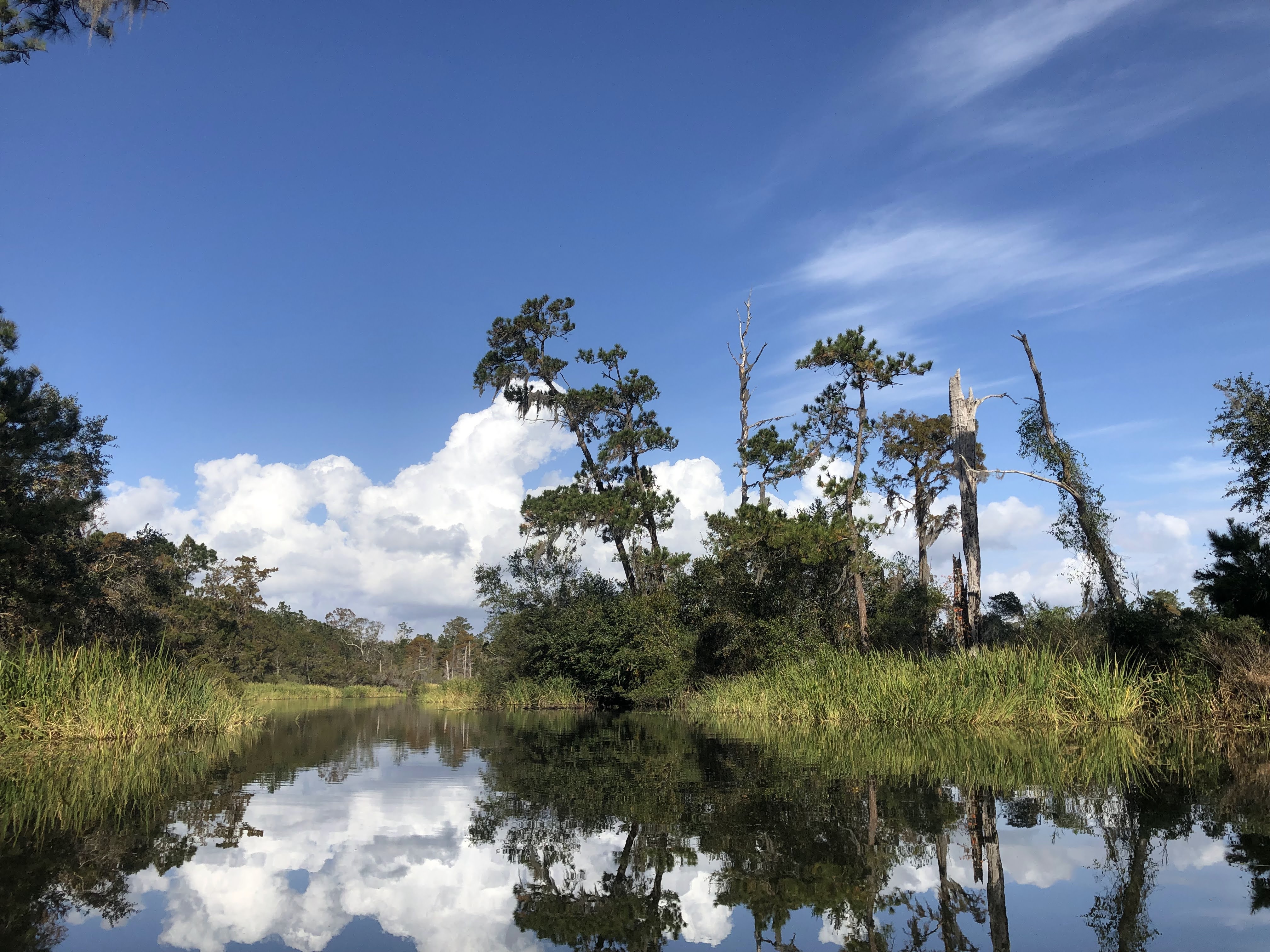
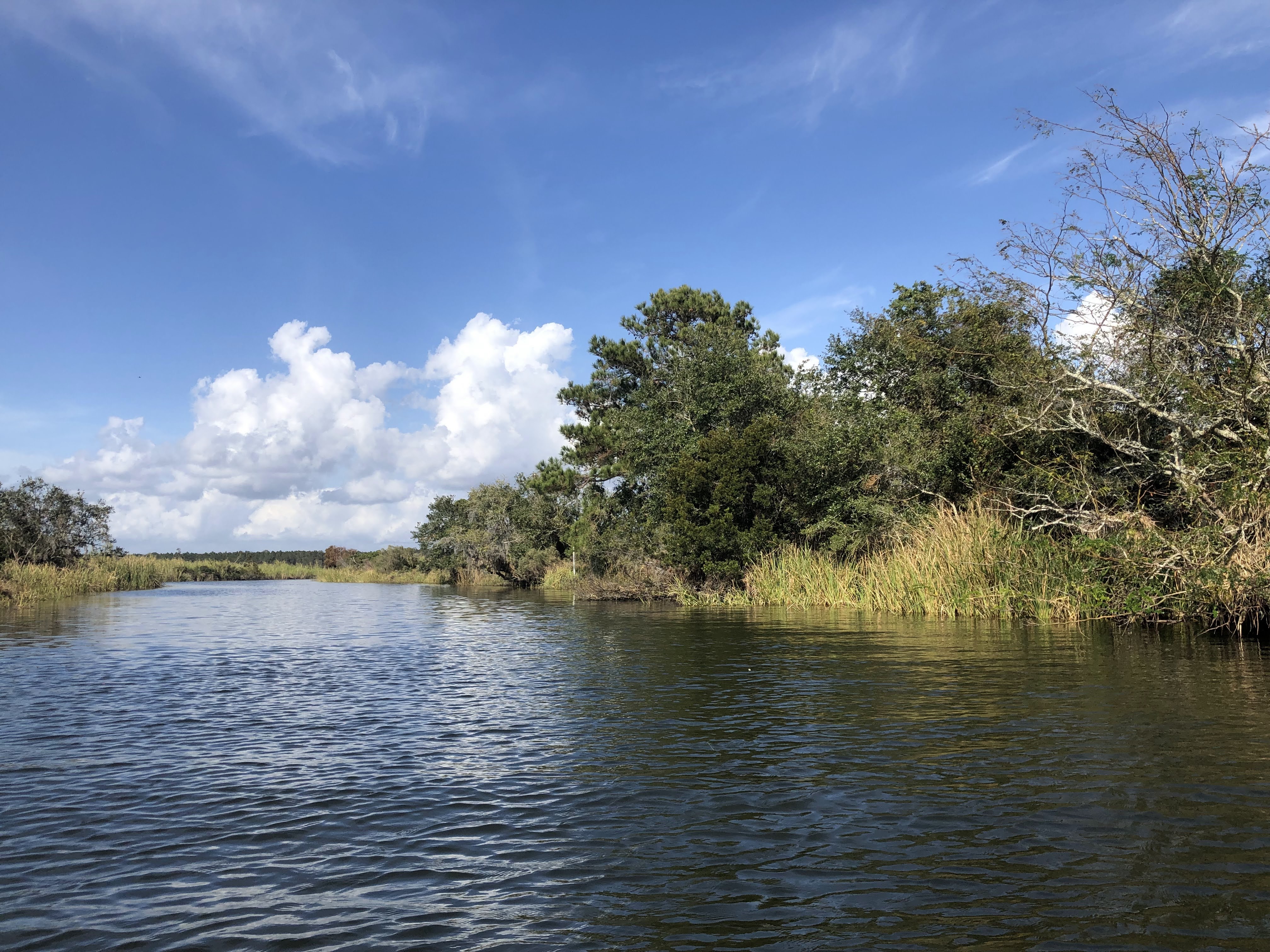
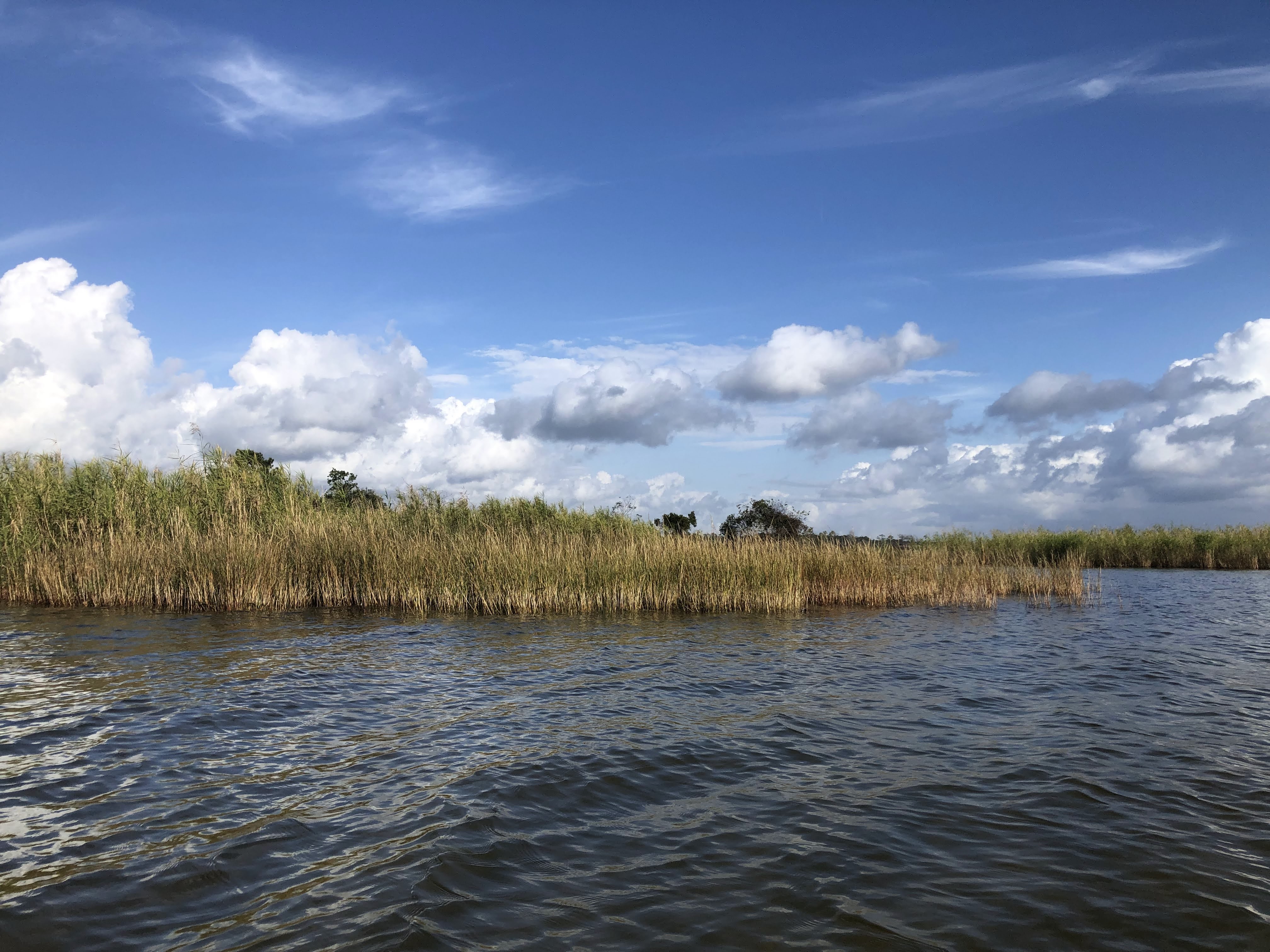
The pictures below were taken on a balmy Sunday in mid-November during a kayak excursion on the Northshore of Lake Pontchartrain. Cane Bayou is one of several streams that empty into Lake Pontchartrain from the north, it runs between Fontainebleau State Park and the Big Branch Marsh National Wildlife Refuge. There is a convenient launch for kayaks just off of highway 190, about four miles east of Mandeville LA, as seen on the map below.
The Tammany Trace bike path crosses Cane Bayou a short distance south of the launch point.Near the kayak launch the shores of Cane Bayou are heavily forested.
Trees thin out approaching Lake Pontchartrain
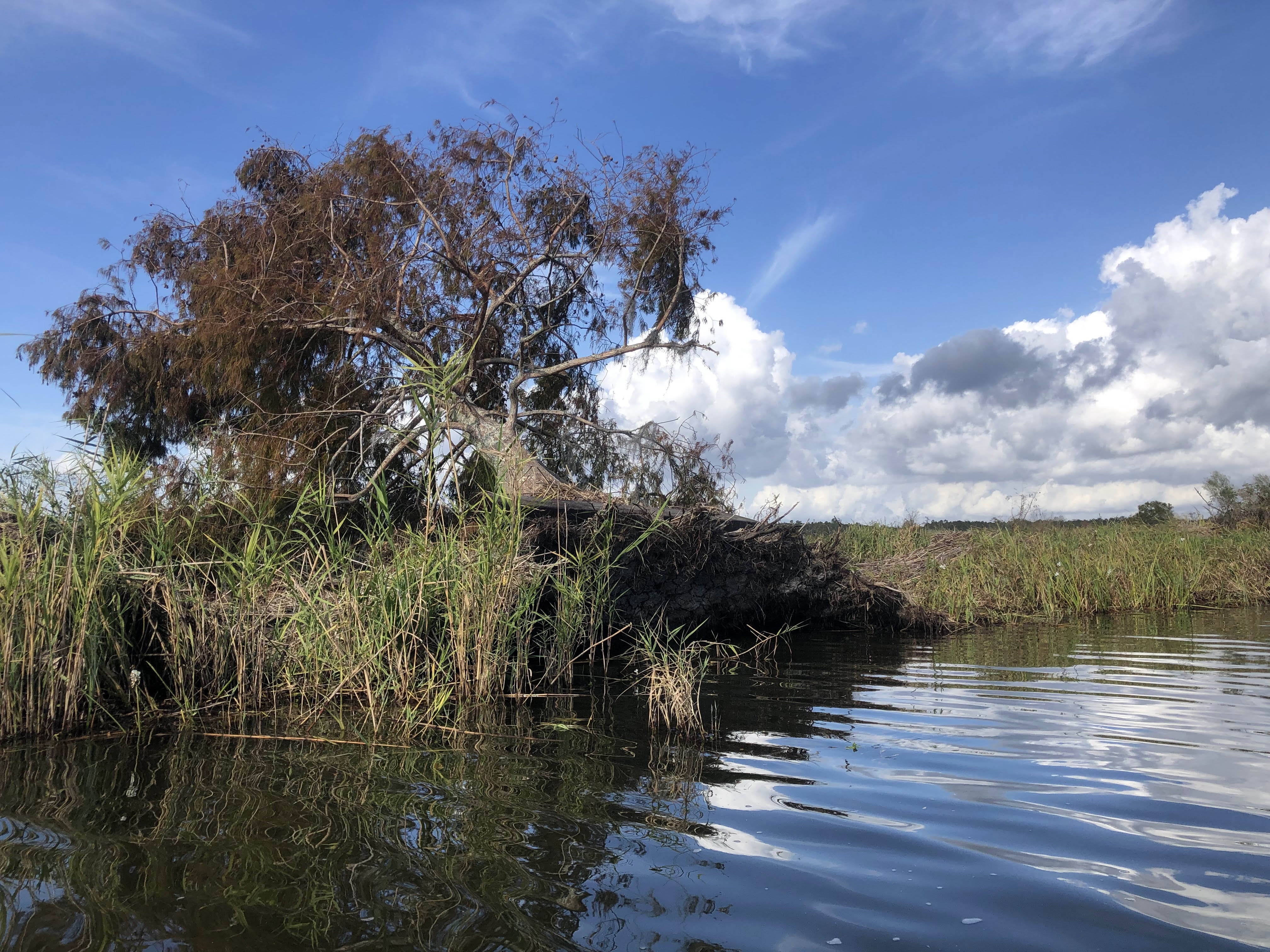
Near the lake the terrain is marshy, here we saw some trees toppled by Hurricane Ida
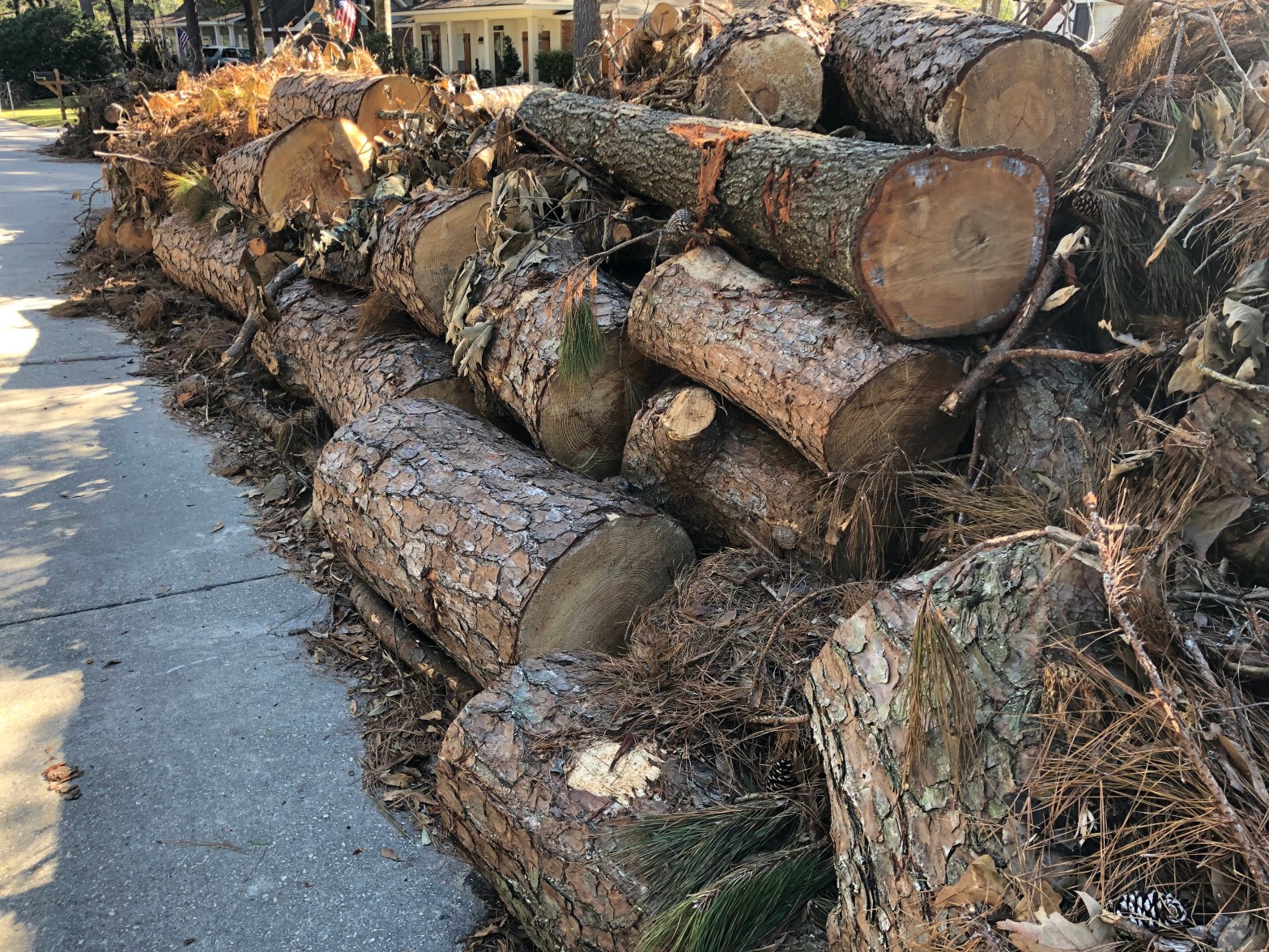
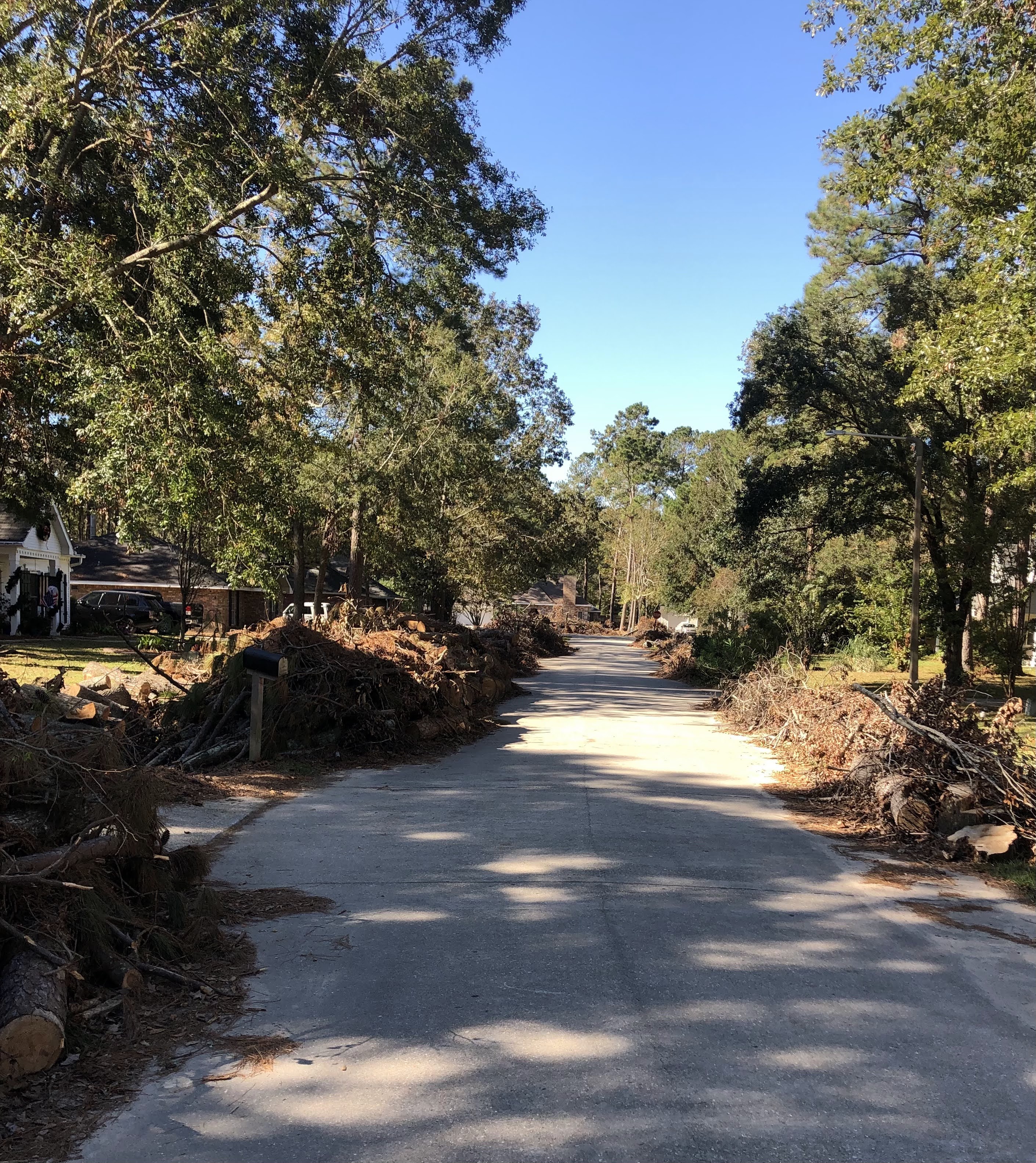
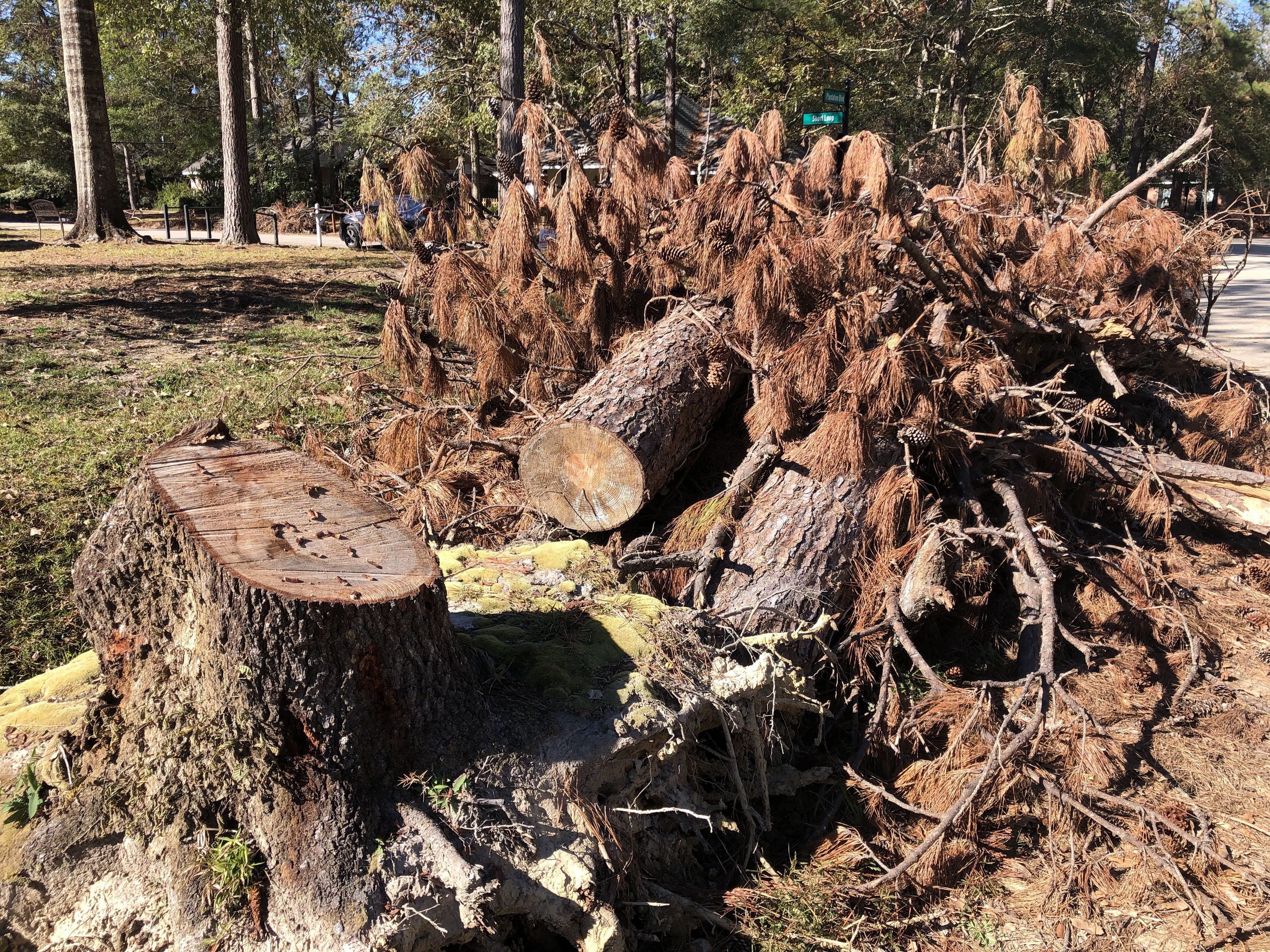
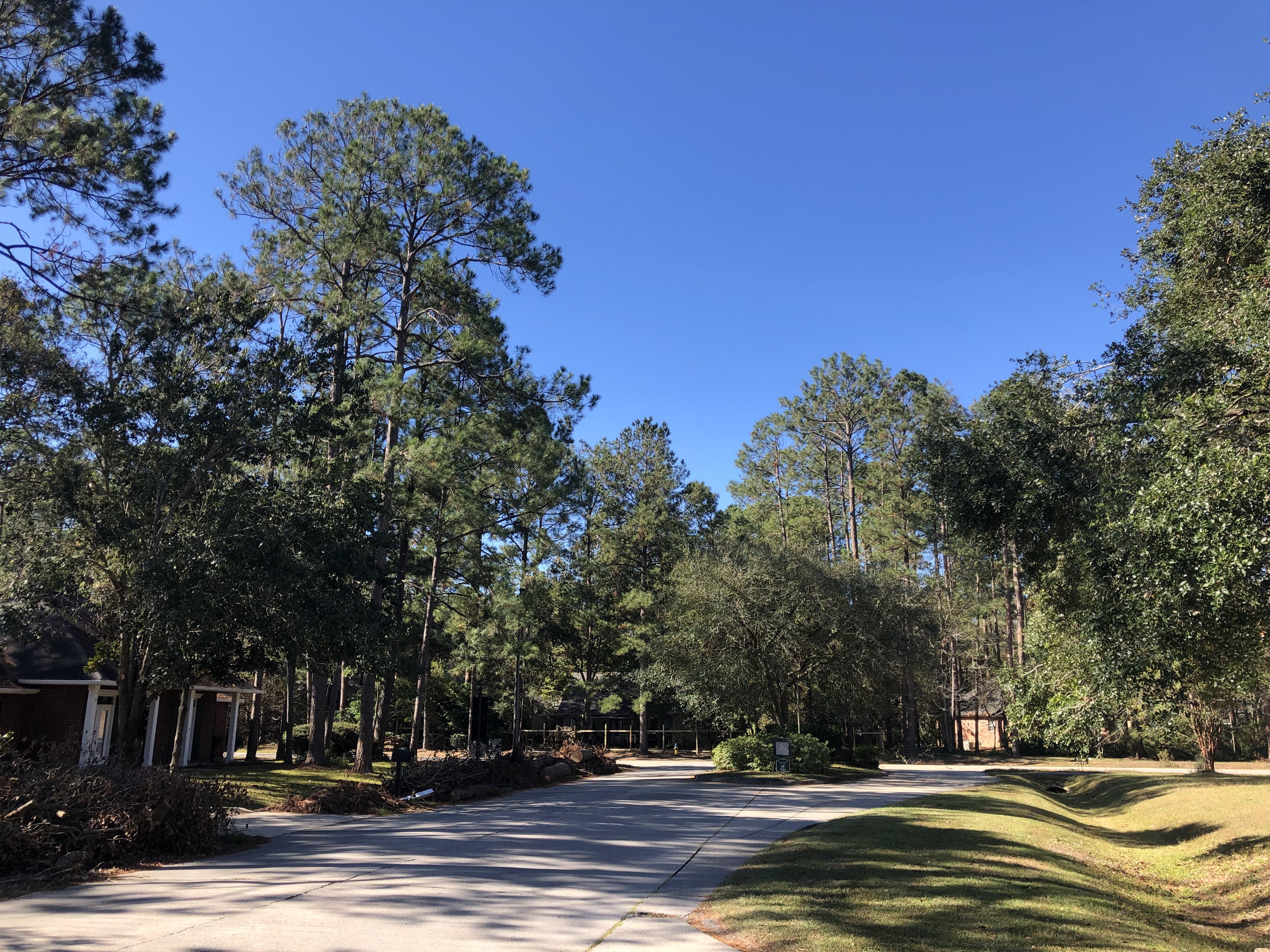
People who have not experienced the aftermath of a severe hurricane may be surprised at how long it takes to clean up an area. Today, 70 days after Ida’s landfall, tree debris still lines the streets of my neighborhood in Mandeville LA. Mandeville is around 40 miles from the path of Ida’s eye, but still experienced very damaging winds. Crews are hard at work clearing our streets, but the huge volume of material makes it slow going.
Hurricane Ida was a category four storm that made landfall near Port Fourchon, Louisiana on August 29, 2021 — 16 years to the day after Hurricane Katrina. Its maximum sustained wind speed at landfall was 150 mph, which was equaled only by two other hurricanes in Louisiana’s recorded history. The damage cause by Ida has been estimated at more than $65 billion, making it the sixth costliest Atlantic hurricane.
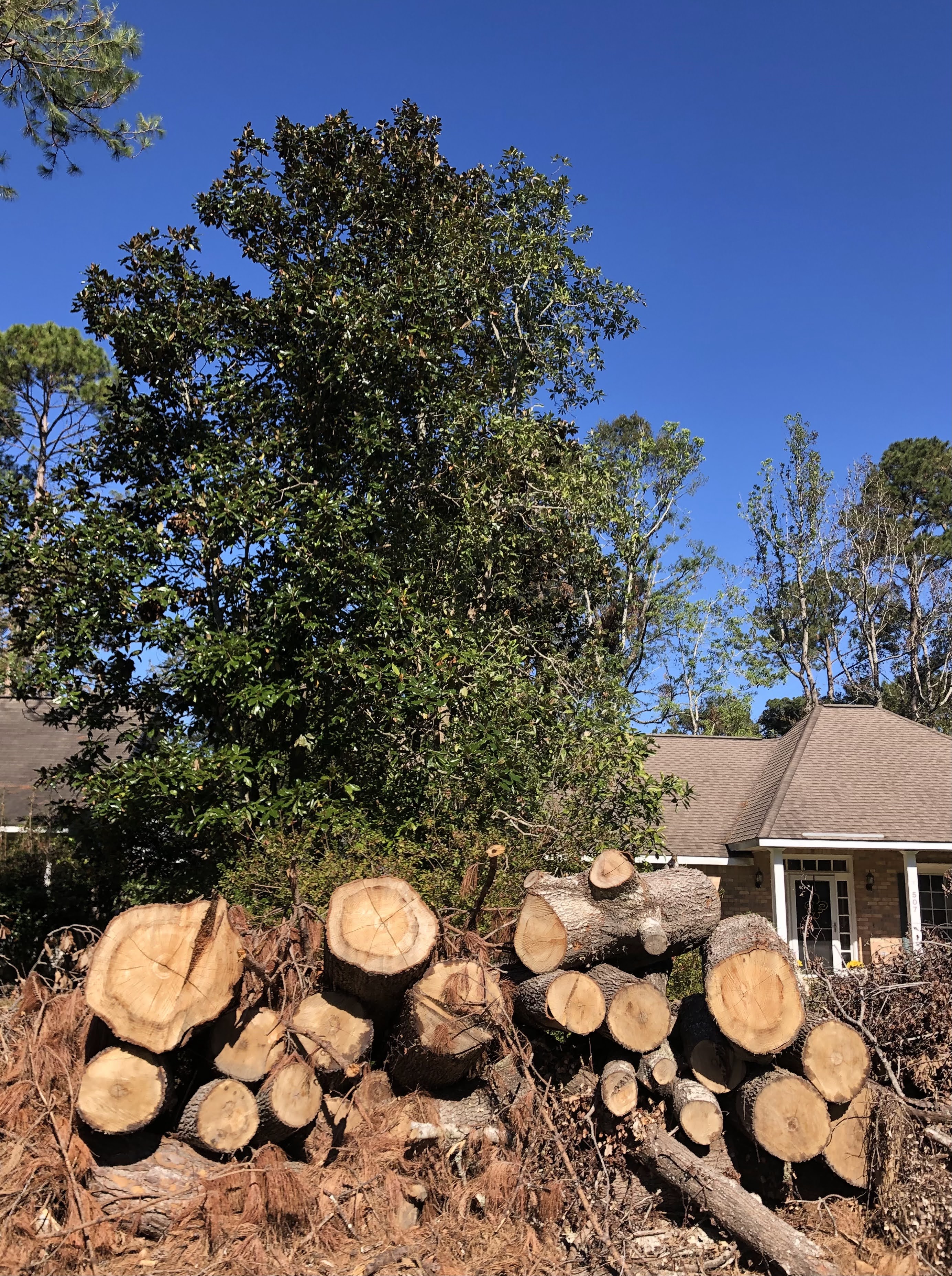
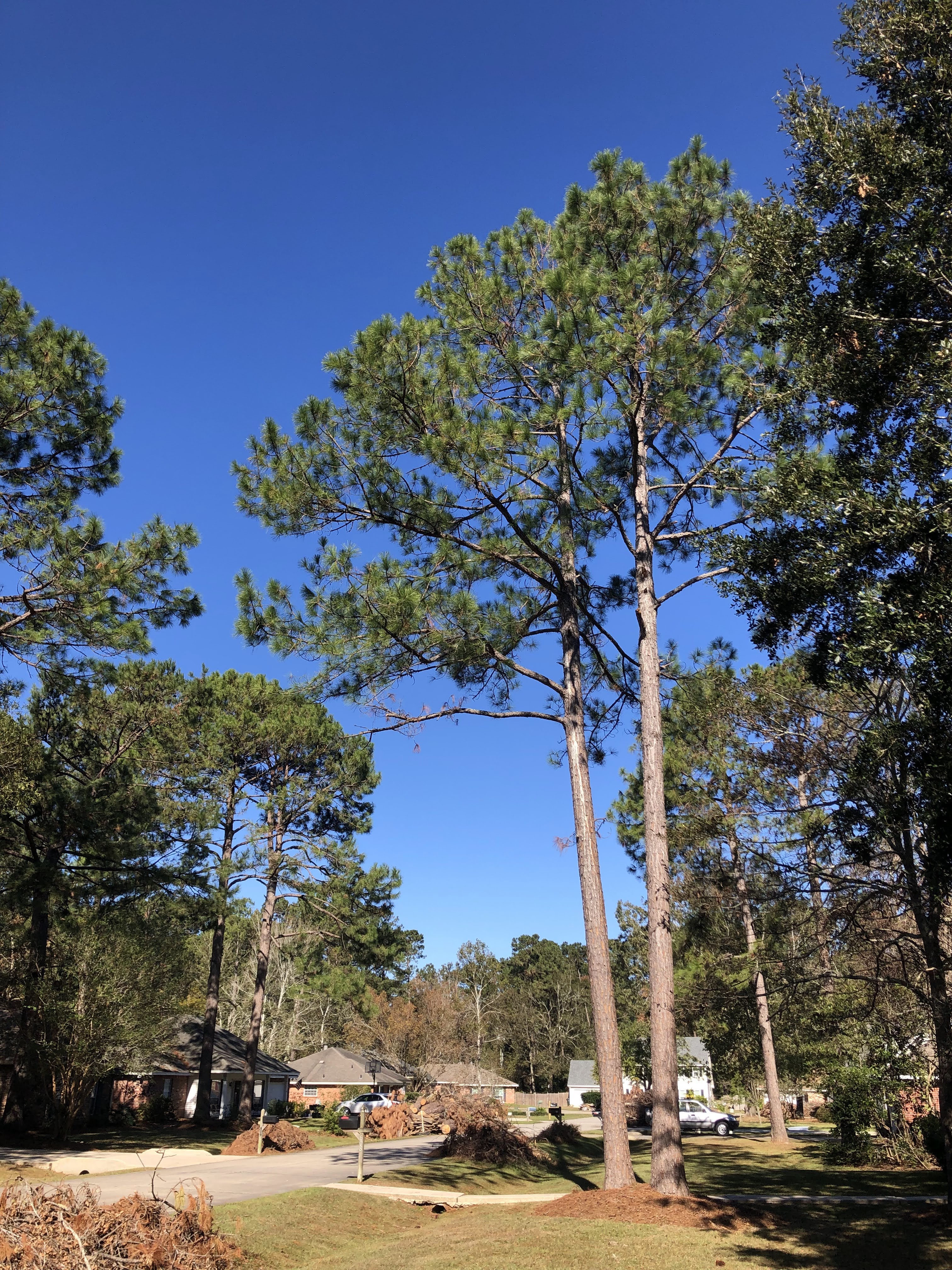
Many of the downed trees were tall loblolly pinesMagnolia trees, like the one in the background of this picture, were less likely to fallTree debris lining our streetsBig tree stump
Thankful that most trees in the neighborhood survived the storm.
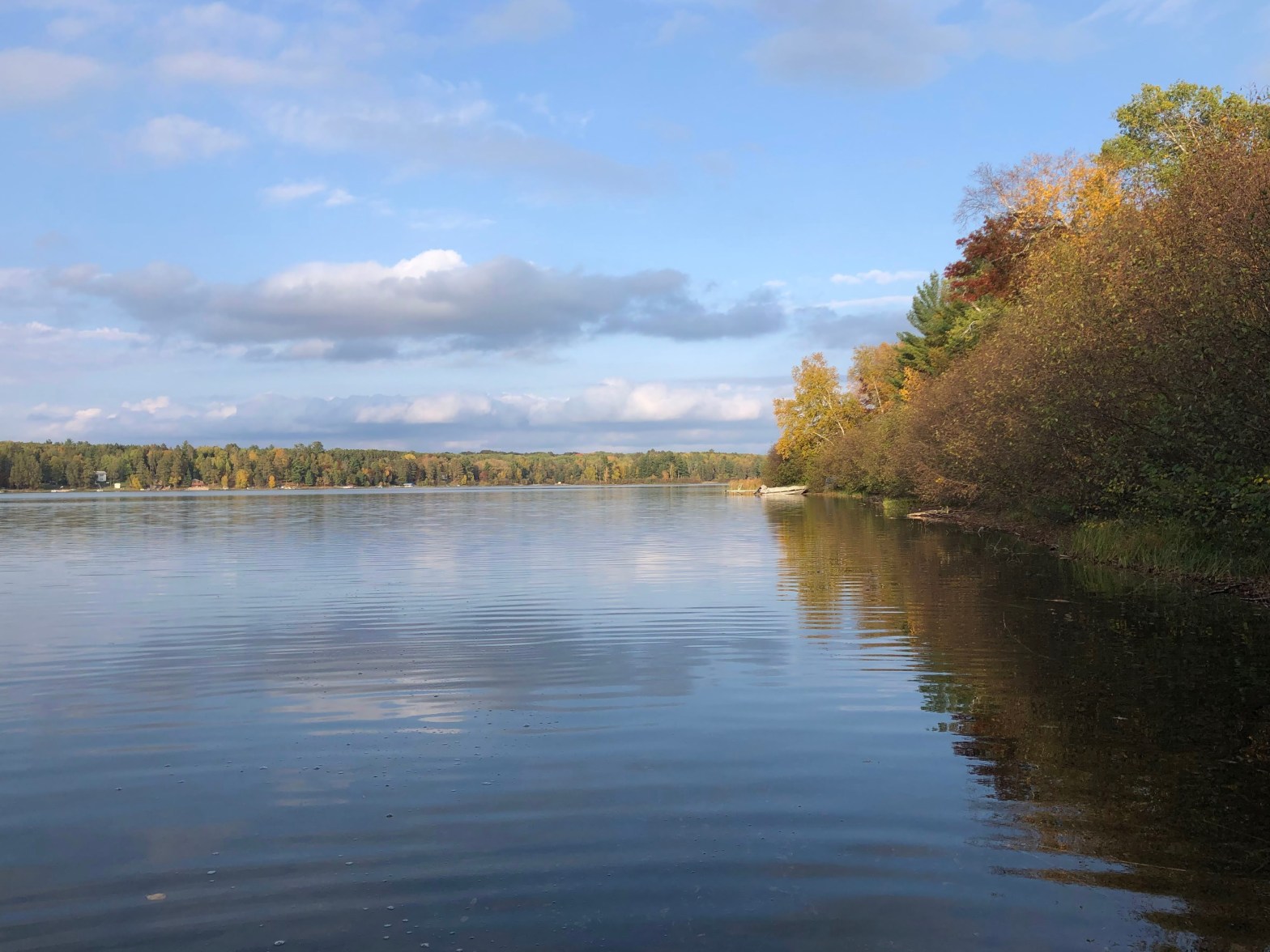
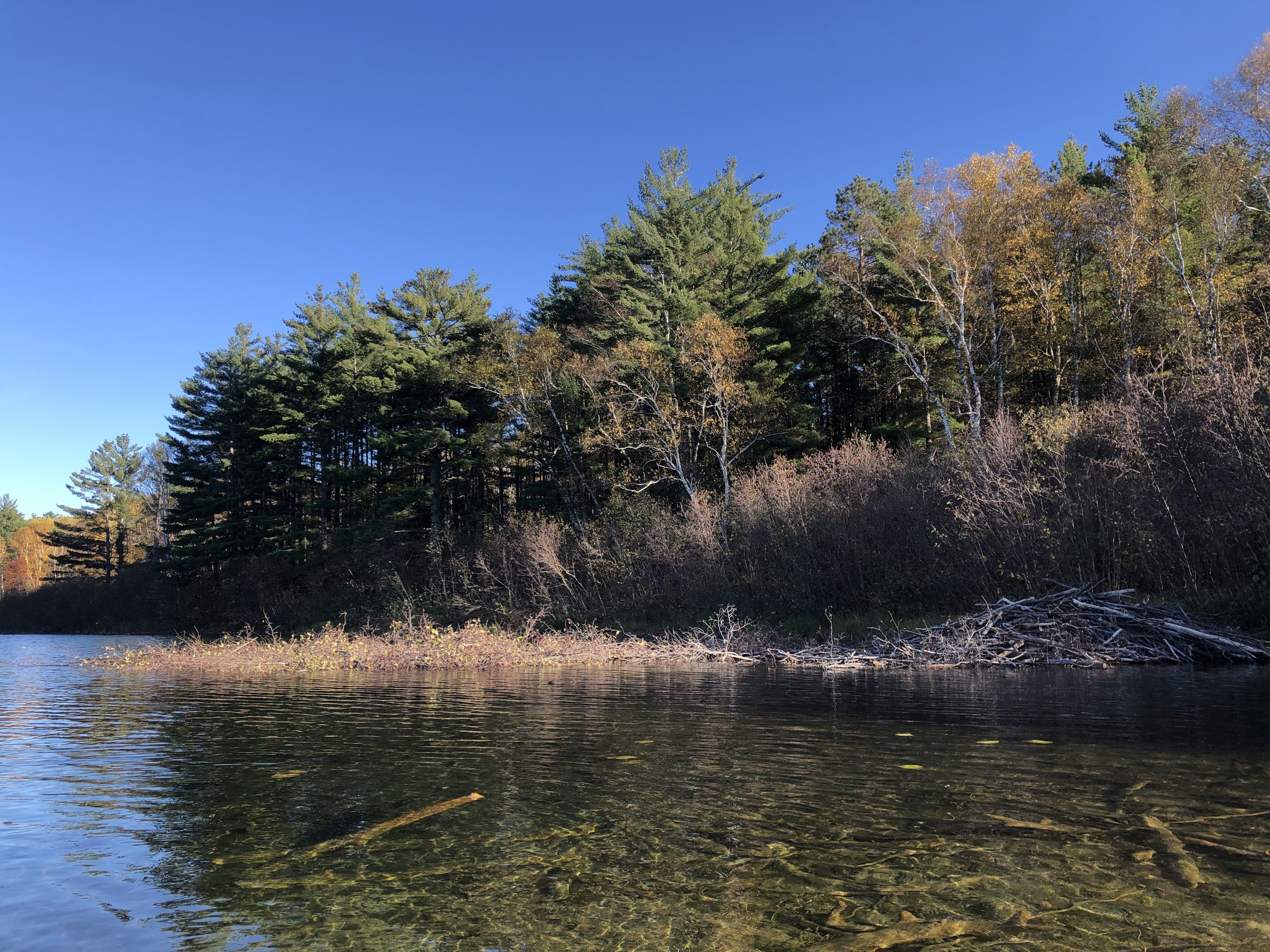
In fall the scenery on and around our lake in north-central Minnesota is wonderful. This post simply shares images taken this October.
Usually these guys jump in the water before my kayak gets this closeBald eagle surveying the lake from a white pineBeavers have been busyRed pines in front of an aspen grove near the lake.
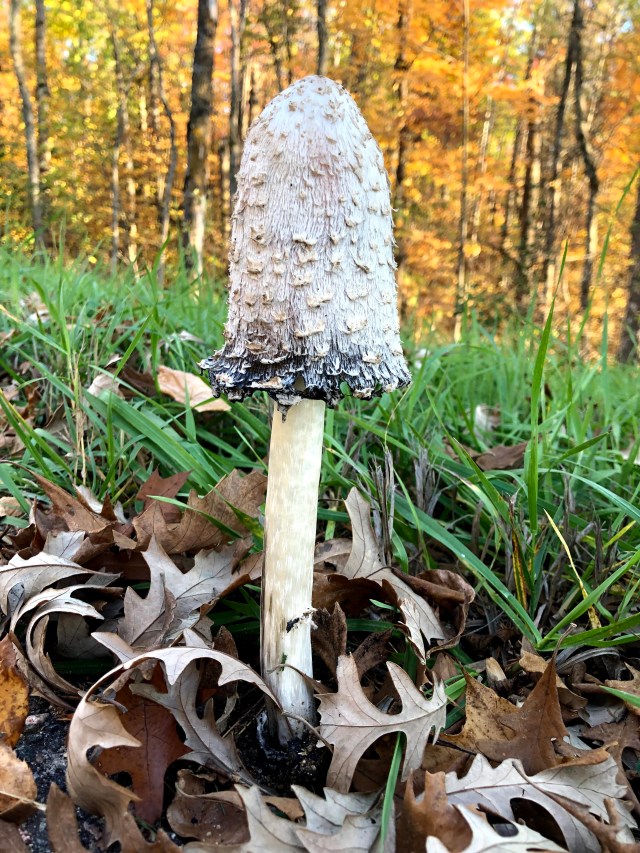
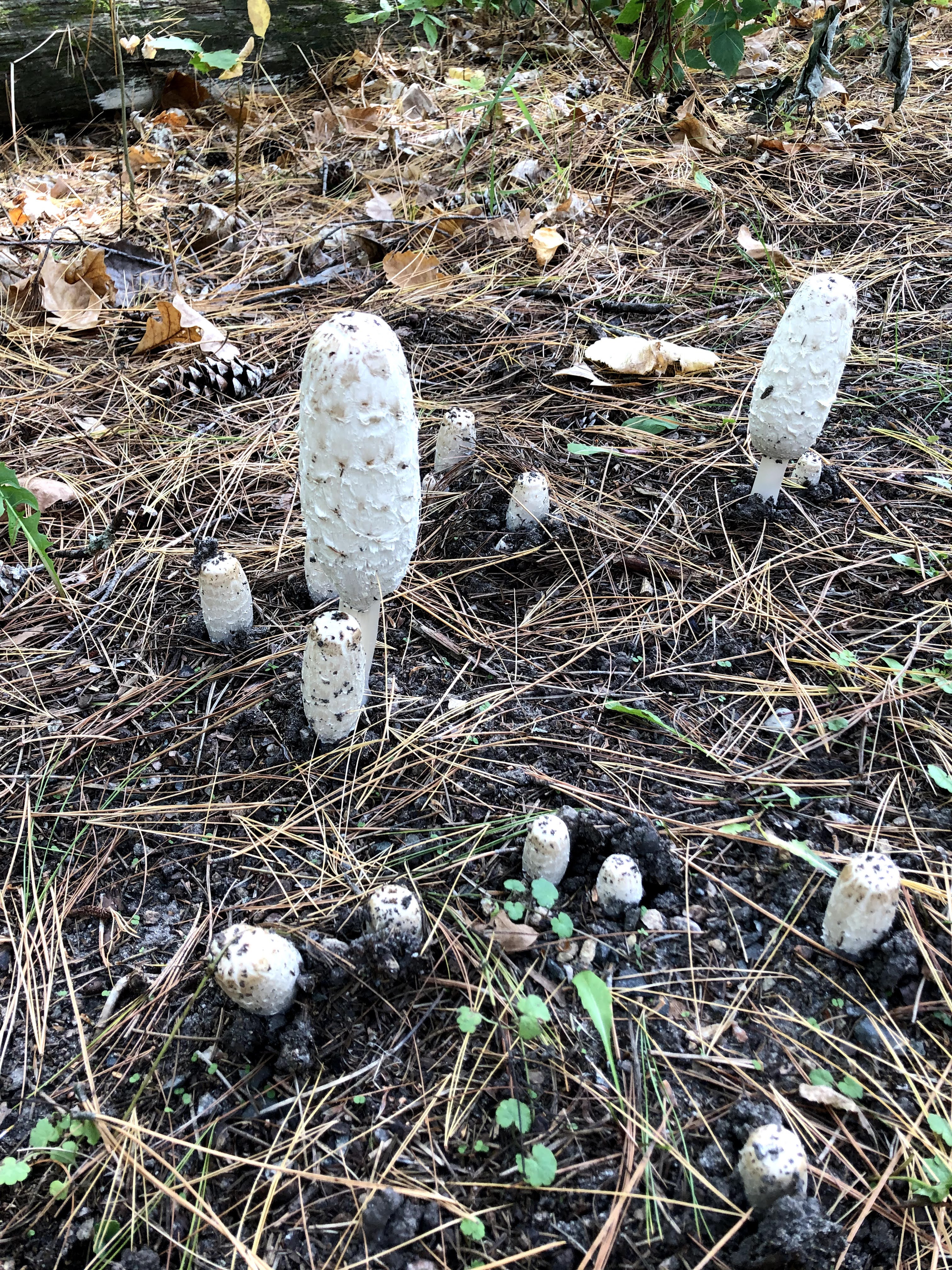
The shaggy inkcap mushroom (Coprinus comatus) is a common mushroom that is also known as lawyer’s wig or shaggy mane. Reportedly is is an excellent mushroom to eat when young, but only immediately after picking. It turns black and dissolves into an inky mess soon after it is picked (which is why it is called inkcap).
The pictures below show a lone inkcap alongside a local road and a group of them seen in Minnesota’s Itasca State Park.
An excellent specimen of shaggy inkcap along a roadside
A group of shaggy inkcaps found in Itasca State Park
The Amanita muscaria mushroom, commonly known as Fly Agaric, is commonly seen in popular culture. It appears as garden sculptures, in video games, in the Disney movie Fantasia, and in Smurf cartoons. We found beautiful specimens of it recently as we hiked through a forest in the north-central Minnesota lake country.
Amanita muscaria mushroom, commonly know as fly agaric
Fly agaric is toxic, but is rarely fatal, and is also mildly hallucinogenic. Its Wikipedia article lists many fascinating details about use of this mushroom throughout history. One interesting item is that eating it can cause dysmetropsia, otherwise known as Alice in Wonderland syndrome. This is a type of hallucination that distorts perceptions of objects, making them seem either larger or smaller than they actually are. Another remarkable suggestion is that the legend of flying reindeer is associated with Finnish shamans under the influence of this mushroom.
Many various mushrooms have appeared here in the fall, they are most prevalent after a rain. Most mushrooms are not as distinctive as Fly Agaric and are not straight-forward to identify. So, I’m not completely certain about the names I’ve assigned to the mushrooms below.
The group of images below show mushrooms found on the forest floor.
Langermannia gigantea Giant puffball
Ampulloclitocybe clavipes Clubfoot
Russula claroflava
Other mushroom were seen growing on wood.
Ganoderma
Ganoderma
Close-up of mushrooms on aspen logs (Trametes versicolor)
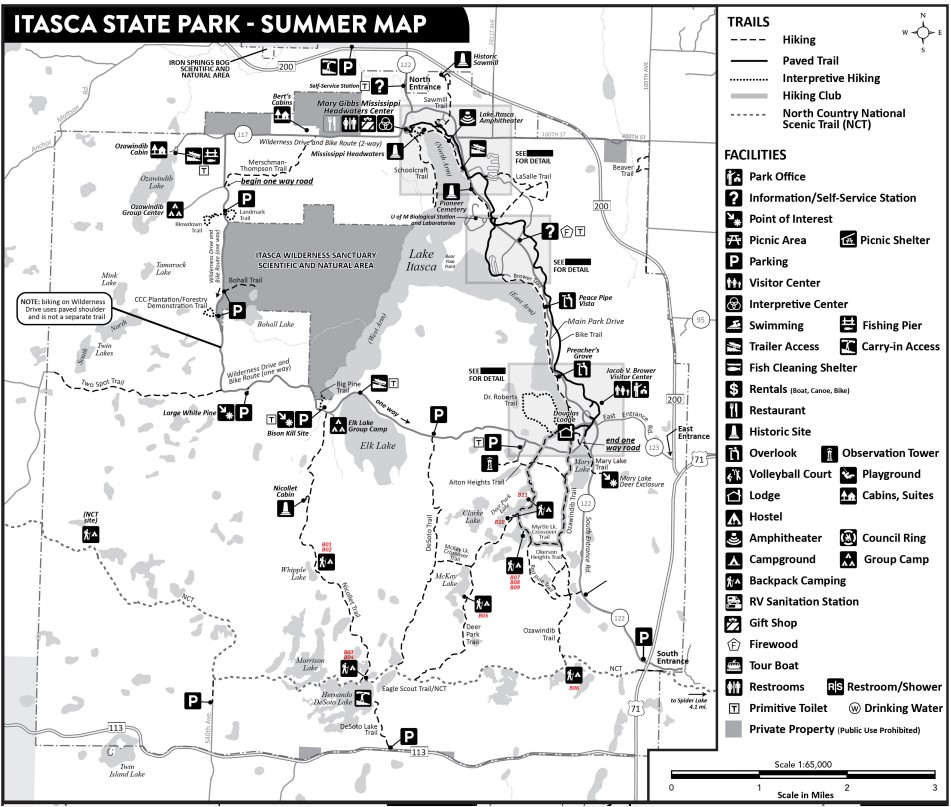
Minnesota’s Itasca State Park is best known for the headwaters of the Mississippi River, which is within the park. Established in 1891 it is the second-oldest state park in the US, only Niagara Falls State Park is older.
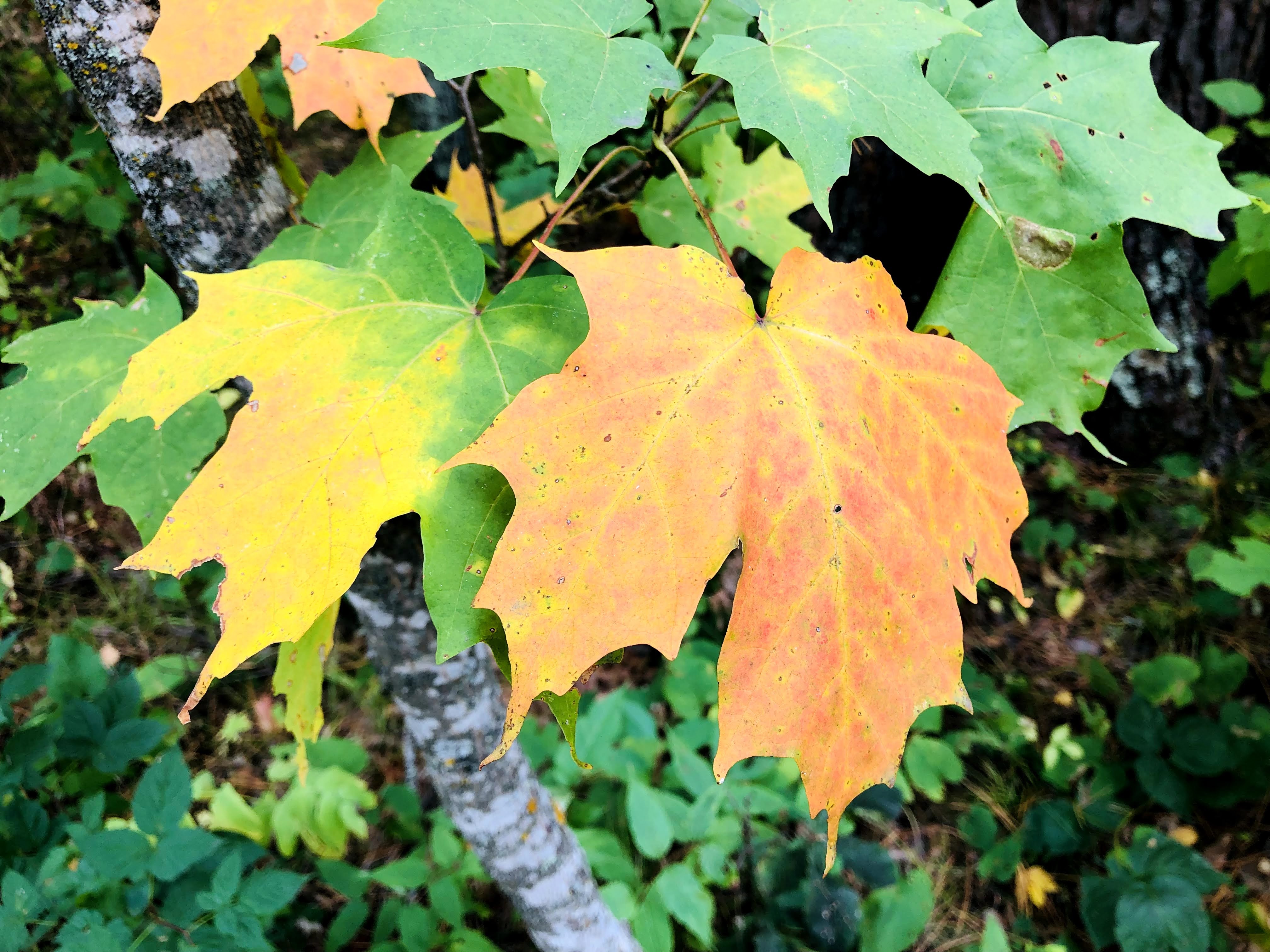
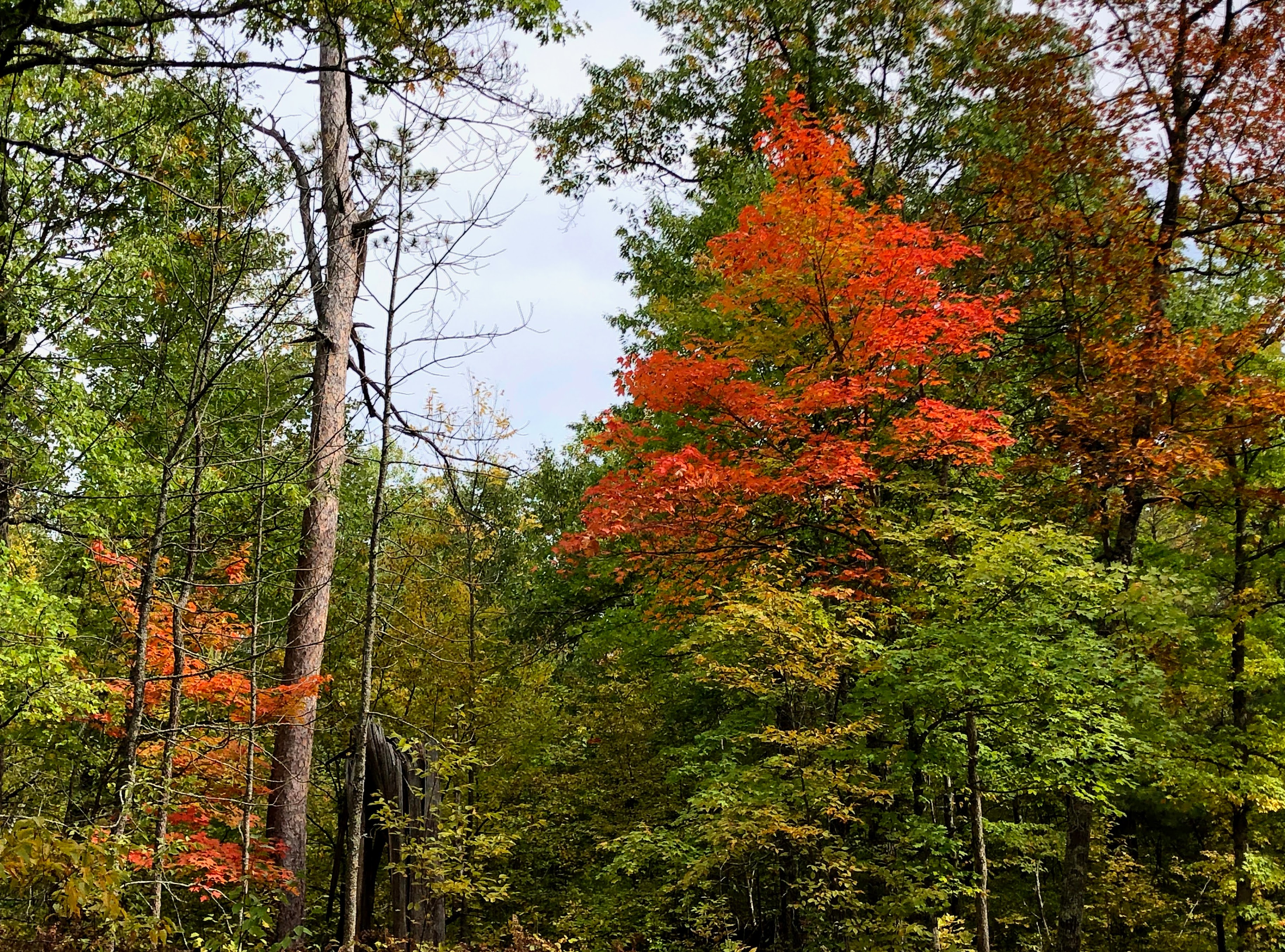
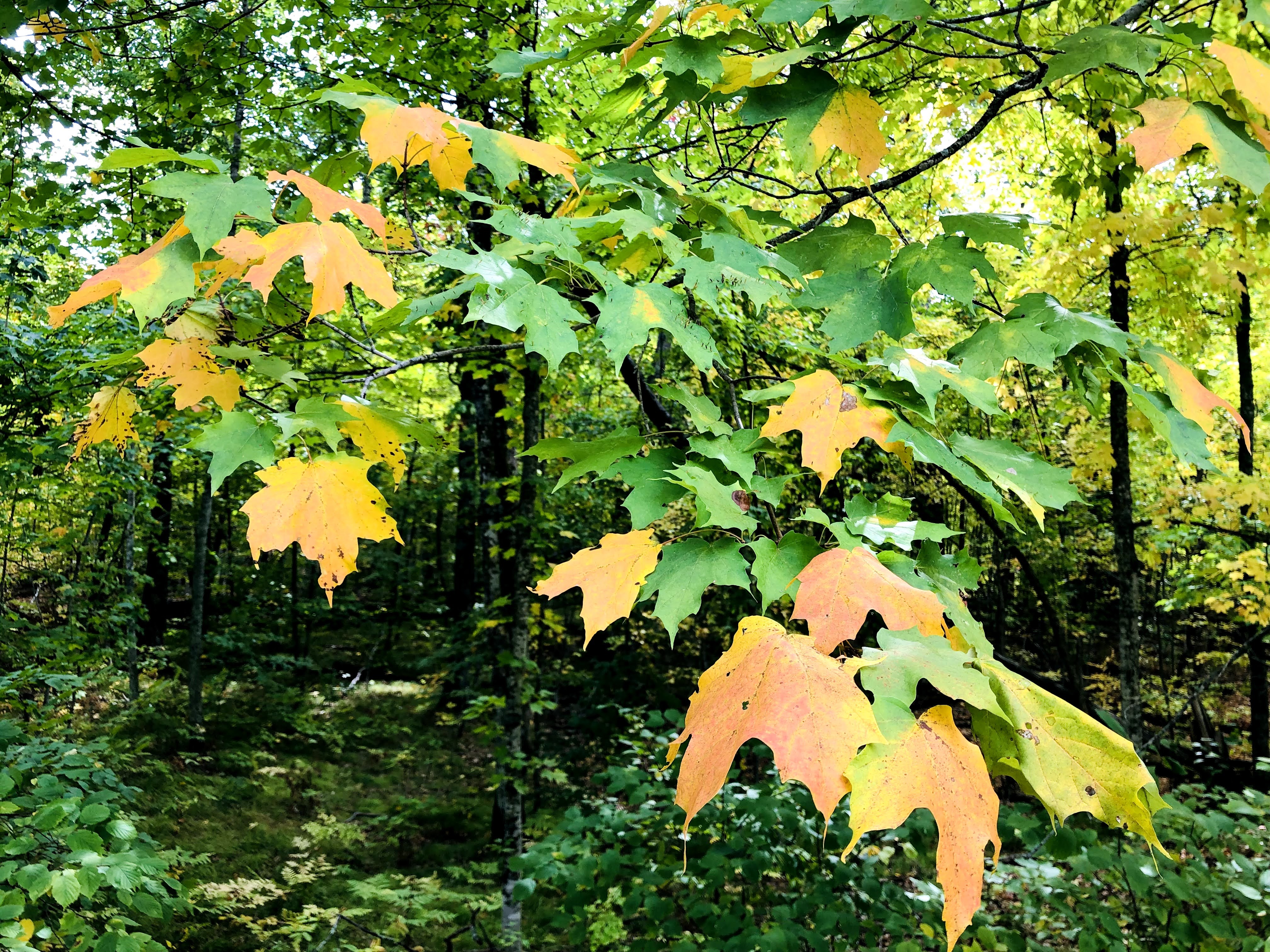
Although it is not yet officially fall, the changing leaves on maple trees in the park were gorgeous on our visit there yesterday, September 19th. We rode our bikes on the 5-mile trail that goes along the eastern shore of Lake Itasca from the Brower Visitor Center to the Mississippi Headwaters, as is shown on the map below. We saw beautiful maple trees mostly along the southern half of this route, oak and aspen trees with leaves turning yellow were seen throughout.