Rainbow

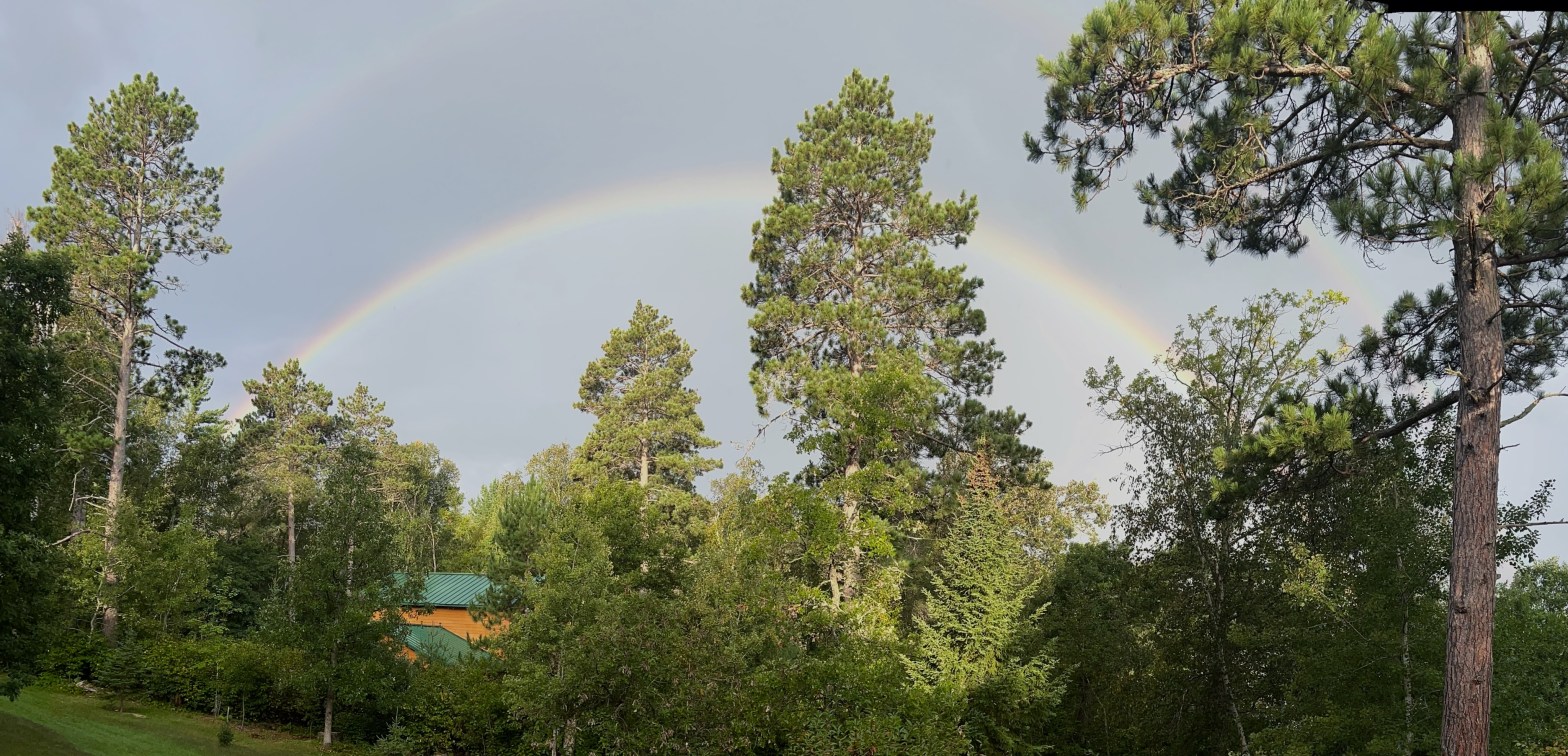
These pictures were taken looking west across our lake around 8AM on September 6, 2024. There was a slight rain shower to the west with sunlight from the east hitting the raindrops. Sunlight is reflected back towards the observer by the raindrops.

Because of the refractive index of water, the wavelength of light, and the spherical shape of the drops, sunlight that hits the top surface of raindrops at an angle of 42 degrees is reflected back most intensely.

The rainbow is reflected light from the cone of raindrops that sunlight hits at angle of about 42 degrees. The exact angle of maximum reflectance is influenced by the wavelength of the incident light. The slightly different wavelengths corresponding to different colors of light are what cause the reflected light of the rainbow to appear with separated colors.

Primary and secondary rainbows

A smaller amount of sunlight hitting raindrops is reflected twice within the drops. This light reaches maximum intensity at 51 degrees and produces a secondary rainbow, fainter and with a wider diameter than the primary rainbow.

Violet, with the shortest wavelength, is along the inside arc of a primary rainbow and red, with the longest wavelength is on the outside arc. The geometry of double reflection causes the order of these colors to be reversed in the secondary rainbow, as can be seen in the picture above.

Explaining the physics behind rainbows has been a focus of many of the most famous philosophers/scientists in history, from Aristotle to Descartes to Newton.
Northern Lights Return

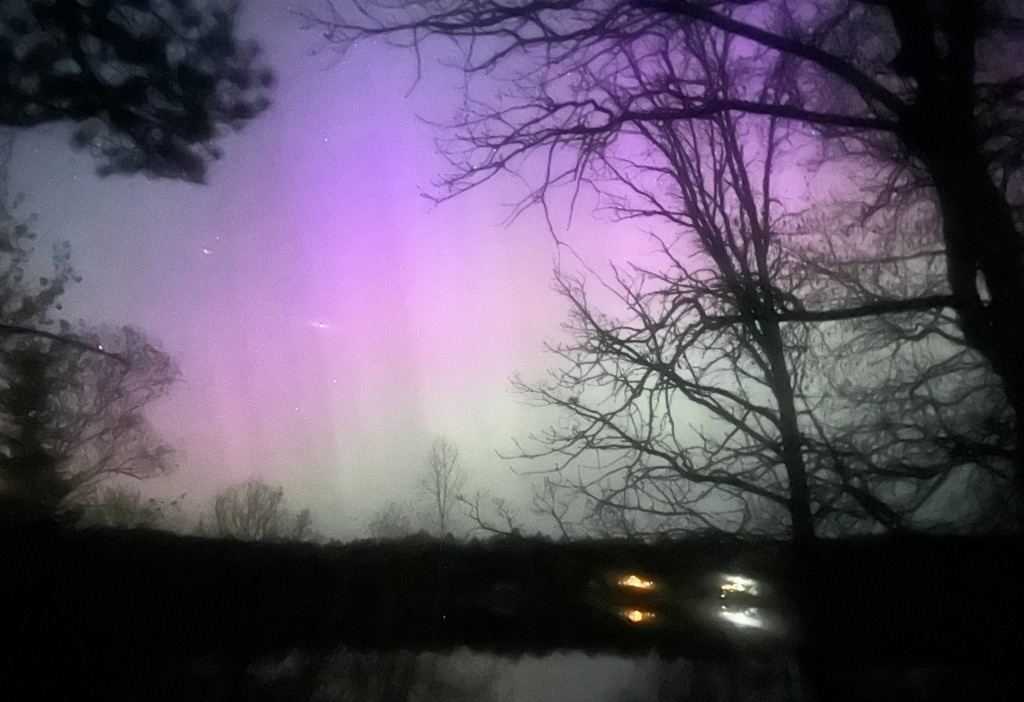
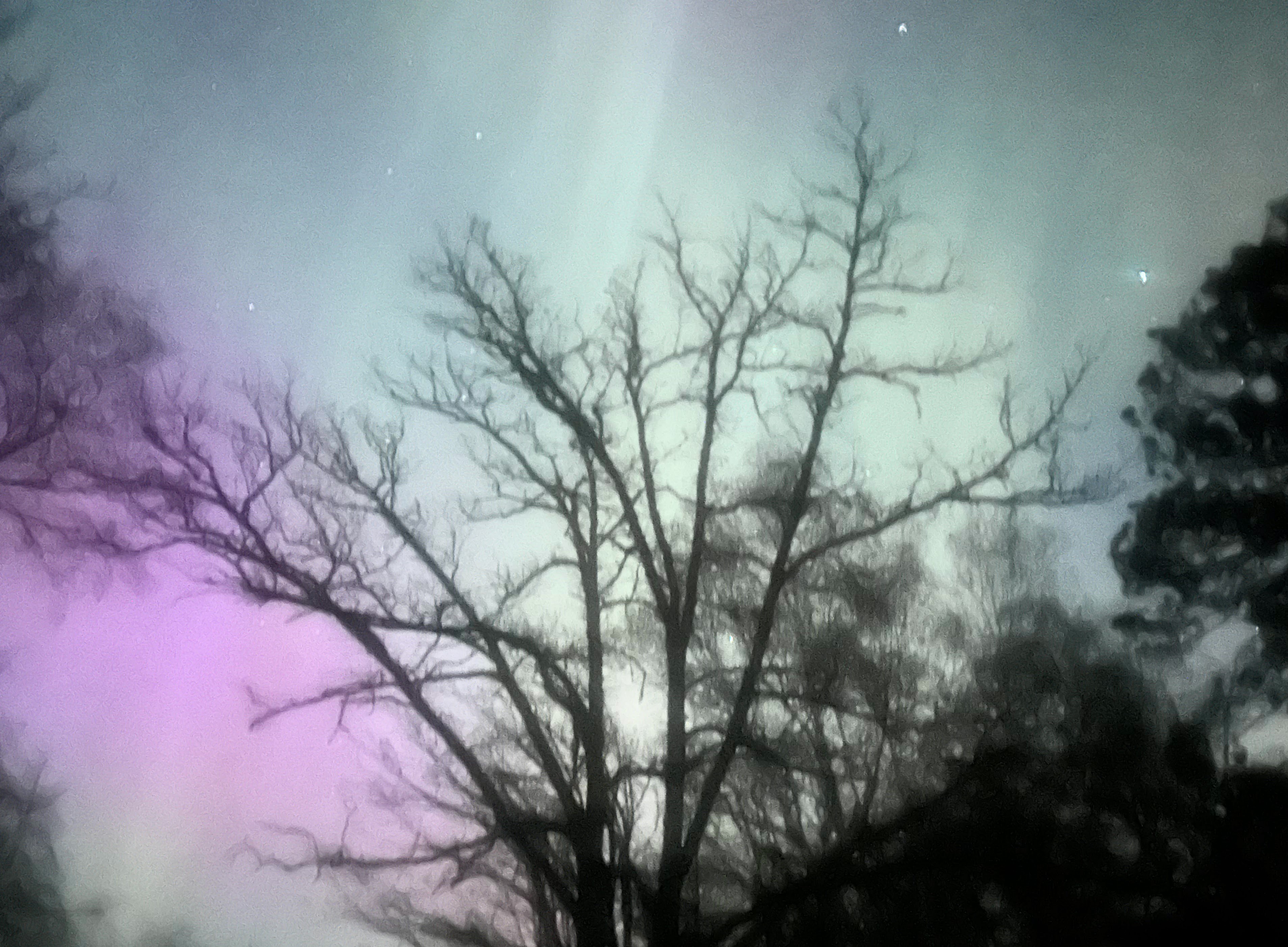
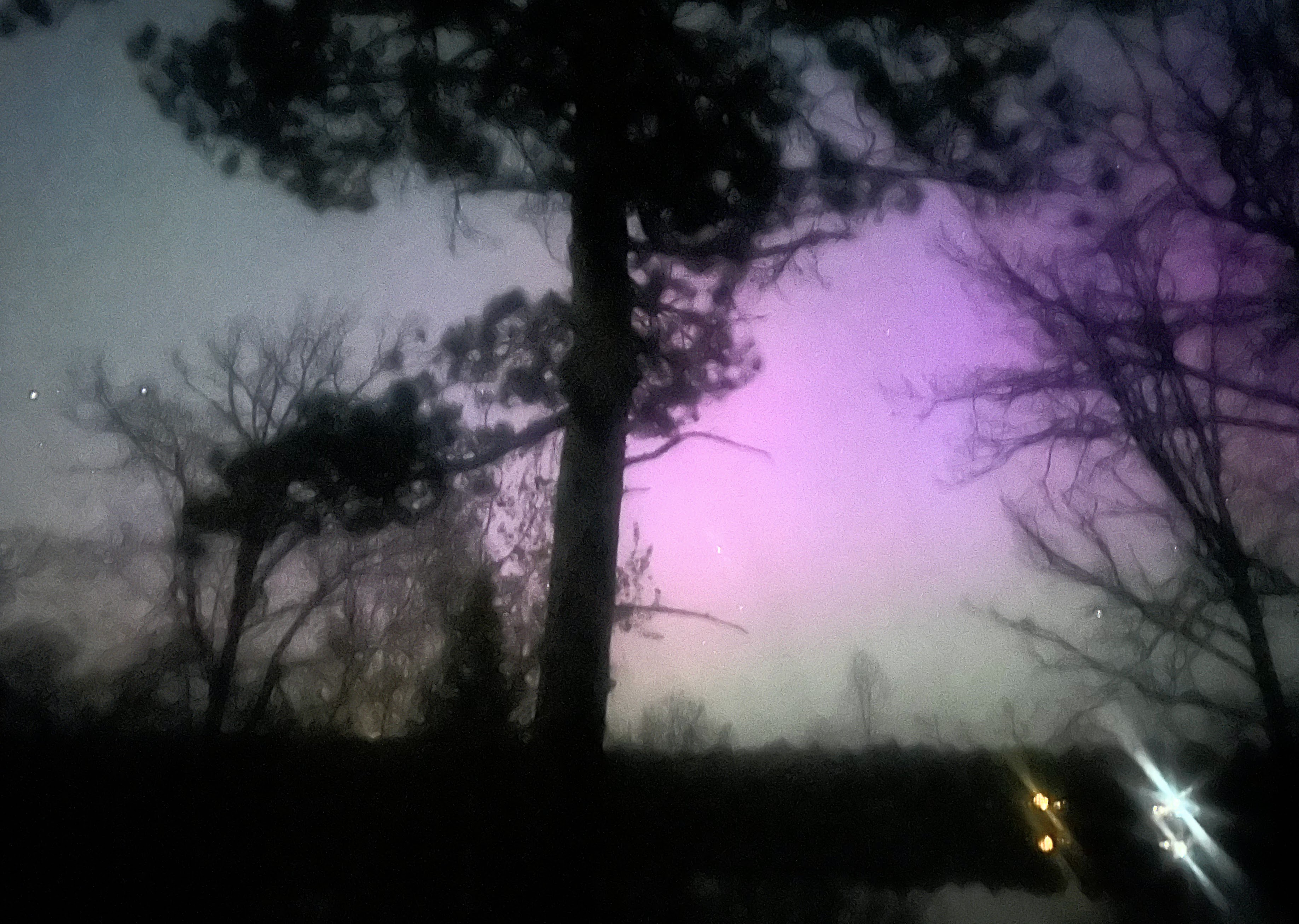
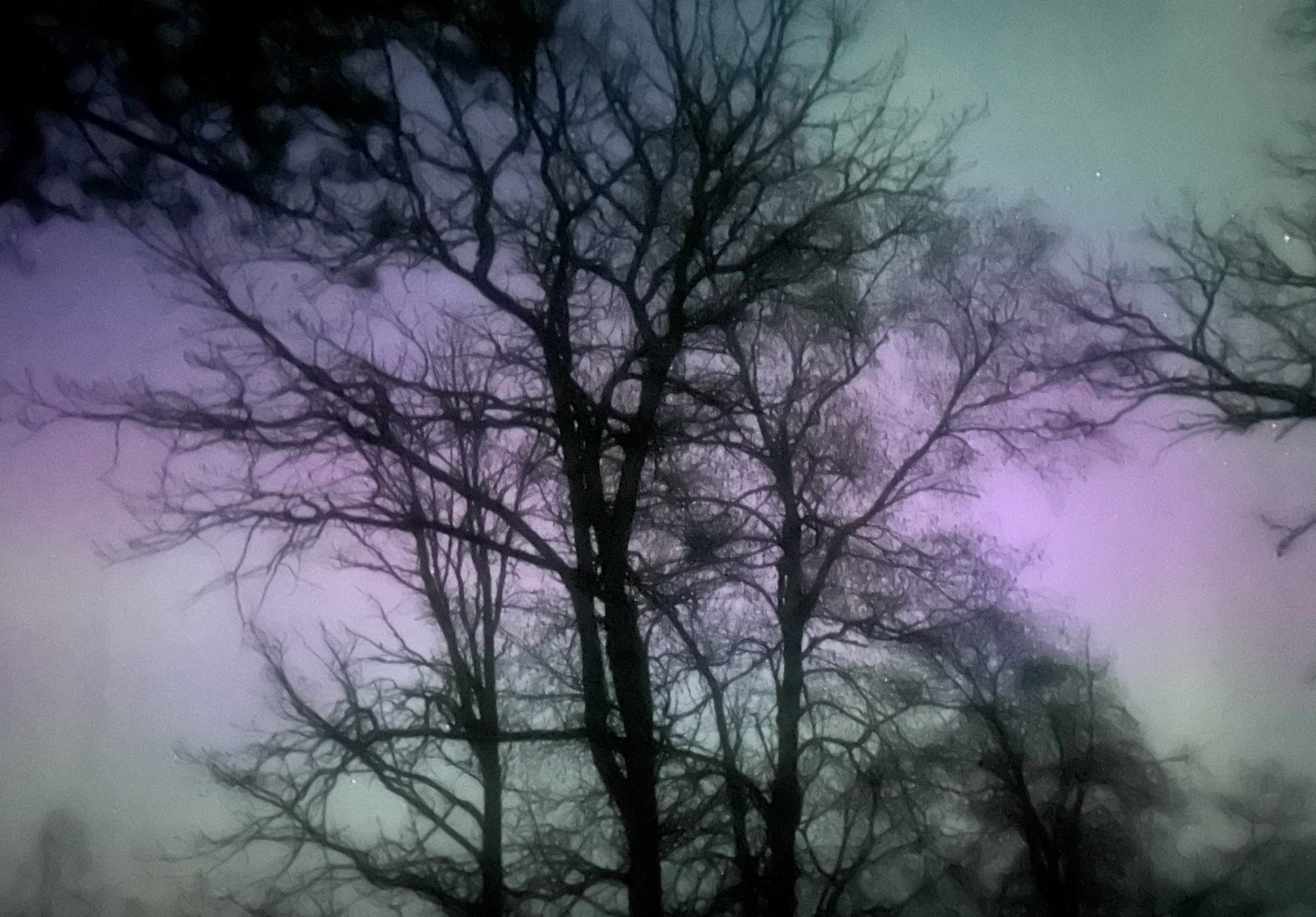
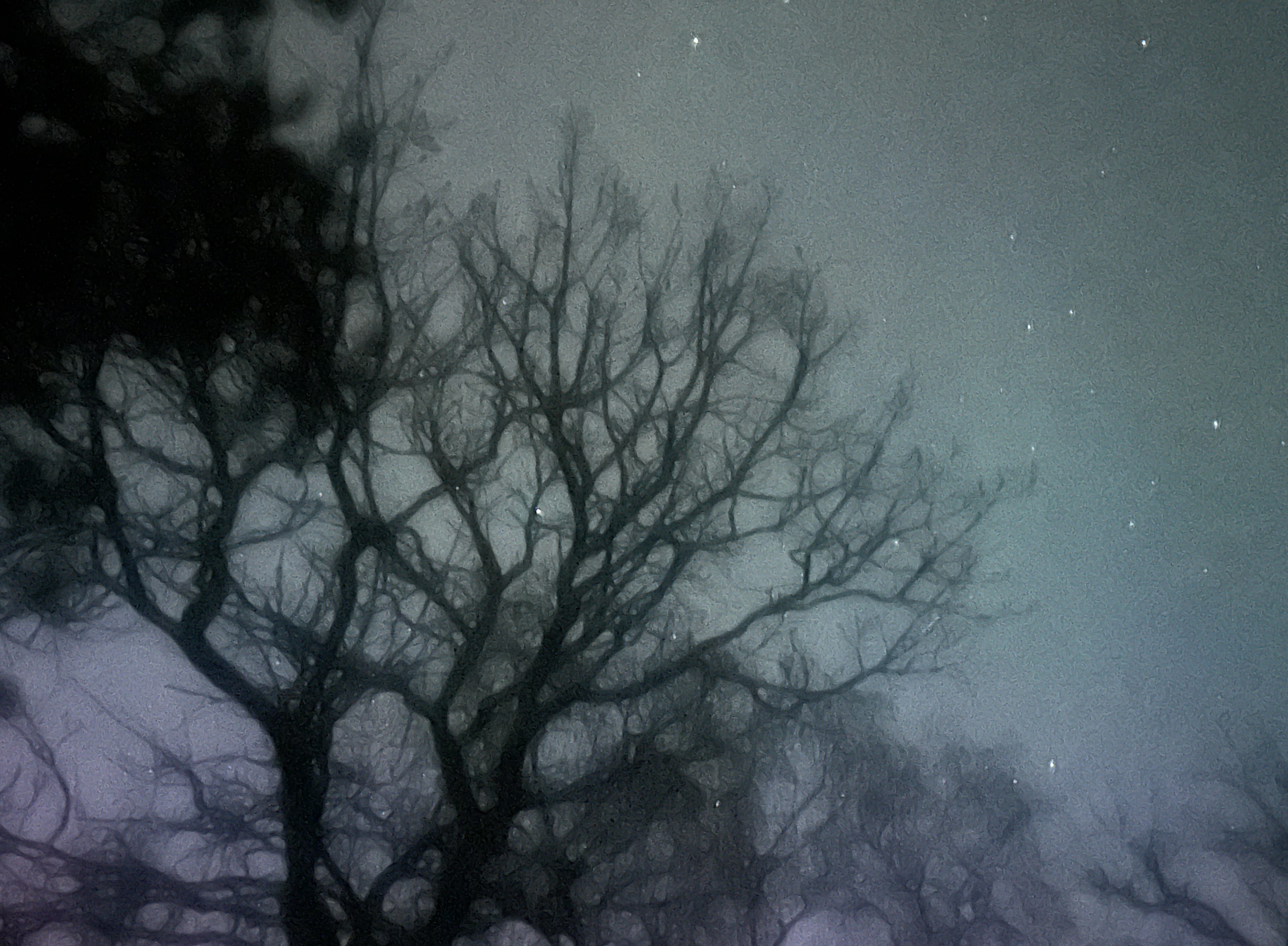
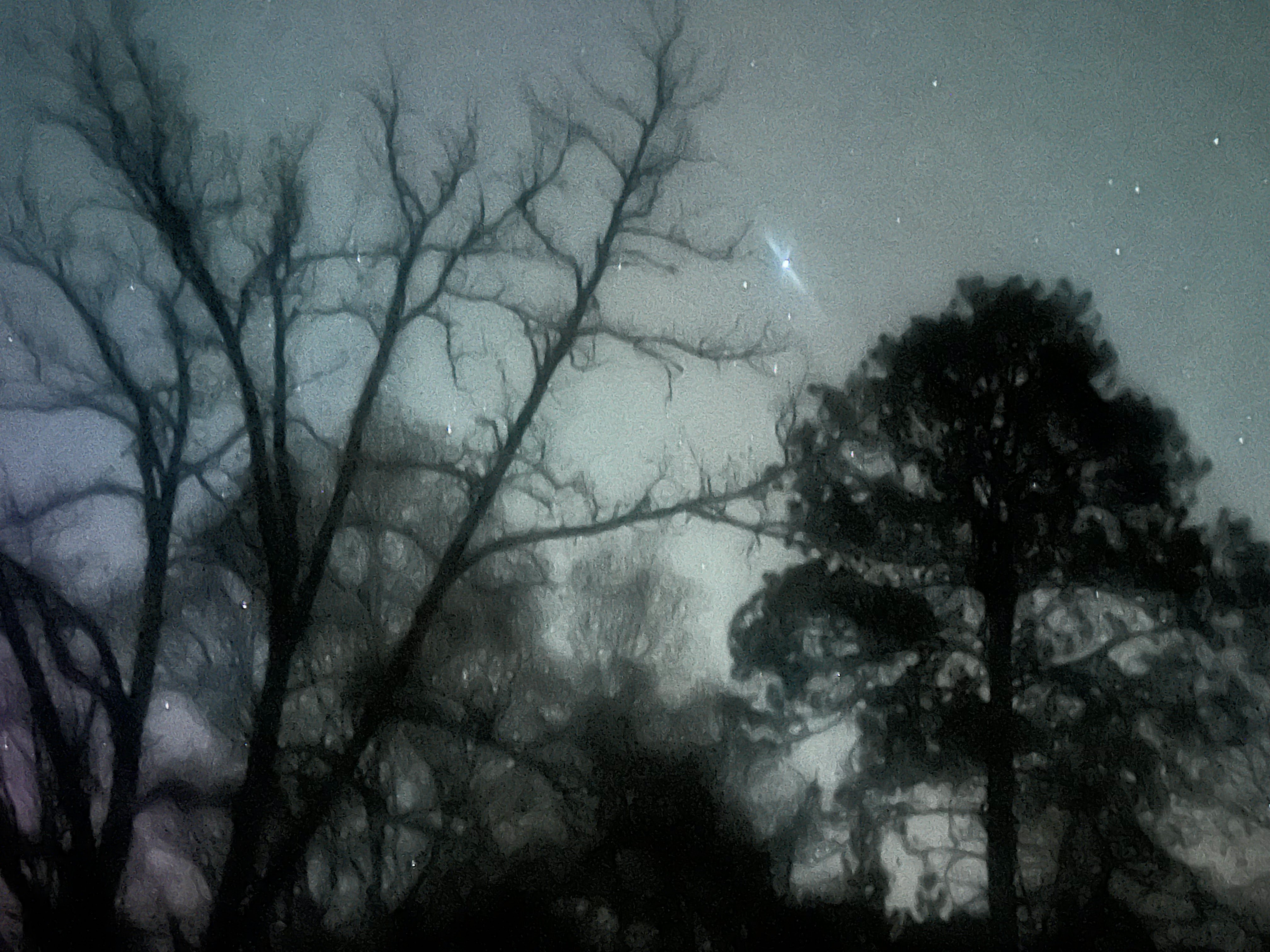
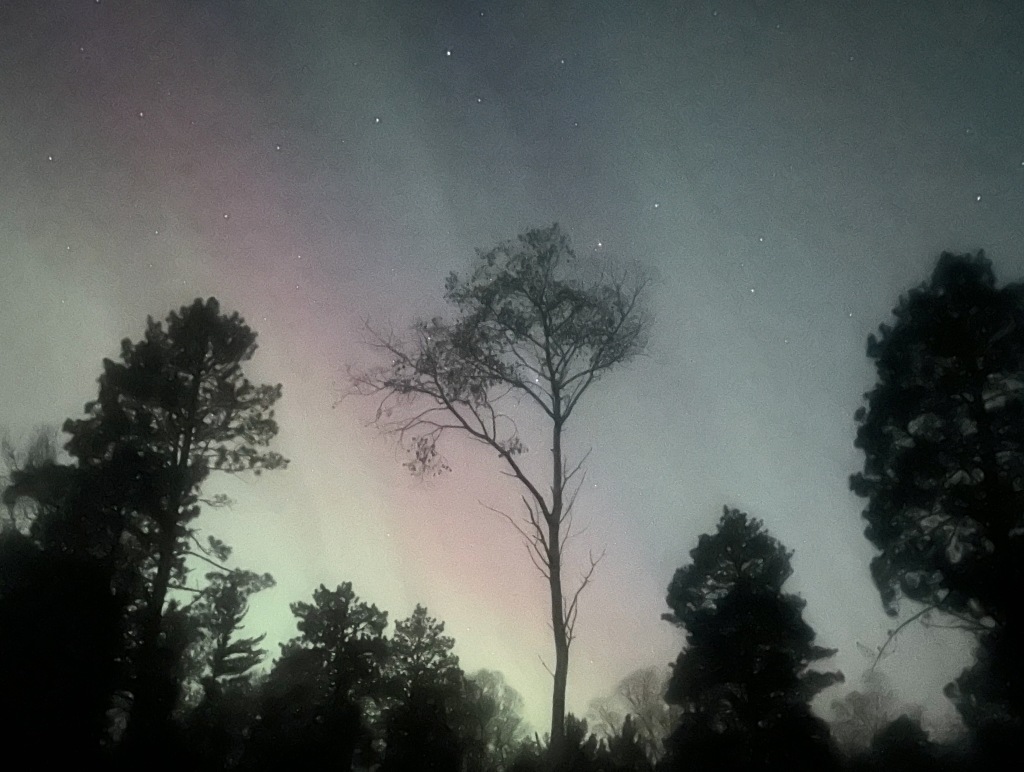
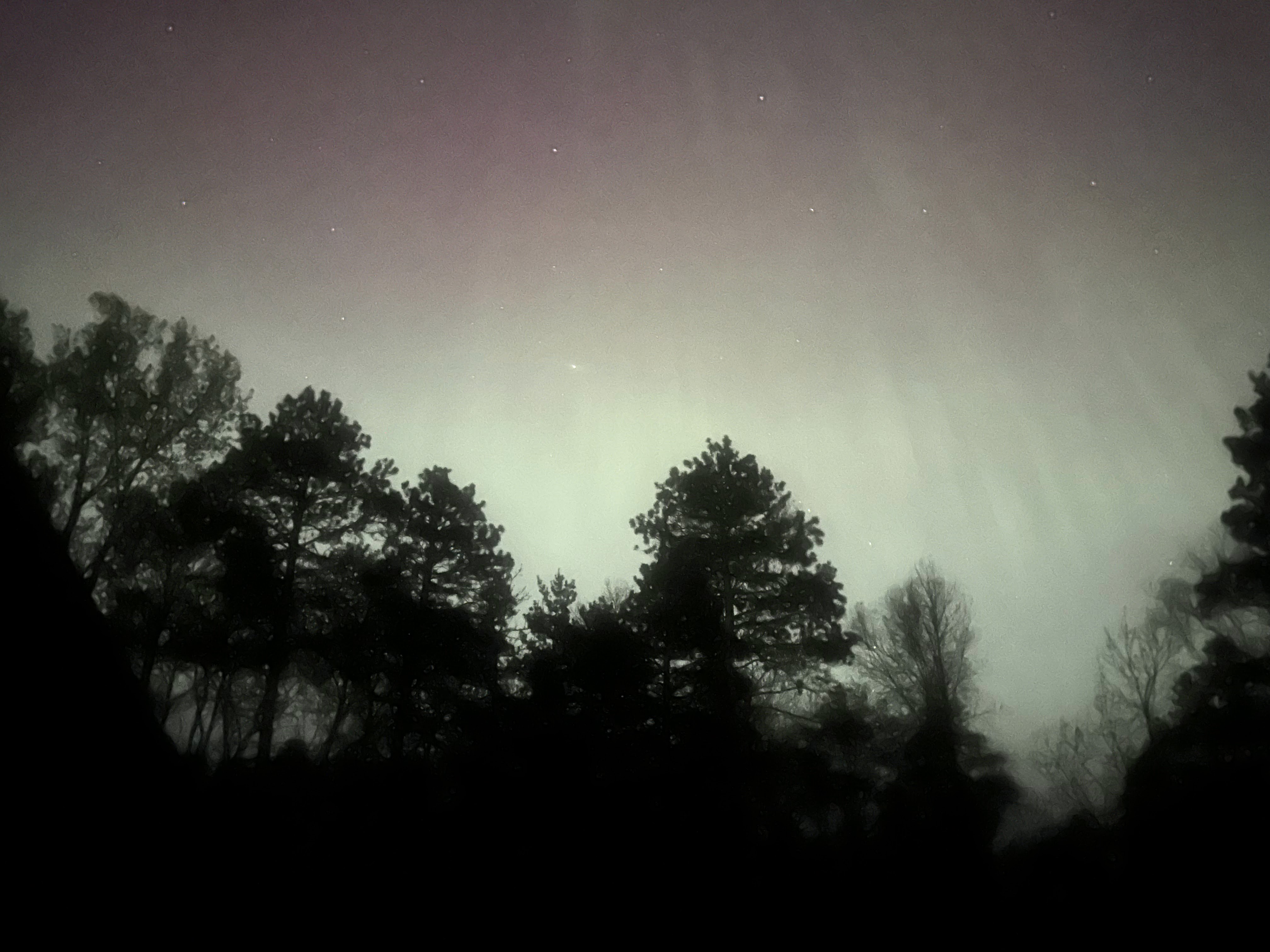
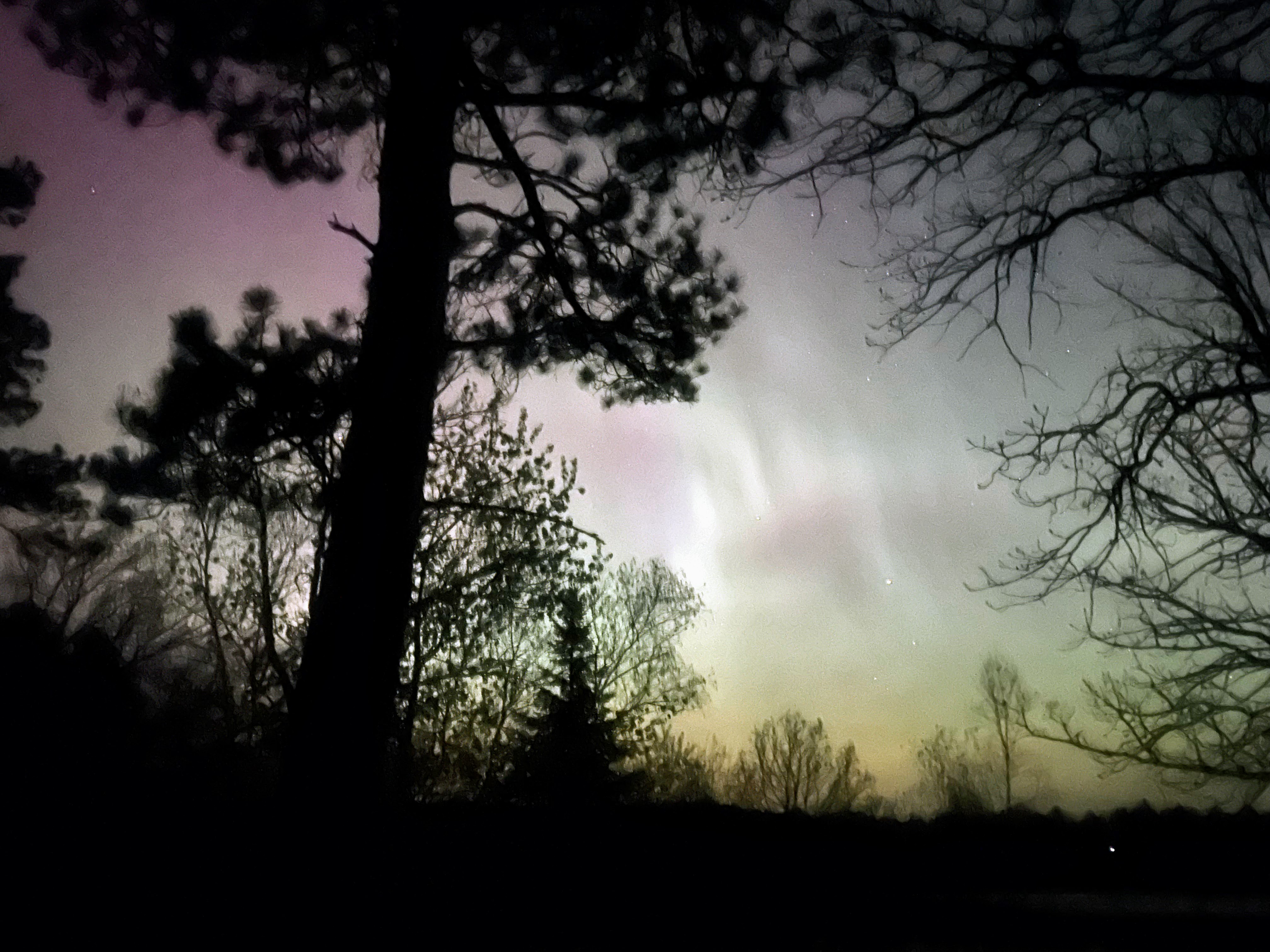
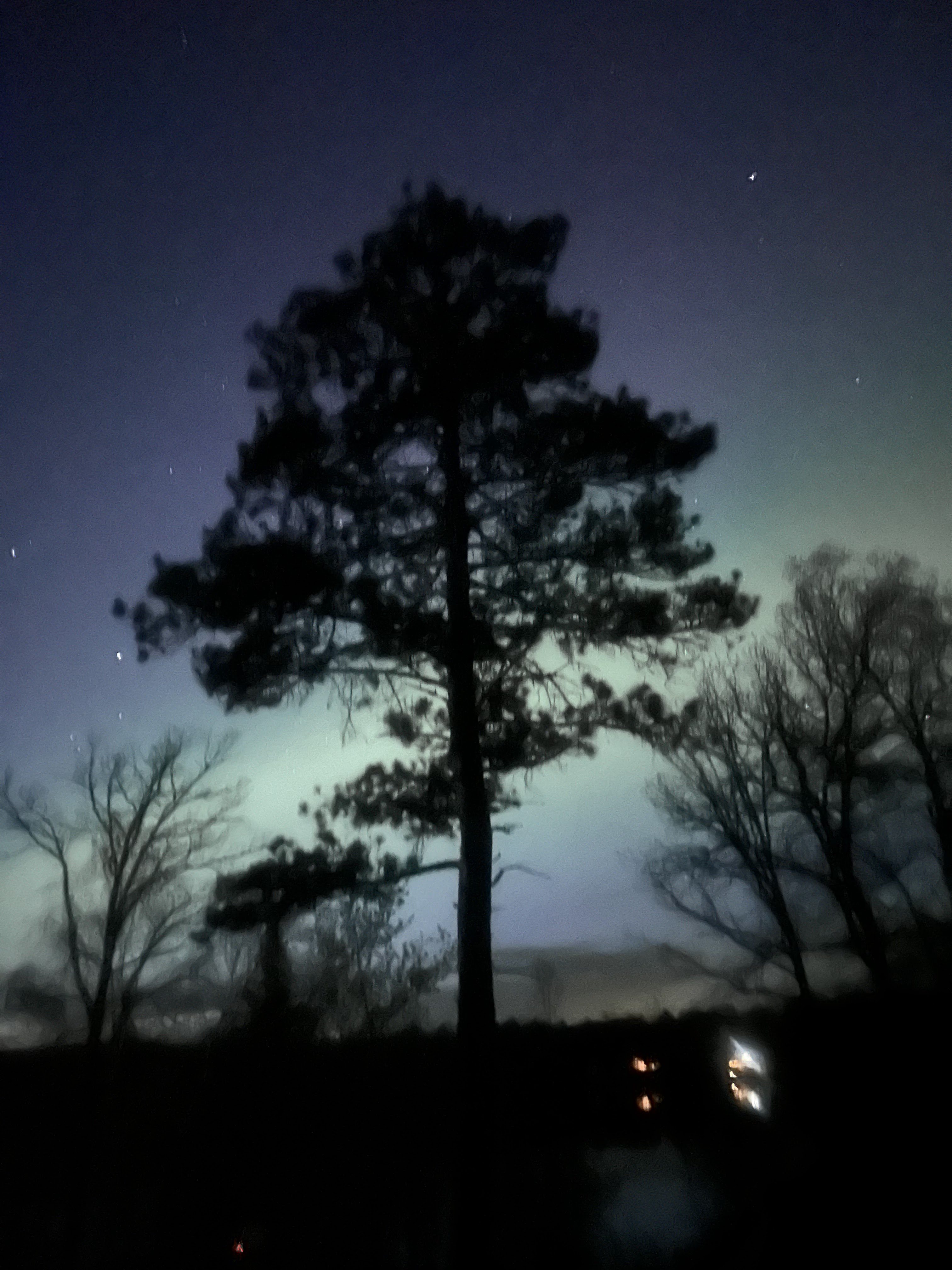
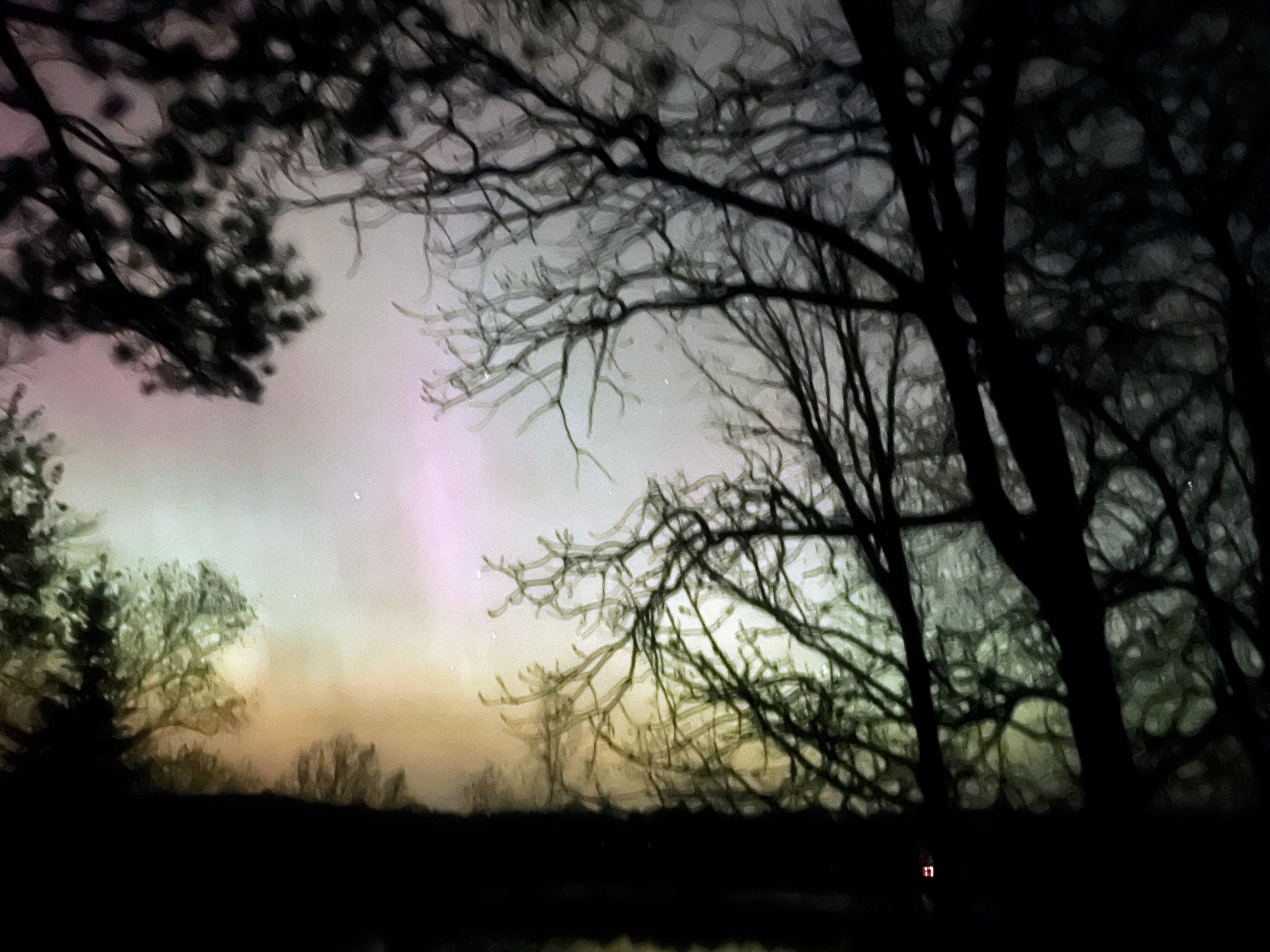
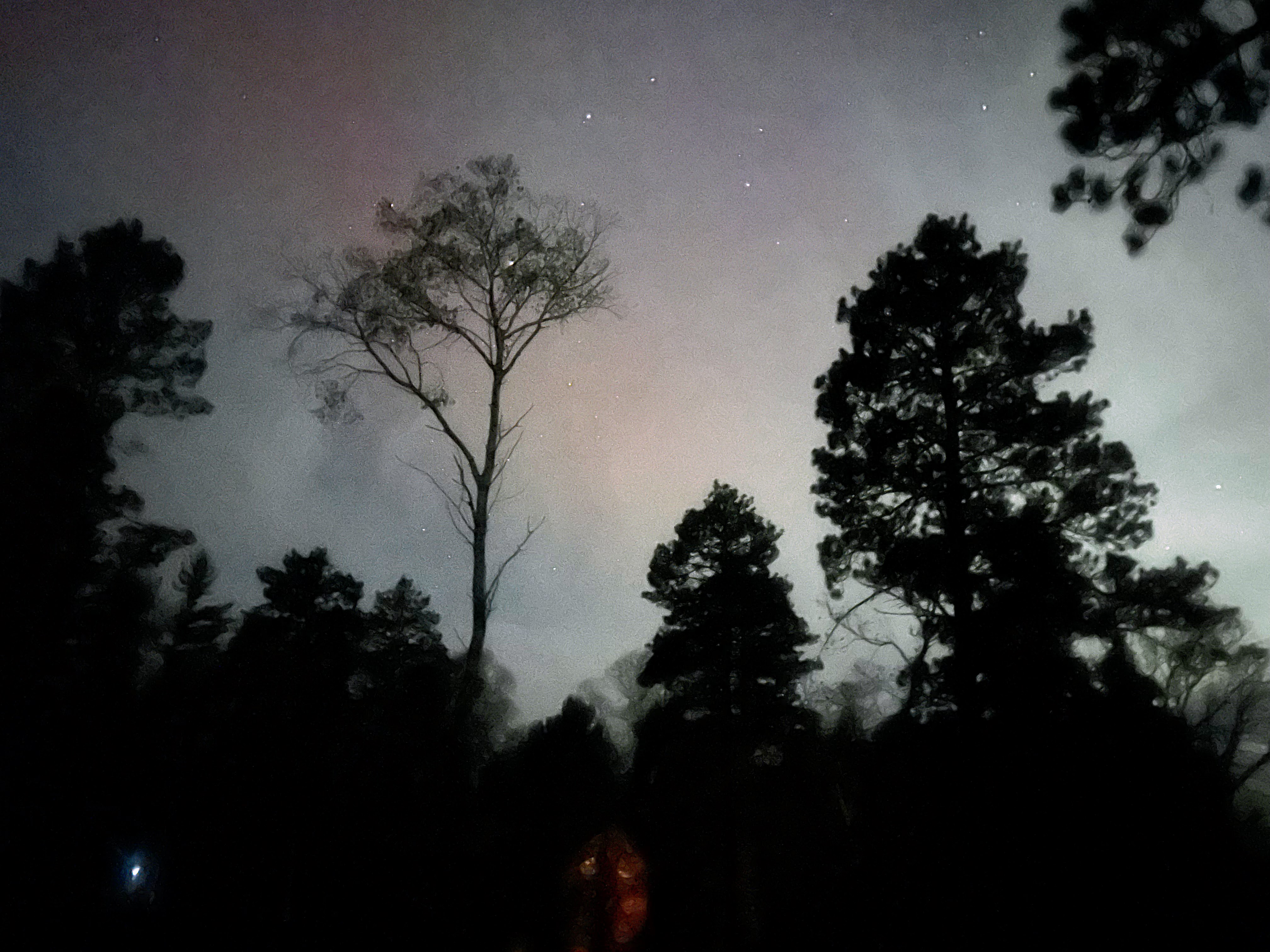
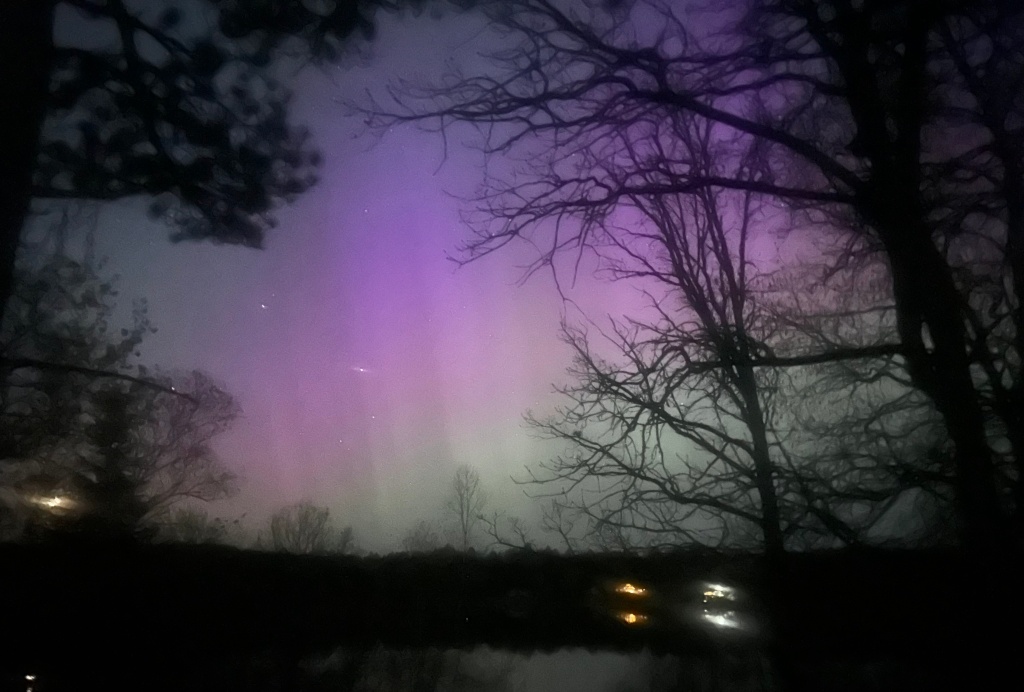
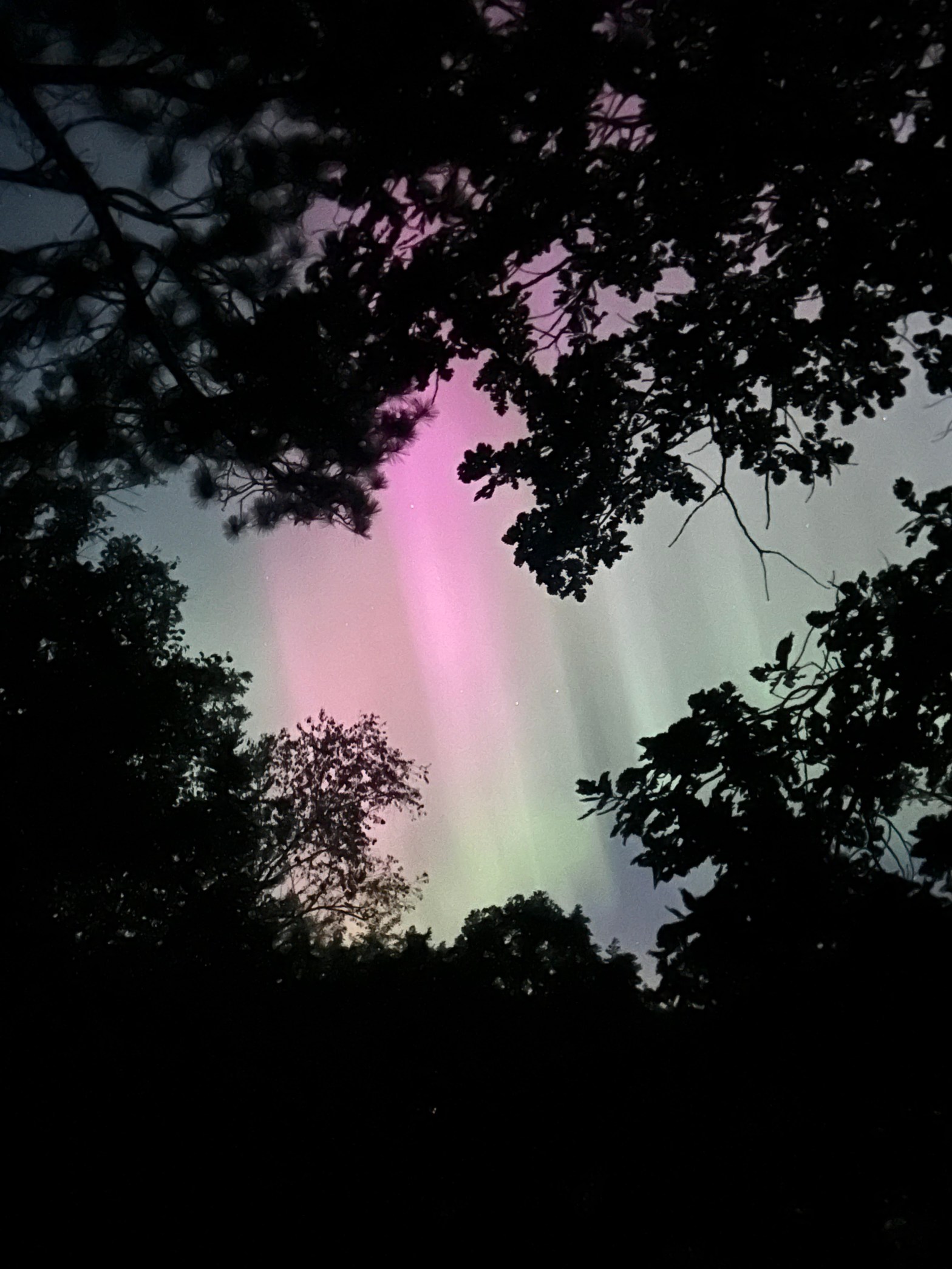
The pictures below were taken last Sunday, August 11, just three months after a similar show of Northern Lights in May.

I had thought Northern Lights predominantly occur in winter. This really does not make sense though. They are caused by interactions between solar activity and the Earth’s magnetic field and neither of these things change because of the Earth’s seasons.

Northern Lights are undoubtedly more noticeable during the long dark nights of winter. This must be why we typically associate them with wintertime.

There are forecasts that solar activity will be high during the upcoming winter of 2025, which will likely lead to spectacular Northern Light shows.

Antelope Island 2024

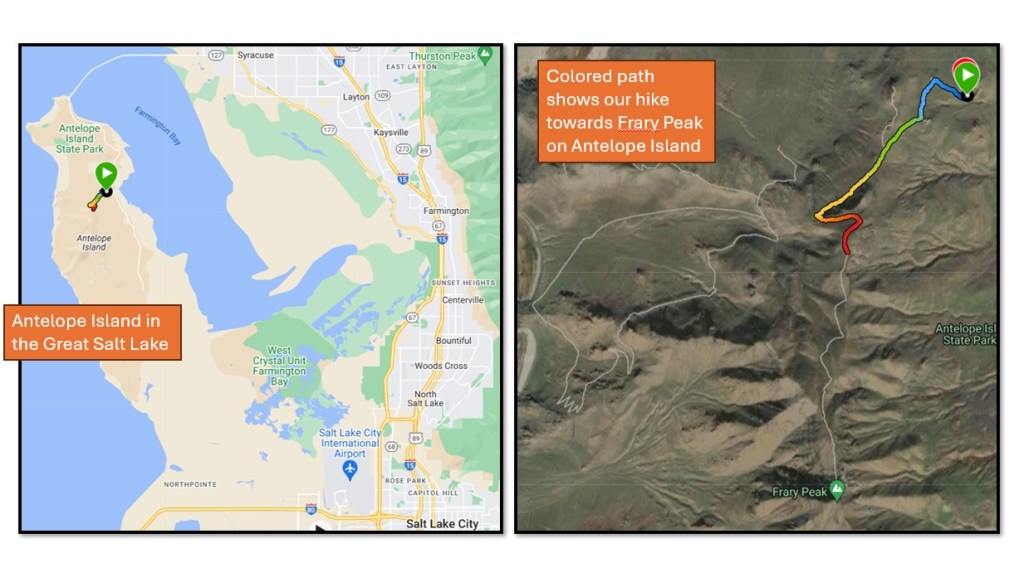
Antelope Island is a peninsula that juts out into the east side of the Great Salt Lake in Utah. The Utah State Park on Antelope Island is a short drive from Salt Lake City. Access to the park across a causeway is seen in the picture above.

There are many hiking trails in the state park, on this occasion we tried the trail to Frary Peak, as marked on the maps above. We had the optimistic intention of making it all the way to the top but bailed out about half-way.

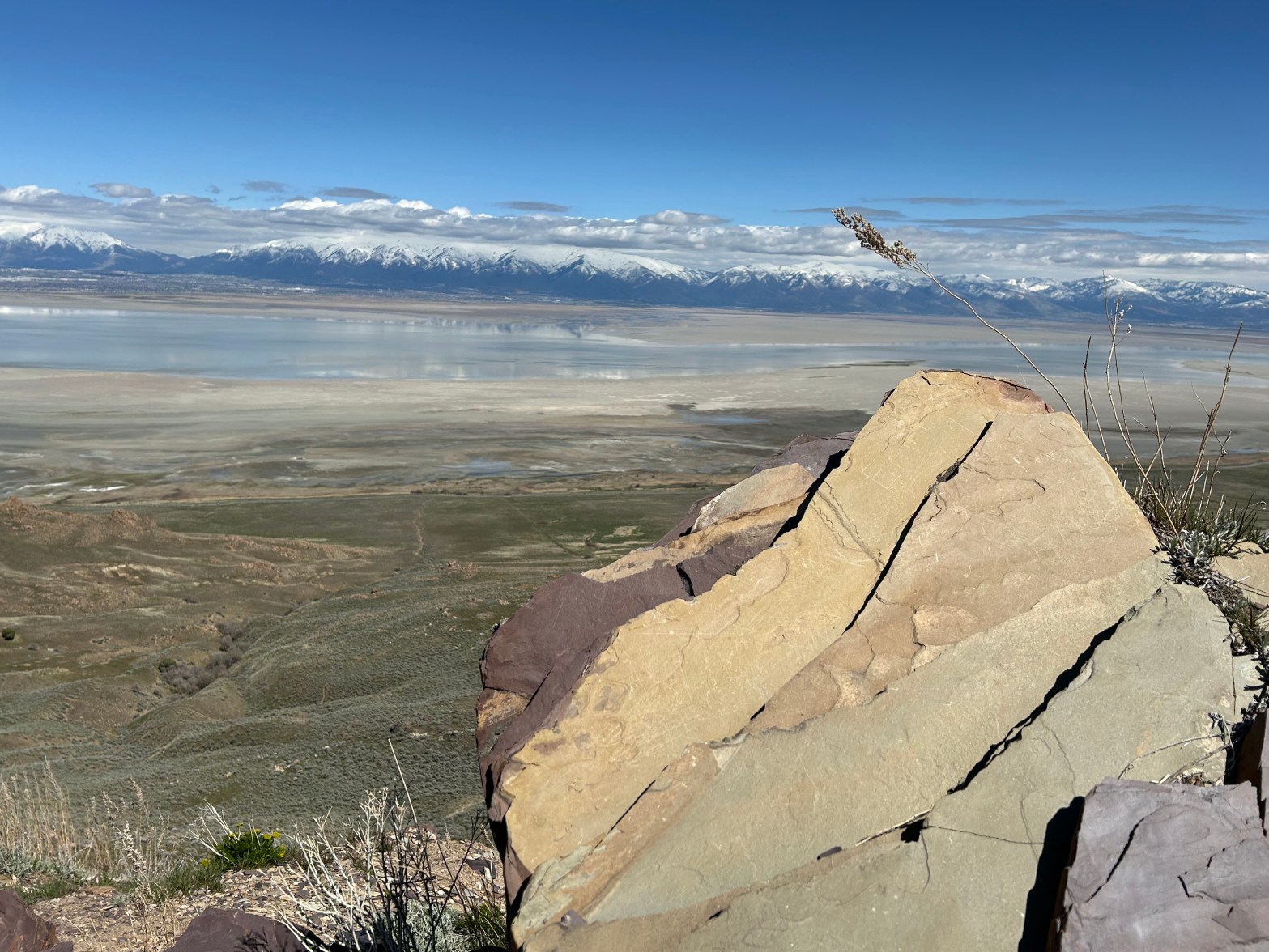
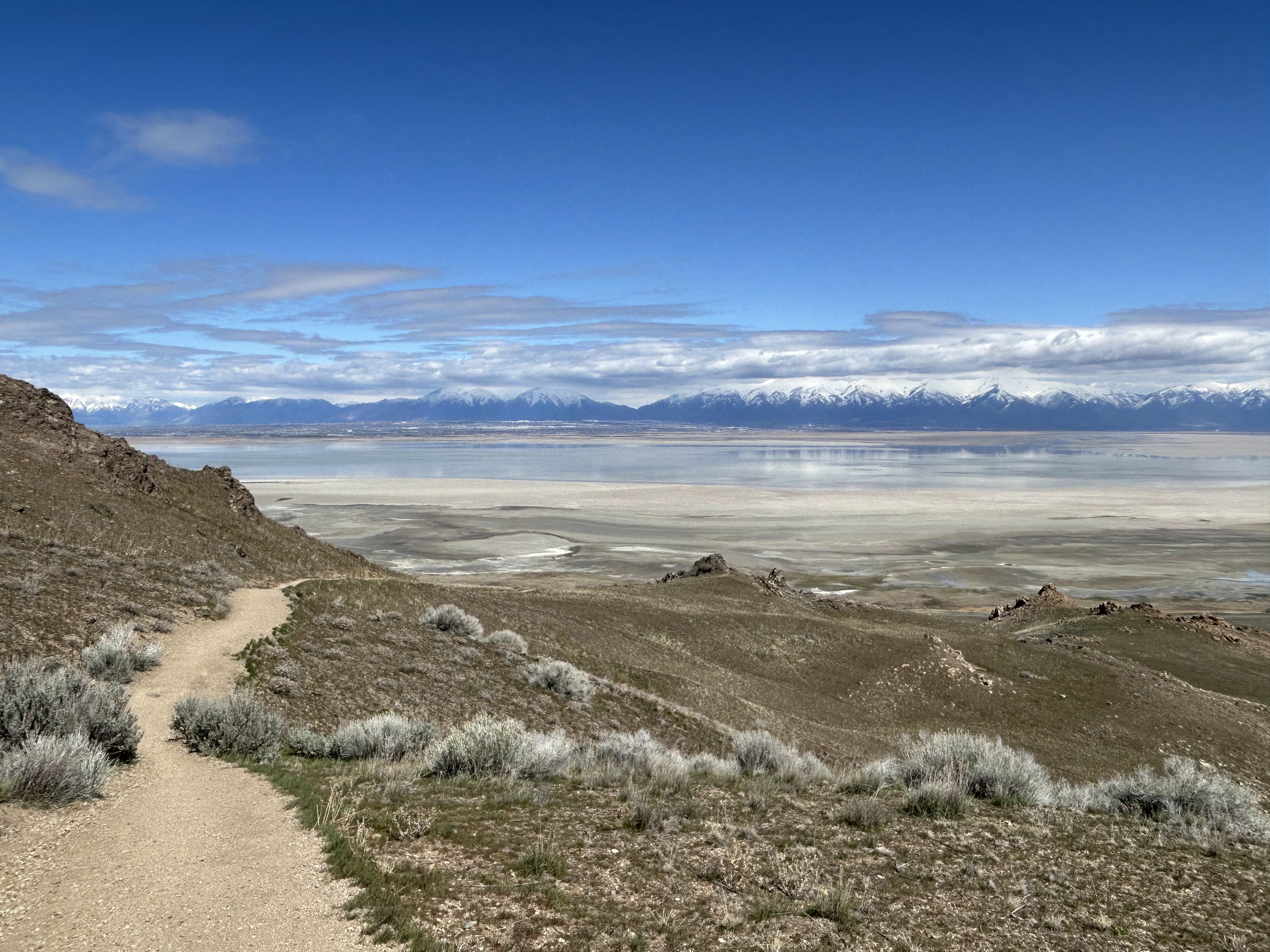
The view looking down from the trail to Frary Peak

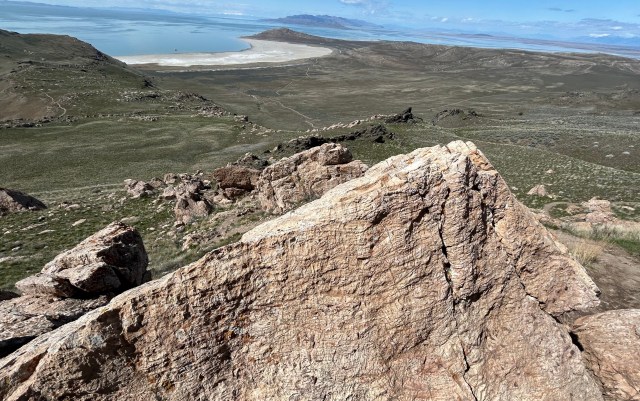
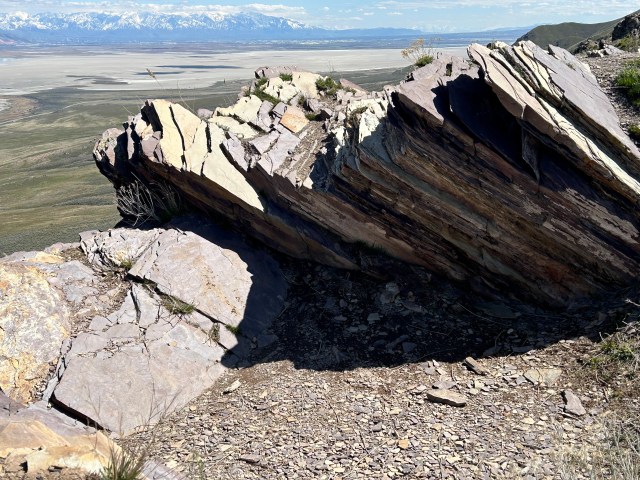
Walking up the trail you pass rock layers of diamictite (above left), dolomite (center), and slate (above right). Diamictite capped by the carbonate dolomite is an assemblage found in several sites world-wide and is cited as evidence of “Snowball Earth” in pre-Cambrian times.

There are similar outcrops of diamictite in the nearby Wasatch Mountains. Once I find these, I hope to do a follow-up post focusing on why these rocks cause geologists to hypothesize that the earth was completely covered in ice 700 million years ago.

Ski Slopes in Summer

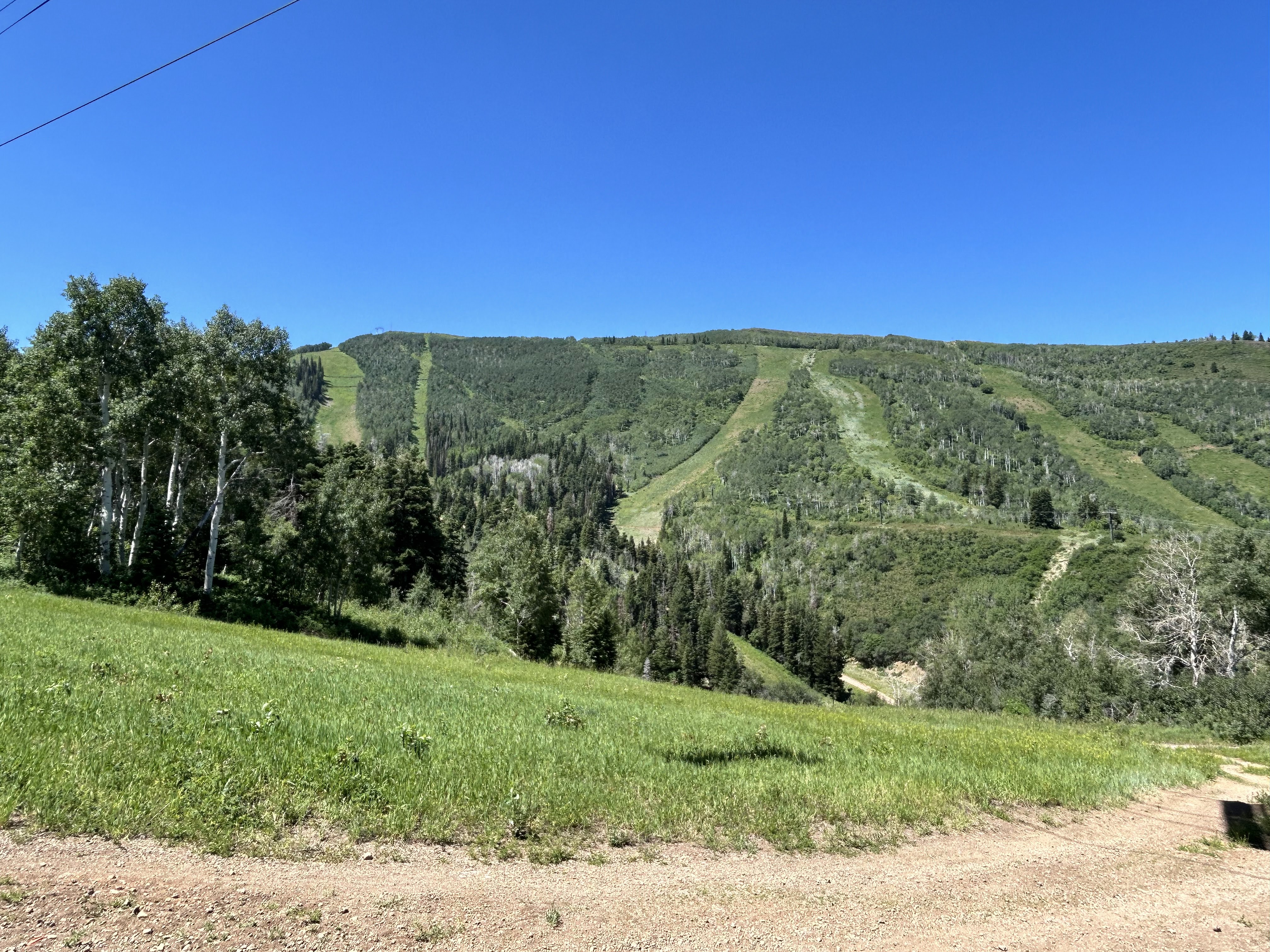
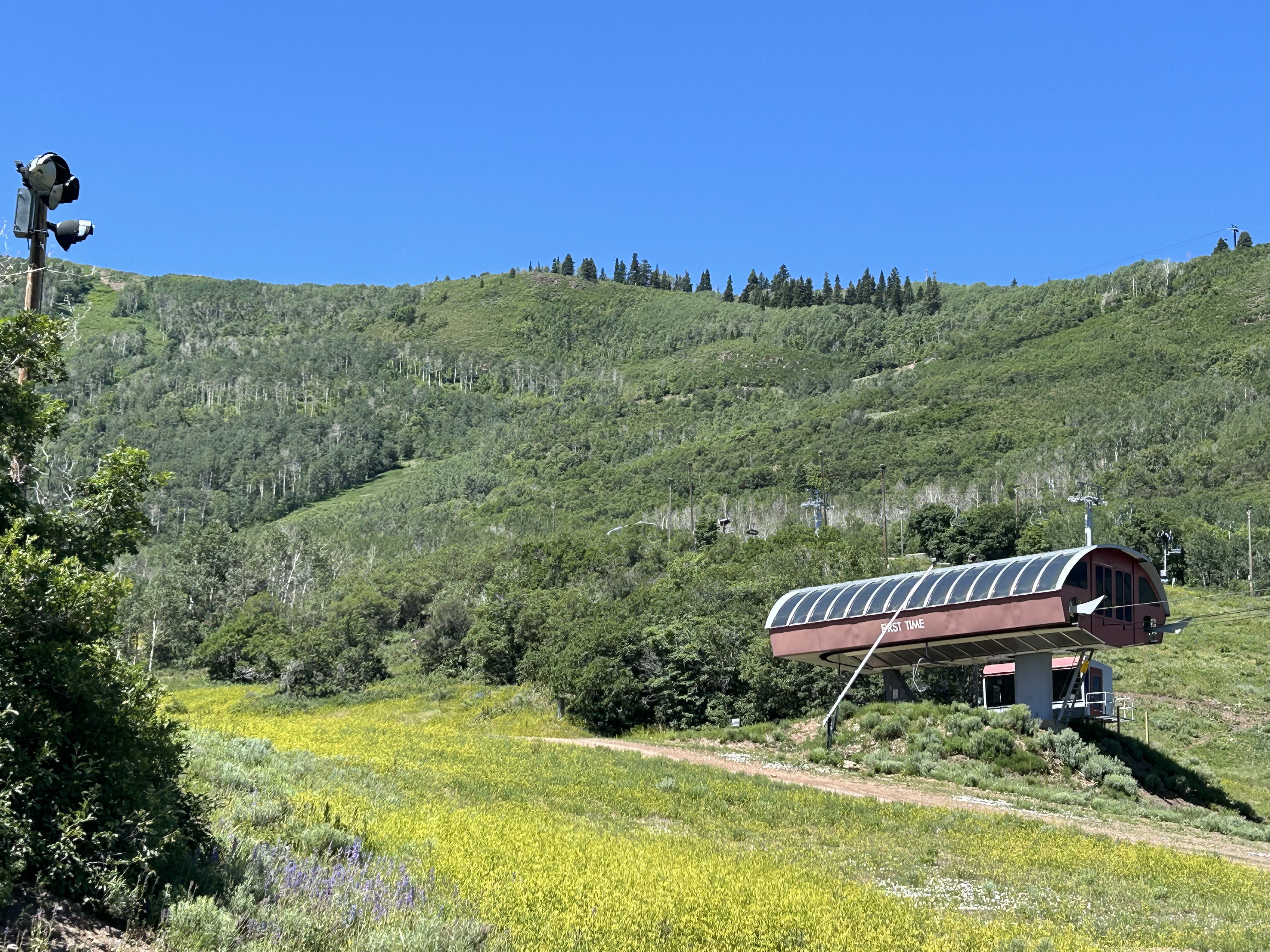
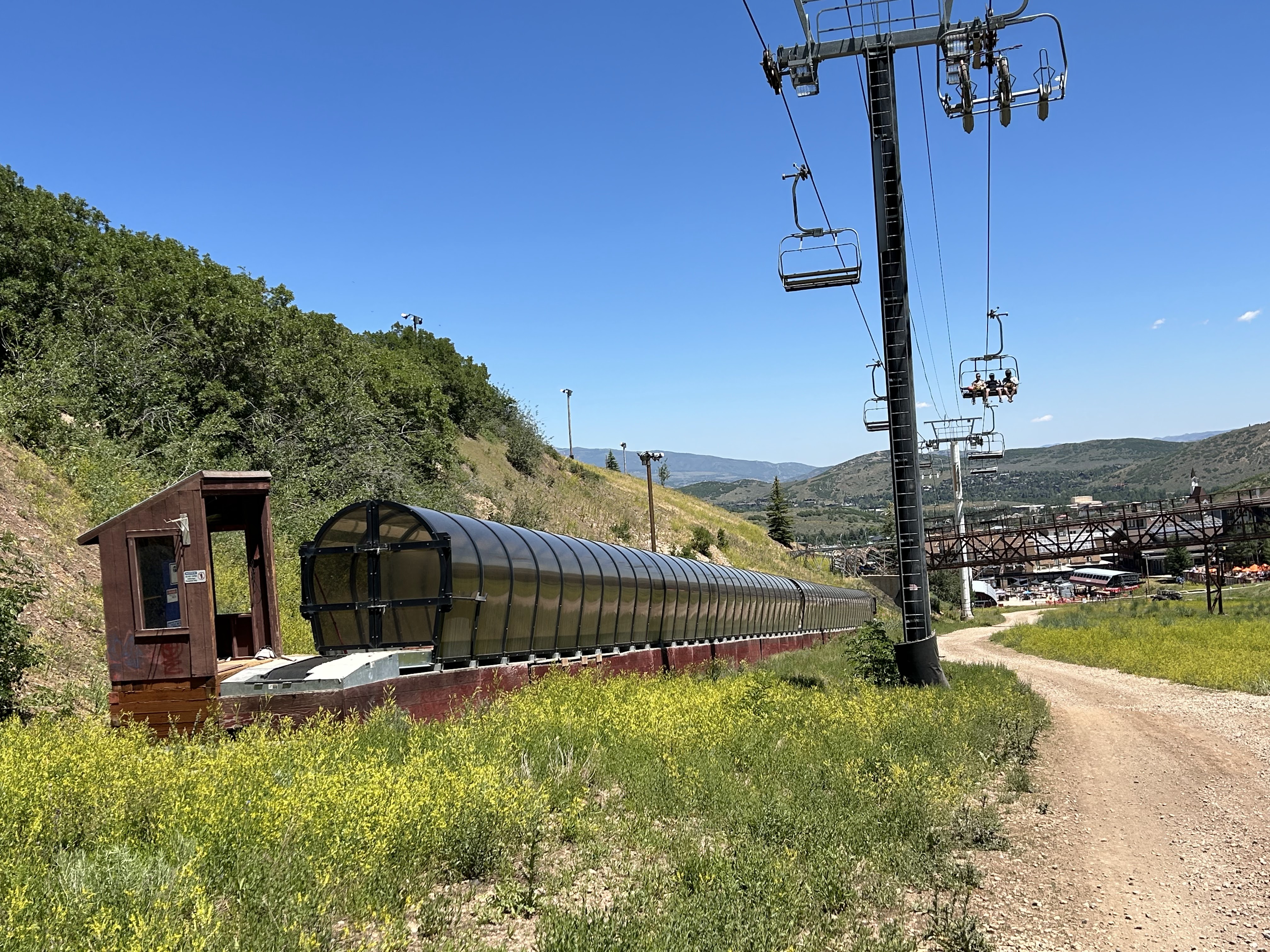
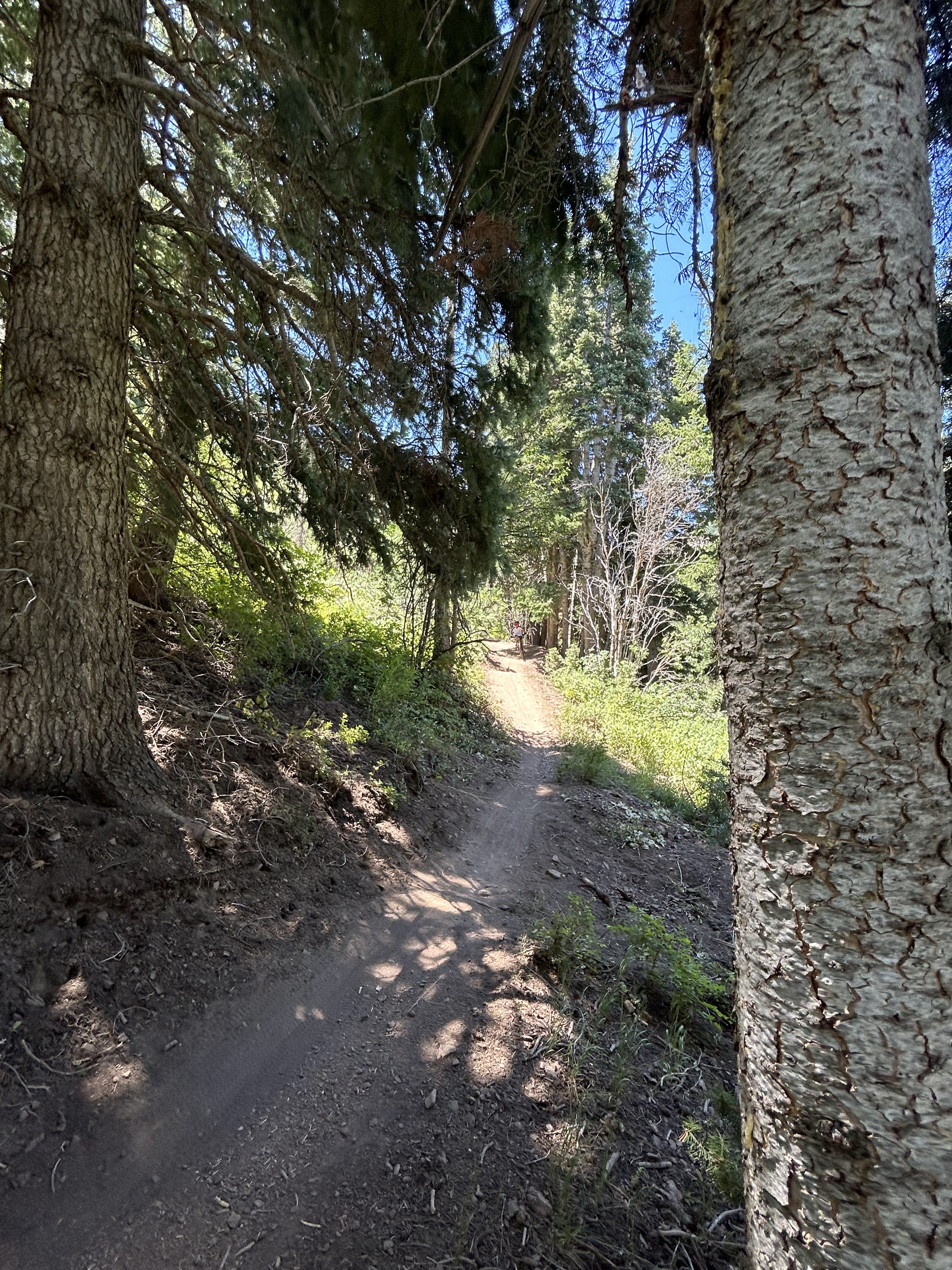
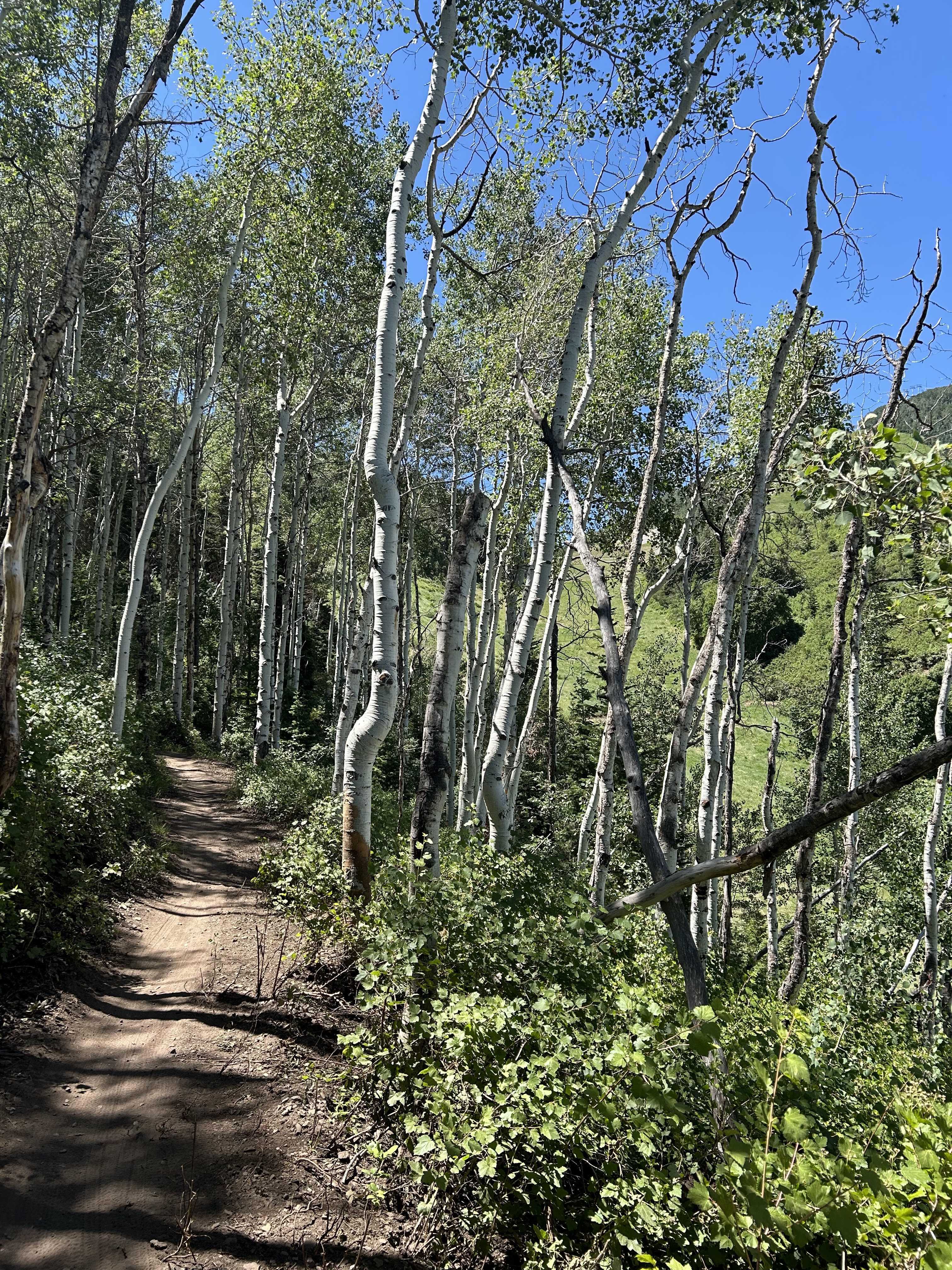
Being familiar with the Park City ski slopes in winter, it was an interesting experience to hike partway up the mountain in summer. I mostly followed a trail designated as Jenny’s Trail. A person hiking here has to be aware of the mountain bikers who are also enjoying the trails; parts of the trail are designated as one-way to avoid collisions.

Green ski slopes

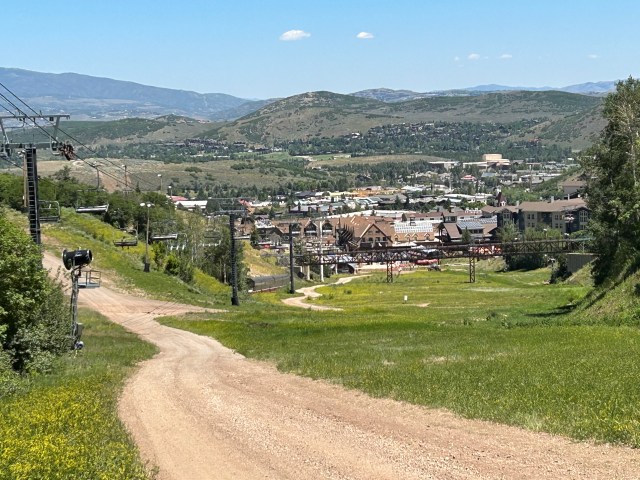
Looking down on Park City

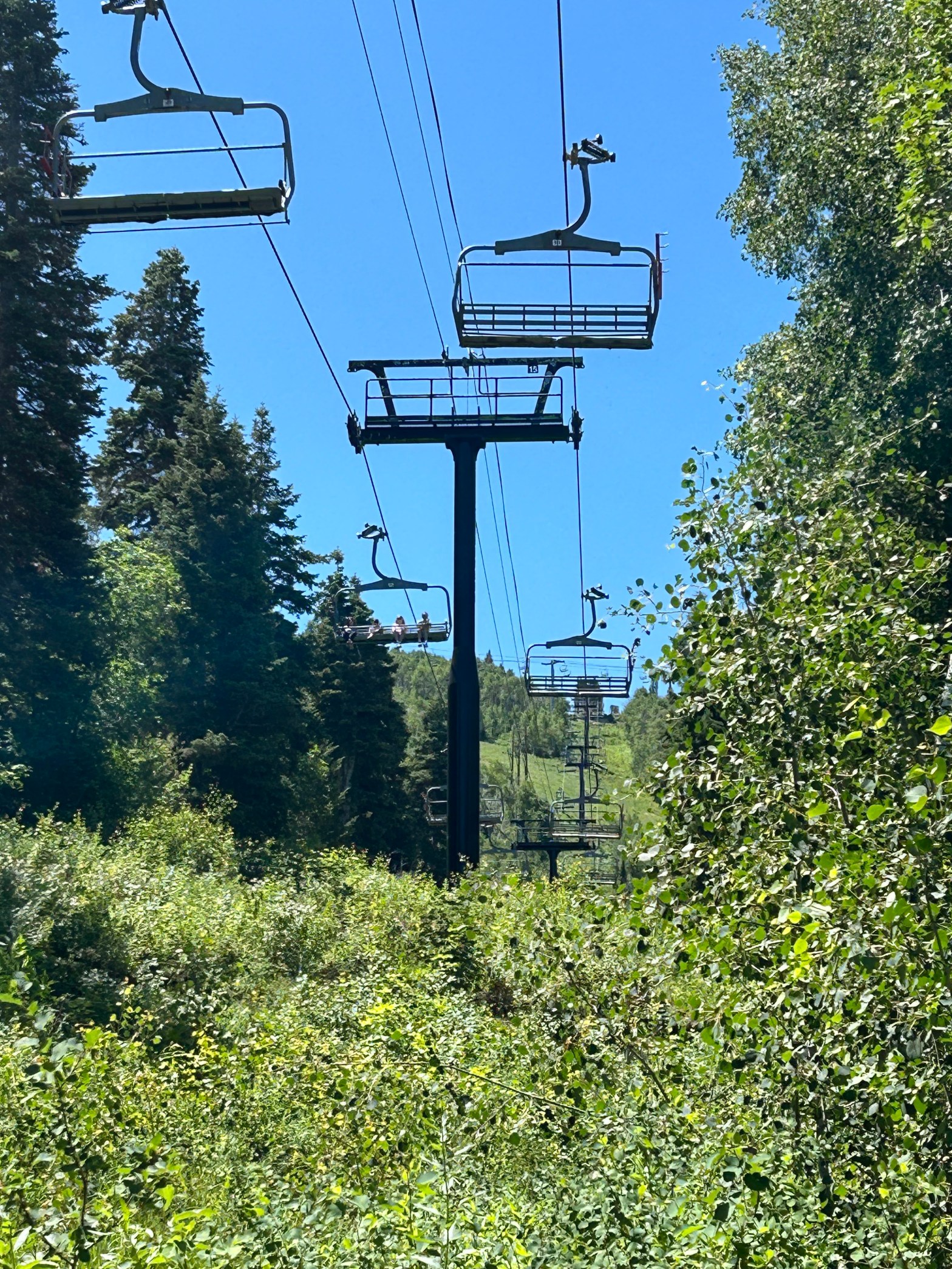
The structures used in skiing look strange with no snow.

The trail wound in and out of trees. You can see why it is fun for mountain bikers!

A sign pointing out green and black diamond ski slopes loses its meaning in summertime.

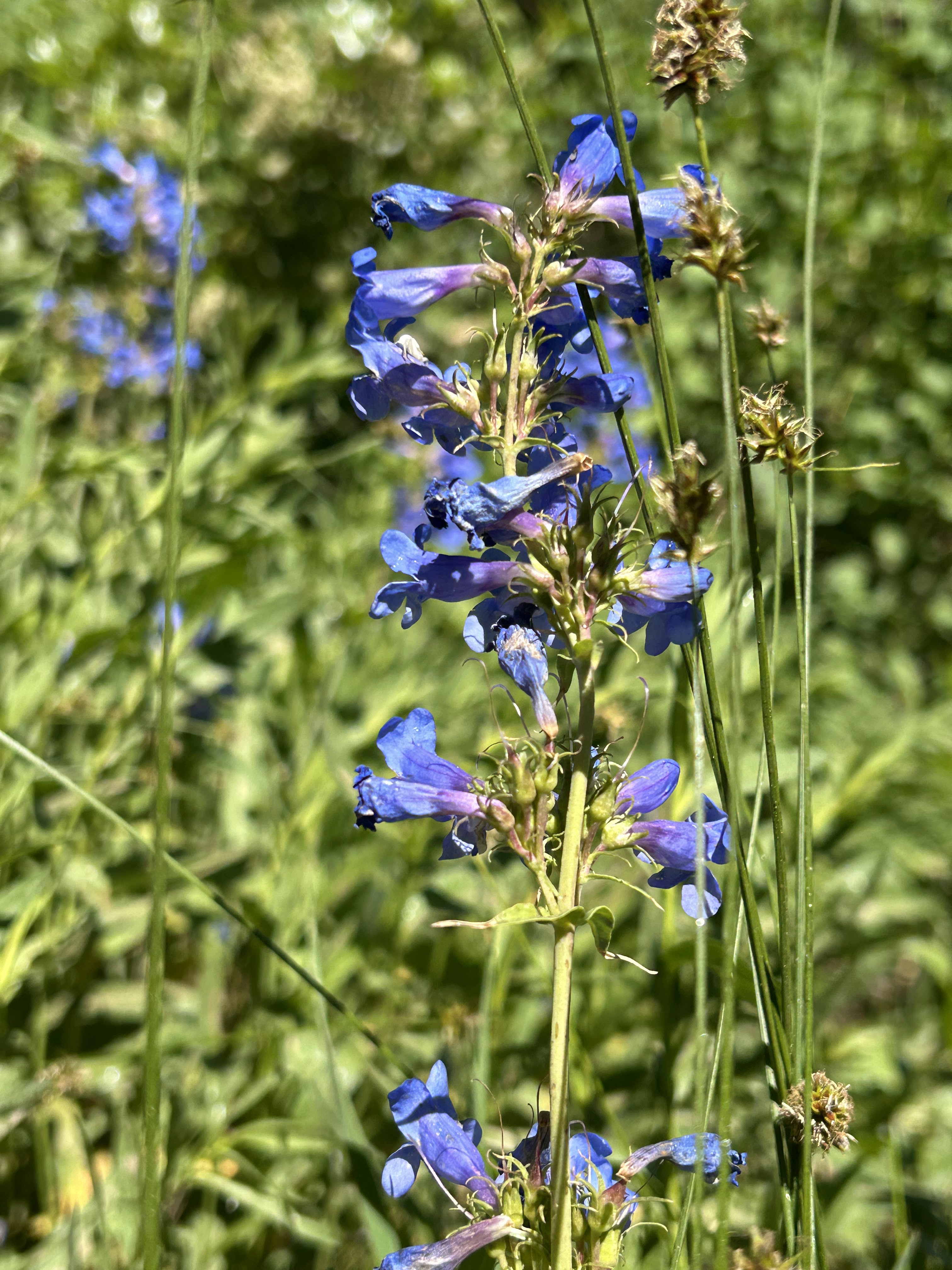
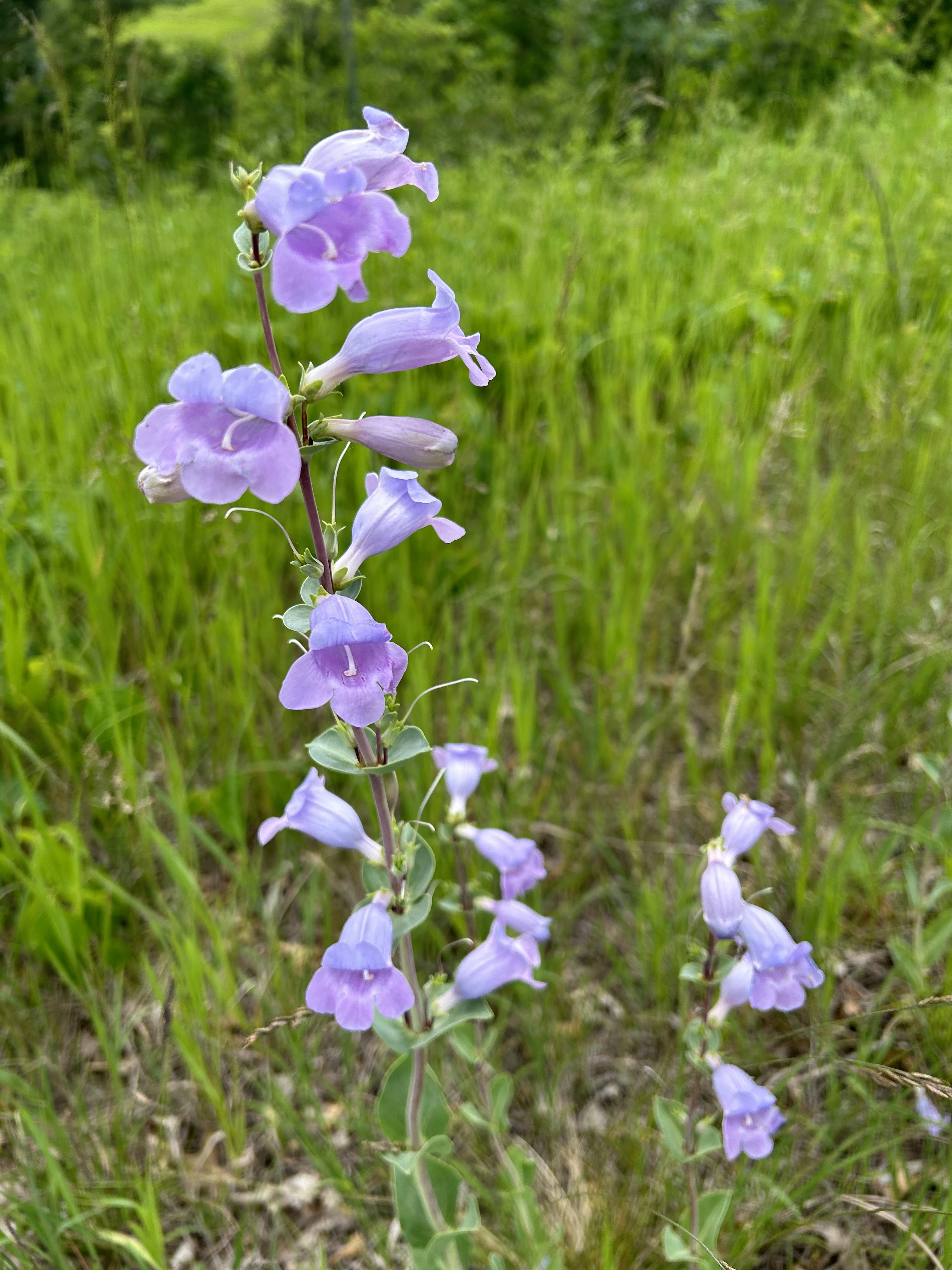
The picture on the left is Wasatch Penstemon (Penstemon cyananthus) which was seen during this hike in Park City. A closely related flower, Large Beardtongue (Penstemon grandiflorus) is shown in the picture on the right. It grows along Heartland Trail in the Minnesota lake country. It is interesting that these related plants are found in such different habitats.

Bugs in the Lilac Blooms

In mid-June this year the two lilac bushes in our yard bloomed profusely. Several different kinds of bugs shared in our enjoyment of the lilac flowers. The photos below show the larger insects in the lilacs. There were more bugs that were too small and fast to photograph.

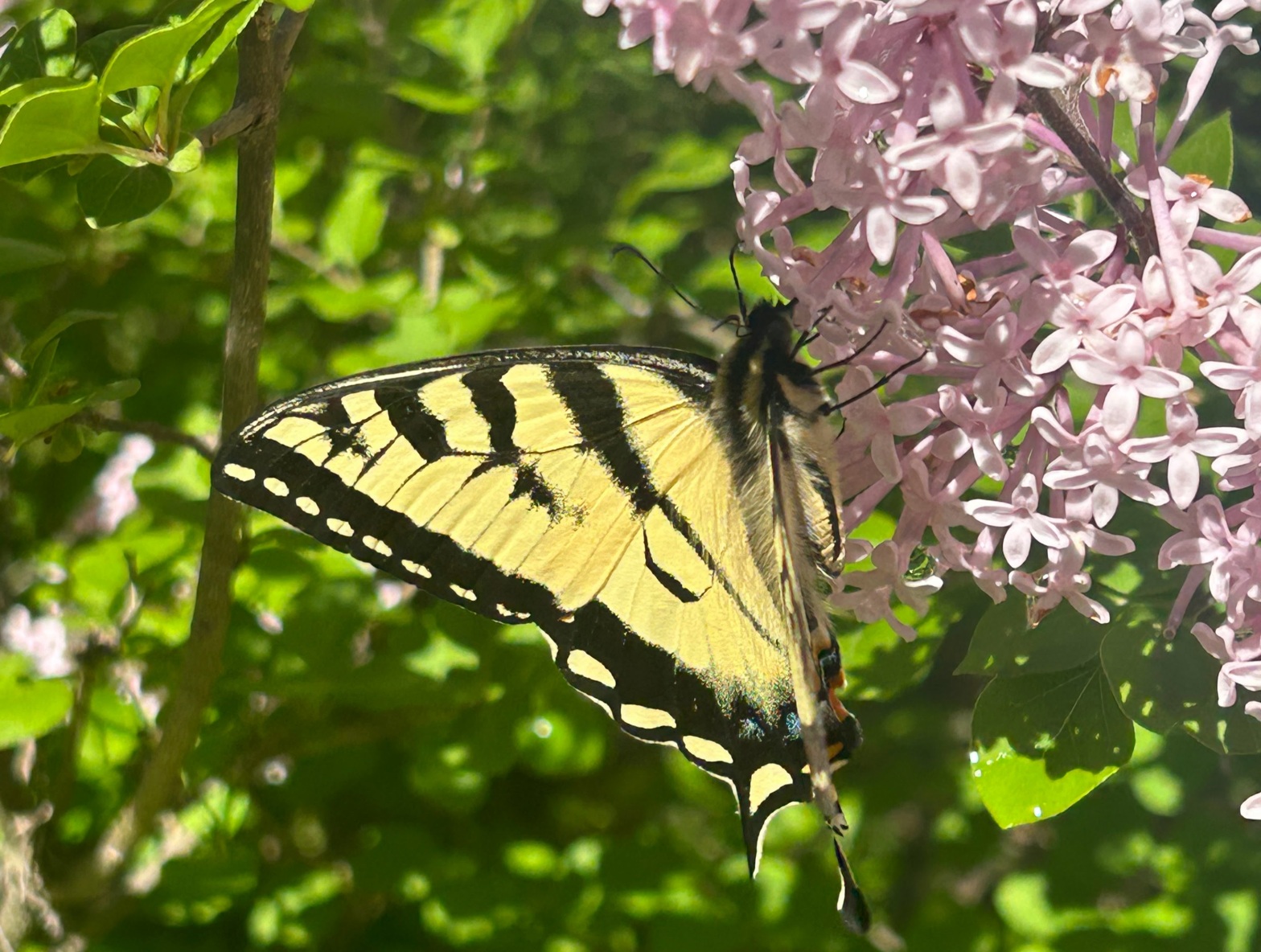
Eastern Tiger Swallowtail Butterfly

Papilio glaucus

Male Eastern Swallowtail Butterflies are yellow, and females are either black or yellow.

Hobomok Skipper Butterfly

Lon hobomok

Snowberry Clearwing Moth

Hemaris diffinis

This moth resembles a small hummingbird; accordingly, it is sometimes referred to as a “hummingbird moth”. Another strange nickname for it is “flying lobster”.

Two-spotted Bumblebee

Bombus bimaculatus

These bees live in underground nests, commonly in forested areas. They rely upon pre-existing holes for the nests, such as abandoned rodent burrows. Unlike many other species of bees with declining populations, the two-spotted bumblebee is thriving.

A Family of Trumpeter Swans

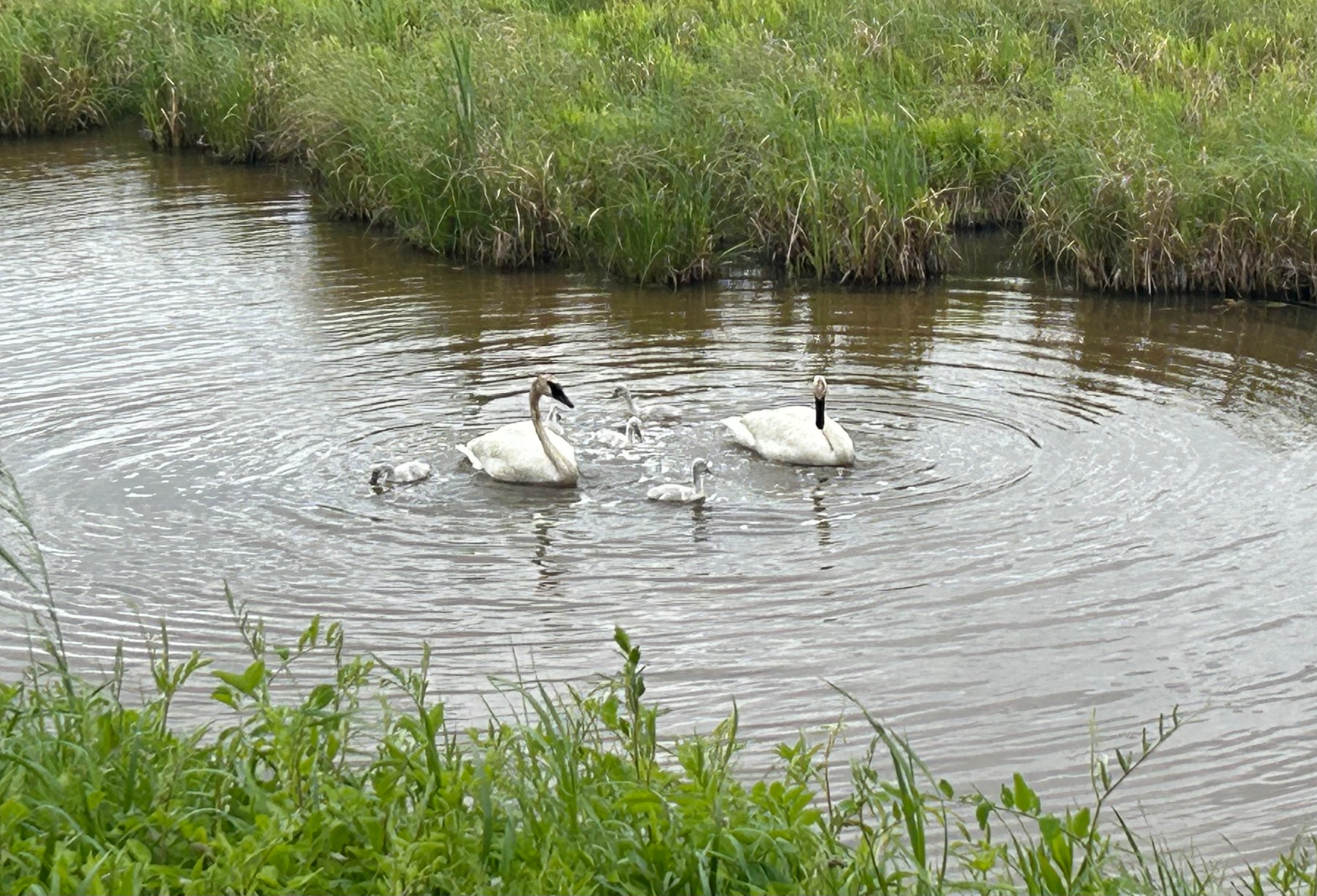
Today we were lucky to see two adult trumpeter swans and their five cygnets very close to the Paul Bunyan bike trail in the Chippewa National Forest.

In the videos below the adult swans are seen waddling back and forth apparently stirring up muck from the bottom of the pond. The FAQ page of The Trumpeter Swan Society confirms that parent swans stir up plant material at the bottom of ponds for the cygnets to eat.

Kicking up pond muck to provide for your family is a pretty ingenious strategy. Maybe better than a 9-to-5 job?

Jack Pine

Pinus banksiana

Three pines are native to North-Central Minnesota, The Red (Norway) Pine, the Eastern White Pine, and the Jack Pine. Jack Pine is somewhat less desirable than the other two, both commercially and aesthetically. However, it successfully exploits its niche as the northern conifer best able to thrive after wildfires.

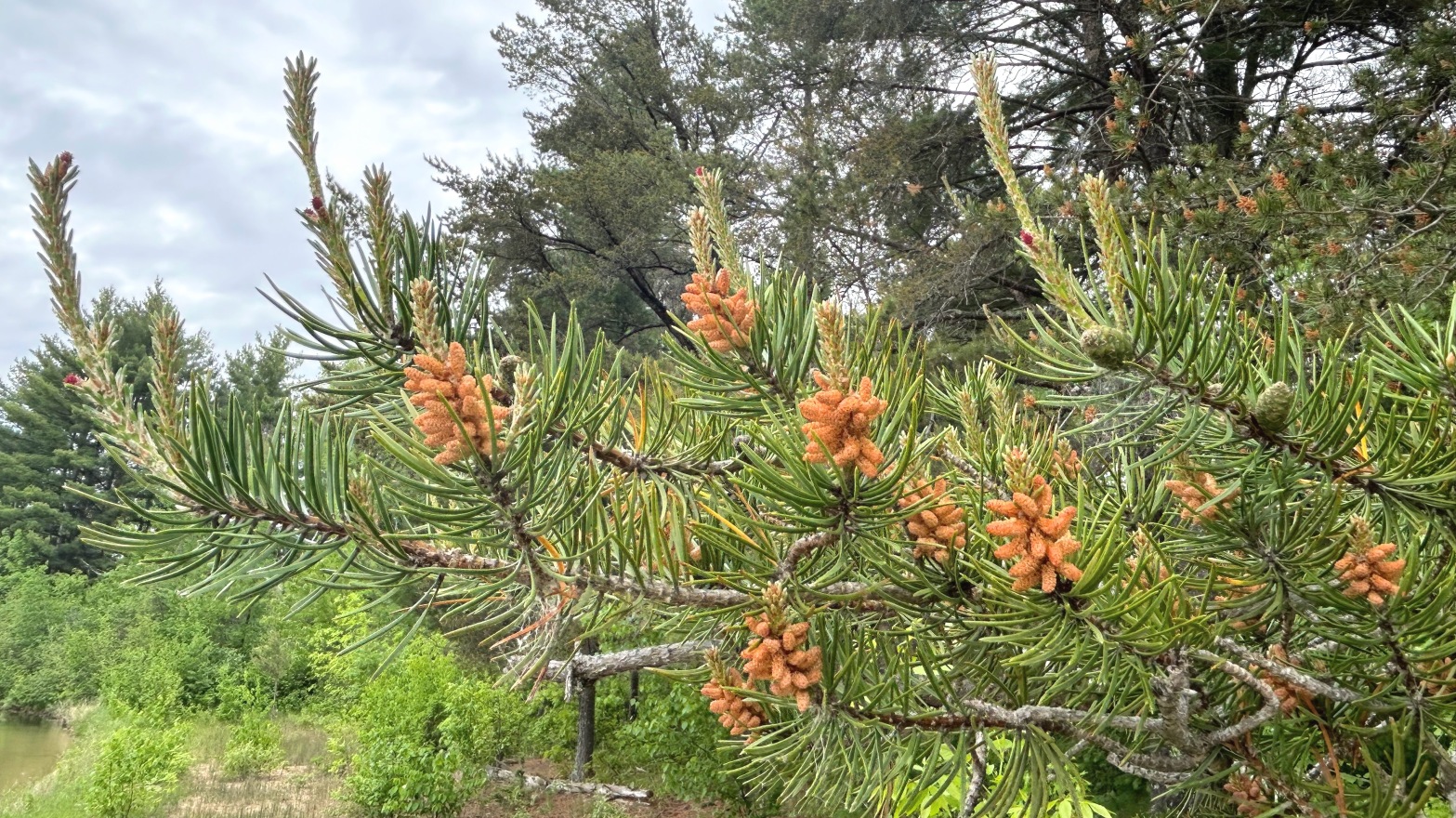
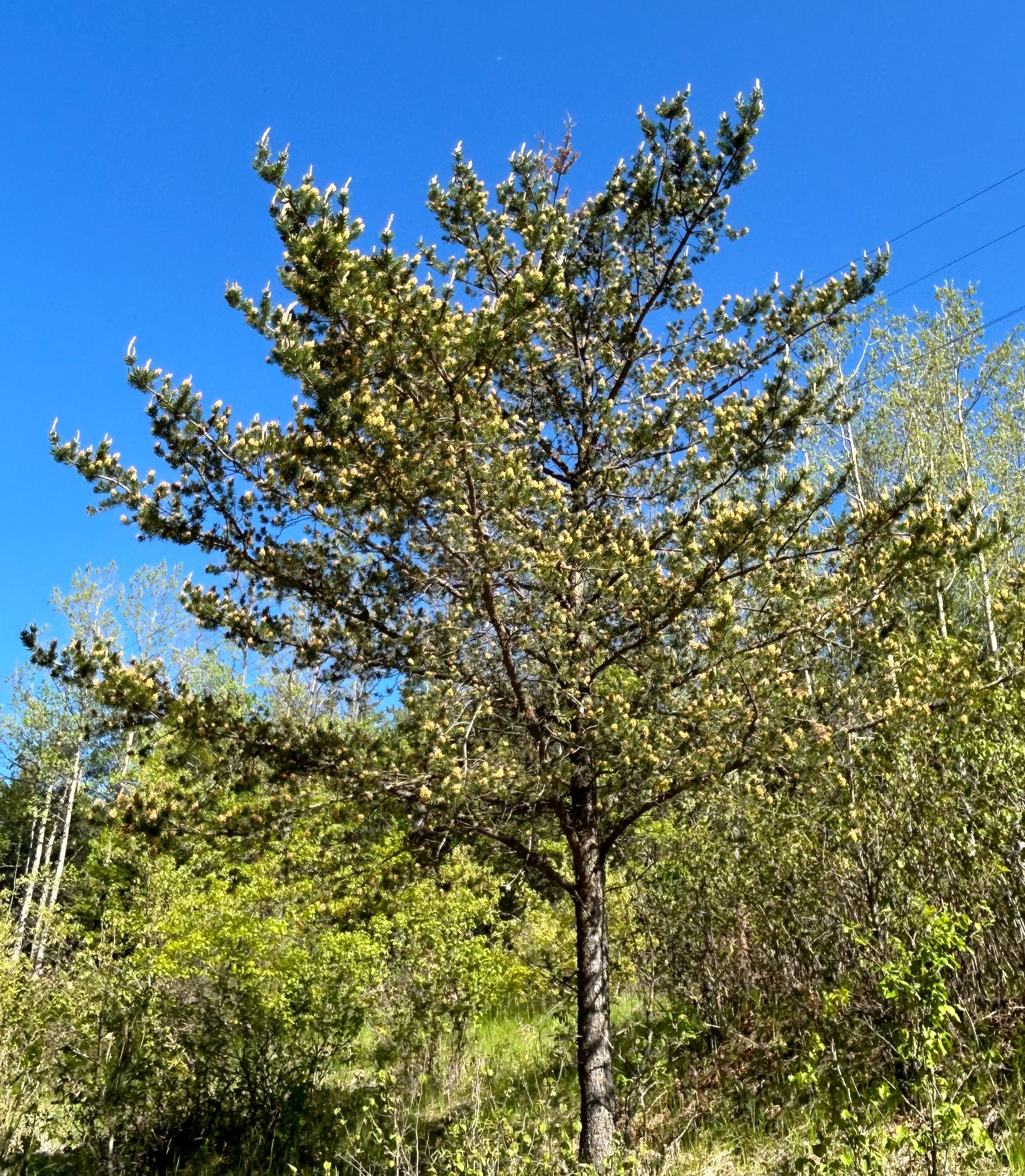
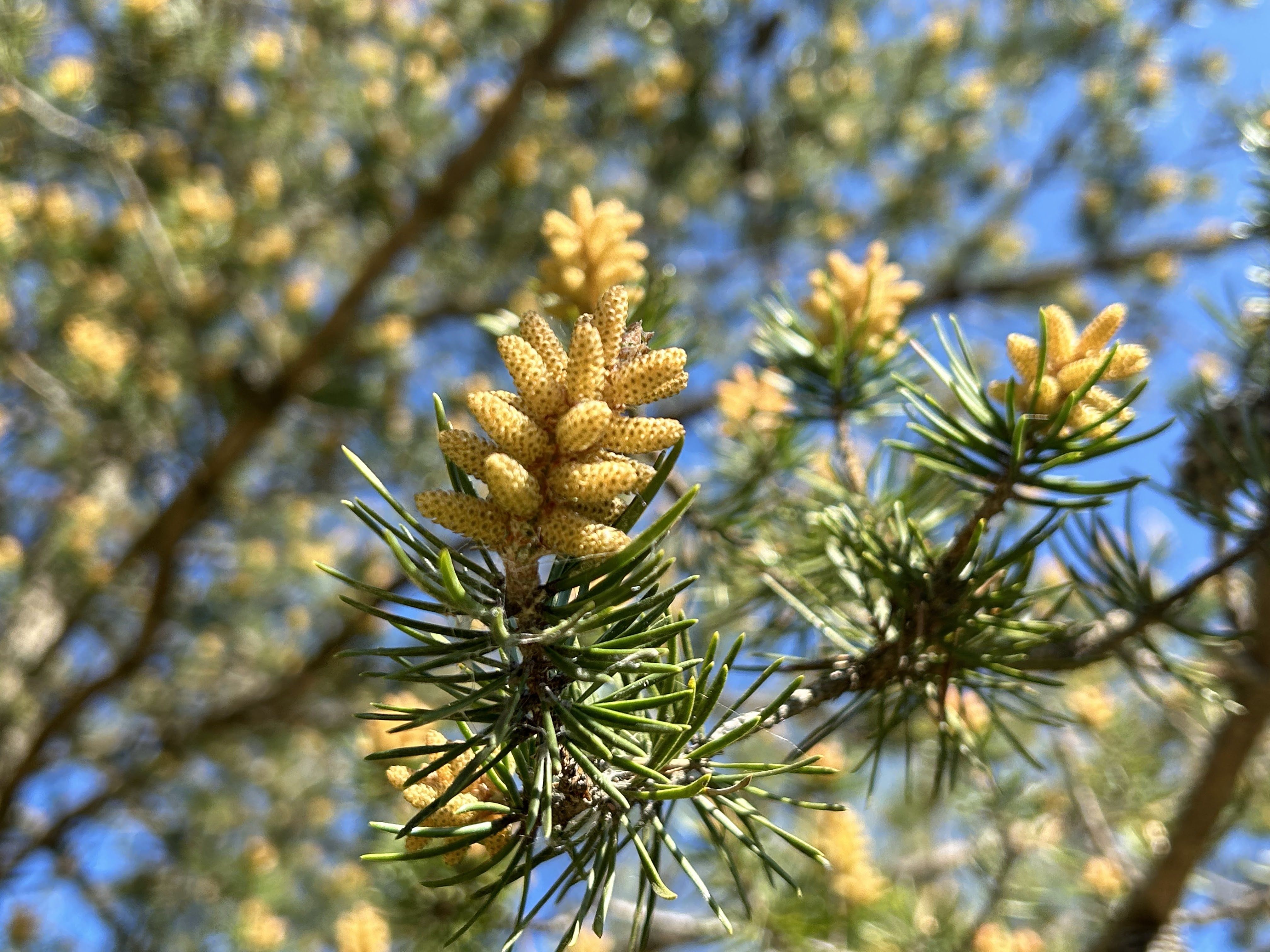
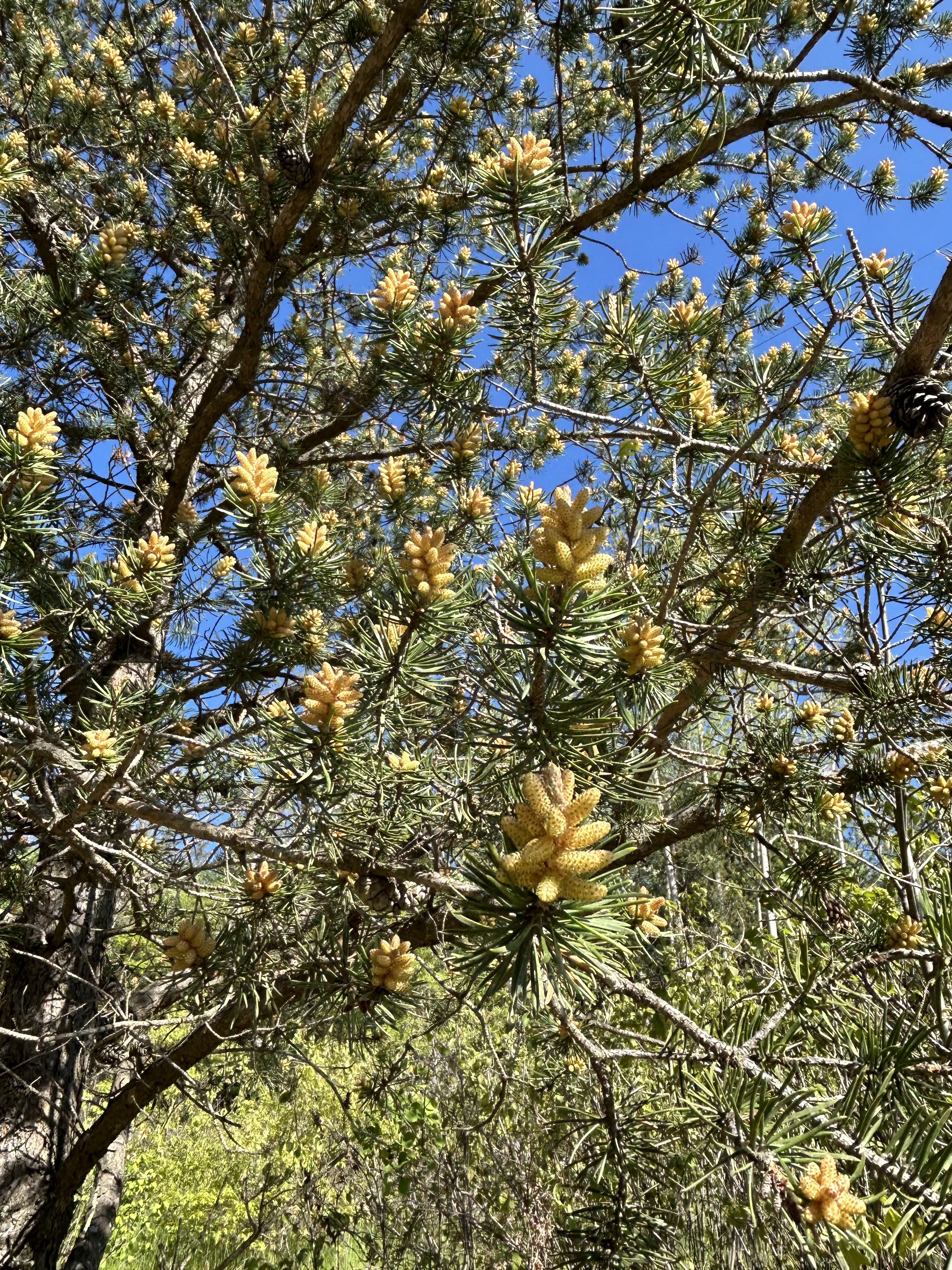
A single Jack Pine has both male and female cones on different branches. Copious amounts of yellow pollen are produced by male cones and distributed by the wind in late May to fertilizes female cones. Seeds mature in the female cones for 2-3 years. Cones remain on the tree for many years and seeds within the cones remain viable for more than 20 years.

The ways in which Jack Pine has adapted its reproductive strategy to dominate after wildfires are ingenious. Its cones are usually sealed with resin. Seeds within these serotinous cones are only released when the resin melts at high temperature (120 – 140 degF). So, the Jack Pine essentially stores up the seeds it produces throughout its life until the high temperature of a forest fire releases them.

Jack Pine seedlings have evolved to thrive in sections of newly burnt forest. They need soil with minimal organic matter, plenty of sun exposure, and little competing vegetation.

Jack Pines produce some non-serotinous cones as well, especially in the southern parts of their range. These cones do not require fire to release the seeds, which means that Jack Pines are not completely dependent on fire to reproduce.

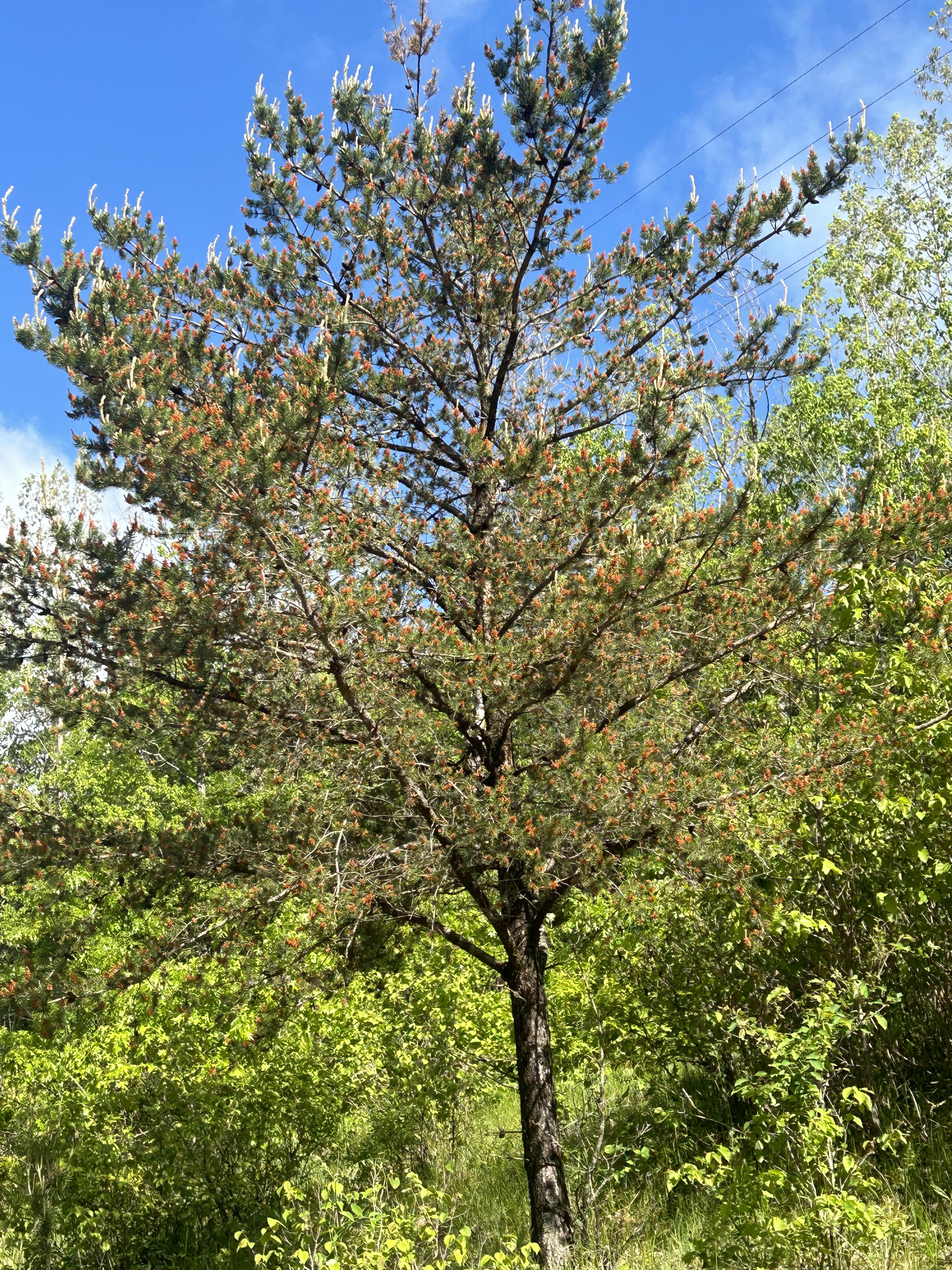
One of the pictures above shows a Jack Pine tree in late May, when the tree is dotted by male cones with their yellow pollen. The underlying picture shows the same tree about two weeks later after it has released its pollen.

Views of Jack Pines in mid-May when male cones are yellow with pollen.

Views of young seed-bearing female cones on Jack Pines. In their first year these serotinous cones are green and tightly sealed by resin.

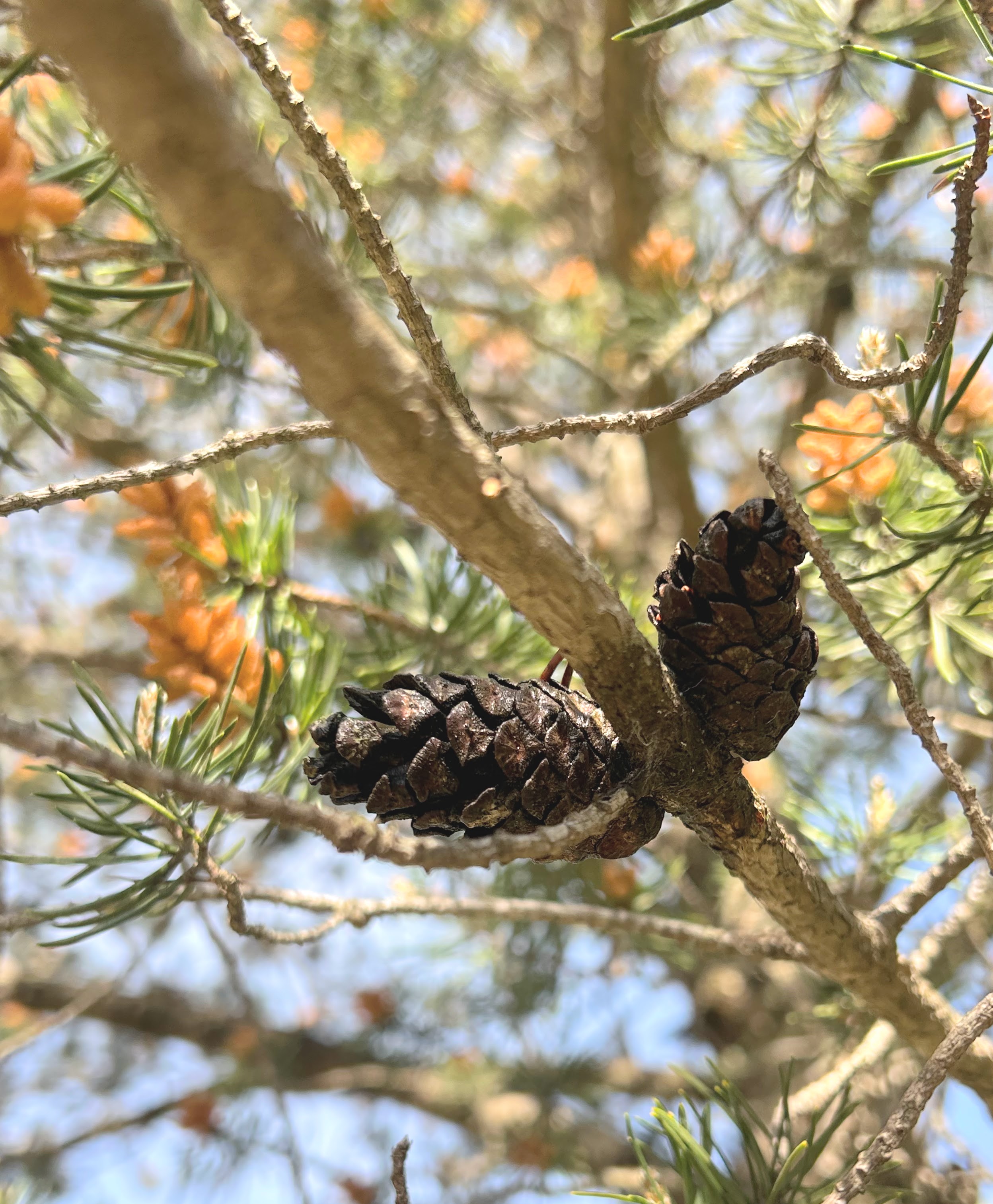
Some older cones of the Jack Pine are non-serotinous and open to release seeds without aid of fire (picture on the left above). Other older cones remain tightly sealed (right-hand picture).

Northern Lights, 2024

The exceptional show of Northern Lights (Aurora Borealis) over the last few days has been covered extensively in the news. The reason for this event is traced back to sunspot activity, specifically in a sunspot cluster designated Region 3664, which is at least 15 times wider than the earth! Solar flares and Coronal Mass Ejections (CME) associated with these sunspots recently ejected huge amounts of energy and charged particles into space.

CME, which are massive expulsions of charged particles from the sun, are primarily responsible for the aurora on Earth. CME produce huge clouds of charged particles that fly away from the sun at high speeds, but always considerably slower than the speed of light. Light carrying information about CME reaches earth in 8.3 minutes, while the charged particle clouds from CME typically take a day or two to reach earth. So, we can see the CME particles coming, and make accurate predictions of the aurora they will cause.

When these charged particles near earth, they are steered towards the poles by the earth’s magnetic field. At heights of 60-620 miles above earth the particles collide with atoms in earth’s atmosphere sending these atoms (mainly nitrogen and oxygen) into excited states. When the excited atoms return to their ground states, they emit the colored light that comprise the aurora.

Friday, May 10

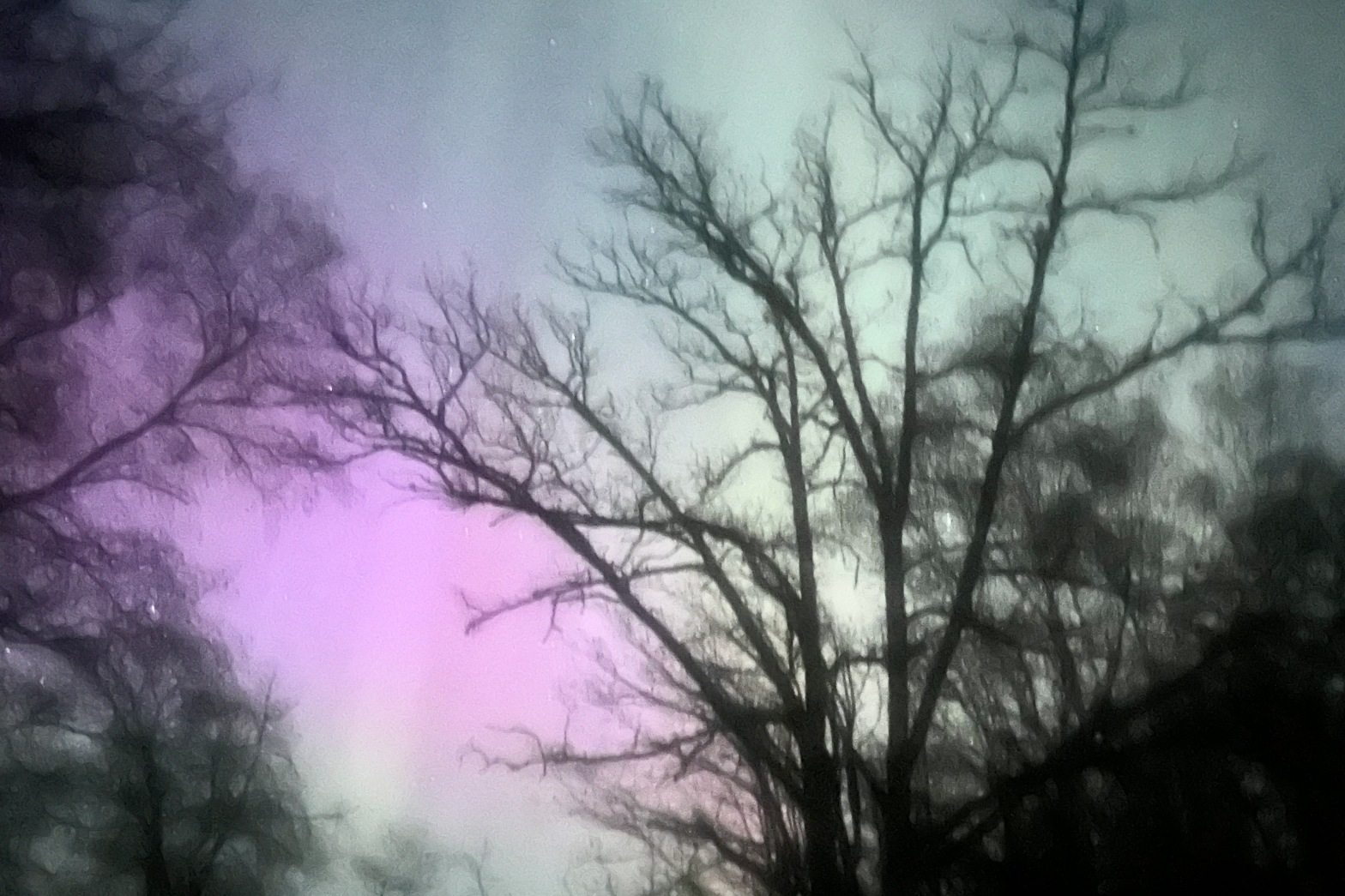
The pictures above were taken Friday night looking north across the lake from our deck. The colors of the Northern Lights come out nicely in these pictures, but by naked eye I could just see that the sky was unusually bright.

The Northern Lights were evident towards the west as well. The image to the left is the night sky Friday around midnight, and the image on the right shows the scene in daylight on Saturday.

Looking south, the night sky was brighter than usual, but not colorful.

Saturday, May 11

The following night the Northern Lights made the sky brighter, but colors were not as evident.

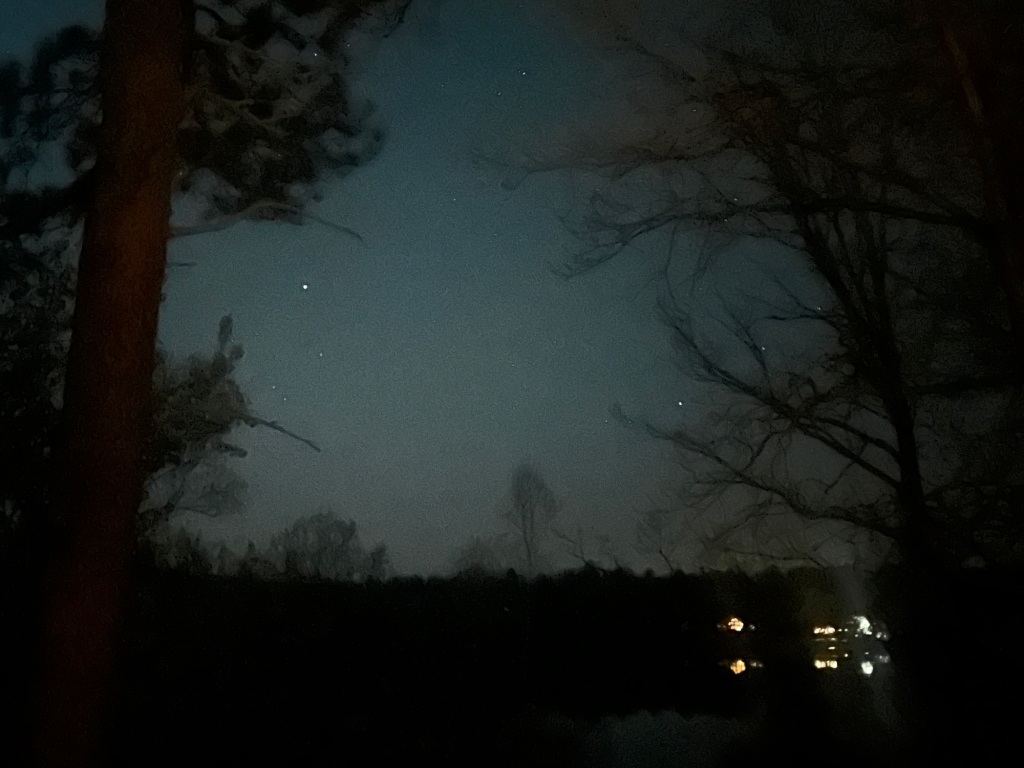
The photos above were taken of about the same view, looking north across the lake. They show the contrast in the night sky from Friday, May 10, with Northern Lights, to Monday, May 13, under normal conditions.

Note about low light photos taken by iPhone

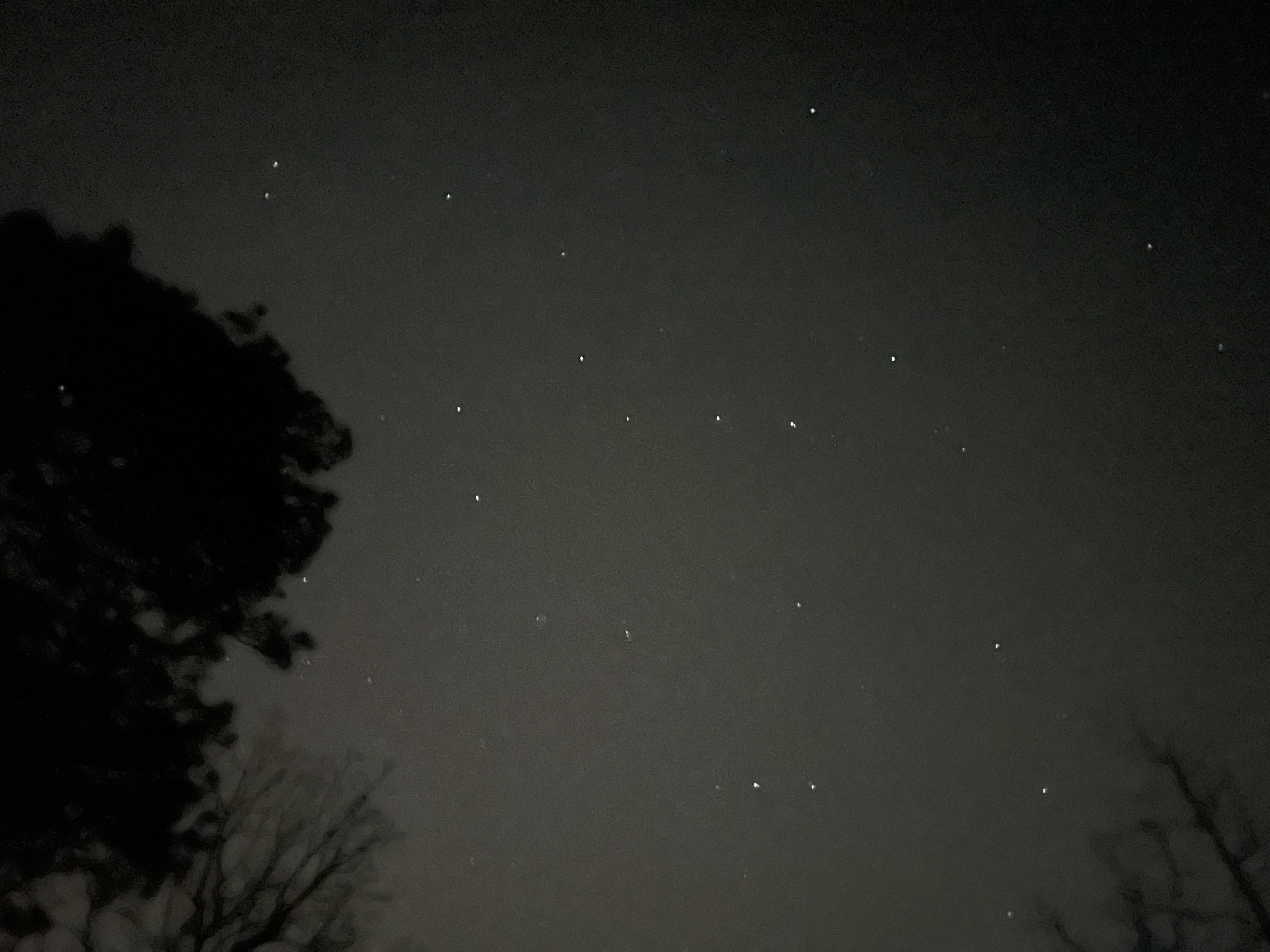
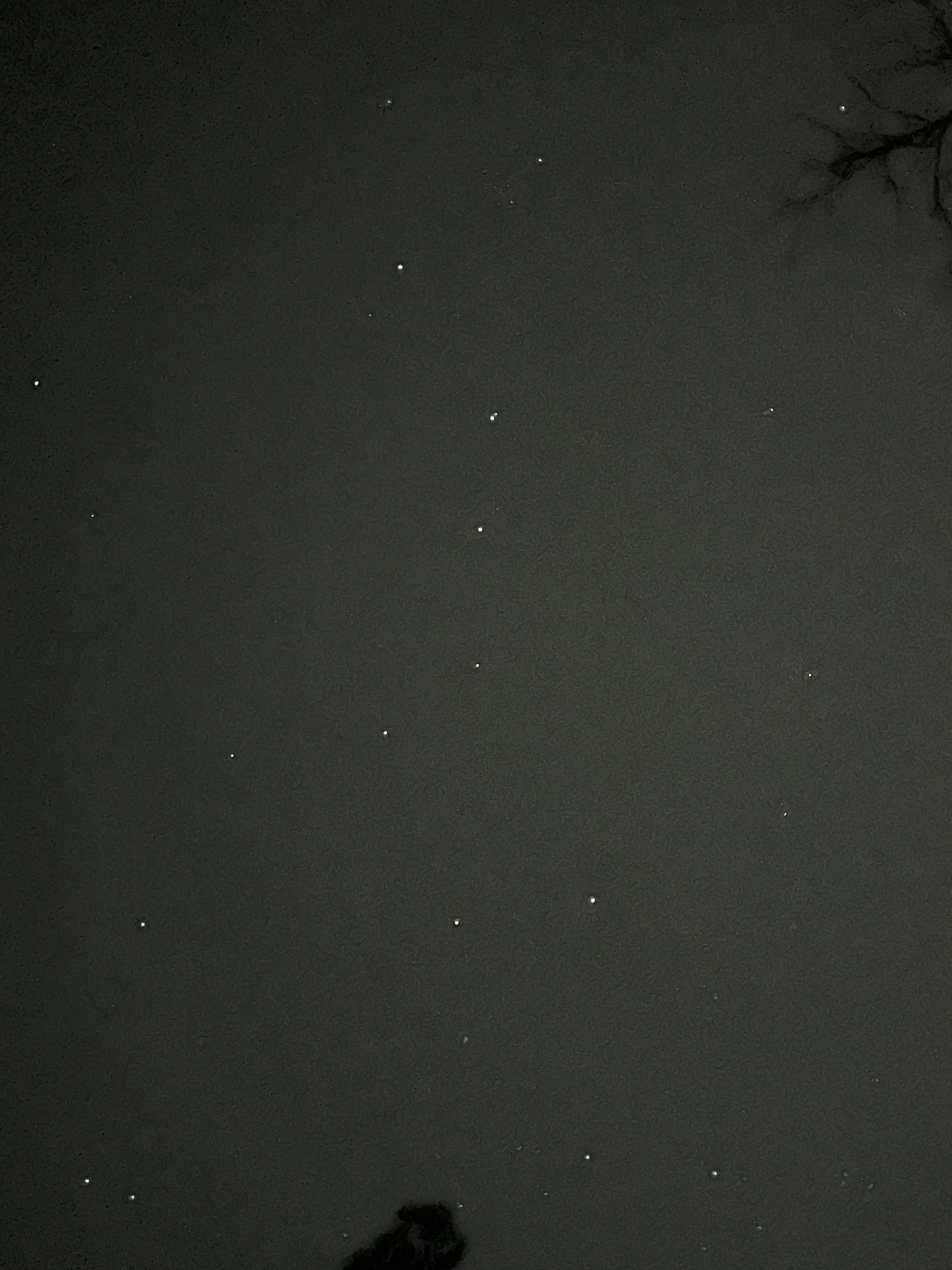
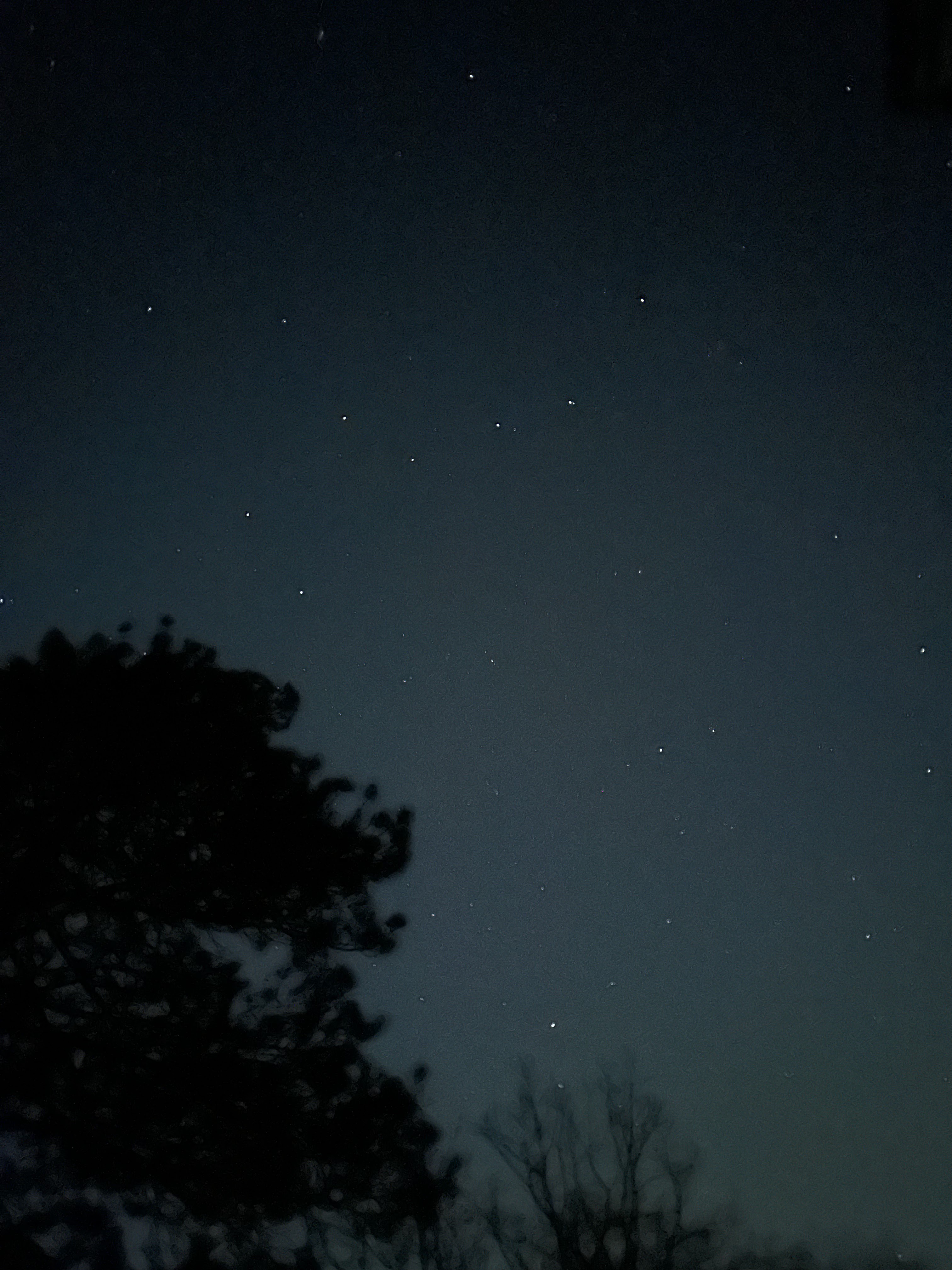
All these photos were taken with my iPhone, with no special preparation or settings. It must automatically use digital processing to allow fairly sharp hand-held long exposure shots, as seen in these photos of the Big Dipper.

Hike to Stewart Falls, April 8, 2024

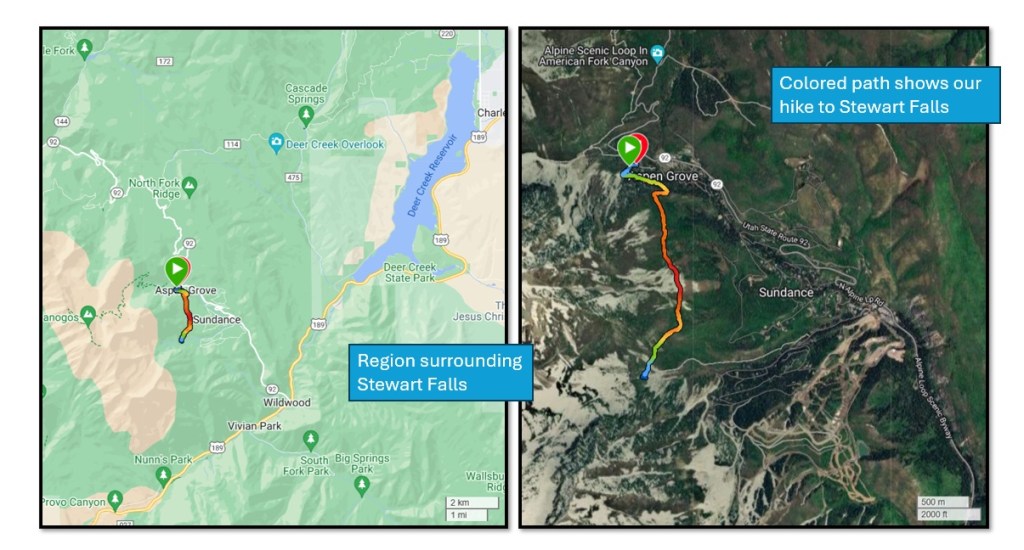
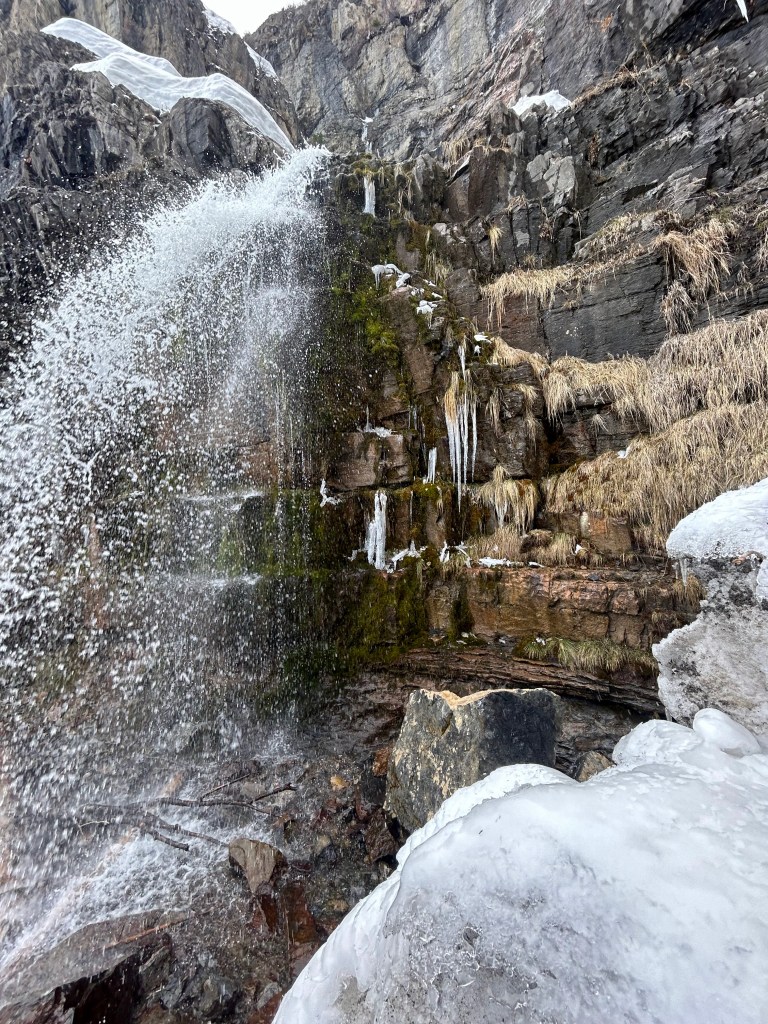
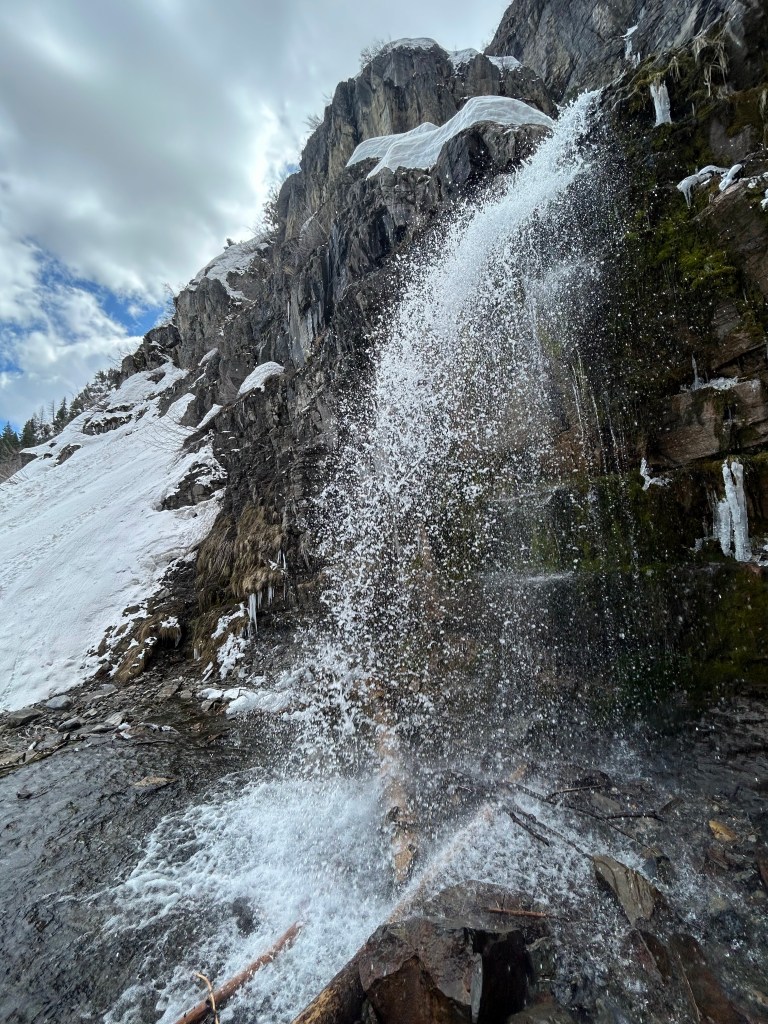
Stewart Falls is a dramatic, reasonably accessible waterfall near the Sundance ski area; it is east up the Provo canyon from the Salt Lake City metro area. Hiking to the waterfall from the trailhead near Aspen Grove was a 3.6-mile round trip. The change in elevation along the trail is about 780 feet, but it is up and down and did not seem too taxing.

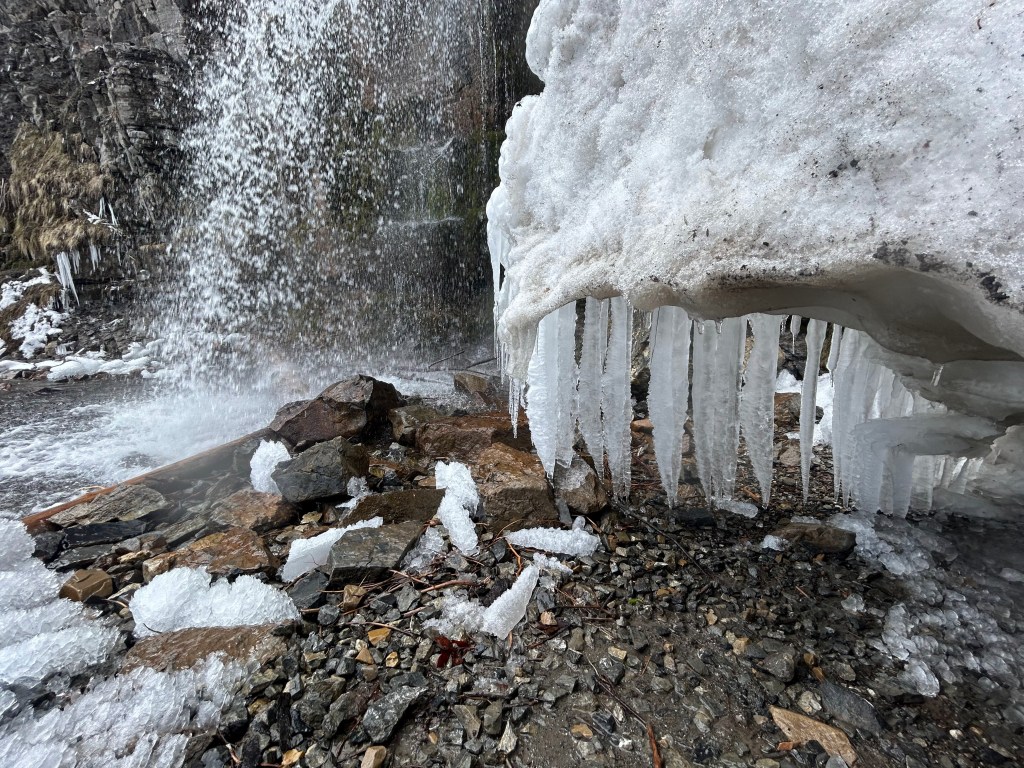
The biggest challenge presented by the trail was snow. Despite it being a warm day in early April, there was plenty of snow on the trail and it was slippery in some of the steep sections. Hiking poles would have come in handy.

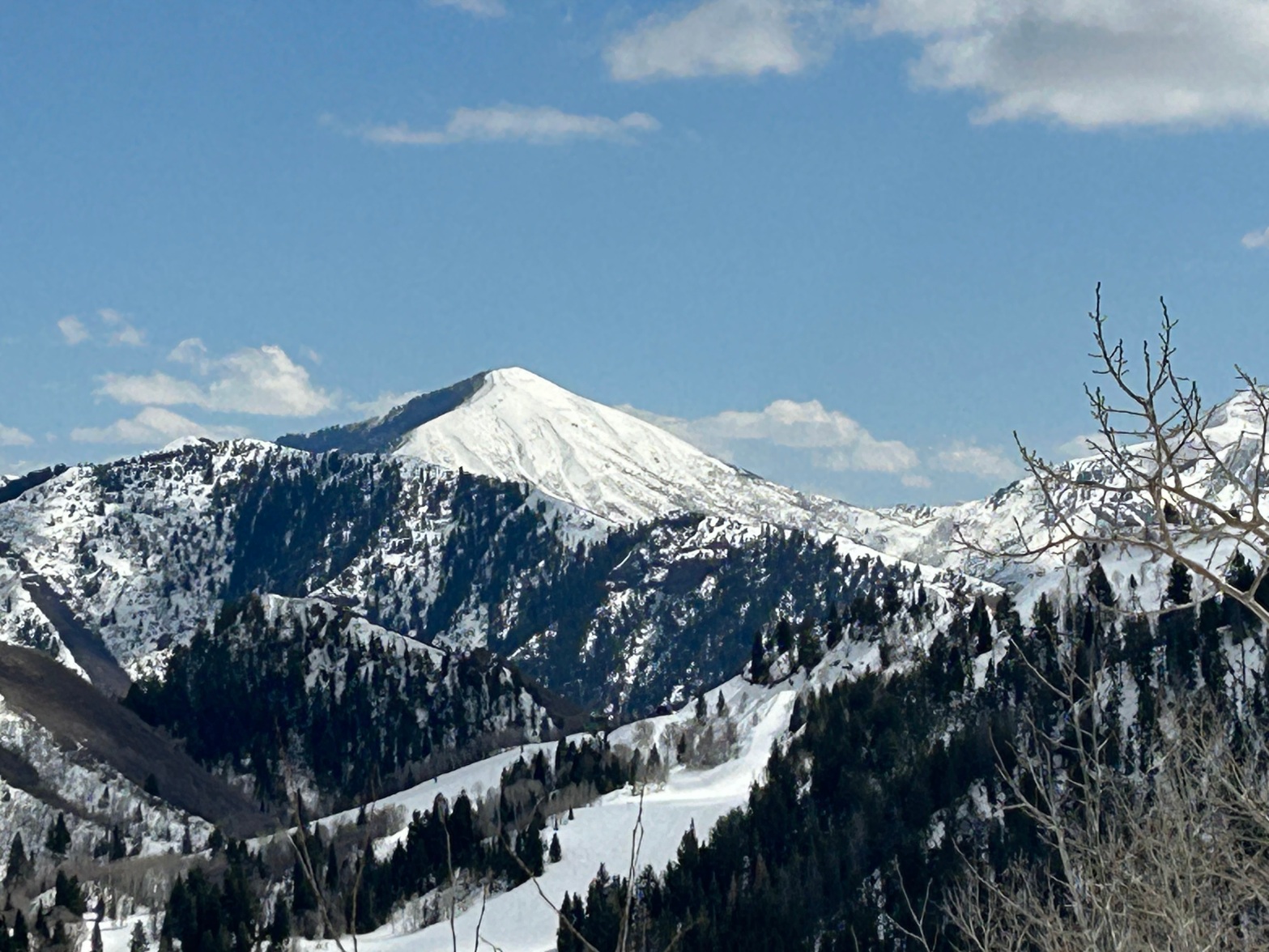
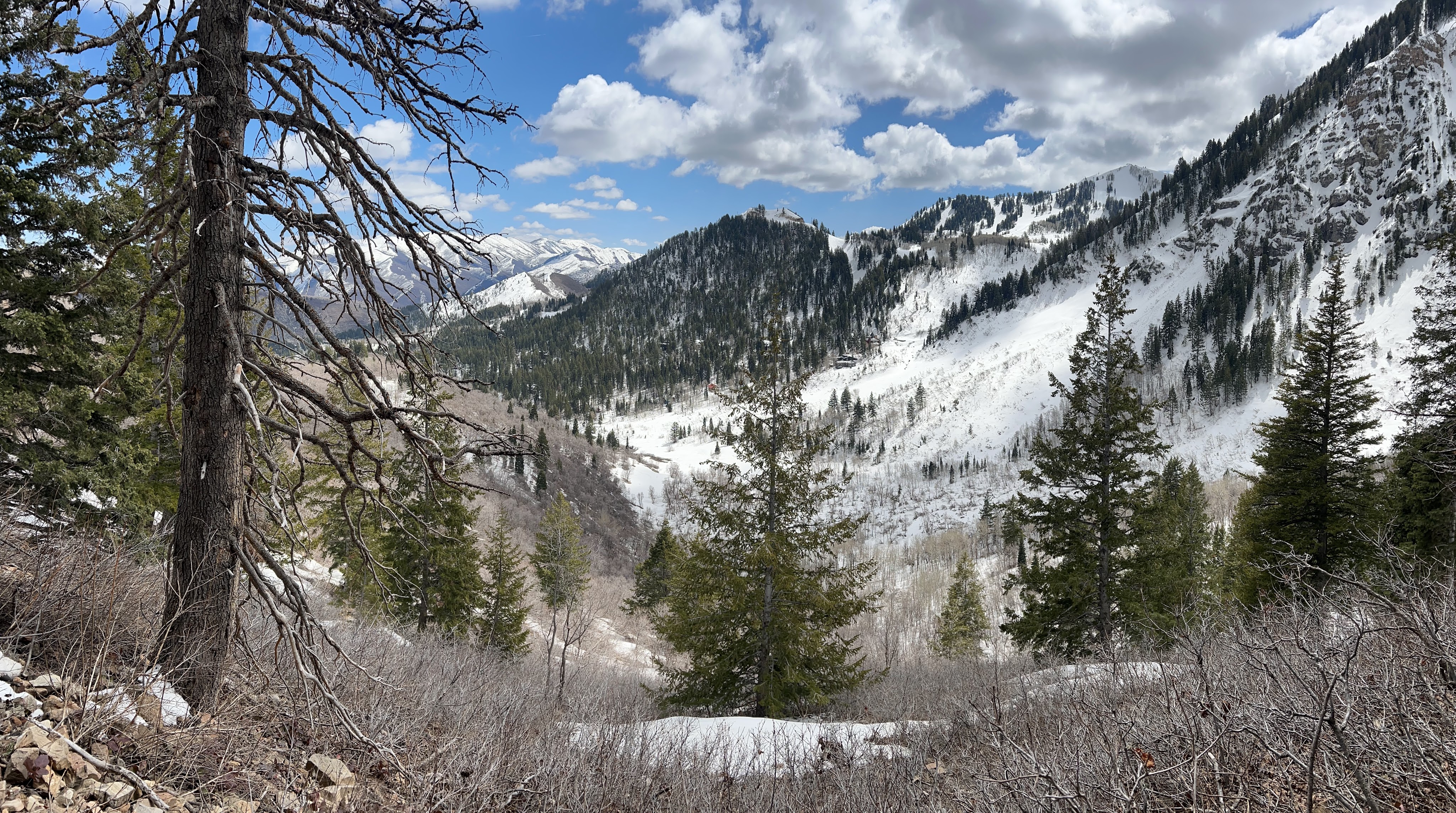
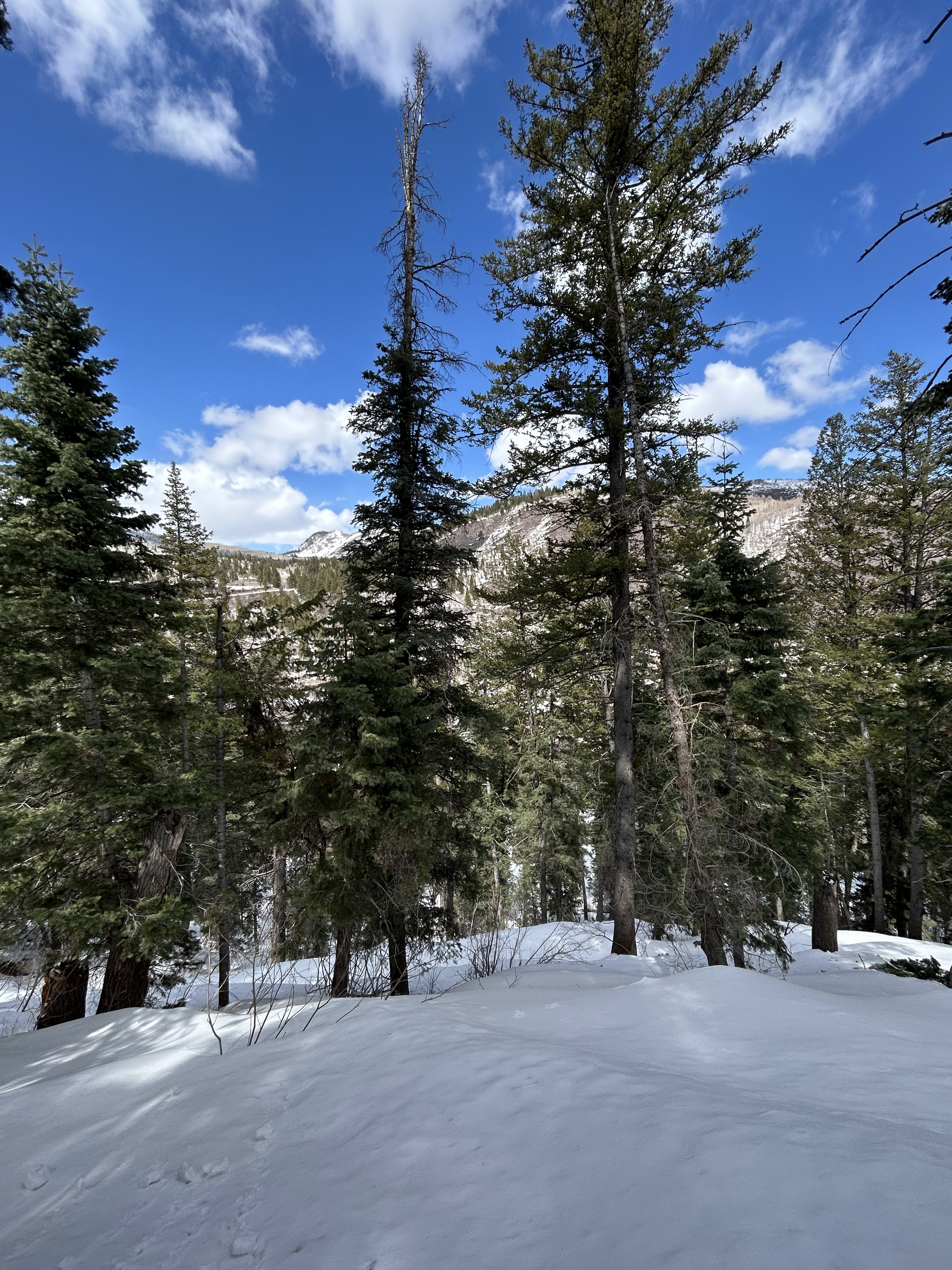
Gorgeous scenery on the way to the falls.

Stewart Falls

Videos that show the falling water.

Scenery on the return trip was also beautiful.