Hummingbirds

Hummingbirds; pictures and info

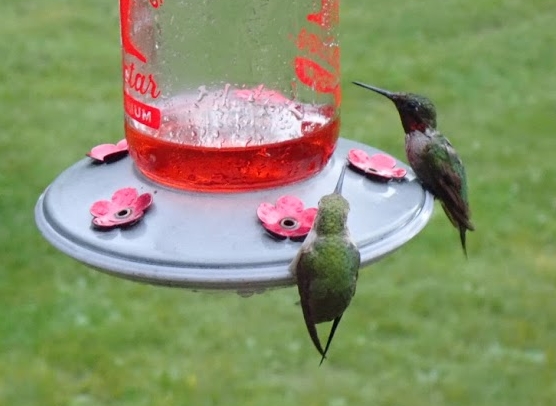
In these first weeks of August we have had many hummingbirds visiting our feeders. We had seen several hummingbirds in May, but they were absent in June and July. Apparently this pattern is common, many hummingbirds hang around feeders in May, but by June the females are busy nesting and the males wander off elsewhere. In late summer they are back at the feeders, fueling up for their upcoming migration south.
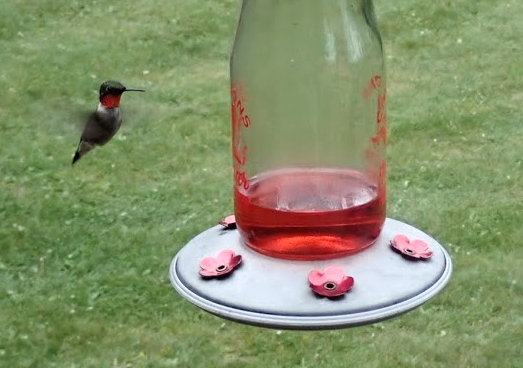
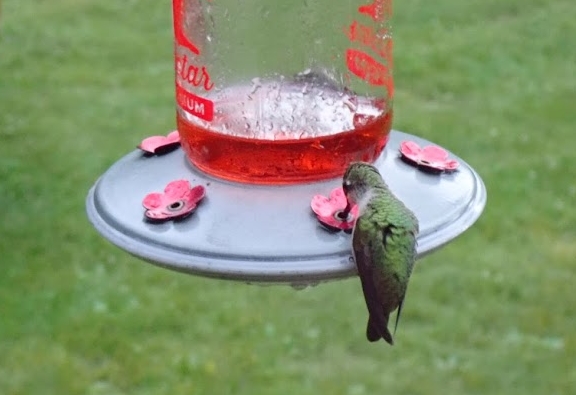
There are several species of hummingbirds in the western US, but in Minnesota and to the east only the Ruby-Throated Hummingbird (Archilochus colubris) is common. The colorful and feisty males are the hummingbirds most often seen at feeders.
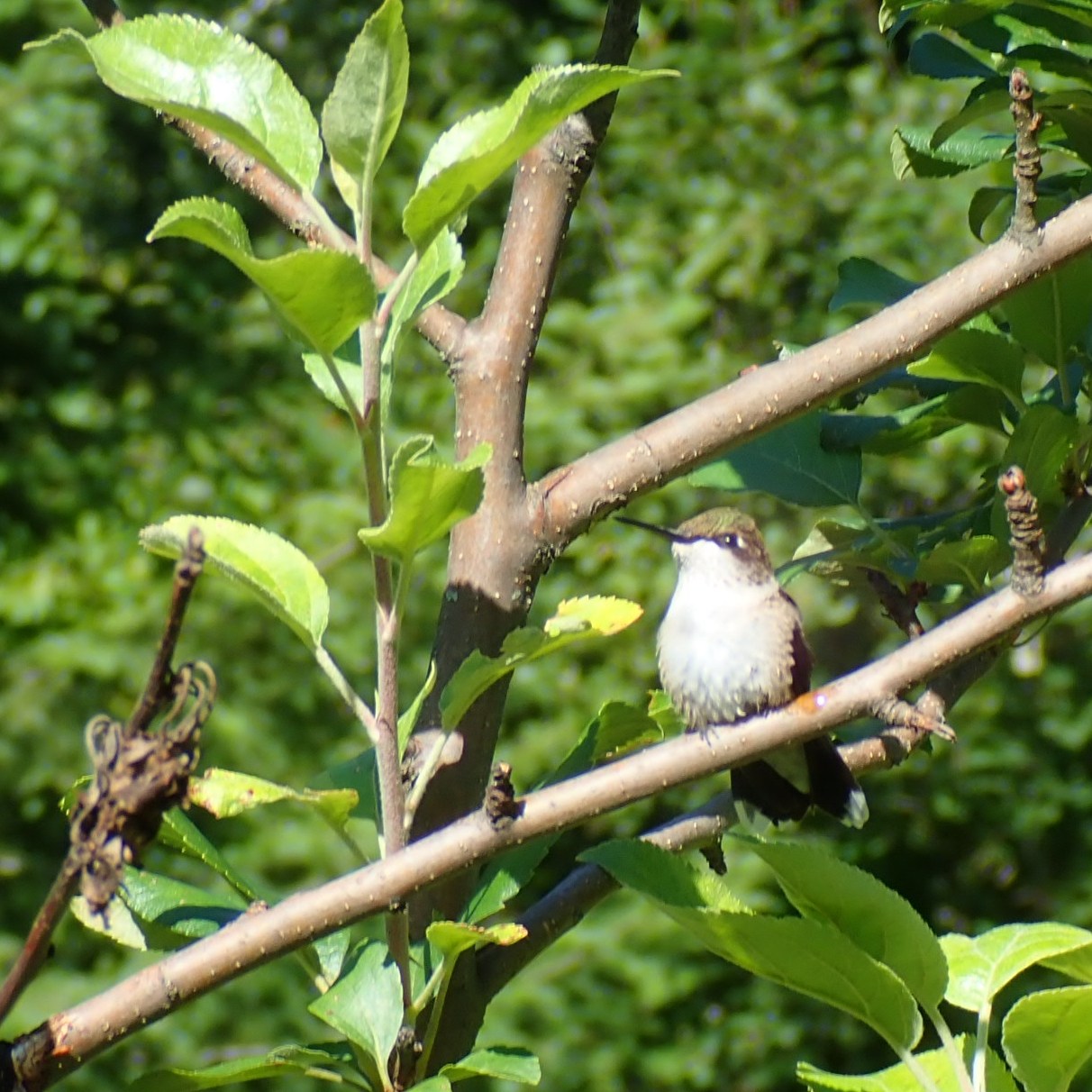
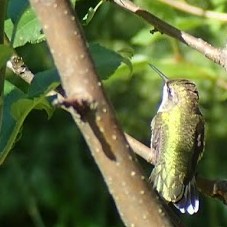
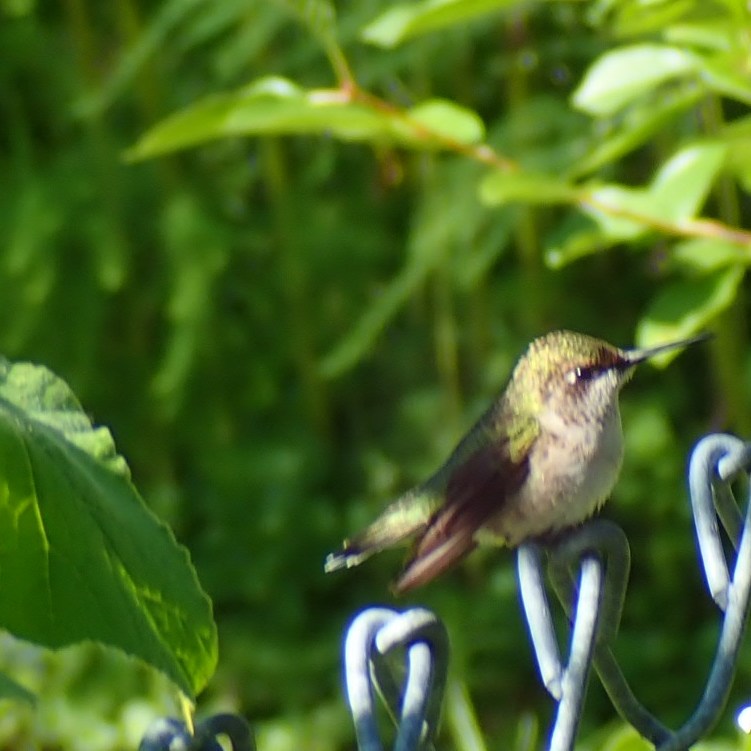
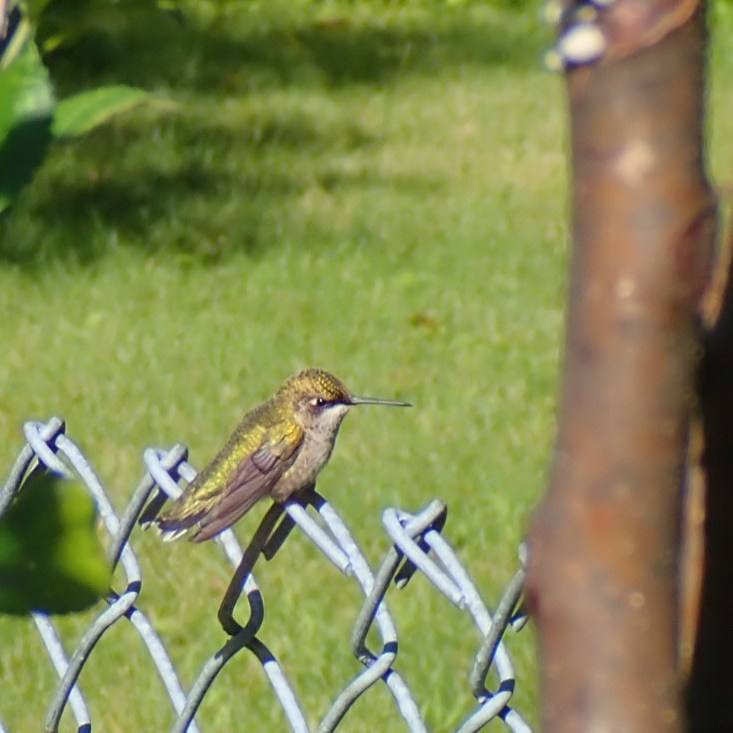
Updated to include the pictures above, that show a female Ruby-Throated Hummingbird visiting our garden today.

Hummingbird in New Mexico
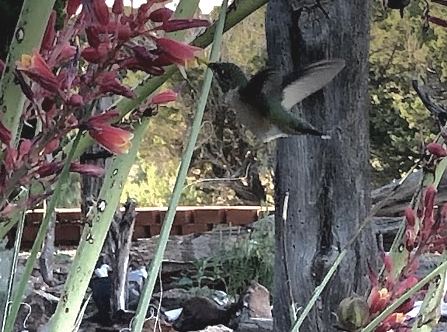
Last week on a road trip from Houston to Salt Lake City, we were lucky to see some hummingbirds feeding on yucca flowers near Santa Fe, New Mexico. There are many species of hummingbird in this area; the one in the picture above looks like a Black-Chinned Hummingbird (?).

Small Flowers

I am learning that small plants have remarkable fine-scale features. This post is intended to show off some of these.

Ontario Lobelia (Lobelia kalmii)

This tiny plant is prevalent on the north shore of Lake Superior and is less common elsewhere in Minnesota. It only reaches 0.5 to 1.5 inches tall and its flowers are just 0.25 to 0.50 inches across.

Ontario Lobelia prefers wetland environments, and is found in the northern states and Canada.

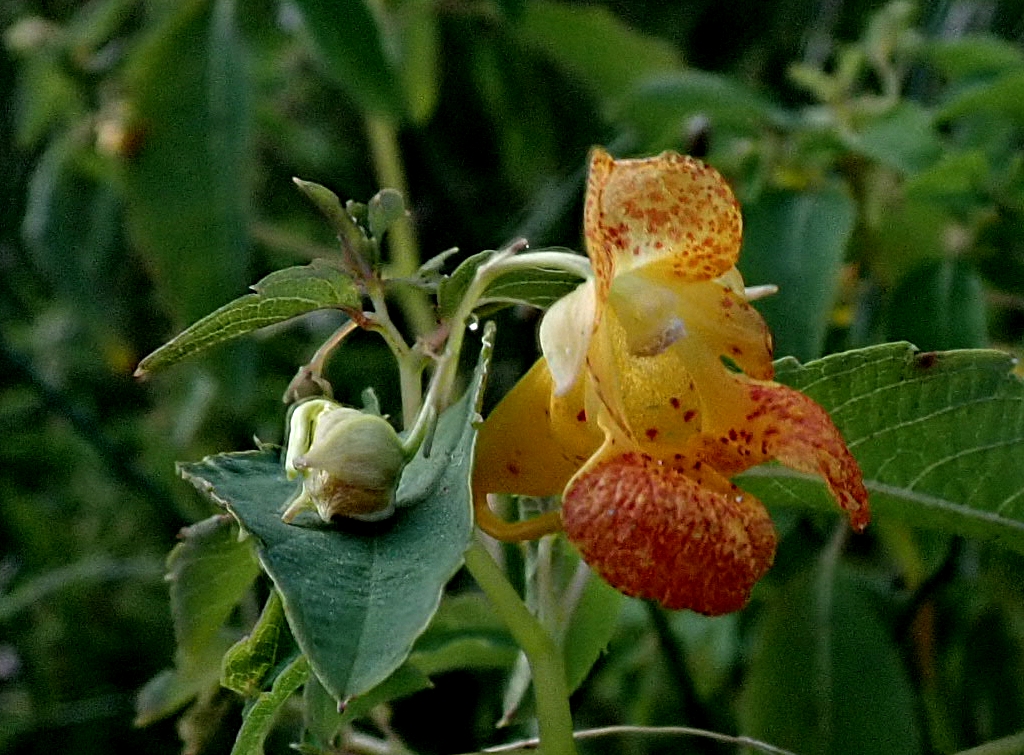
Jewelweed (Impatiens capensis)

This is an attractive and vigorous native plant that prefers semi-shady wetlands. Its mature seed pods explosively expel seeds at a slight touch, which explains its alternate name, Spotted Touch-me-not.

The sap of Jewelweed has been used by Native Americans to sooth skin rashes, particularly from poison ivy.

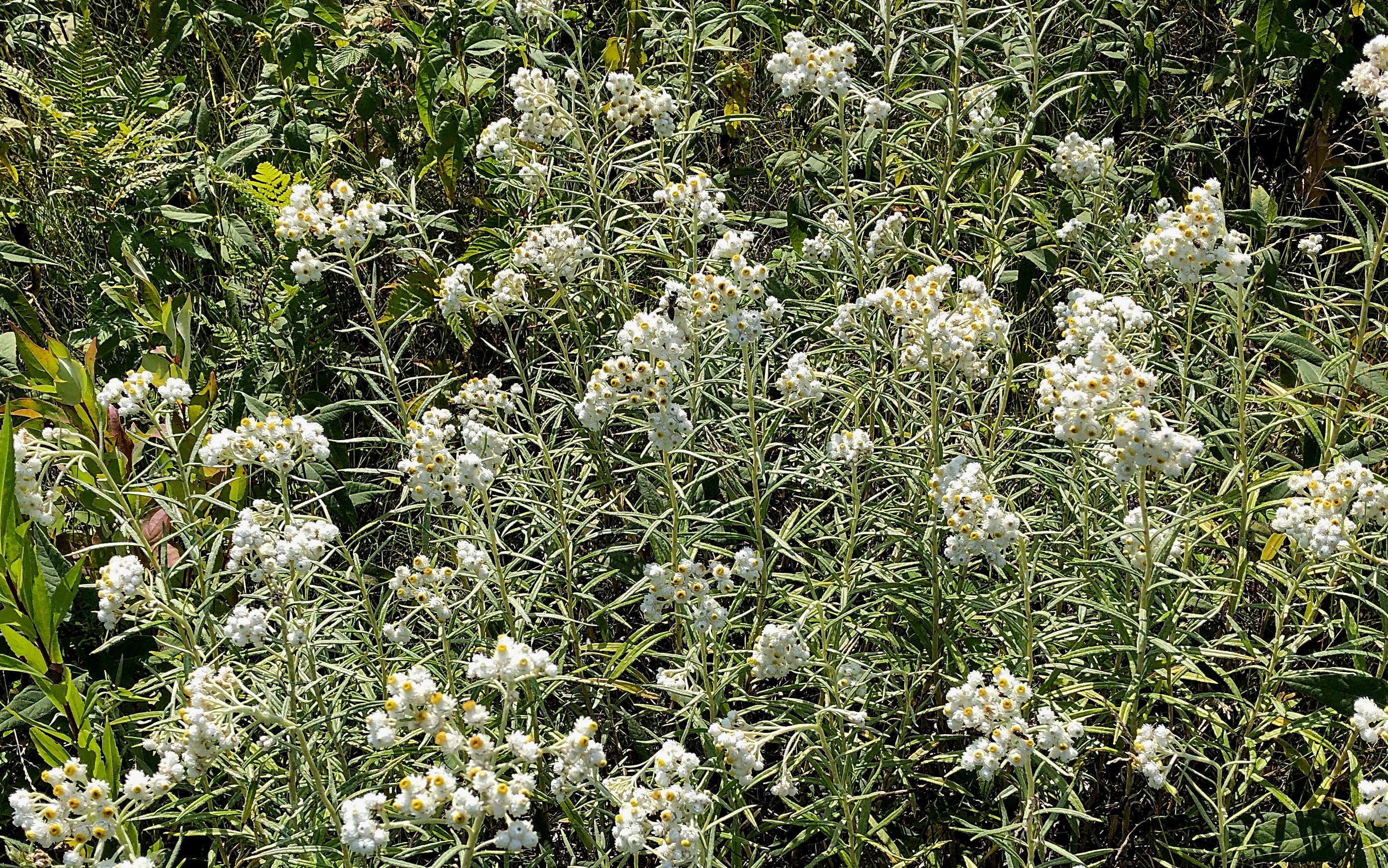
Rabbit Tobacco (Pseudognaphalium obtusifolium)

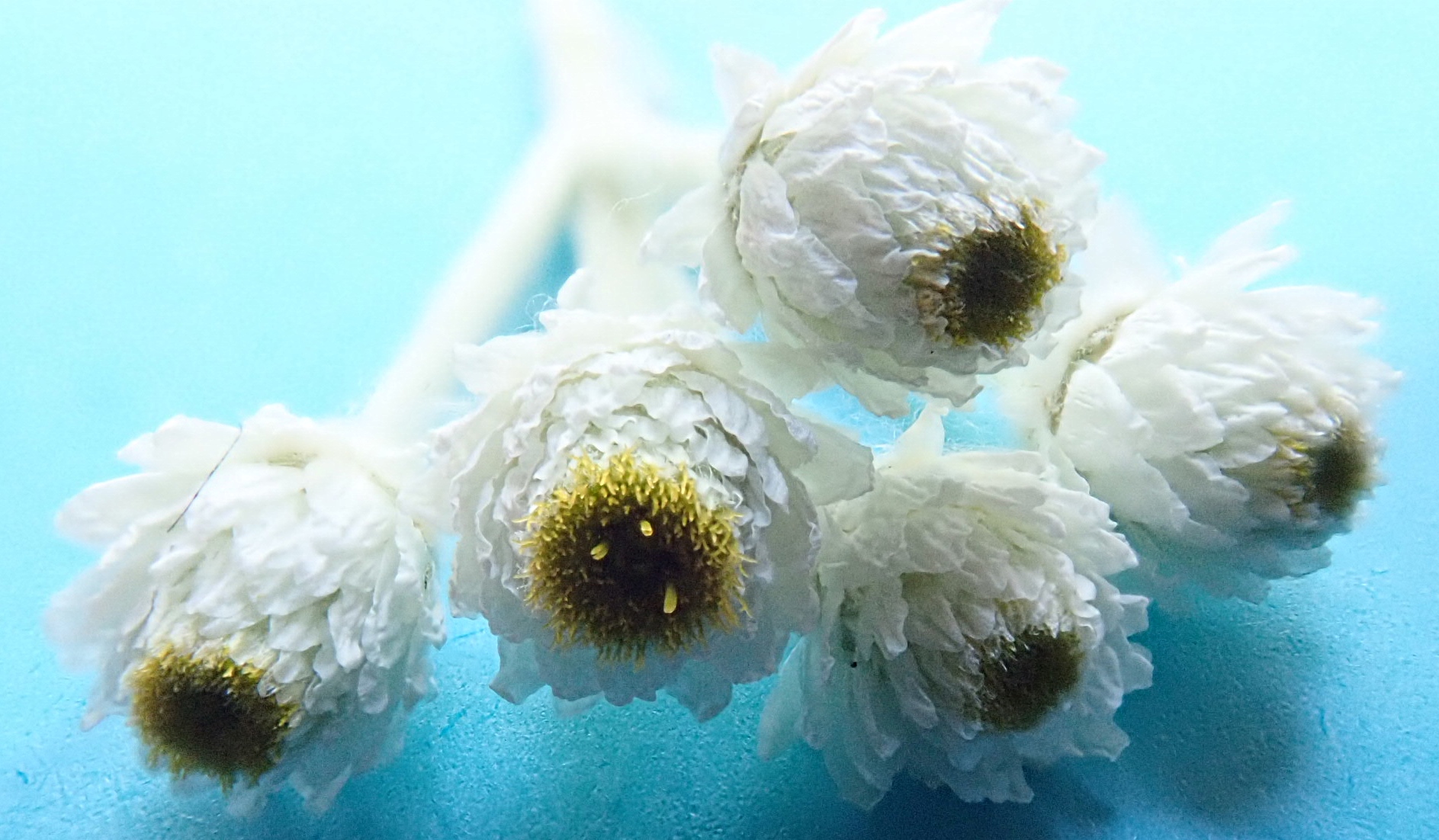
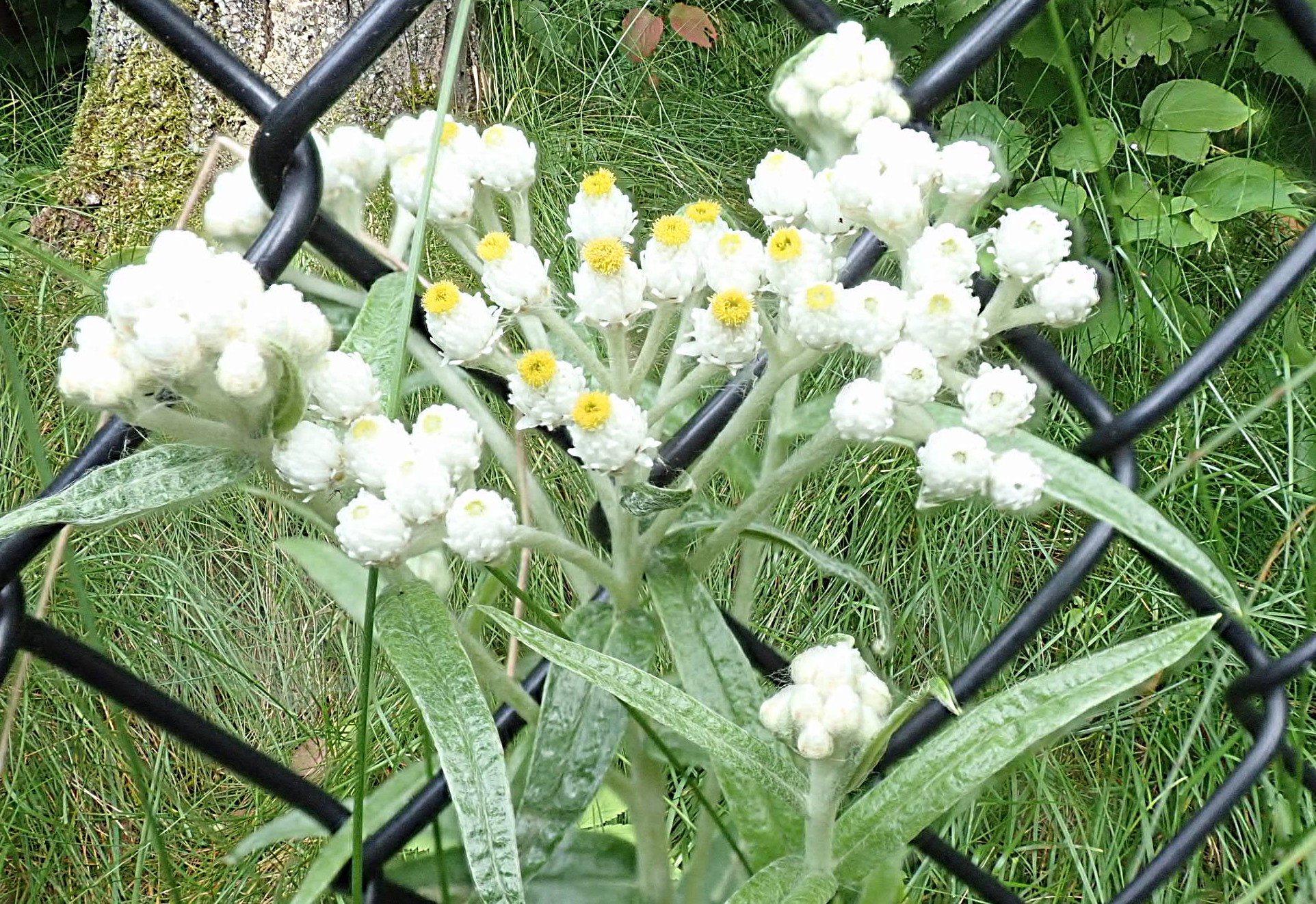
Rabbit Tobacco is an interesting plant. A commonly-used alternate name is Sweet Everlasting; because its flowers are long-lasting and it reportedly gives off a sweet, maple-like scent. Its flowers are the yellow-brown parts seen at the tips of the plant in the photos above. The white petal-like structures surrounding the flower are actually bracts.

There are several medicinal and supernatural benefits attributed to Rabbit Tobacco, including sore-throat relief and repelling ghosts. As suggested by the name “tobacco” people smoke the leaves of this plant. Smoking Rabbit Tobacco has been a tradition among both Native Americans and children in the rural south.

Mouse-ear Chickweed (Cerastium fontanum)

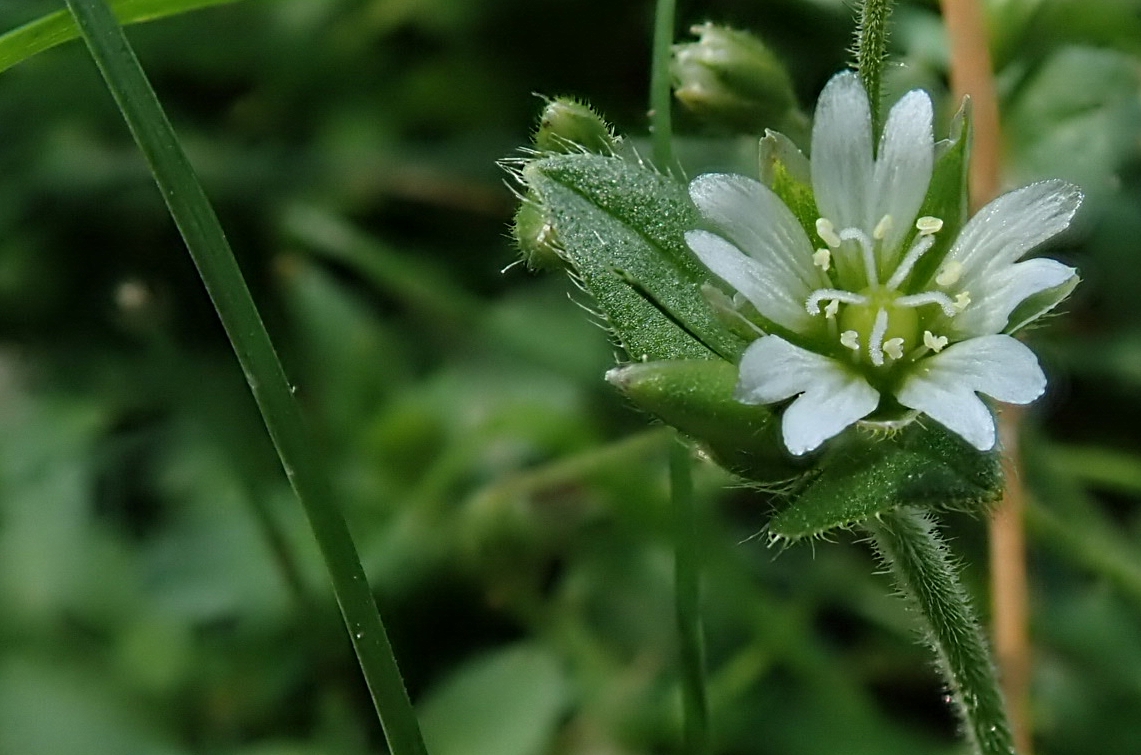
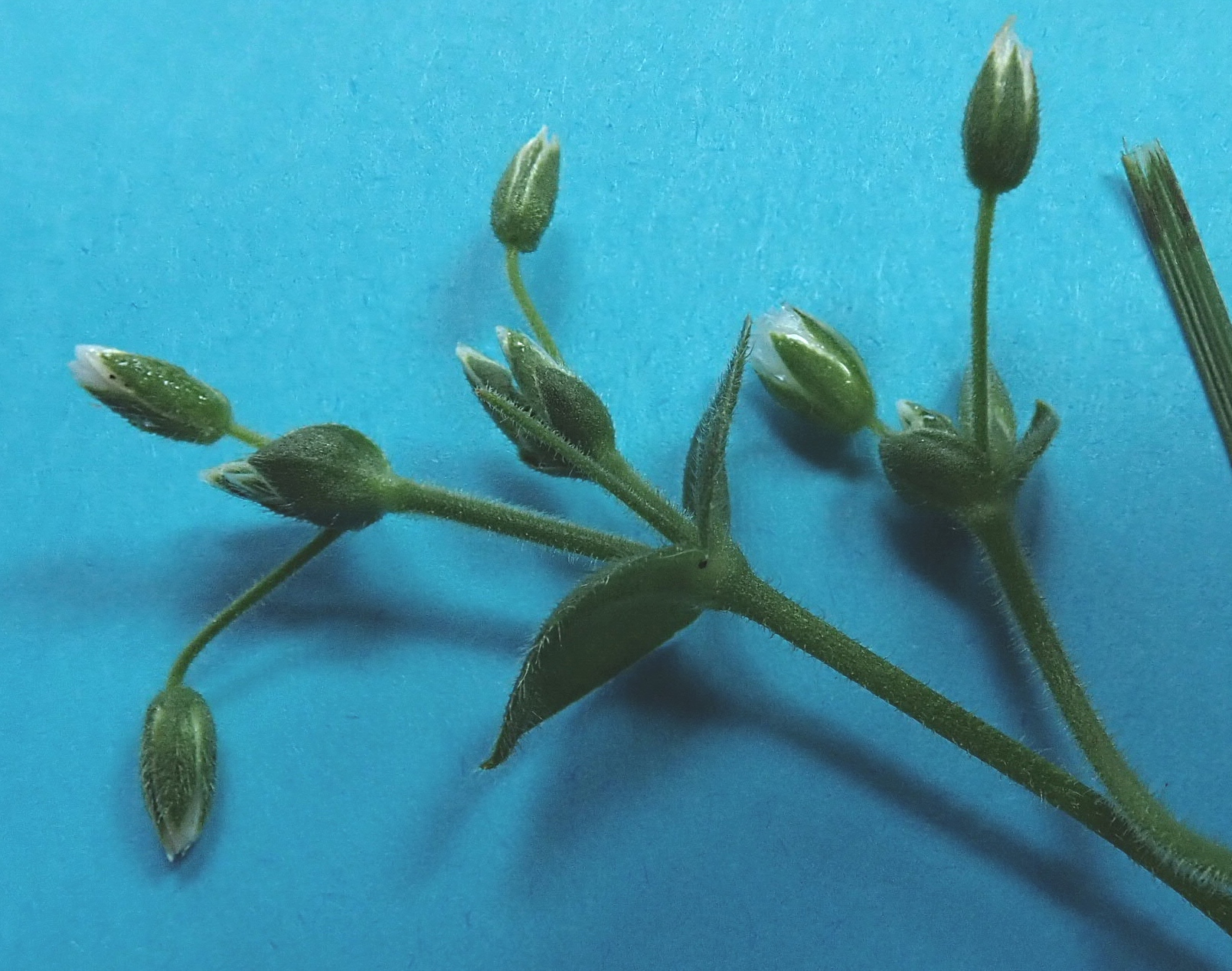
Mouse-ear chickweed is truly tiny, I found it hidden amongst the grass on our lawn. For scale, compare it to the blades of grass seen in the pictures above.

There are many species of chickweed in Minnesota, Mouse-ear is distinguished from other similar species, like Common Chickweed, by the prevalent hairs on its stems and leaves and its creeping mat-like growth habit.

These chickweeds are non-native and commonly regarded as lawn weeds.

Indian Strawberry (Duchesnea indica)

Indian Strawberry is another tiny plant found in our lawn that is non-native and invasive (a weed).

An alternate name for it is Mock Strawberry, however its red fruit is essentially tasteless. The Wild Strawberry plant is quite different, much more like cultivated Strawberries.

Three lobed leaves distinguish Indian Strawberry from another similar plant, Dwarf Cinquefoil.

Morning on the Lake

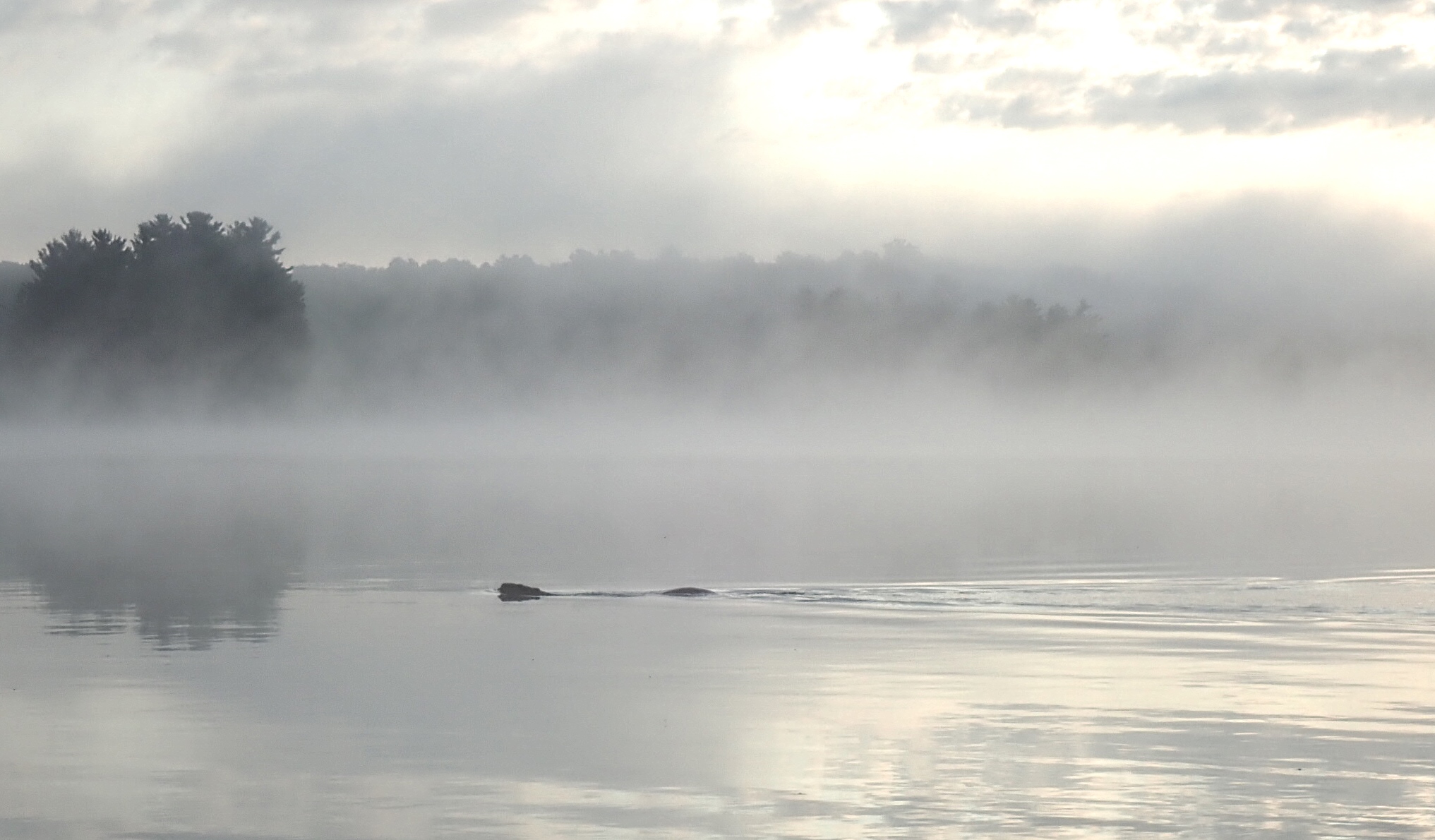
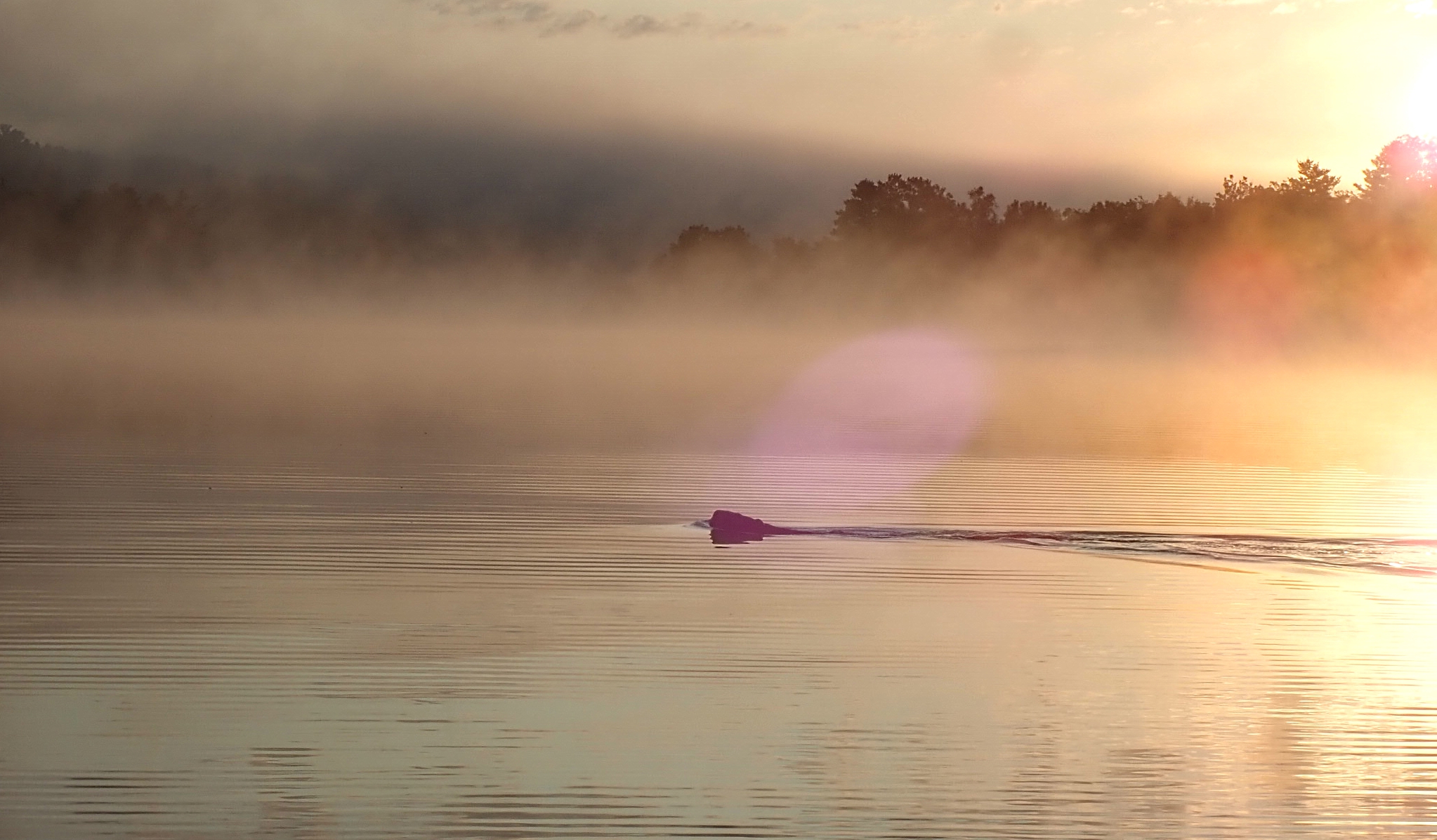
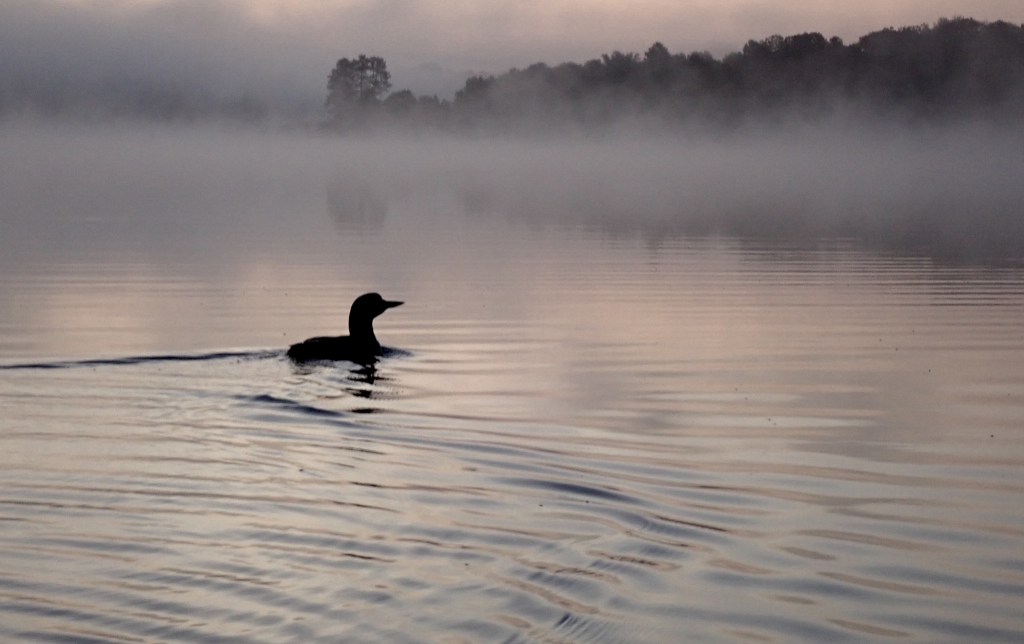
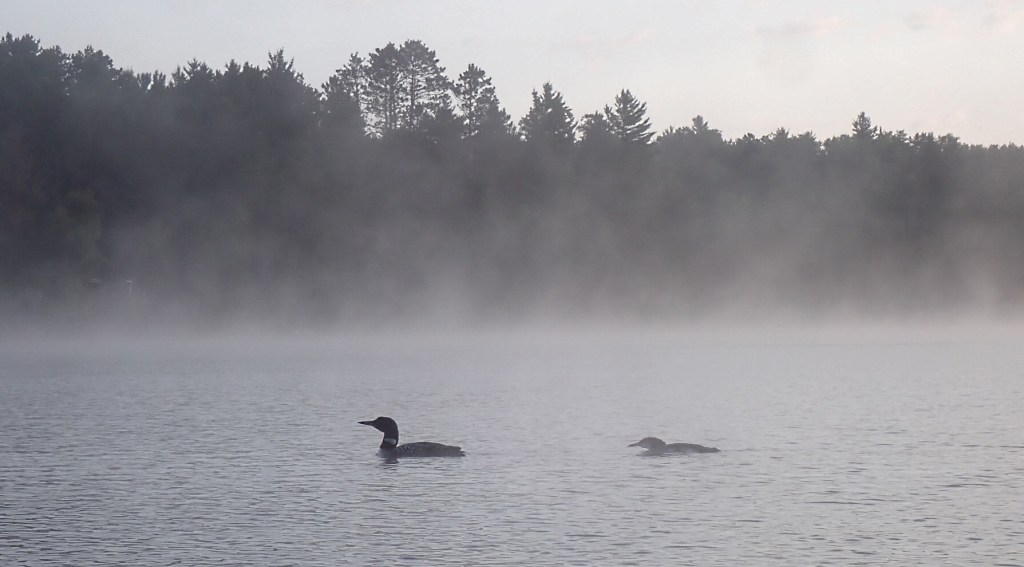
Before sunrise is the best time to be on the lake to see loons, eagles, and swimming beavers.

In the three images above a beaver can be seen swimming across the lake, then raising his tail to slap the water, and finally the resulting splash as he submerges.

It seemed like this beaver was intentionally showing himself to me and then swimming away — maybe to draw me away from the beaver lodge?

A loon parent was out patrolling the lake with the loon chick. The chick still appears to be thriving.

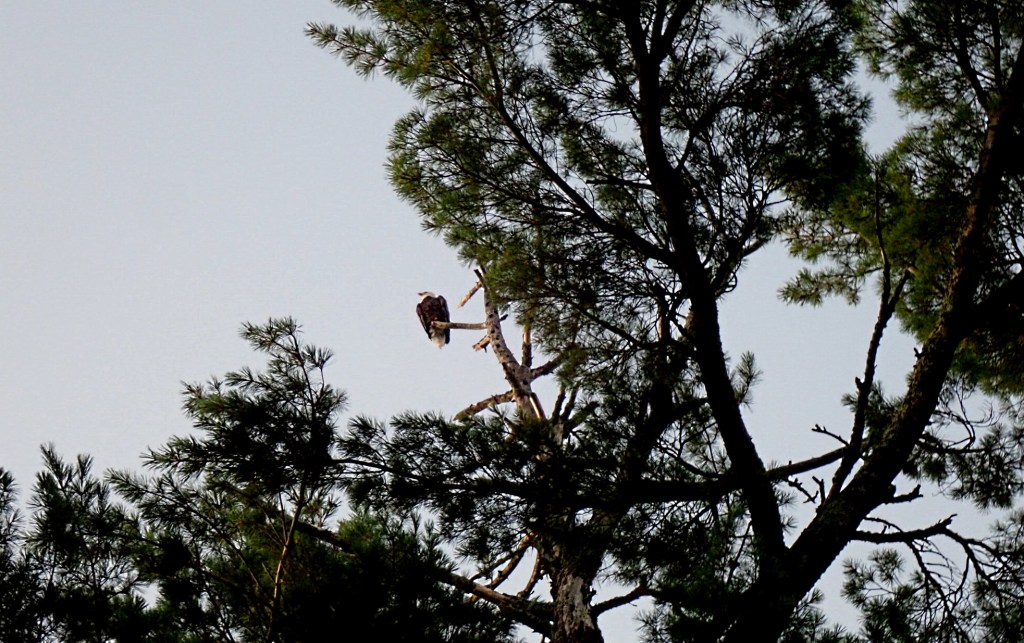
A bald eagle was perched watching the lake the entire time I was in the area.

Sunrise pictures; before and after the sun peeks over the horizon.

Milkweeds and Butterflies #2

Different milkweeds, same butterflies…

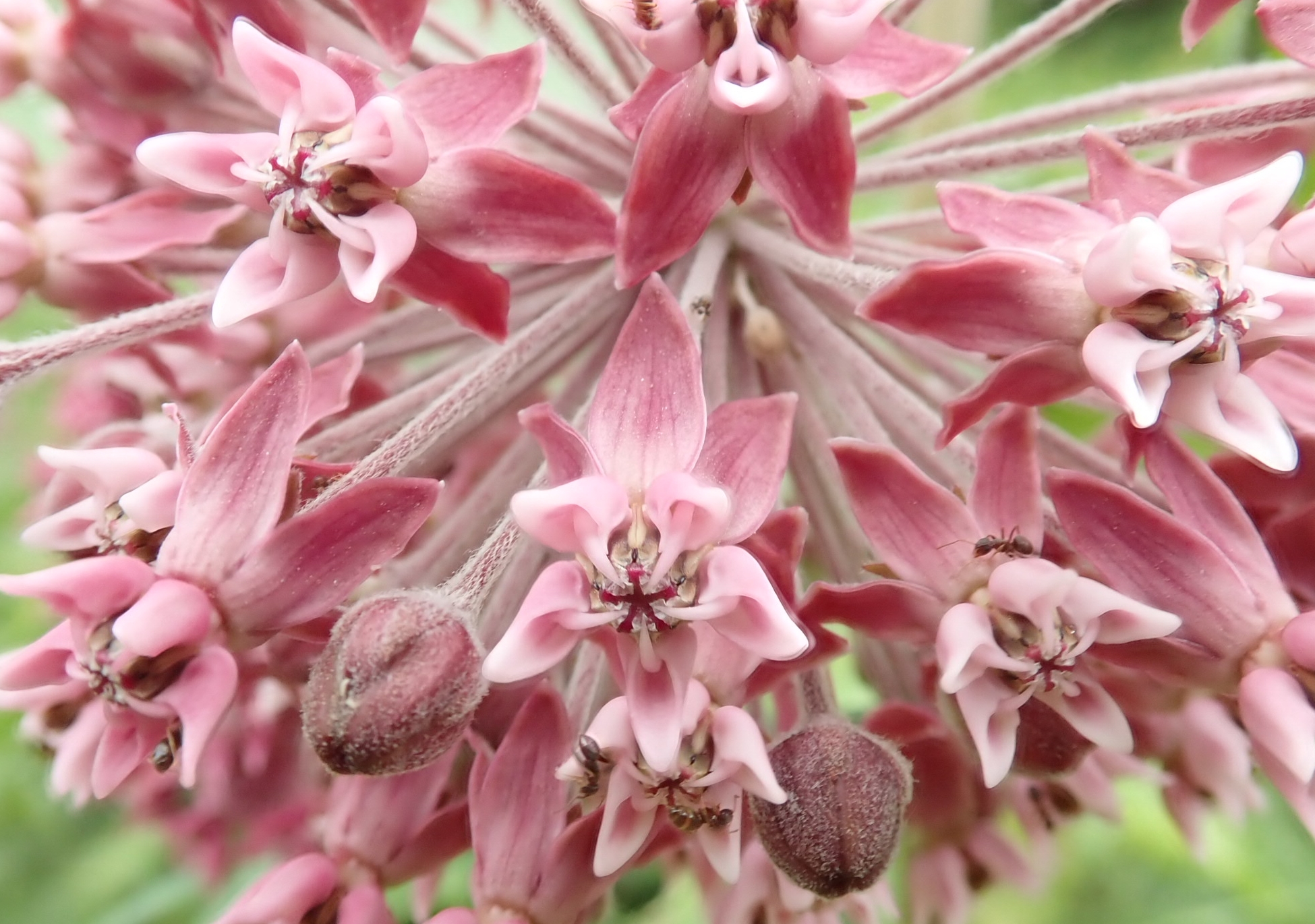
Swamp Milkweed (Asclepias incarnata)

The long narrow leaves of Swamp Milkweed distinguishes it from other milkweeds. Its beautiful flowers make it a desirable plant in the garden and attractive to butterflies and hummingbirds. As expected from its name, Swamp Milkweed is typically found near water in the wild. However it can thrive in an average garden, as long as it is kept watered.

Caterpillars

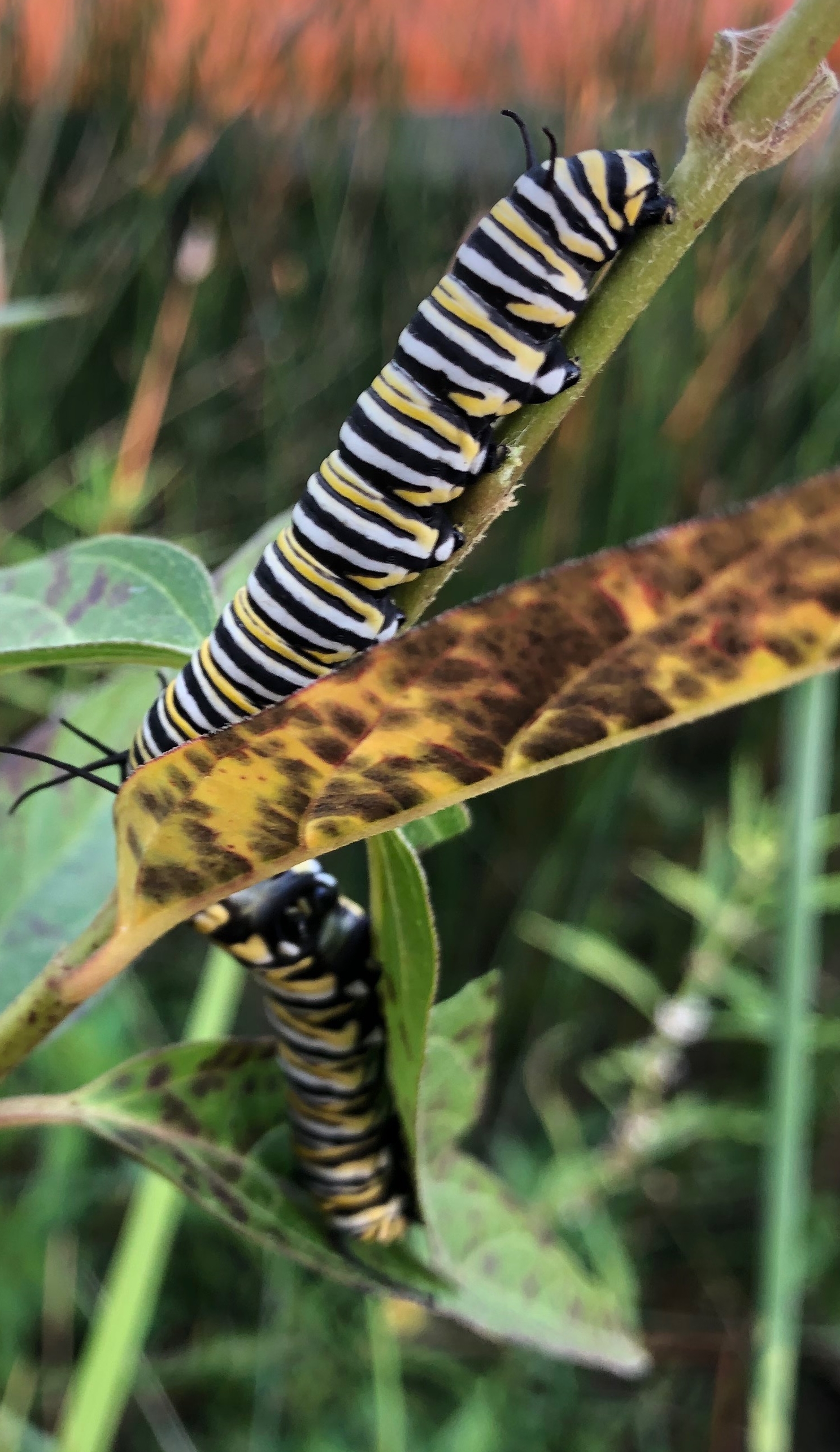
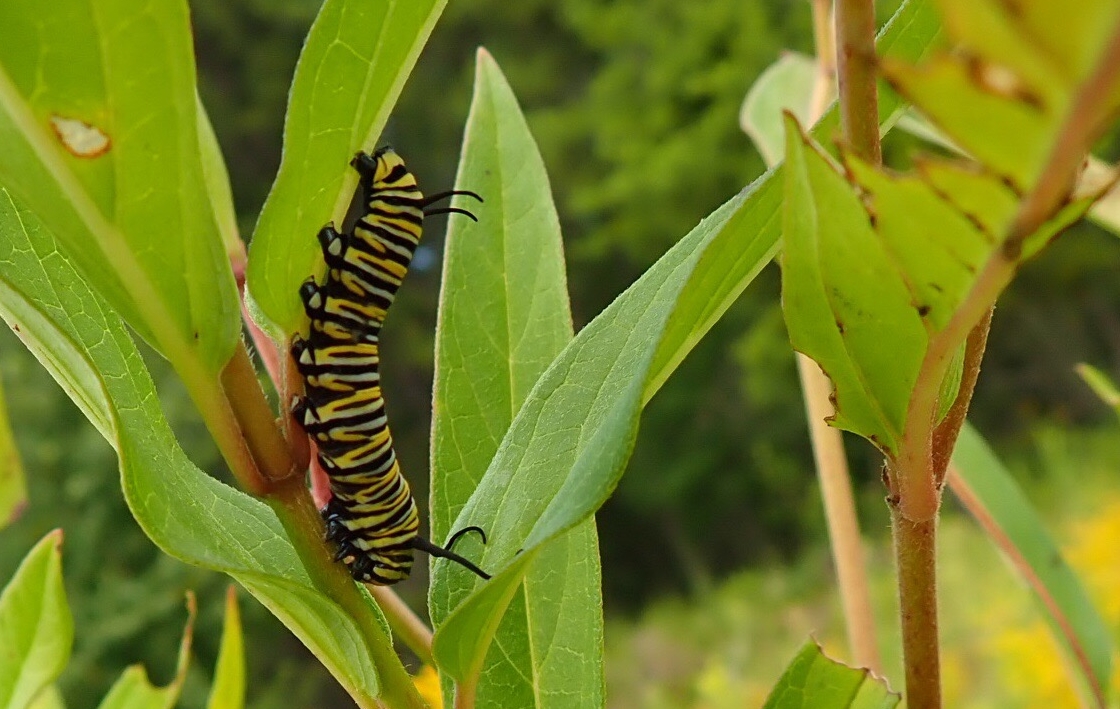
In elementary school I remember bringing in these caterpillars with a few milkweed leaves for show-and-tell, hoping they’d turn into monarchs.

Here is a similar show-and-tell. Today I’m showing the caterpillars on their Swamp Milkweeds; hoping to return later to capture the metamorphosis.

Common Milkweed (Asclepias syriaca)

Described previously, but I got some better pictures….

Understory; Shrubbery #2, Gray Alder and Hazelnut

The perimeter of our lake has a nearly continuous natural hedge. The picture below shows this continuous wall of bushes rimming one of the lake’s islands. This bushy barrier at the water’s edge is predominantly Gray Alder.

Gray Alder (Alnus incana)

According to the Minnesota DNR, many smaller lakes and ponds in northern Minnesota are ringed by thickets of Gray Alder — commonly called Speckled Alder because of the scattered white lenticels on its stems. It prefers wet areas, which explains its prevalence on the shoreline. It has no commercial uses, but does provide erosion control. Plus, its branches seem to be a favorite of beavers.

Gray Alder flowers in early spring, the cylindrical clusters of its small flowers are called catkins. Female catkins develop into the small cones seen in the center of the photo to the left.

Gray Alder and Hazelnut

Gray Alder and Hazelnut are both in the birch family (Betulaceae).  Grey Alder is everywhere along our lakeshore, while Hazelnut bushes seem to be absent right next to the water. 

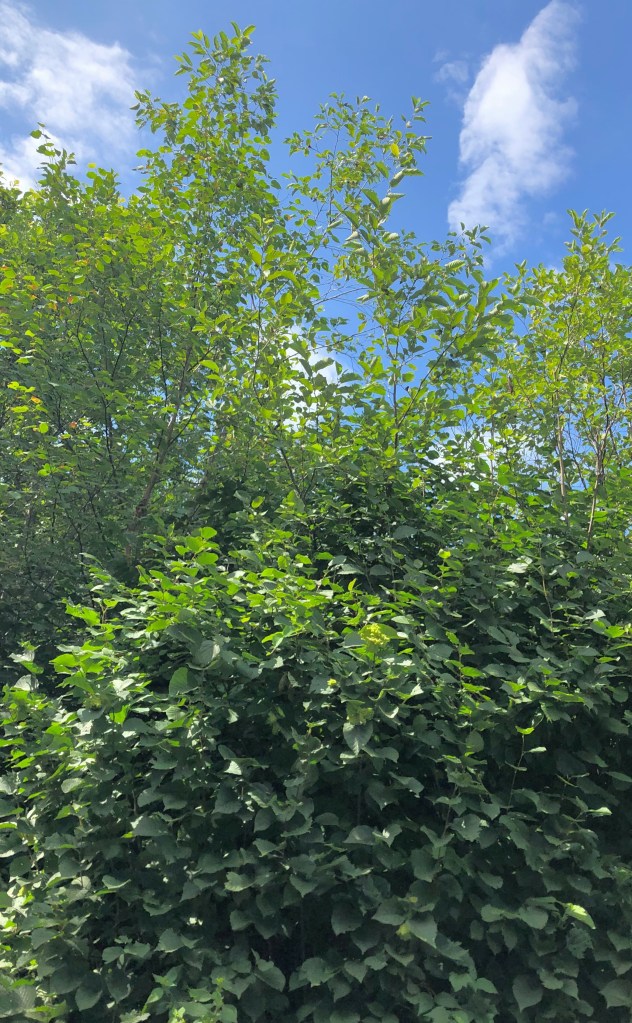
The picture to the right shows an area a few yards from the lake’s edge. Taller Gray Alders are towering over shorter, darker-green Hazelnut bushes. Further away from shore, the Hazelnut predominates in the understory.

Two species of Hazelnut coexist here, the American Hazelnut and the Beaked Hazelnut. They are described below.

American Hazelnut (Corylus americana)

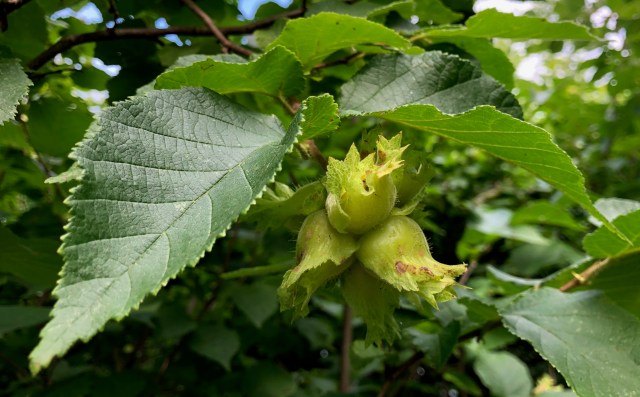
The American Hazelnut bush bears hard-shelled nuts encased by stiff green bracts. In late summer the nuts grow so that they are exposed through the bracts and change color to brown. The nuts are smaller than commercially-grown hazelnuts (filberts), but they are tasty. Squirrels, chipmunks, and other animals will be in competition with you for the nuts.

Beaked Hazelnut (Corylus cornuta)

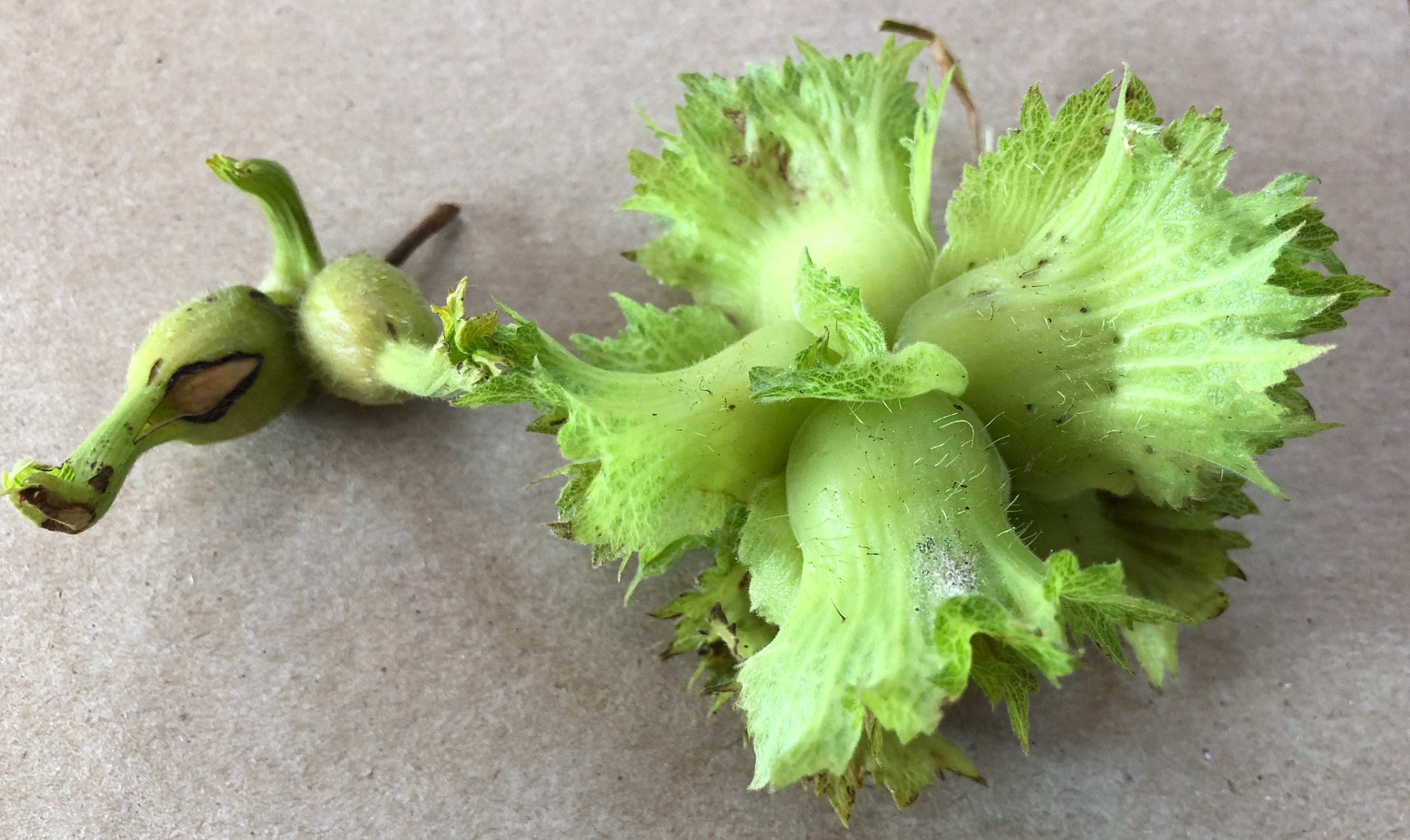
Beaked Hazelnut is very similar to American Hazelnut, the major difference is the beak-shaped husk surrounding the nuts on this plant.

Reportedly, Beaked Hazelnut prefer areas a bit wetter than American Hazelnuts. However, I find them growing intermingled, with no discernable preferences. For both species, bushes getting abundant sunlight produce noticeably more nuts.

Below are two pictures, each a side-by-side comparison of Beaked and American Hazelnuts (as of July 31). The image on the left show the nuts still in their husks, and the image on the right shows the nuts with husks removed. The two nuts from the Beaked Hazelnut appear more mature than the six nuts from the American Hazelnut cluster. The nuts are smaller than commercially grown hazelnuts, but once they ripen in late summer they are every bit as edible. Websites are available to help you find, harvest, and prepare wild hazelnuts,

Could hazelnuts be a profitable crop in the Upper Midwest?

The Upper Midwest Hazelnut Development Initiative (UMHDI) is a group promoting hazelnut cultivation as a new crop in the Upper Midwest. Their website contains a wealth of information about hazelnuts. Here is a list of interesting facts:

  • The top hazelnut producer in the world, by far, is Turkey. This production is from the European hazelnut; a plant that is more tree-like than native North American hazelnuts.
  • 99% of the current US hazelnut production is from Oregon.
  • Various hybrid crosses of the American, Beaked, and European Hazelnuts are being tested in the Midwest in hopes of finding an economically viable cultivar.
  • Hazelnut oil is 81% oleic acid, which makes it very heart healthy; it is also well-suited for production of biodiesel fuel. Hazelnut has the potential to become the first perennial oilseed crop in the Midwest, a big plus for sustainability.

Lily Pads

Lily pads have proliferated in Big Bass Lake. A kayak trip this weekend found the lake’s edges covered.

Watershield (Brasenia schreberi)

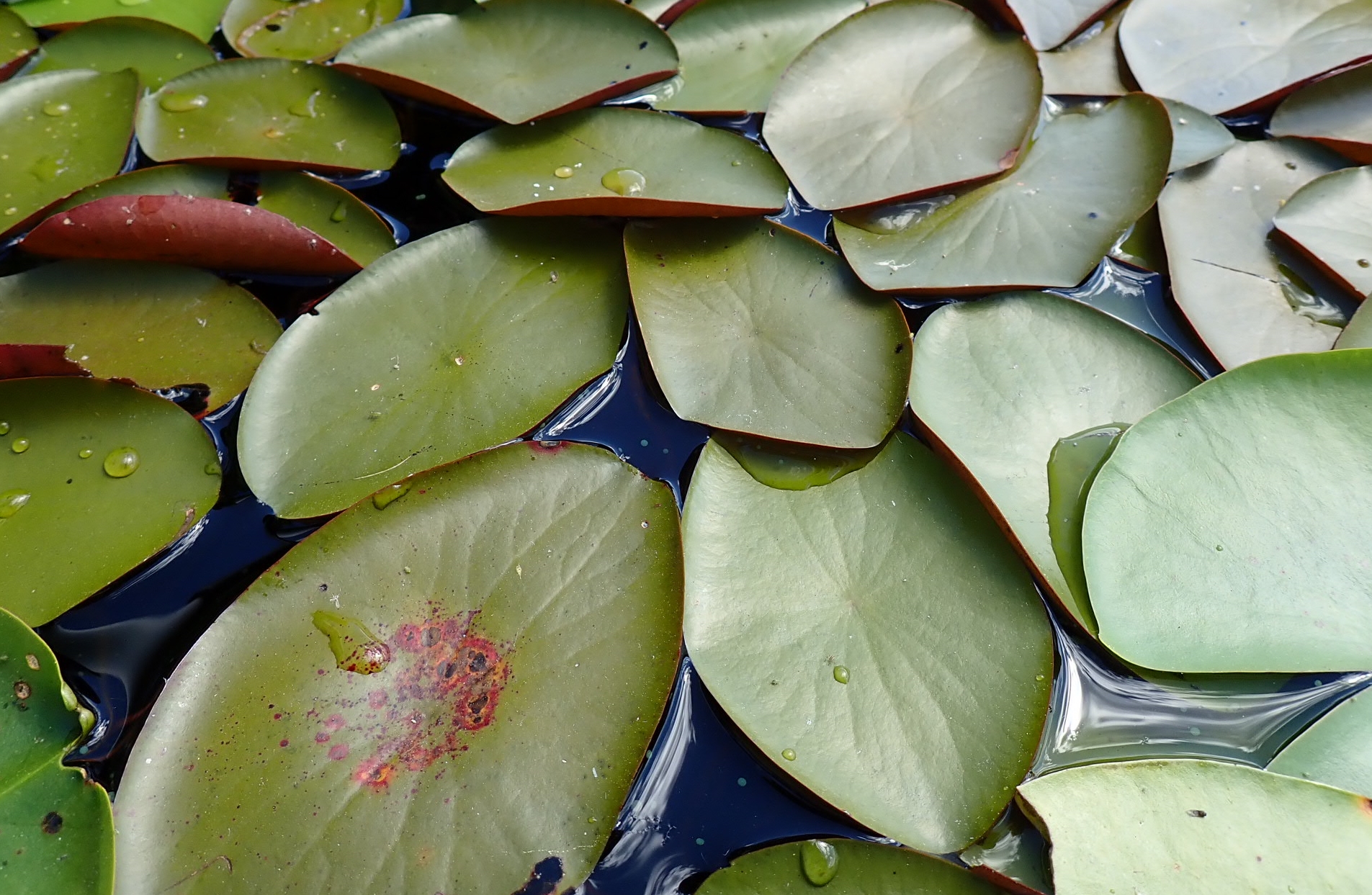
The pads of watershield are slightly smaller than other common lily pads, and they are more elliptical. It blooms throughout the summer, but we did not notice any of the smaller pink-purple flowers.

Its most interesting and noticeable feature was a thick coating of very slippery mucilage (slime!) coating the underside of the pads.

Because of the sliminess, I was surprised to read that it is edible and considered a delicacy in Japan. Further reading revealed that Watershield is best eaten as a young plant, before the mucilage is prevalent. Still…

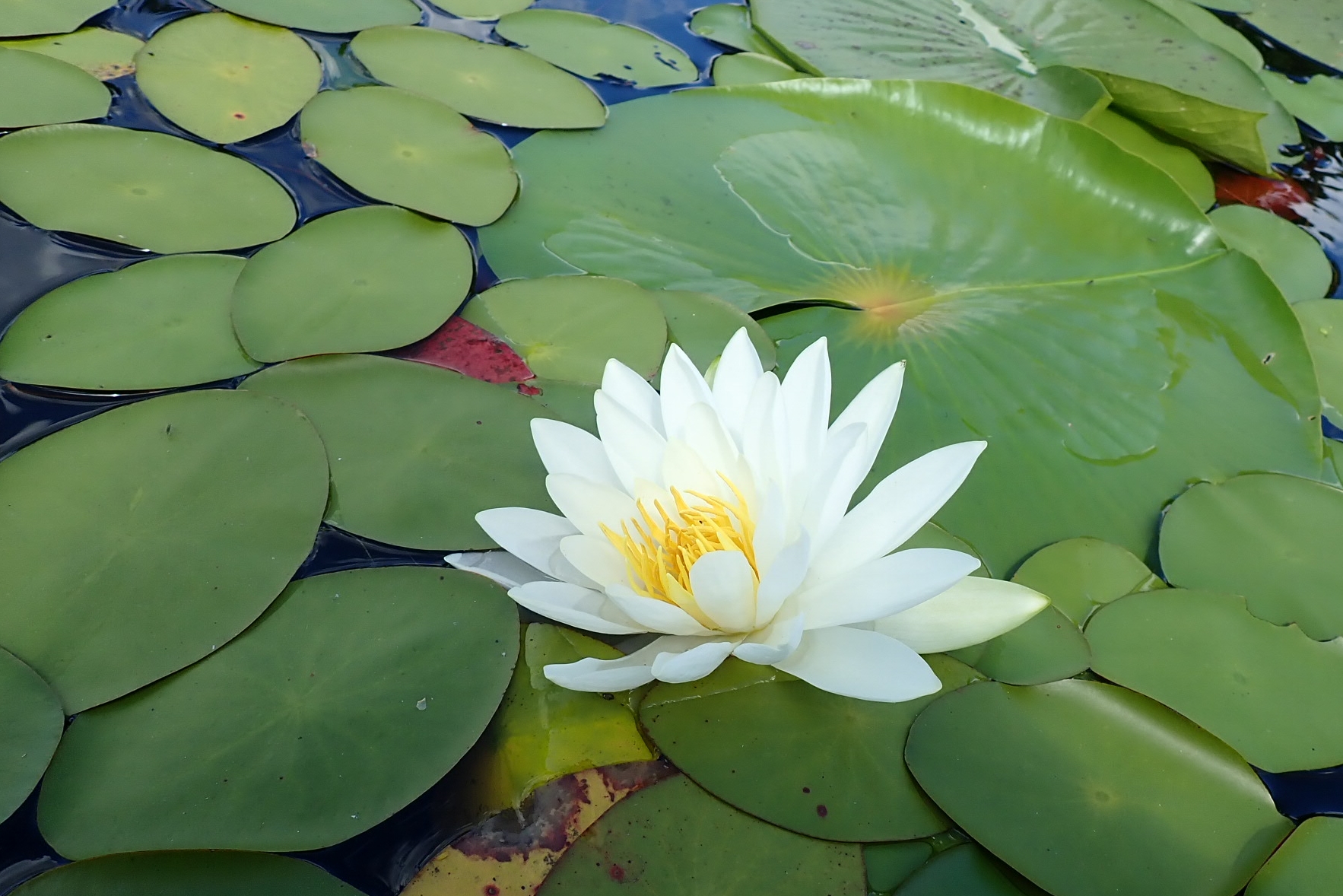
American White Water-Lily (Nymphaea odorata)

The White Water Lily is commonly seen in area lakes. This picture from Big Bass Lake shows the contrast between its larger split leaf (at the upper right) and the smaller oval unsplit pads of Watershield. Also, the Watershield is a duller olive-green color.

Its prefered habit is clear water up to 5 feet deep with mucky soil at the bottom.

The prevalence of White Water-Lily along lake shores can interfere with boat access to docks. A website of the Minnesota DNR specifies that dock owners have the right to clear a 15′-wide channel through aquatic plants to access clear water. Beyond that, checking regulations prior to clearing aquatic plants is advisable.

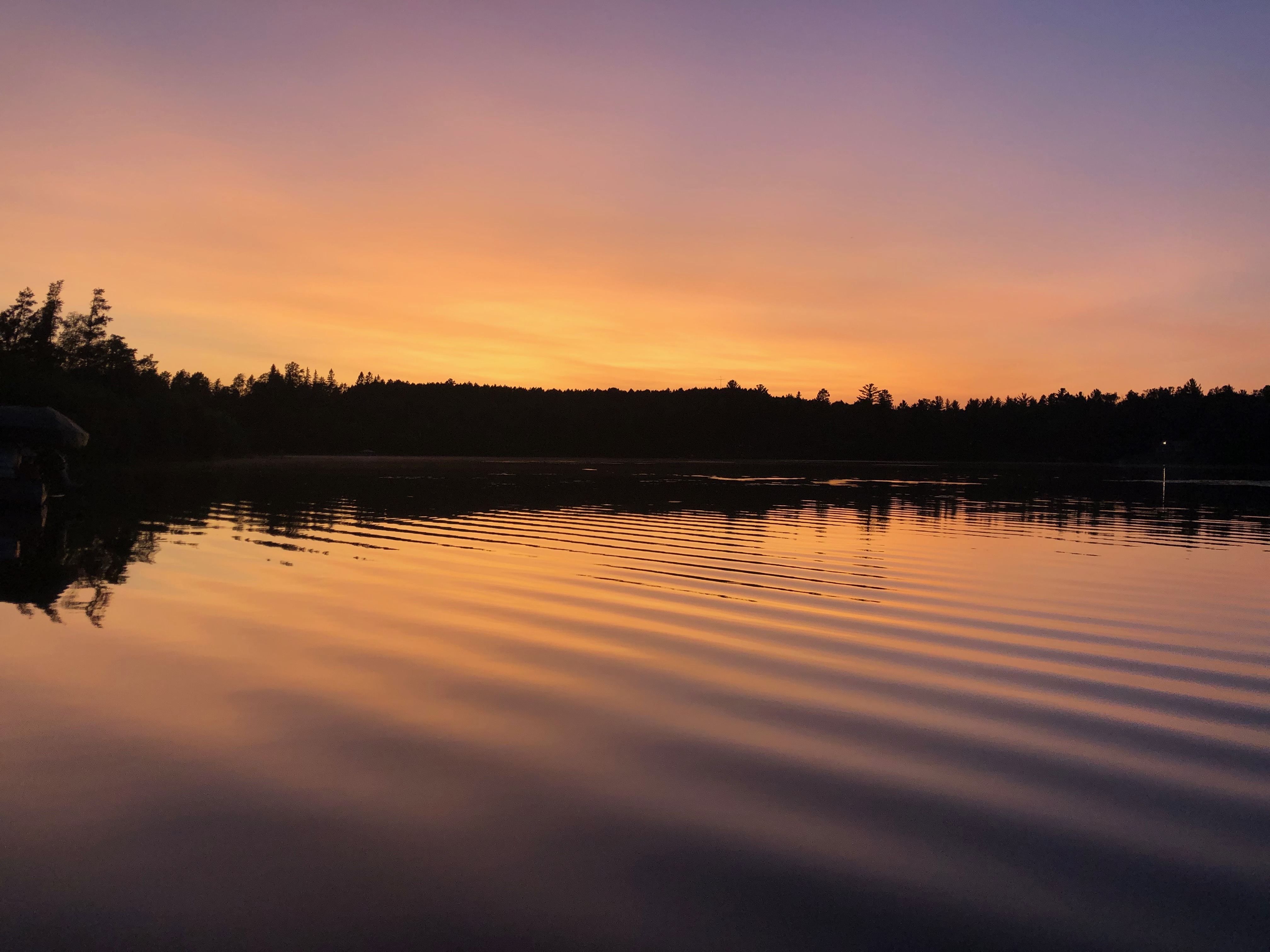
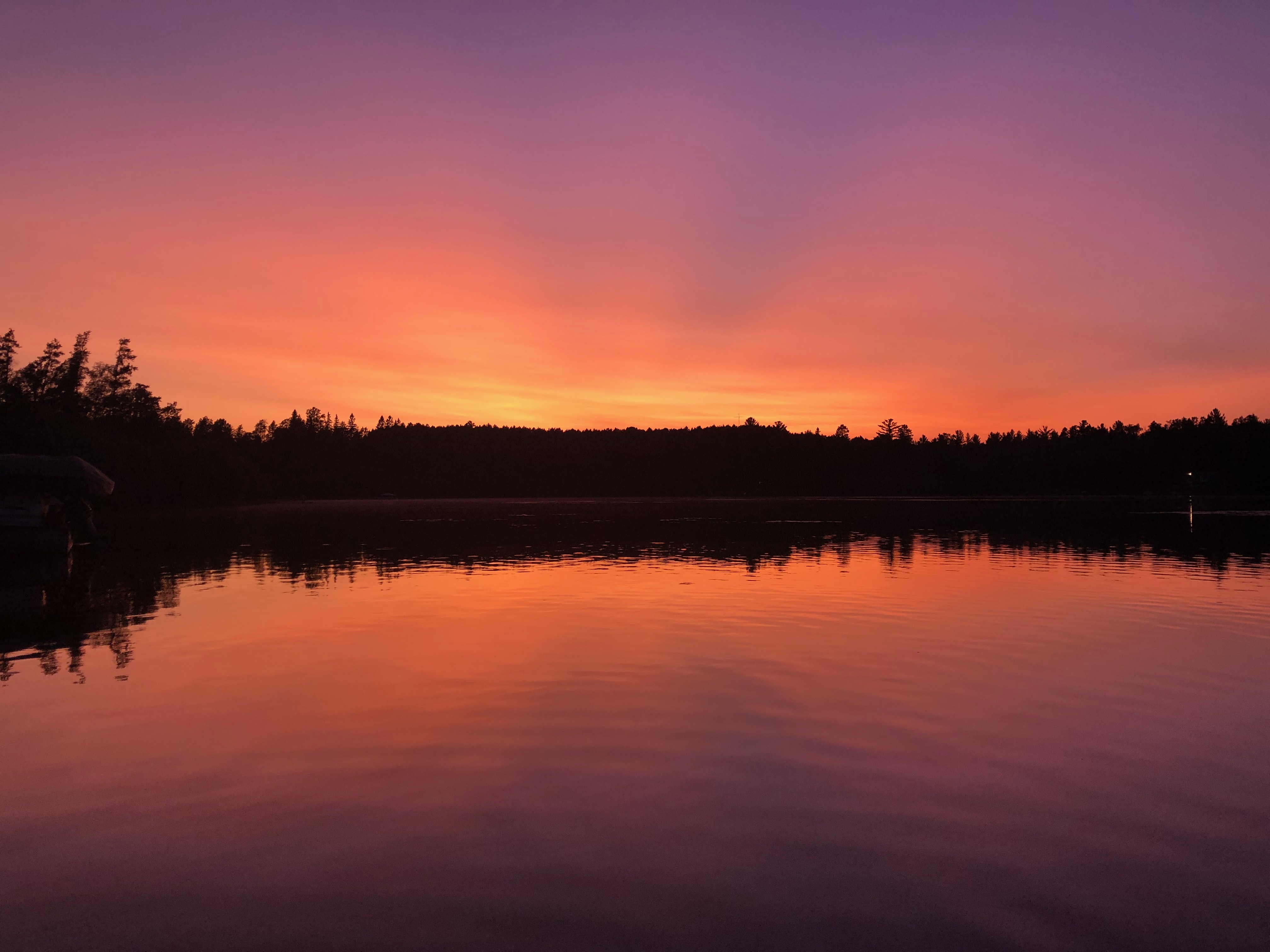
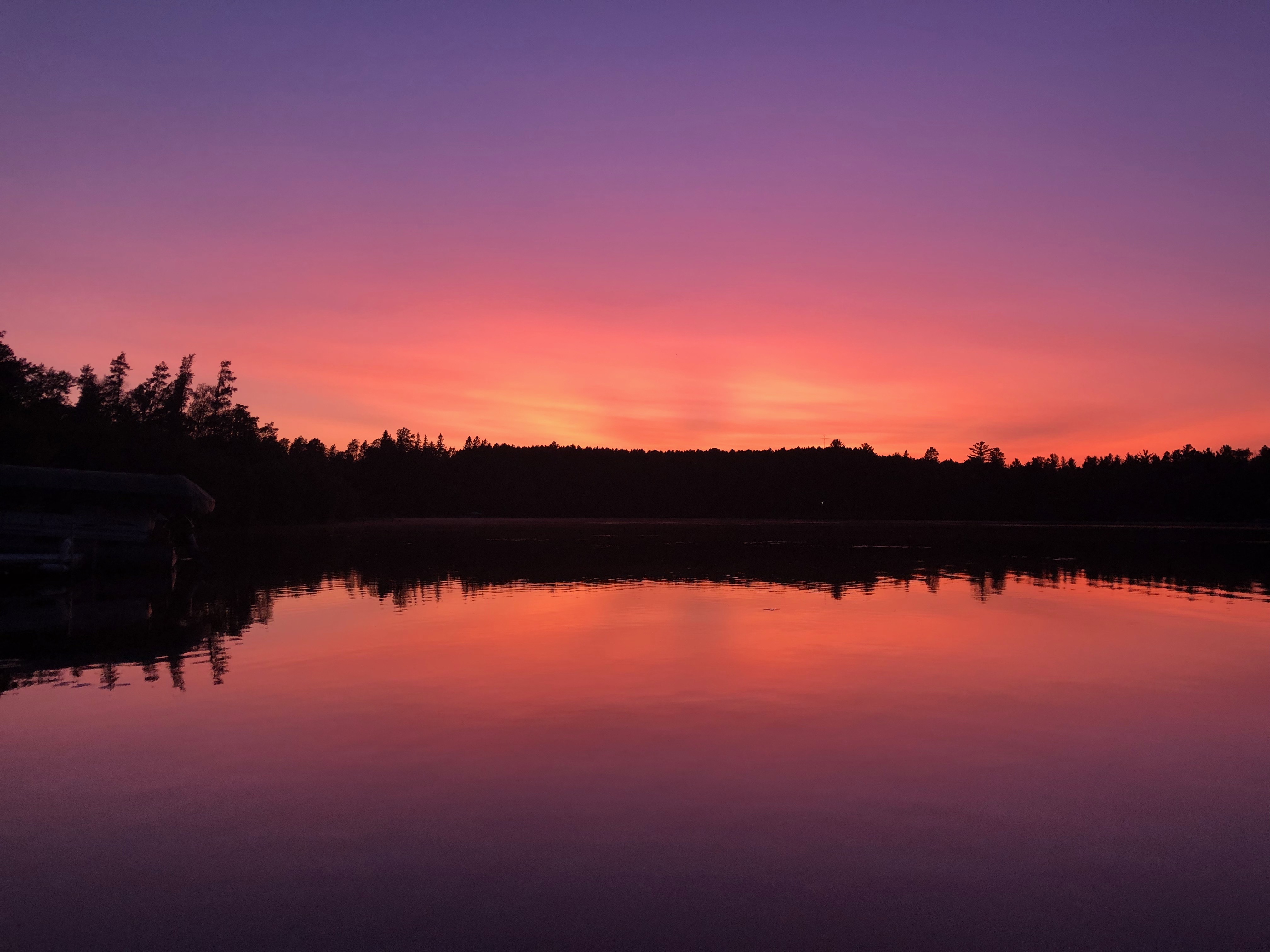
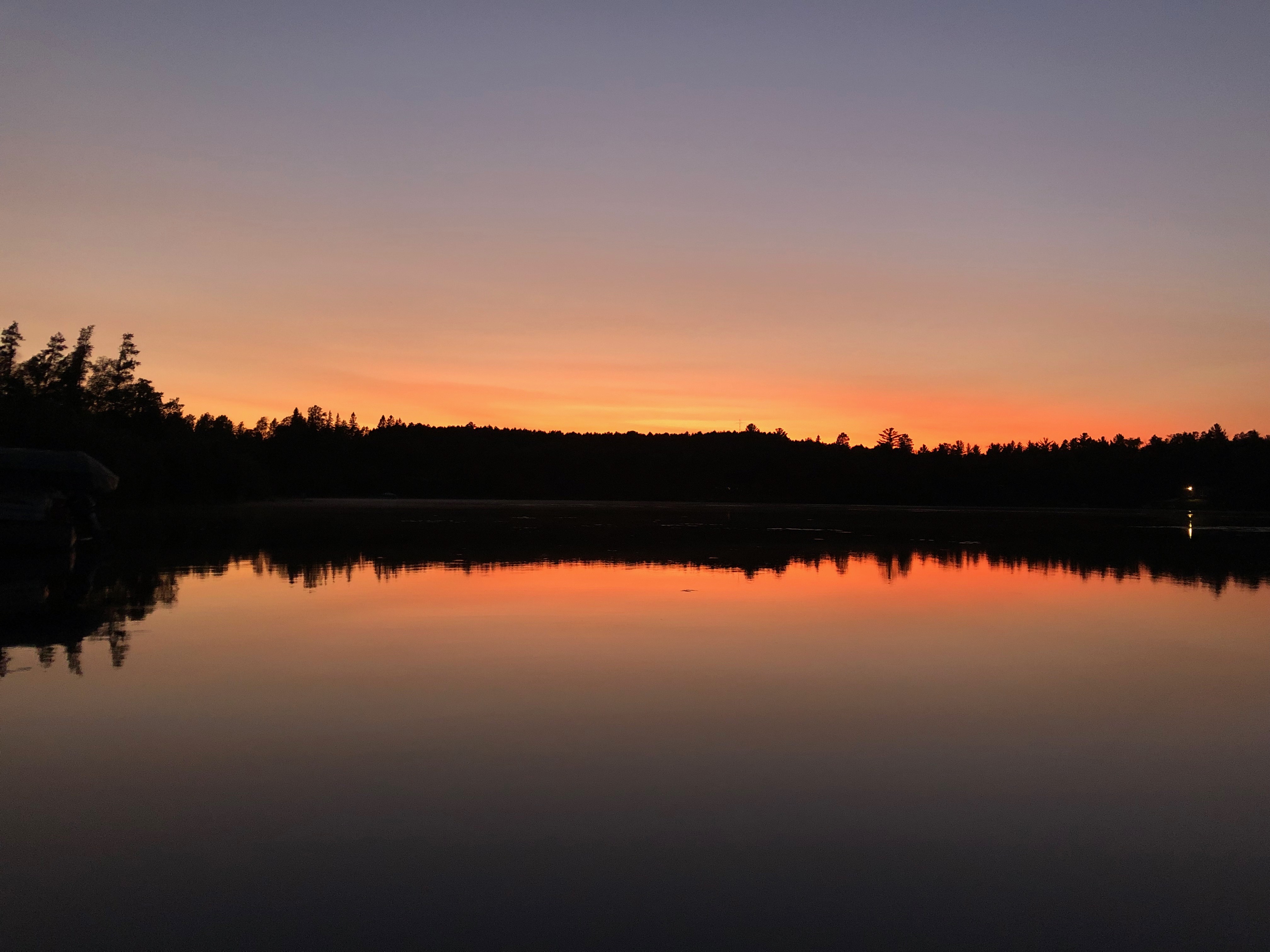
I think there is room today to show off last night’s dramatic sunset …

July Brings New Wildflowers #3 Yellow

Many different yellow wildflowers have appeared recently. So this is a longer post than usual.

The first grouping includes four plants that have a “weedy” appearance. Despite this, their flowers are surprisingly attractive.

Meadow Hawkweed (Hieracium caespitosum); upper left of image

This is an invasive non-native species relatively new to Minnesota. Like the related Orange Hawkweed, it is spreading southwest in the state after its introduction in the Duluth area.

Yellow Avens (Geum aleppicum); lower left in image

This is a plant in the rose family that is found throughout the Northern Hemisphere. As is the case with most of these plants, various medicinal properties are attributed to it. More interestingly, in medieval Europe Yellow Avens was thought to protect your home from the devil.

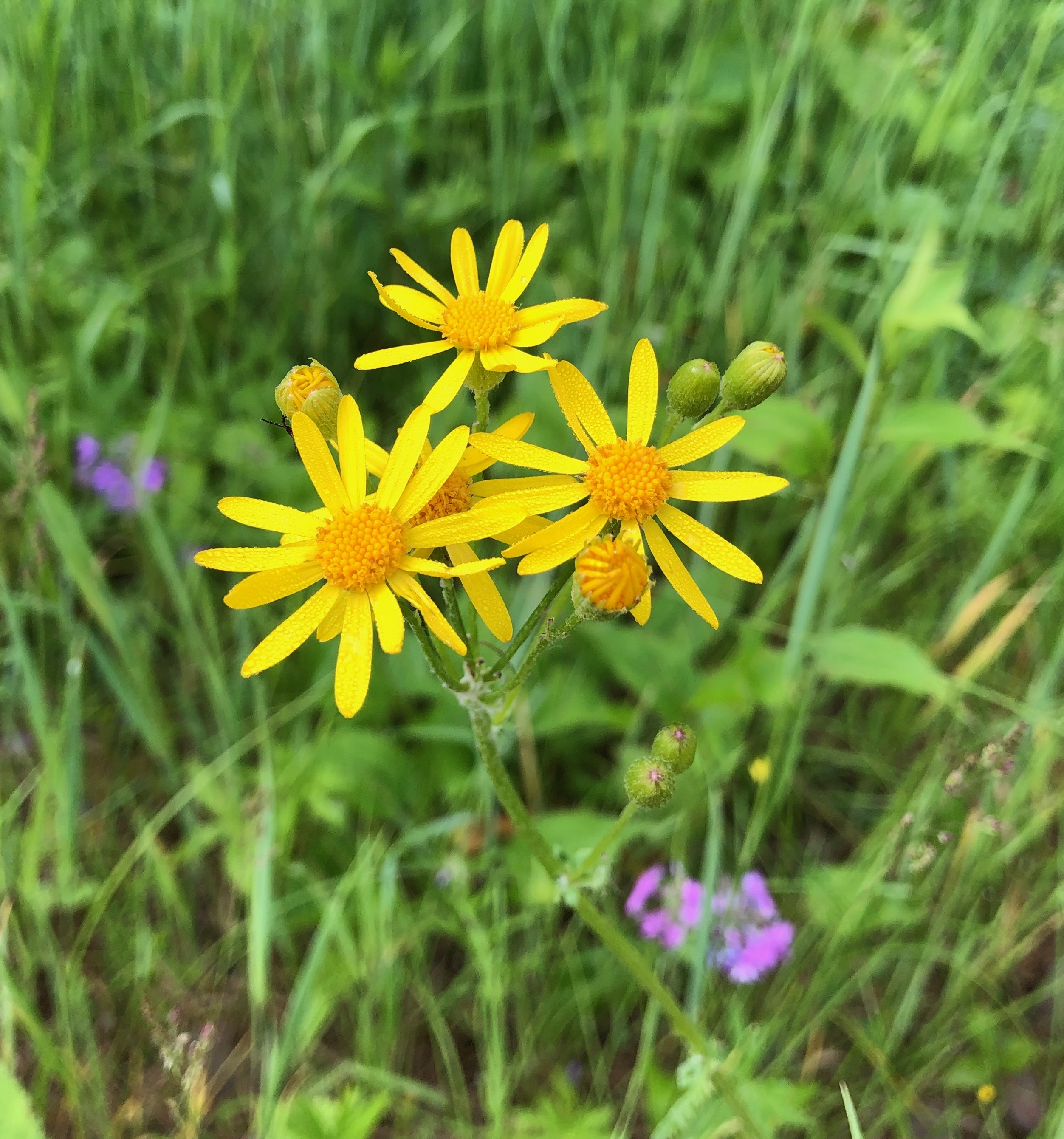
Golden Ragwort (Packera aurea); center of image

There is a long list of ailments that are supposedly helped by application of Golden Ragwort, in particular issues with the reproductive system. However, it contains toxic pyrrolizidine alkaloids, which can lead to liver problems. It seems clear that herbal remedies like this should be used with caution.

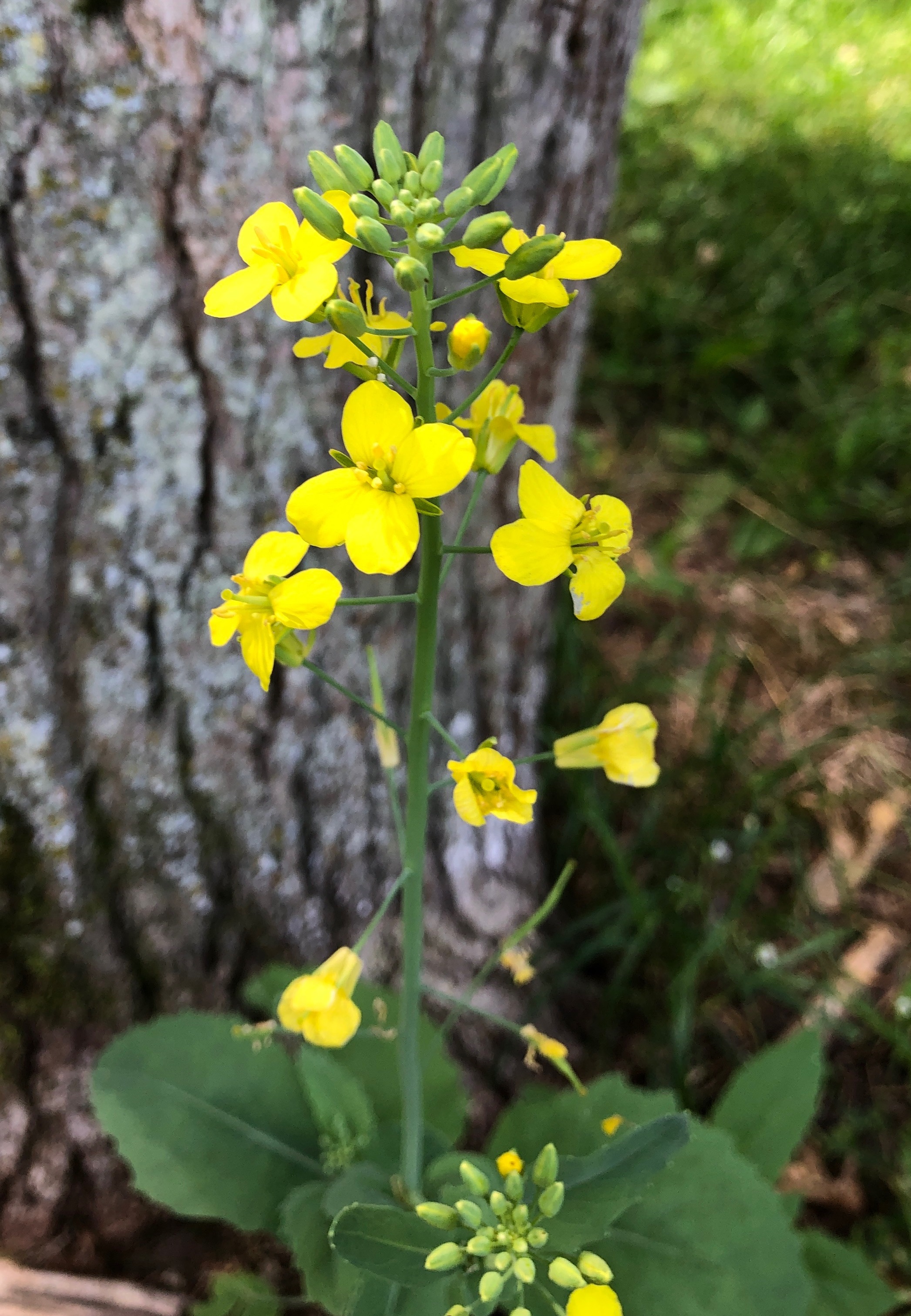
Field Mustard (Brassica rapa); right side of image

This is a non-native species that has many cultivated subspecies. The subspecies oleifera is field mustard, which is a common weed. More useful subspecies include turnips and bok choy. A closely related species is the plant that produces canola oil (Brassica napus)

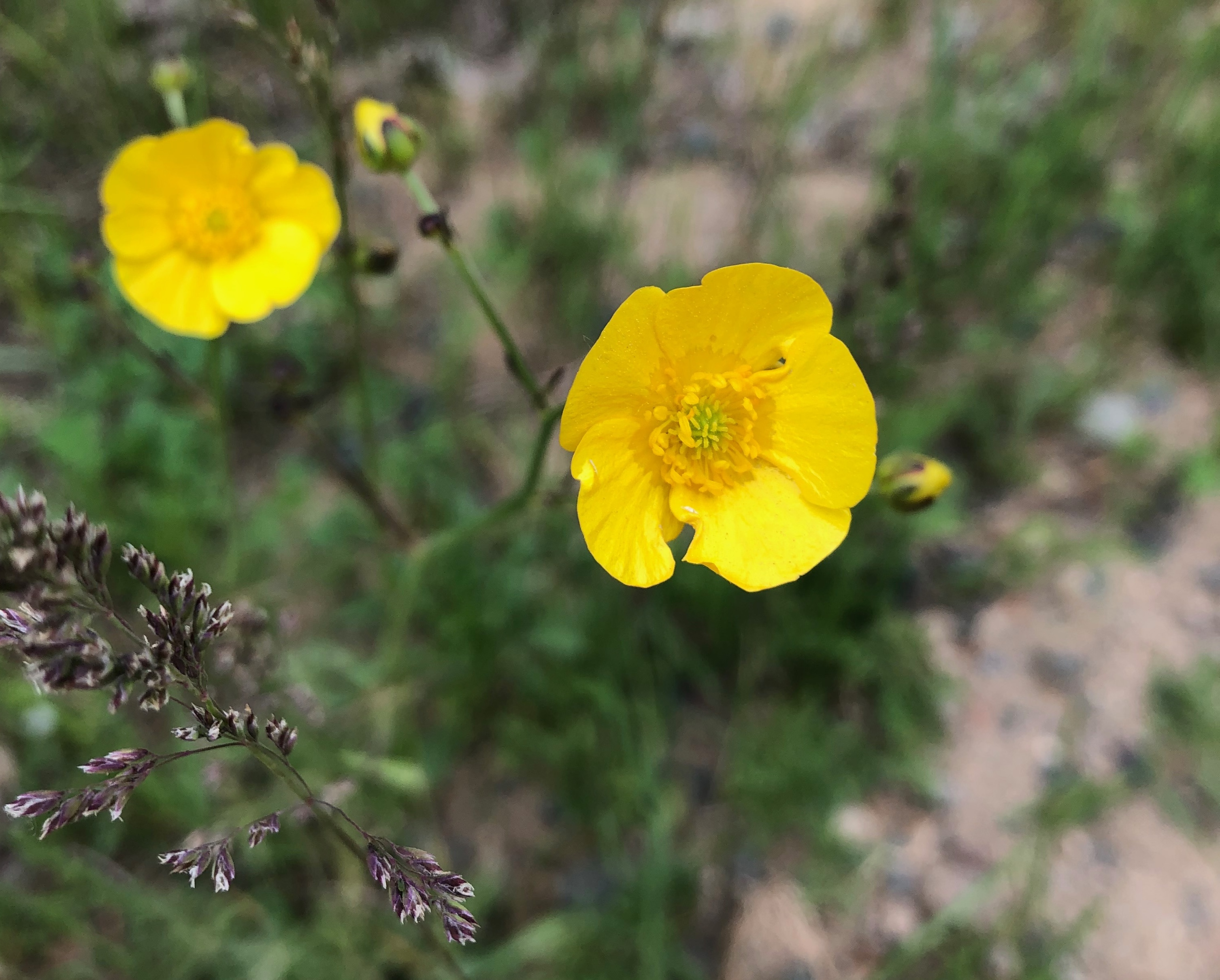
Tall Buttercup (Ranunculus acris)

Most of the ~15 buttercup species in Minnesota are native, however the Tall Buttercup is not. Its alternate name, crowfoot, comes from the resemblance of its leaves to birds feet. It is native to Europe and is considered a weed here. Of particular concern is the bitter toxic oil that it contains, protoanemonin. This is a serious irritant to grazing animals, known to cause blistering of mouths and even deaths of cattle.

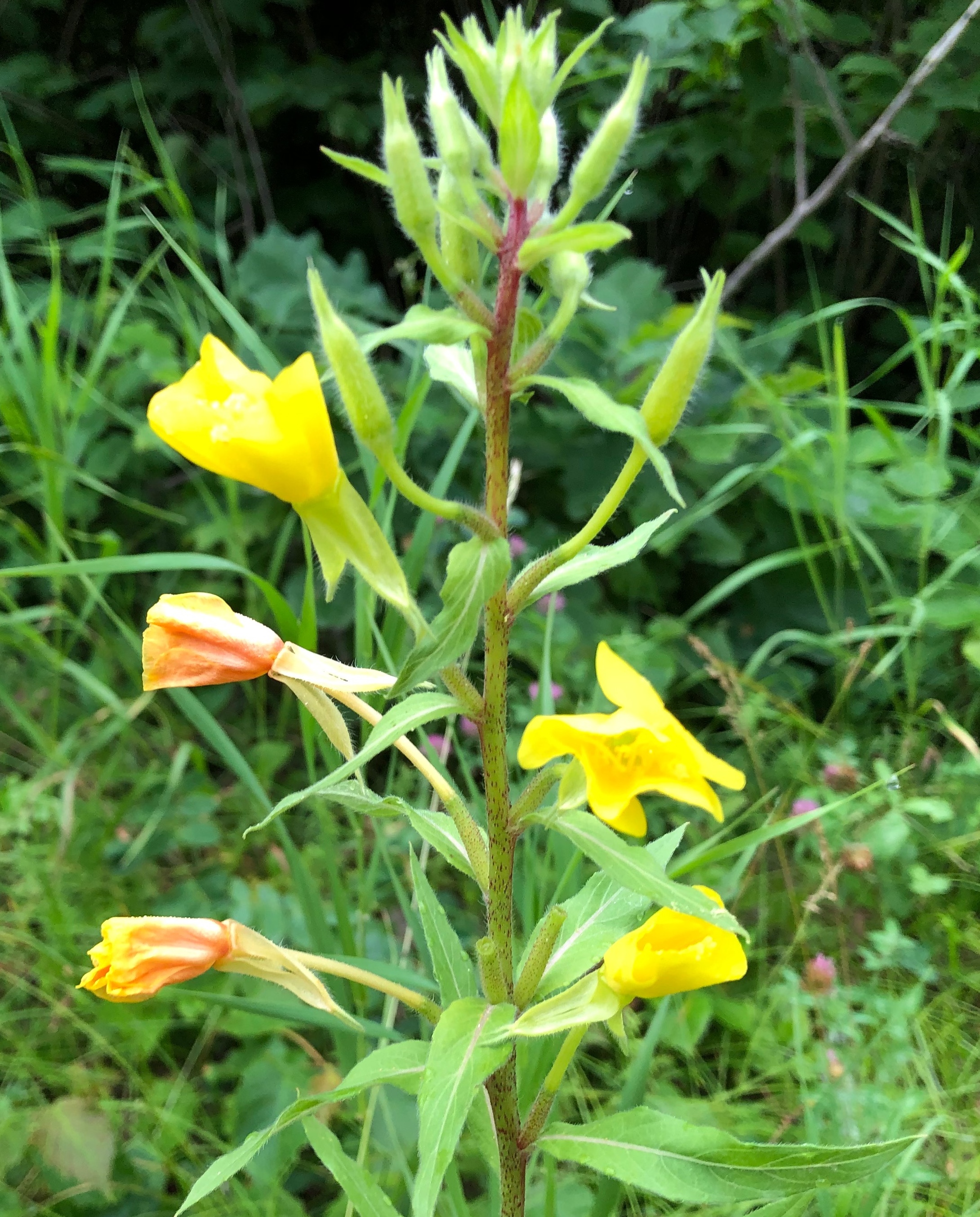
Evening Primrose (Oenothera biennis)

There are eight native species of evening primrose in Minnesota, this example is the Common Evening Primrose. Its flowers open at dusk and wilt away the following day; ideal for night-pollinating insects.

The plant has a long tradition of medicinal application. Evening Primrose Oil (EPO), made from its seeds, is commercially available because of its reported healing properties. Gamma-linolenic acid, an omega-6 fatty acid, is thought to be the active healing agent in this oil. The most convincing application of EPO has been for treatment of skin conditions like eczema. Studies of other applications have more ambiguous results. Evening primrose is also edible — including its fleshy roots which can be prepared like potatoes.

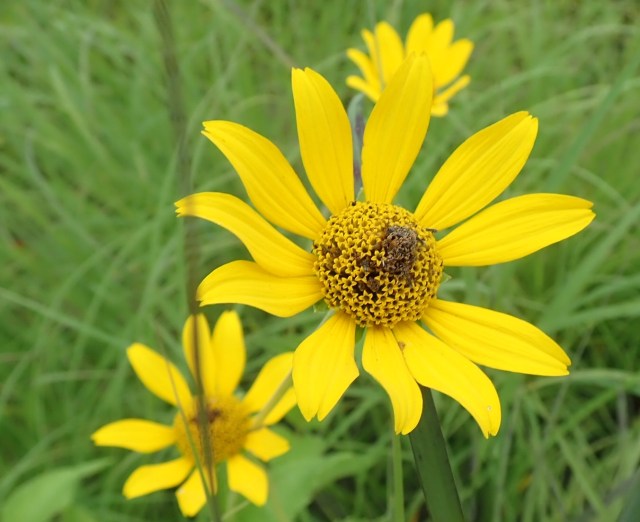
Black-eyed Susan (Rudbeckia hirta)

Black-eyed Susan is a very common and popular plant; it occurs wild and is often used as a domesticated plant in landscaping. It is the state flower of Maryland.

Four varieties of Black-eyed Susan are recognized in the US. The variety pulcherrima occurs throughout eastern North America, and is likely the variety seen in Minnesota. 

The origin of its name is likely the poem “Black-Eyed Susan” by the English poet John Gay (1685-1732):

When Black-Eyed Susan came aboard,
and eyed the burly men.
“Tell me ye sailors, tell me true
Does my Sweet William sail with you?”

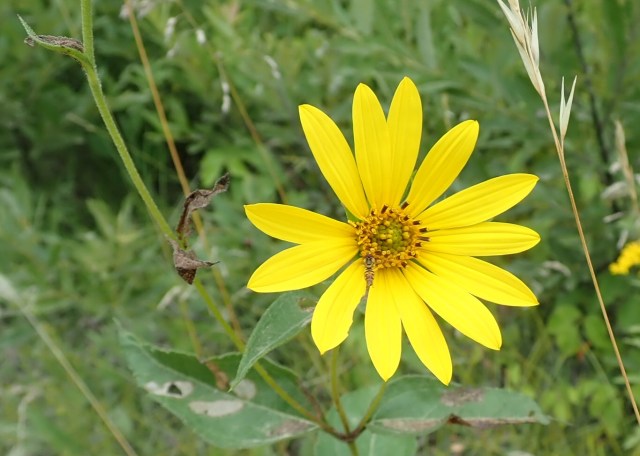
Smooth Oxeye (Heliopsis helianthoides)

Smooth Oxeye is not a true sunflower, but it is so similar that an alternate name for it is False Sunflower. It is a native plant in Minnesota, and also a popular garden plant. Smooth Oxeyes are prevalent along the roadsides in our area.

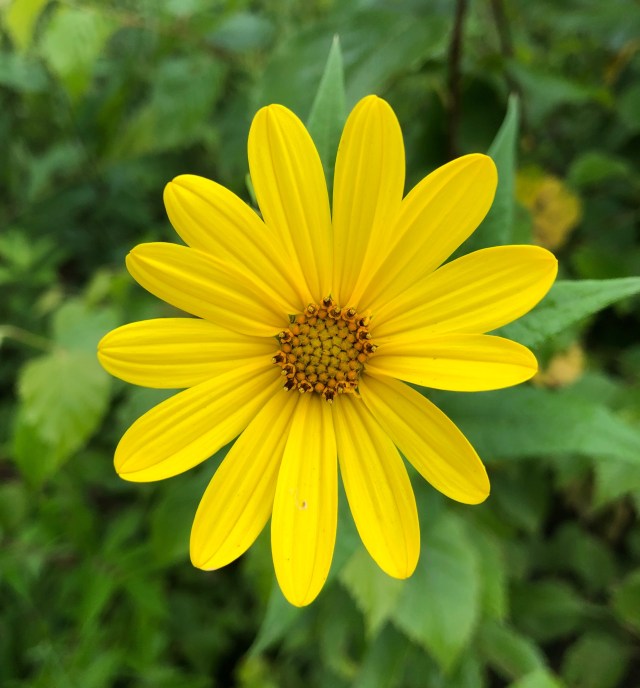
Woodland Sunflower (Helianthus strumosus) Jerusalem Artichoke (Helianthus strumosus)

Native sunflower species are similar to one another. The Minnesota Wildflower site provides tips on making correct ID’s — I believe these pictures are the two listed species, but there is some uncertainty.

The Jerusalem Artichoke was cultivated by Native Americans for its tubers, and was important food source for them. They provided Jerusalem Artichoke for Lewis and Clark to eat on their expedition. In Germany an alcoholic drink, Jerusalem Artichoke Brandy, is made from these tubers.

The tuber reportedly tastes like artichoke. The connection to “Jerusalem” is uncertain but likely is a corruption of an Italian word “girasola”; translated as “following the sun”.

Old Technology; Is Newer Necessarily Better?

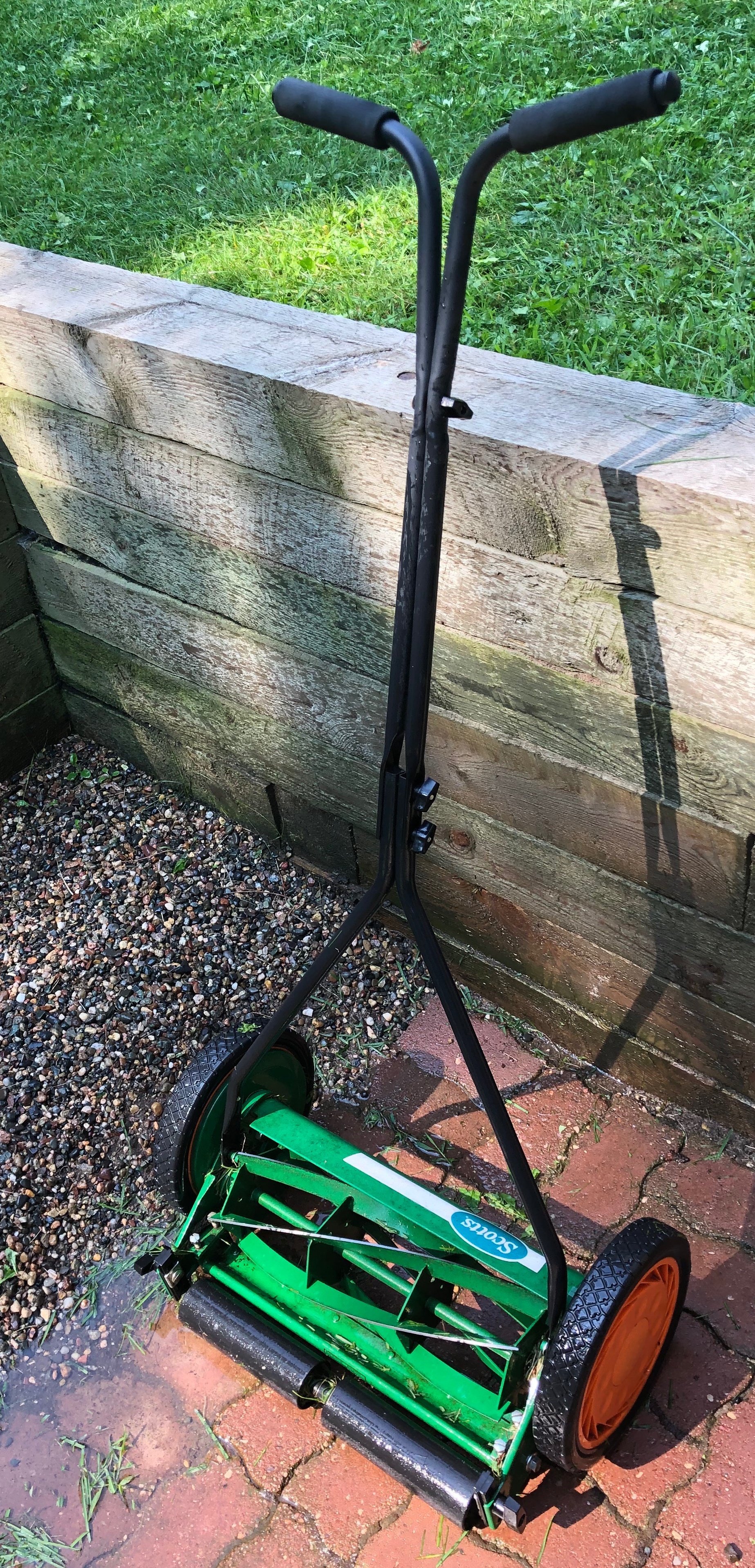
Mowing the dog’s yard using a manual reel mower

Departing from the usual for one post to advocate an unconventional method to mow lawn — the old-style, non-motorized reel mower. I got one of these mowers for the first time about four years ago, and was surprised at how well it worked. Since then, I’ve used this type of mower a lot; the images and text following show an example from this morning.

The images above show my manual reel mower; plus before and after shots of the lawn I mowed with it this morning.

The mower cost only about $100, consumes no gas (obviously), and is very quiet. It cuts a 16″ swath, there are models available that cut 20″.

This lawn is our fenced-in dog run, it’s approximately 46′ by 35′, so about 1600 square feet. Mowing it today took just 15 minutes using the 16″ manual mower. Rough calculation estimated that it required 400 steps, and my wrist monitor credited me with 140 calories burned (certainly a low estimate).

So, the manual reel mower has many advantages. It is cheap, so quiet that you can mow anytime without disturbing neighbors, and good exercise. To my eye it does just as good of a job as power mowers. You do have to keep up with the mowing though, it does not do well with tall grass.

Understory; Shrubberies #1

Here are some of the smaller trees and bushes that exist beneath the treetops and above the forest floor in our Minnesota lake region. This “understory” provides food and cover for wildlife.

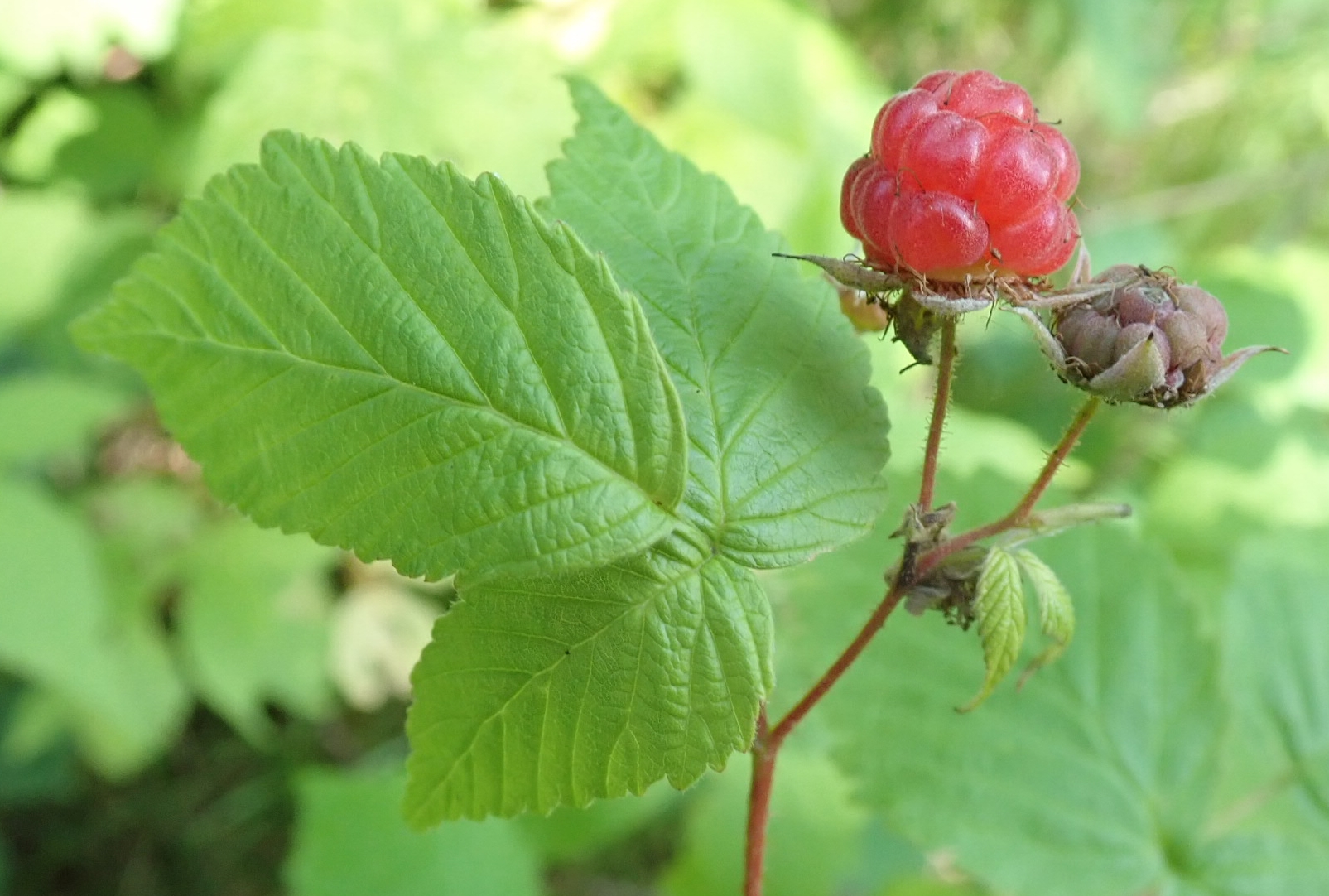
Wild Red Raspberry (Rubus idaeus)

Red Raspberry is a native plant common throughout Minnesota and easily recognized. It is likely the wild berry most often eaten by people.

In our area the raspberries are especially noticeable now, because of their eye-catching ripe fruit. They are most commonly found in the dappled shade at the edges of forested areas.

Stems, or canes, sent up by raspberry plant in spring (primocane) typically do not produce fruit in their first year. It is in its second year that the canes, now called floricane, produce flowers and fruit. Botanically, raspberries are actually not berries, rather they are an aggregate fruit comprised of several drupelets.

Serviceberry (Amelanchier interior),

May and July

The white flowers of the Serviceberry, photographed in May, were featured in one of this blog’s first posts. Now in late July, this update shows the berries produced by this plant. Despite this plant’s alternate name of Juneberry, in our area it seems the berries don’t ripen until July.

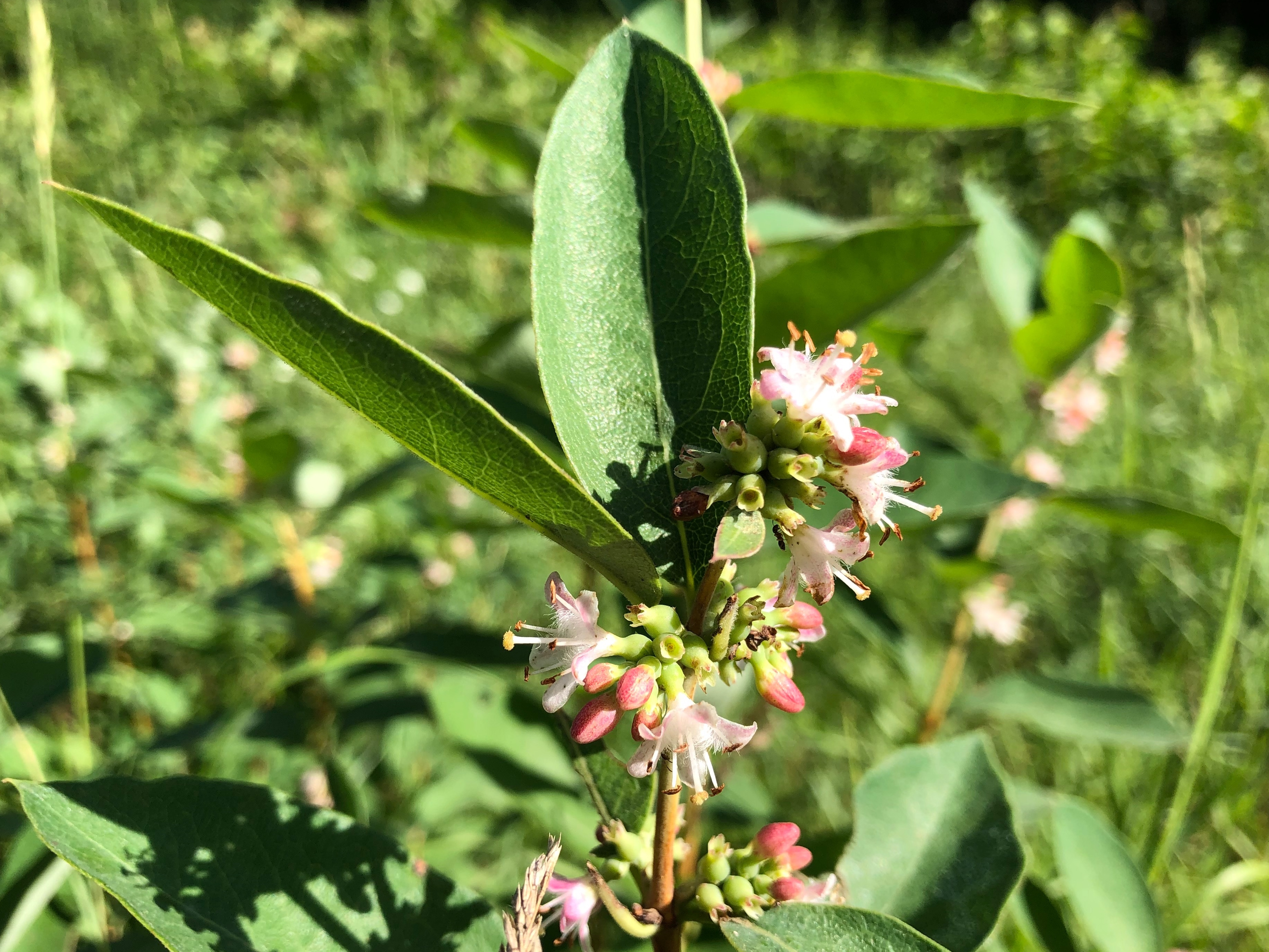
Wolfberry (Symphoricarpos occidentalis)

Wolfberry, also called Western Snowberry, is a woody shrub in the honeysuckle family. It is prevalent in prairie settings, but also found at forest edges in Minnesota. A related species with smaller flowers named Snowberry (Symphoricarpos albus), is also common in Minnesota. When I was a kid on a Minnesota farm, I believe we called these plants buckbrush.

The flowers are followed by white berries that are edible by some wildlife, but mildly poisonous to humans.

While these plants are native, they are considered undesirable in pasturelands.

Bush Honeysuckle

(Diervilla lonicera)

Despite its name, the Bush Honeysuckle is actually not in the Honeysuckle family. The flower is similar to honeysuckles, but the leaves and fruit are quite different.

Bush Honeysuckle is a native low-growing plant that prefers well-drained soils. It is recommended as a landscape plant for use on slopes to prevent erosion. It is also desirable for its striking burgundy color in fall.