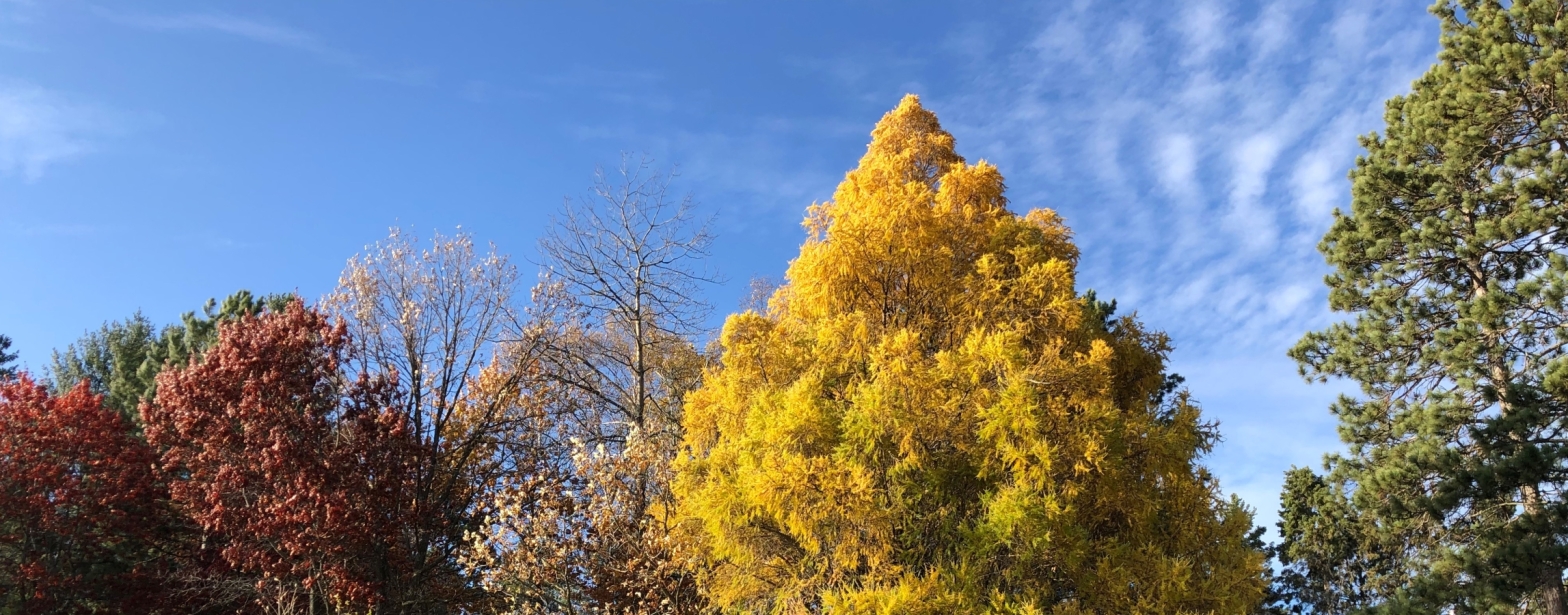
The tamarack is unusual because it is the only conifer native to Minnesota that is not evergreen. The photos below show how local tamaracks have changed color from September to October prior to dropping all their needles. A disadvantage for deciduous trees is that they must expend considerable resources to make new leaves each year. …
Author Archives: jimr77
Winter Survival; Trees
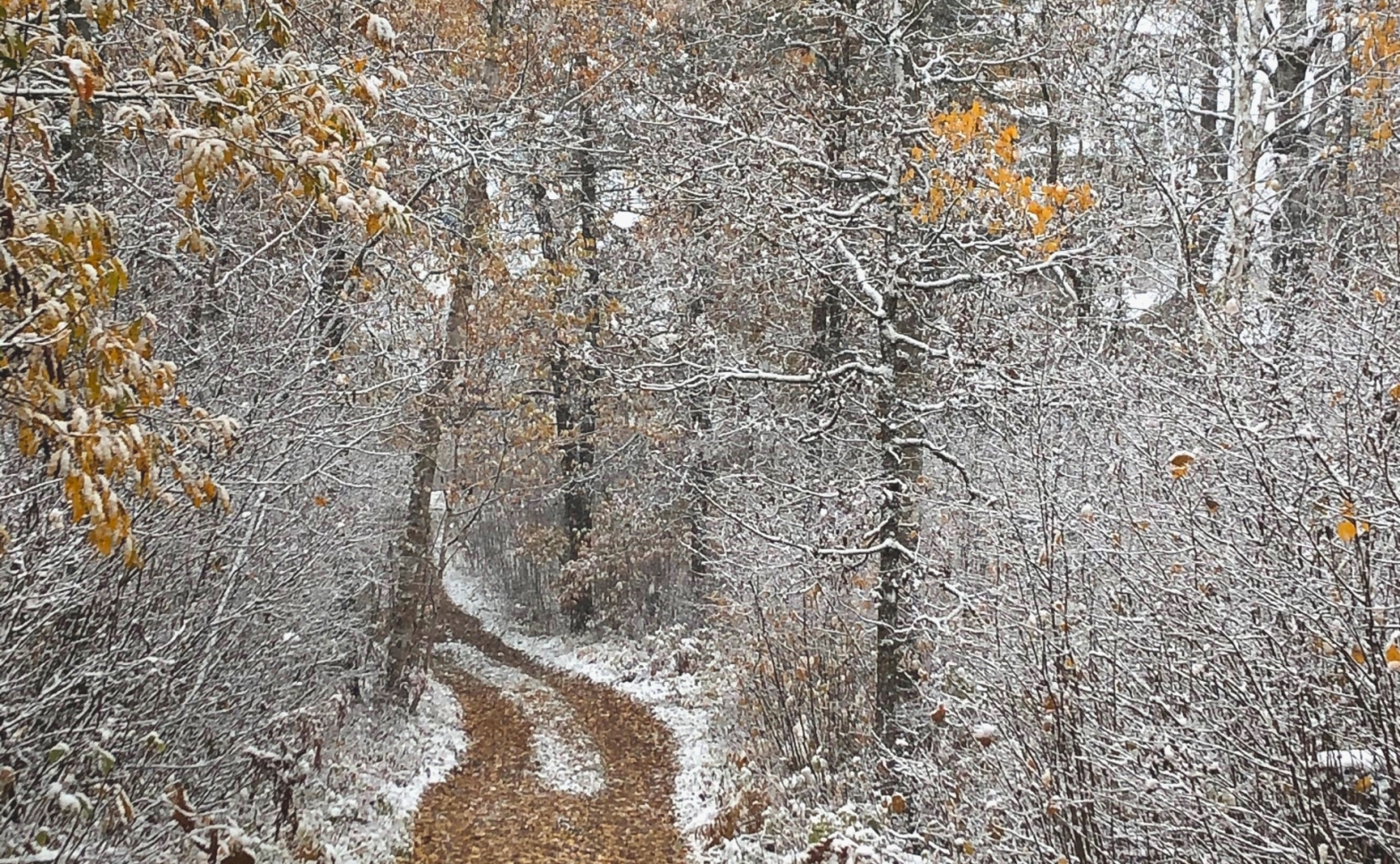
Gentle snow fell in Northwestern Minnesota in early October this year, providing a wintertime preview. Surviving winter temperatures far below freezing is a big challenge for plants and animals. Today’s post focuses on how trees make it through — with some scenic pictures of the recent snow. Trees are largely comprised of water, a critical …
Understory; Shrubbery #3, Sumac and Honeysuckle

Staghorn Sumac (Rhus typhina) and Smooth Sumac (Rhus glabra) Two species of sumac are widespread in Minnesota, Staghorn Sumac and the slightly more common Smooth Sumac. Staghorn Sumac bushes are larger, have fine hairs on their branches, and fuzzy fruit. The pictures below are likely a mix of Smooth and Staghorn Sumac. The tart fruit …
Continue reading “Understory; Shrubbery #3, Sumac and Honeysuckle”
Paul Bunyan Trail in October

Photographs in this posting show off fall scenery near Walker, Minnesota along the Paul Bunyan Trail, a Rails-to-Trails route between Crow Wing State Park and Bemidji (115 miles). This hilly and remote section of the trail, between highways 34 and 371, runs through the Chippewa National Forest. Scenic Overlook Fir and Aspen Forest Views
Patterns in Conifer Growth

Annual growth is reflected by patterns seen in the branches of conifer trees. Robert Knudson, a local biologist, points this out in a terrific YouTube video about our Northern Minnesota conifers. Pictures in this post illustrate two of the patterns featured in his presentation. Annual growth of Balsam Fir The pictures above show buds of …
Fall Colors; Why?

Interplay among three pigments is responsible for the changing colors seen in plant leaves each fall. Chlorophyll — this is the key green compound that enables the plant to convert sunlight and CO2 to sugar throughout the summer. Carotenoid — a yellow/orange compound that is present in the leaf throughout the year. When green chlorophyll …
Wildflower Roundup
White Rattlesnake-root (Prenanthes alba) White rattlesnake-root, also known as White Lettuce, is a shade-loving member of the aster family that flowers in the late summer. The plant pictured was in a wooded section of the Paul Bunyan Trail north of Hackensack Minnesota. Native Americans used Rattlesnake-root for many medicinal purposes. In particular, the Iroquois used …
Fungus on Trees

Shelf-like fungal growths on trees are known as conks Fungus identification is best left to experts, but I think the “conks” shown in the pictures above are the species Phellinus Tremulae. The photograph in the upper right is a close-up of the porous bottom-side of one of them. So far I have seen these growths …
Heartland Trail in September
Photographs in this posting show off fall scenery near Nevis, Minnesota along the Heartland Trail, a Rails-to-Trails trail for biking/running/walking that extends from Park Rapids to Cass Lake (49 miles). Also in our area is the Paul Bunyan Trail, a Rails-to-Trails route between Crow Wing State Park and Bemidji (115 miles). The Rails-to-Trails Conservancy (RTC) …
A very different wildflower
Indian pipe is different from any of the plants previously shown in this blog. It also has the most interesting survival strategy. Indian Pipe (Monotropa uniflora) Unlike most plants, Indian Pipe has no chlorophyll and does not depend on the sun. This clump of it was thriving in a deeply shaded forest setting. However it …

