Pinus banksiana
Three pines are native to North-Central Minnesota, The Red (Norway) Pine, the Eastern White Pine, and the Jack Pine. Jack Pine is somewhat less desirable than the other two, both commercially and aesthetically. However, it successfully exploits its niche as the northern conifer best able to thrive after wildfires.
A single Jack Pine has both male and female cones on different branches. Copious amounts of yellow pollen are produced by male cones and distributed by the wind in late May to fertilizes female cones. Seeds mature in the female cones for 2-3 years. Cones remain on the tree for many years and seeds within the cones remain viable for more than 20 years.
The ways in which Jack Pine has adapted its reproductive strategy to dominate after wildfires are ingenious. Its cones are usually sealed with resin. Seeds within these serotinous cones are only released when the resin melts at high temperature (120 – 140 degF). So, the Jack Pine essentially stores up the seeds it produces throughout its life until the high temperature of a forest fire releases them.
Jack Pine seedlings have evolved to thrive in sections of newly burnt forest. They need soil with minimal organic matter, plenty of sun exposure, and little competing vegetation.
Jack Pines produce some non-serotinous cones as well, especially in the southern parts of their range. These cones do not require fire to release the seeds, which means that Jack Pines are not completely dependent on fire to reproduce.
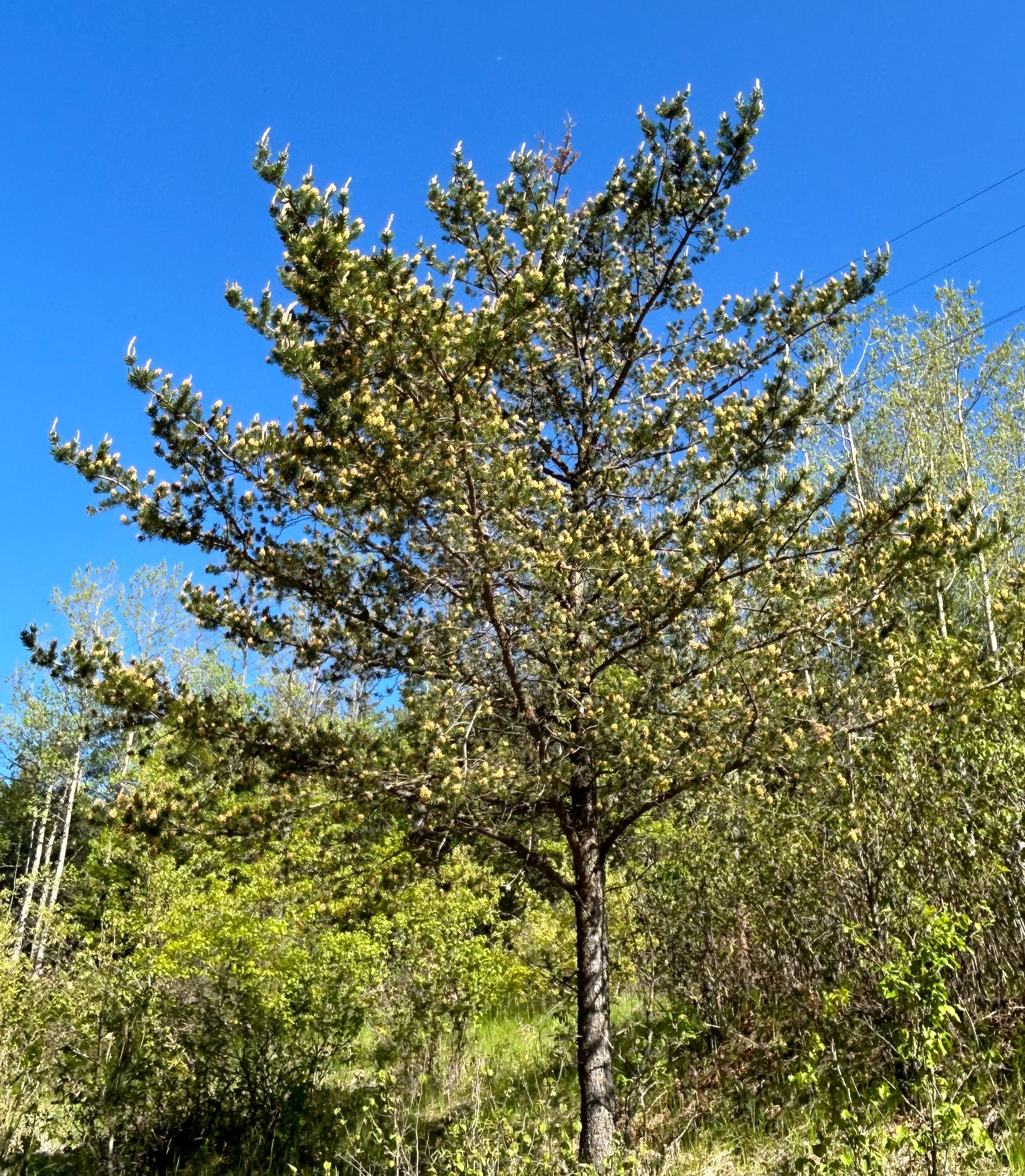
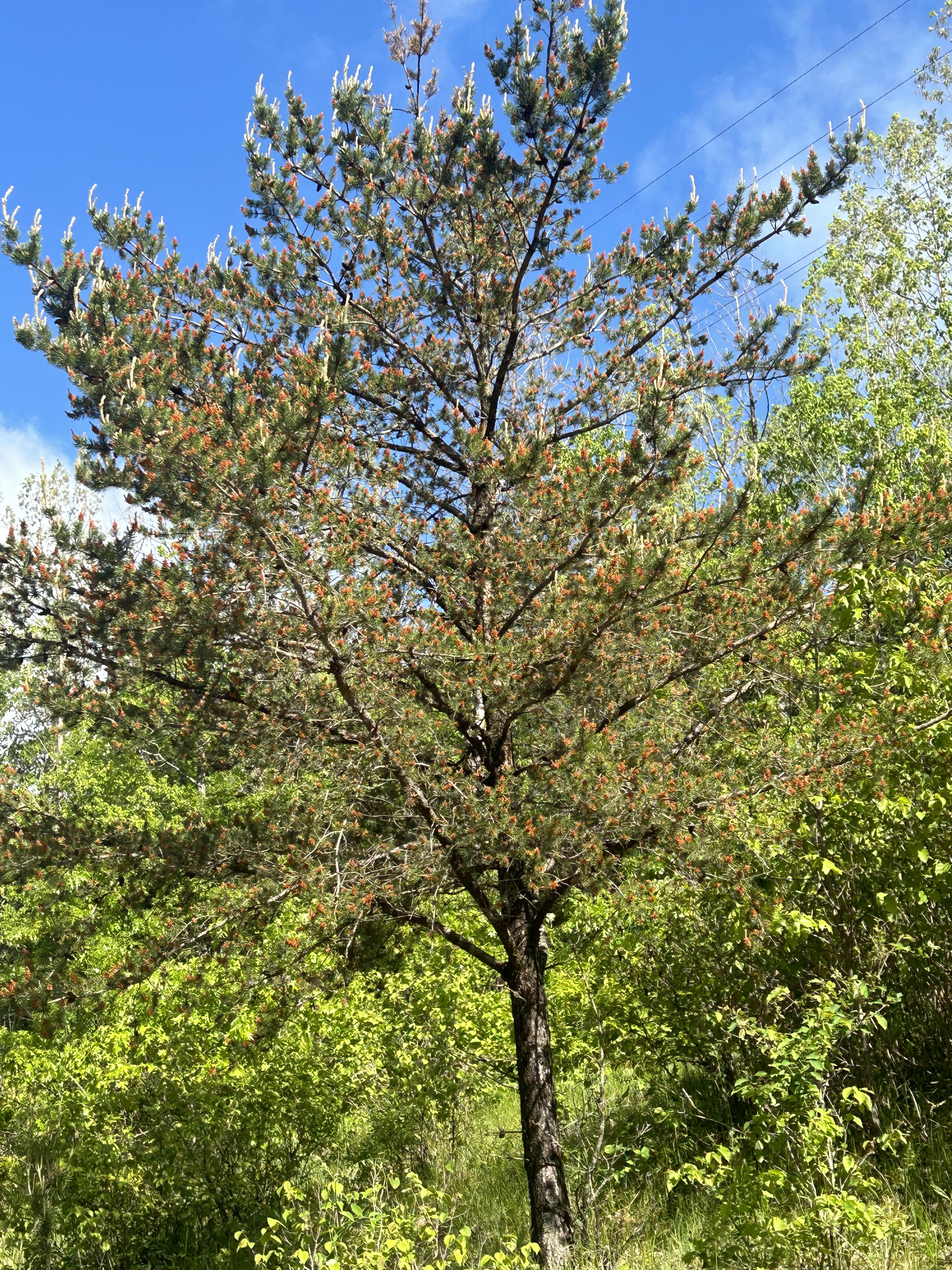
One of the pictures above shows a Jack Pine tree in late May, when the tree is dotted by male cones with their yellow pollen. The underlying picture shows the same tree about two weeks later after it has released its pollen.
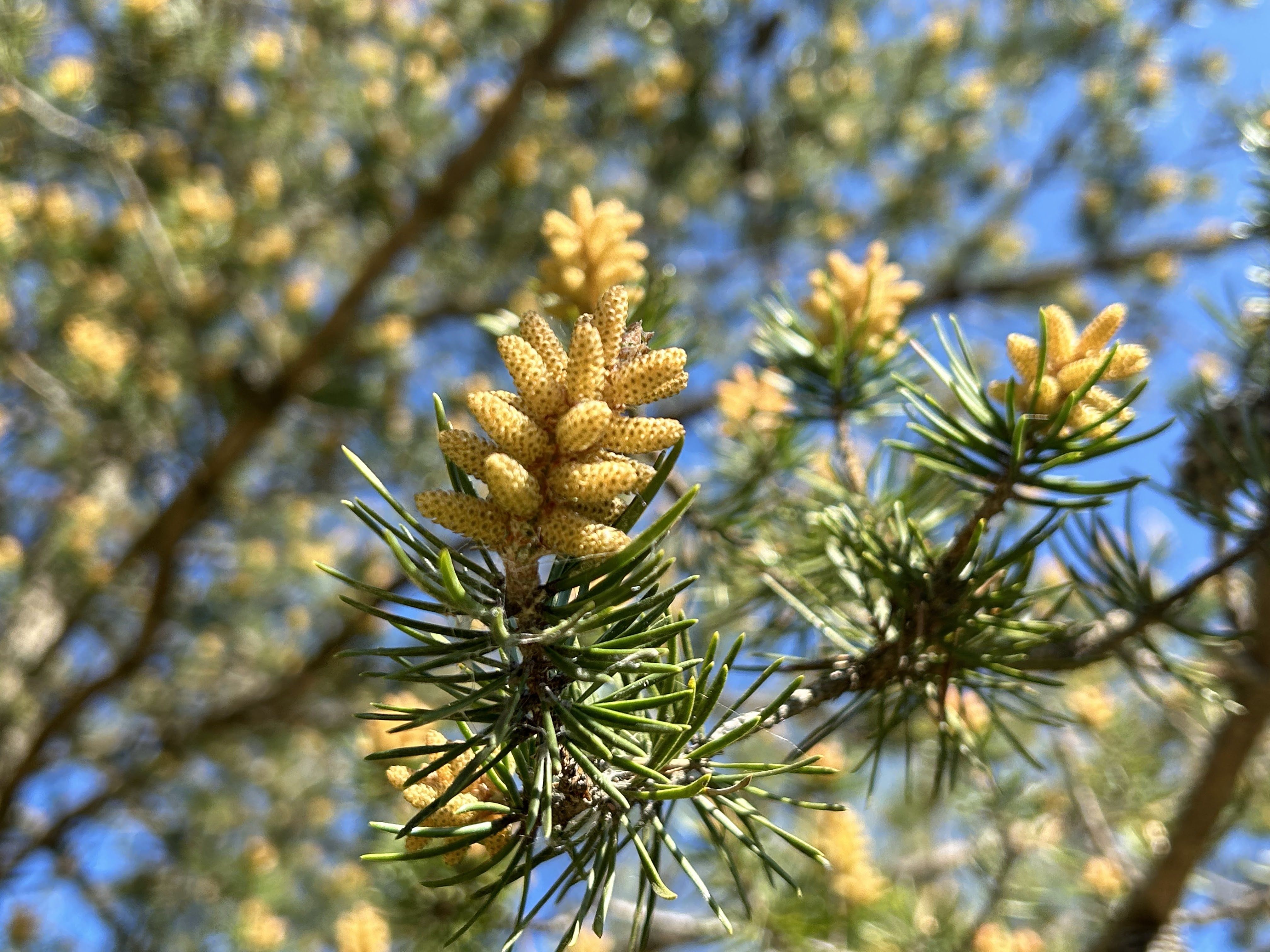


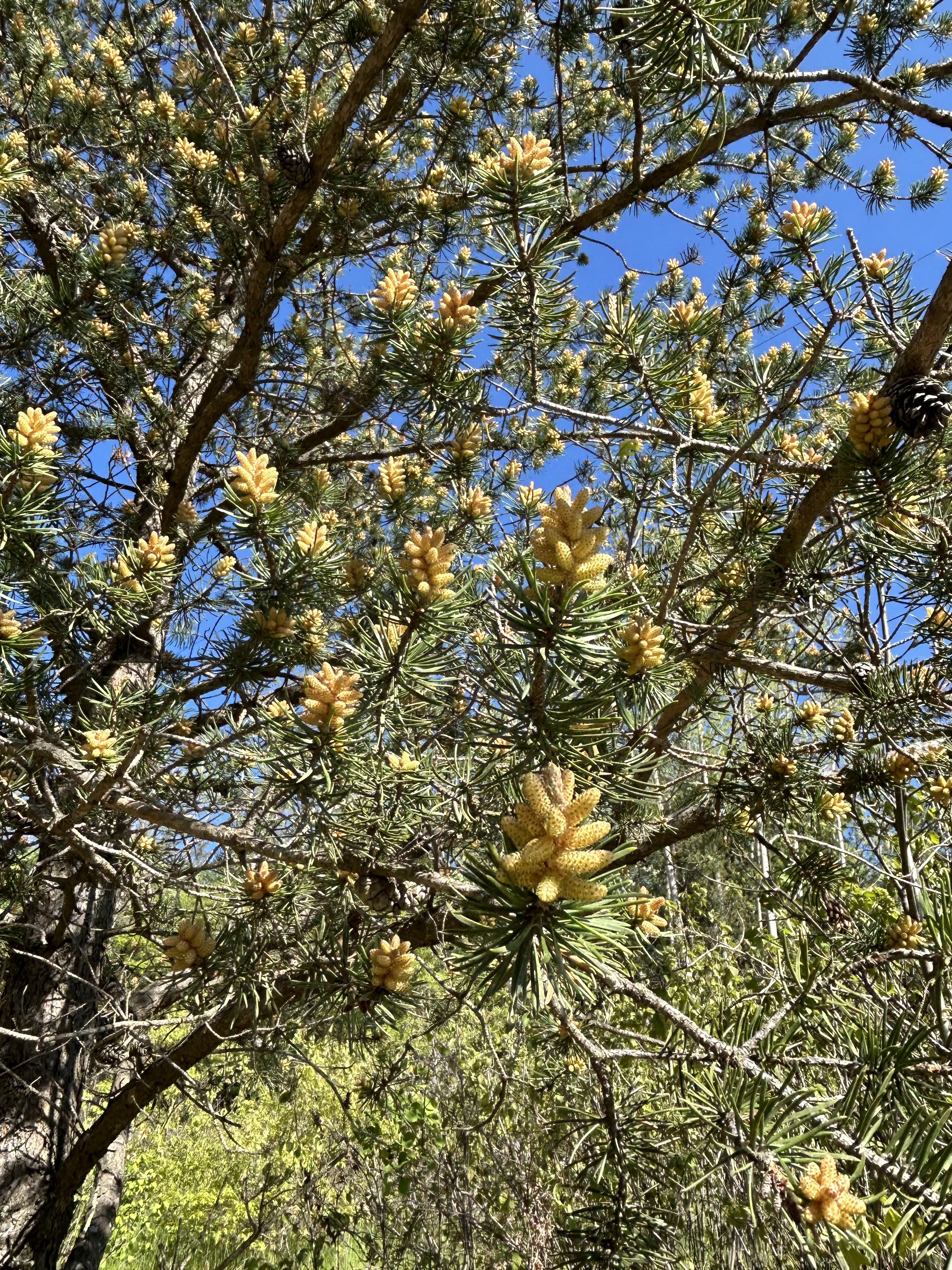
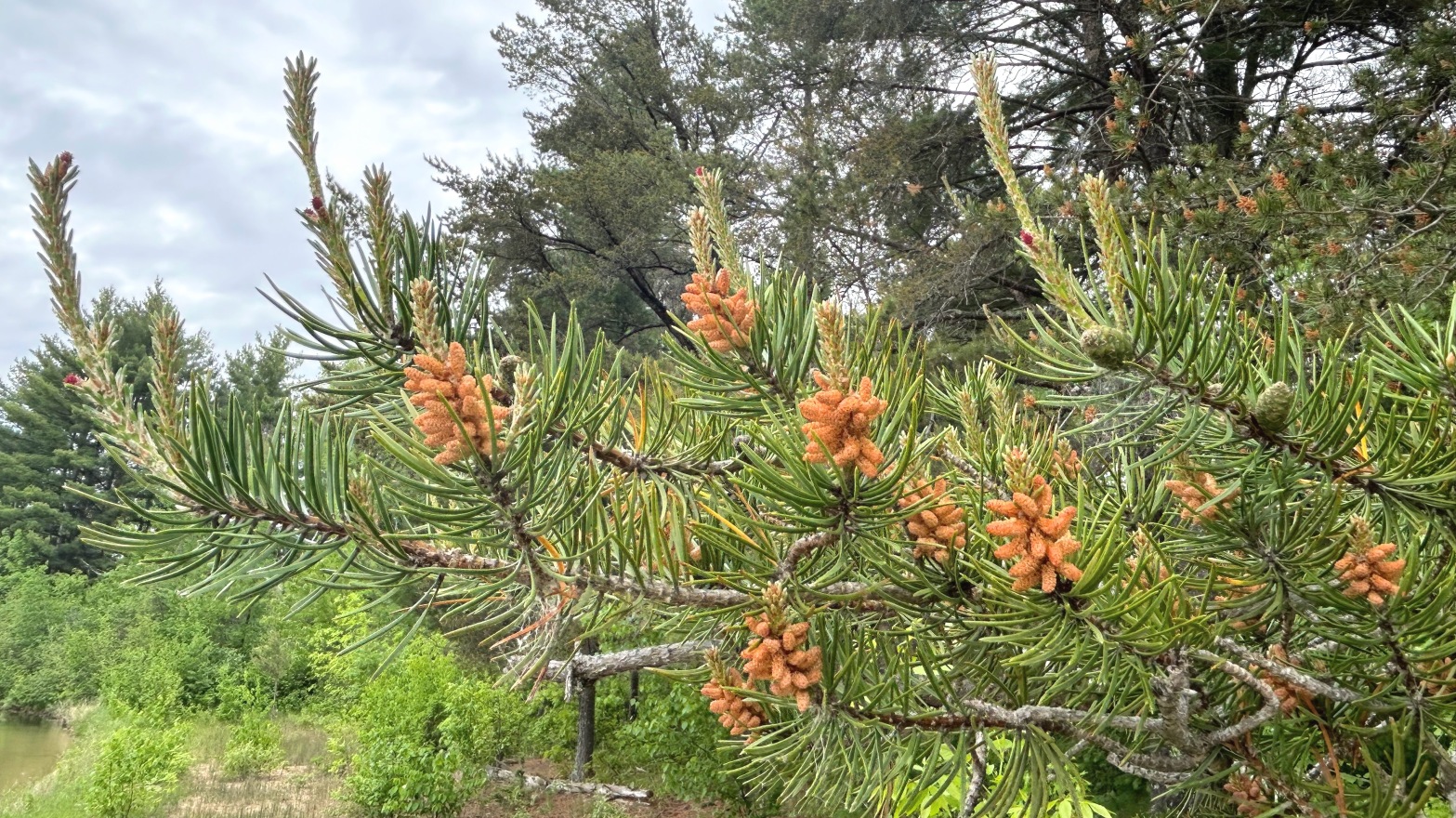
Views of Jack Pines in mid-May when male cones are yellow with pollen.


Views of young seed-bearing female cones on Jack Pines. In their first year these serotinous cones are green and tightly sealed by resin.

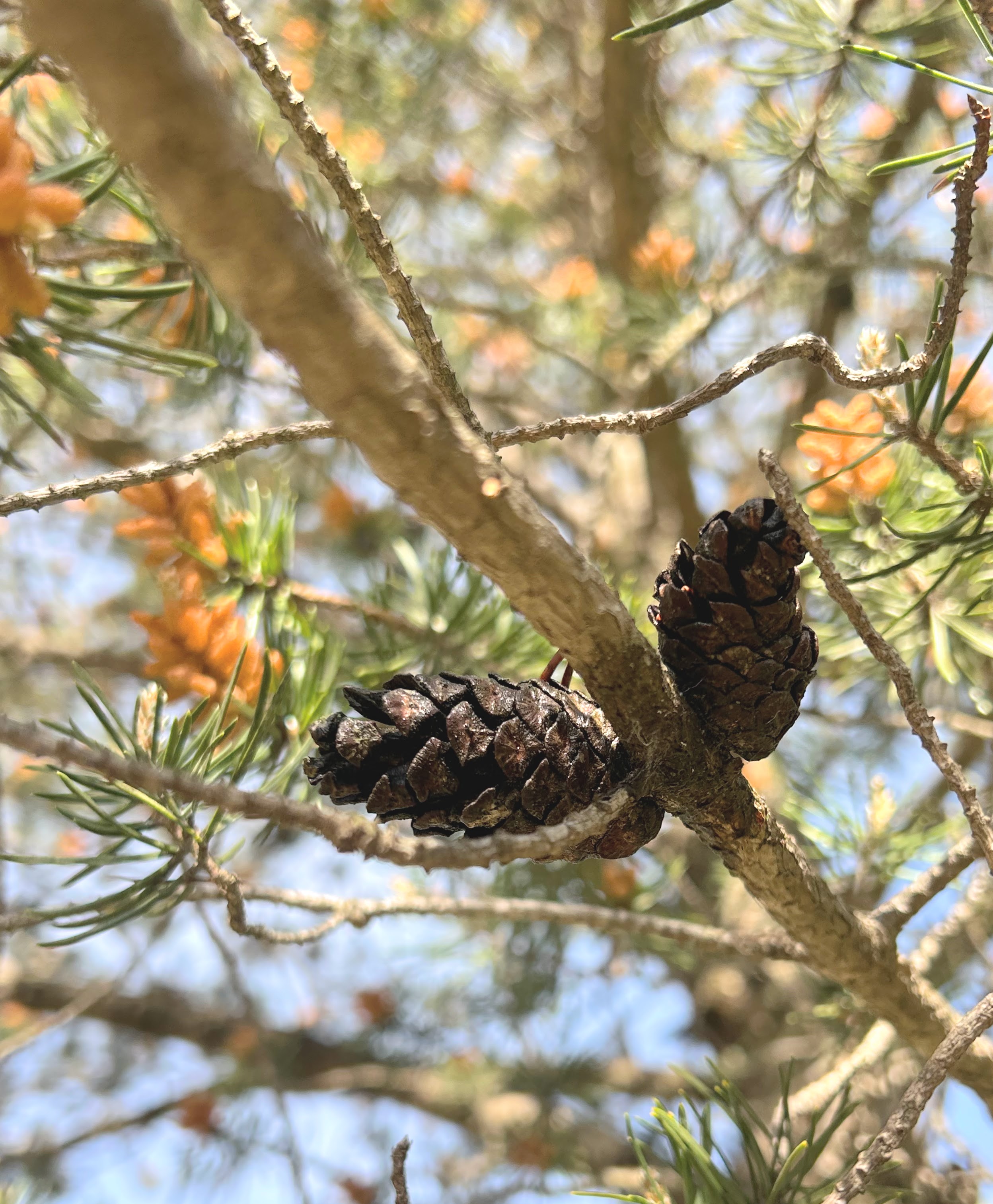
Some older cones of the Jack Pine are non-serotinous and open to release seeds without aid of fire (picture on the left above). Other older cones remain tightly sealed (right-hand picture).
 North MN Outdoors